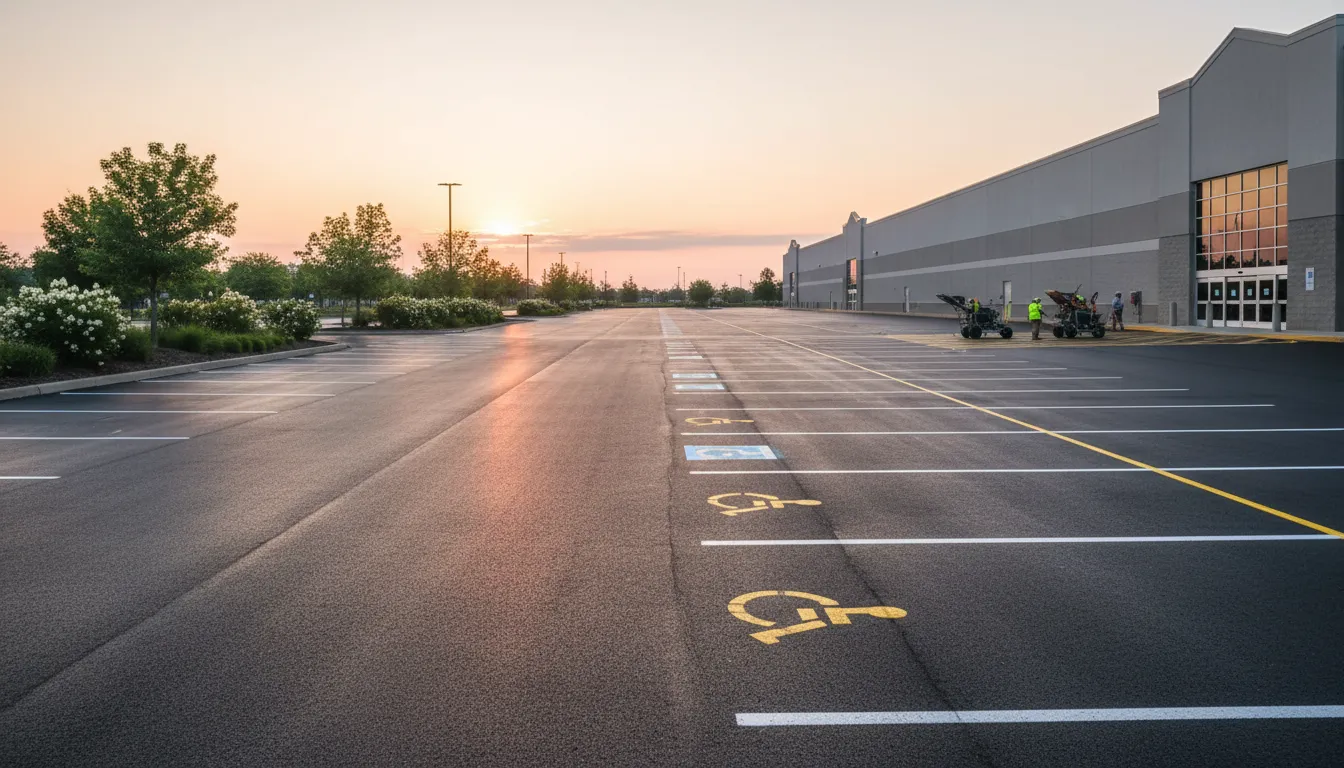
Find the Best Parking Lot Striping Companies for Your Business
No obligation • Fast responses • Nationwide coverage
Why you can trust Tidy Parking
Tidy Parking is a leading U.S. source for parking lot maintenance services, including striping, sealcoating, sweeping, paving, resurfacing, and repairs. Our content is created independently, and providers cannot pay to influence ratings or recommendations.
Search providers near you
Top Parking Lot Striping Companies in Plano, Texas Ranked
Clear, compliant parking lot striping is a critical component of property management in Plano. It's not just about painting lines; it's about ensuring safety, maximizing space, and adhering to strict state and federal accessibility laws. Proper pavement markings guide traffic, designate accessible parking, and define fire lanes to keep your lot functional and legally sound. This guide explains the key requirements for line striping in Plano and how you can connect with qualified local professionals to maintain your property's pavement markings.
Precise Property Maintenance
650 Dalworth Dr, Mesquite, TX 75149
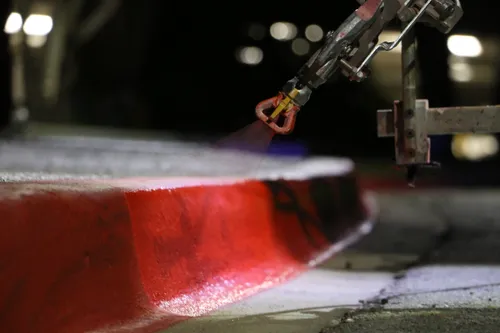
Precise Property Maintenance is a parking lot striping, sealcoating, and repair company serving Dallas, TX. Founded in 2019, the company offers a range of services including detailed parking lot striping, pavement repair, sealcoating, and routine pressure washing. They specialize in code-compliant markings such as ADA parking and fire lanes, and provide flexible scheduling to meet client needs. With over a decade of prior industry experience among its team, Precise Property Maintenance focuses on maintaining parking lots in optimal condition across the Dallas-Fort Worth Metroplex.
Lonestar Lot Maintenance
Dallas, TX
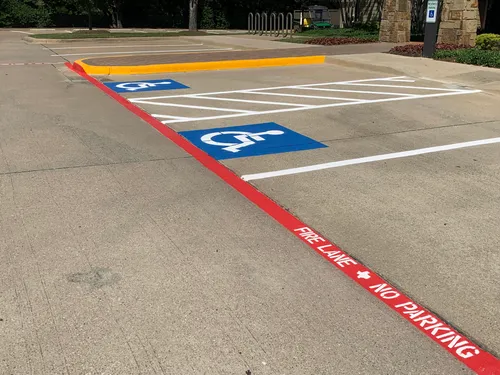
Lonestar Lot Maintenance is a locally owned and operated company based in Dallas, TX, specializing in parking lot maintenance services including striping and pressure washing. They serve clients throughout North Texas, including Arlington, Prosper, Fort Worth, and Garland. The company is known for quality workmanship and certified expertise, offering services that enhance property value and curb appeal. Lonestar Lot Maintenance also handles parking lot repairs and can accommodate scheduling needs around client operations.
Evoren Development
Richardson, TX
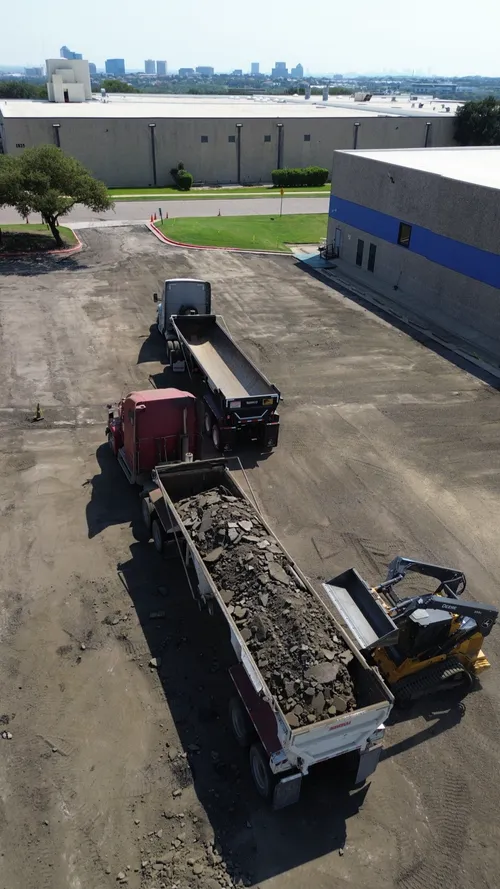
Evoren Development is a general contractor based in Richardson, TX, offering a wide range of services including parking lot striping, asphalt paving, concrete work, and full-scale structural rehabilitation for both commercial and residential projects. They provide comprehensive site solutions from demolition and site grading to finishing touches like custom painting and fencing. Their capabilities include large-scale parking lot striping and durable asphalt paving designed to withstand local weather conditions. Serving multiple cities in the Dallas-Fort Worth area, Evoren Development combines advanced technology with skilled craftsmanship to deliver lasting results.
Parking Lot Striping DFW
Dallas, TX
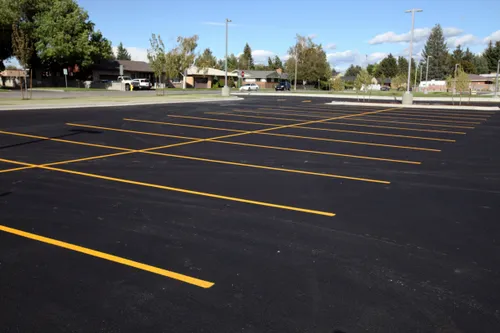
Parking Lot Striping DFW provides parking lot striping, sealcoating, and paving services in Dallas, TX. They offer commercial line striping to improve safety and traffic flow, as well as asphalt sealcoating to protect surfaces from damage caused by UV rays, water, and oil. With experience serving the Irving area and a skilled team, they handle projects of various sizes using modern technology and tools to ensure smooth completion.
All Things Asphalt Paving
Dallas, TX
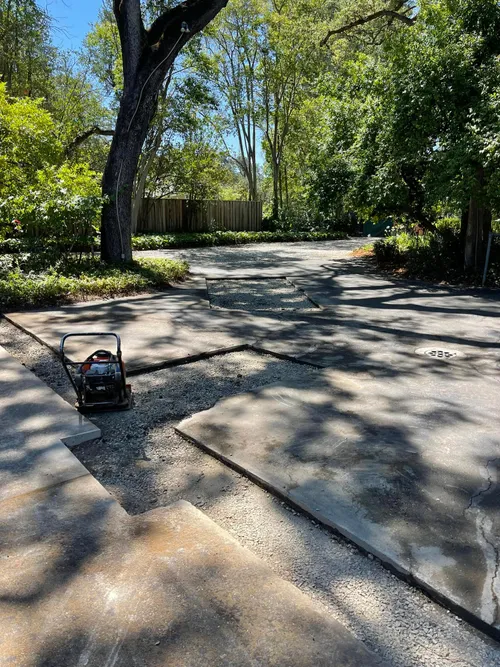
All Things Asphalt Paving is a licensed and insured asphalt contractor serving Dallas, TX. They provide a range of services including asphalt paving, patching, striping, sealcoating, and driveway and parking lot construction. Their team uses quality materials and advanced techniques to deliver durable and precise results, focusing on both residential and commercial projects. The company emphasizes craftsmanship and customer-first values, with a strong reputation for restoring and maintaining asphalt surfaces. They are known for their expertise in asphalt striping and sealcoating, helping to enhance safety and extend pavement life.
Why Proper Parking Lot Markings Matter
Parking lot line striping serves several essential functions beyond simple organization. First and foremost, it is a fundamental safety feature. Clear directional arrows, stop bars, and crosswalks help manage the flow of vehicle and pedestrian traffic, reducing the risk of accidents. Well-defined stalls prevent overcrowding and door dings, improving the user experience for customers and tenants alike.
From a legal and liability perspective, compliant striping is non-negotiable. In Texas, parking areas are subject to the Texas Accessibility Standards (TAS) and the federal Americans with Disabilities Act (ADA). Failure to maintain proper accessible parking markings can result in significant fines and open a property owner to lawsuits. Furthermore, local fire codes mandate clearly marked fire lanes to ensure emergency vehicle access is never blocked. Investing in professional parking lot layout and striping is an investment in risk management and public safety.
Key Requirements for ADA & Accessible Parking in Plano
Adhering to ADA and TAS guidelines is a primary concern for any commercial or public parking area in Plano. The regulations are detailed and specific, covering everything from dimensions to signage.
Space Dimensions and Layout:
- Standard Accessible Spaces: Must be at least 8 feet wide with an adjacent 5-foot-wide access aisle 1. The access aisle, often marked with diagonal lines, is crucial for deploying wheelchairs and mobility devices and must be kept clear at all times.
- Van-Accessible Spaces: A portion of the total accessible spaces must be van-accessible. These require either an 8-foot-wide space with an 8-foot aisle, or an 11-foot-wide space with a 5-foot aisle2. The "van accessible" designation is critical for accommodating larger mobility vehicles.
- Location: Accessible spaces must be located on the shortest accessible route from the parking area to the building's accessible entrance. They should be level and as close as possible to the entry.
Signage and Markings:
- Vertical Signs: Each accessible space must be identified by a vertical sign displaying the International Symbol of Accessibility. For van-accessible spaces, the sign must include the "Van Accessible" text. These signs must be mounted at least 5 feet above the ground so they remain visible when a vehicle is parked 3.
- Pavement Symbols: The accessibility symbol is also typically painted in blue on the pavement within the stall. While blue is common for the symbol, the stall lines and access aisle markings are usually white or yellow.
Quantity Requirements: The number of required accessible spaces is based on the total number of parking spaces in the lot. For example, lots with 1 to 25 total spaces require at least one accessible space. For 26 to 50 spaces, two are required, and the requirement scales up, generally mandating one accessible space for every 25 spaces (or fraction thereof) in larger lots4 5.
Fire Lane and Safety Striping Regulations
Texas fire codes are strict about maintaining clear access for emergency responders. Fire lane striping is not a suggestion-it's a legal requirement for public safety.
- Marking Method: Fire lanes must be conspicuously marked. This is most commonly done with red curbing or red paint applied directly to the pavement surface. The word "FIRE LANE" is often stenciled in white within the red zone6.
- Purpose and Enforcement: These areas must be kept free of parked vehicles at all times. Illegally parked cars in a fire lane can be ticketed and towed immediately to prevent obstruction during an emergency.
- Additional Safety Markings: Beyond fire lanes, a comprehensive safety layout includes clearly marked loading zones with specified dimensions (at least 5 feet wide and 20 feet long)7, crosswalks for pedestrian safety, and stop lines at intersections within the lot. Directional arrows and "Do Not Enter" signs painted on the asphalt are also part of a complete traffic control plan8 9.
Find the perfect parking lot striping companies for your needs
Get personalized recommendations and expert advice
The Professional Striping Process: From Layout to Paint
A professional parking lot marking project involves more than just running a paint machine. It's a multi-step process that ensures longevity, compliance, and optimal space utilization.
- Assessment and Layout Design: The process begins with a thorough evaluation of the existing asphalt surface and the property's needs. Professionals measure the lot, account for traffic flow patterns, and design a layout that maximizes the number of stalls while incorporating all required ADA spaces, fire lanes, and safety zones. For a new layout, detailed planning is essential.
- Surface Preparation: For a lasting job, surface preparation is key. This involves thoroughly cleaning the pavement to remove dirt, oil, and debris. Old, faded lines may need to be removed or obscured. A clean, dry surface ensures the new paint will adhere properly.
- Stenciling and Masking: Before the main line striping begins, areas for handicap symbols, directional arrows, and other custom stencils are often laid out and masked. This ensures crisp, clean edges for these important symbols.
- Application: Professionals use specialized airless or air-assisted striping machines to apply high-quality, fast-drying traffic paint or thermoplastic. These materials are designed to withstand tire friction and UV exposure. Layout strings and chalk lines guide the application for perfectly straight lines10.
- Curing and Reopening: The final step is allowing the paint to fully cure before reopening the lot to traffic. Drying time can vary based on material and weather conditions.
Restriping vs. Full Re-layout
Property owners typically face two main scenarios when refreshing their parking lot markings:
- Restriping (Over Existing Lines): This is the most common and cost-effective service. It involves applying new paint directly over the existing, well-defined line pattern. This is ideal for lots where the current layout is still compliant and functional. It simply refreshes the visibility of the markings.
- Full Re-layout (New Design): This service is necessary when the existing layout is non-compliant, inefficient, or has faded beyond recognition. It may also be required after significant asphalt repair or resurfacing. A full re-layout involves completely redesigning the stall plan, which includes new measurements, stenciling, and the application of all markings from scratch. This is a more involved and therefore typically more expensive project due to the additional labor and planning.
A general industry recommendation is to restripe a parking lot every 18 to 24 months to maintain optimal visibility and safety, and to avoid the higher cost and disruption of a full re-layout later11.
Maintaining Your Investment
To get the longest life from your parking lot striping, consider these tips:
- Schedule Regular Refreshes: Don't wait for the lines to completely disappear. Proactive restriping on a 1.5 to 2-year cycle is more economical.
- Promptly Address Asphalt Damage: Cracks and potholes not only damage lines but can lead to more significant pavement failure. Repairing the asphalt surface before restriping ensures a smooth, long-lasting result.
- Clean Spills Quickly: Oil and chemical spills can degrade paint. Regular sweeping and prompt cleanup of stains help preserve the markings.
- Use Professional-Grade Materials: While DIY kits exist, professional contractors use commercial-grade paints and thermoplastics formulated for durability against constant traffic and Texas weather.
Frequently asked questions
Sources
Footnotes
-
ADA Compliance Brief: Restriping Parking Spaces - https://www.ada.gov/resources/restriping-parking-spaces/ ↩
-
ADA Compliance Guide for Parking Lot Line Striping - https://www.pavementsolutions.org/ada-compliance-guide-for-parking-lot-line-striping/ ↩
-
ADA Handicap Striping in Plano, TX | Accessible Parking Markings - https://www.parkinglotstripingplano.com/handicap-striping-plano-tx.html ↩
-
Texas ADA Parking Requirements for Business Owners - https://www.semperfistriping.com/post/texas-ada-parking-requirements-for-business-owners ↩
-
Texas Accessibility Standards Parking Lot Codes - SMR Striping - https://smrstriping.com/texas-ada-parking-lot-codes/ ↩
-
Texas Fire Lane Striping Requirements Explained | Semper Fi - https://www.semperfistriping.com/post/texas-fire-lane-striping-requirements-explained ↩
-
19.10 On-Street Parking - https://www.txdot.gov/manuals/des/rdw/chapter-19-pedestrian-facilities/19-10-on-street-parking.html ↩
-
Make Your Parking Lot Layout and Striping Compliant - https://www.ppm.us/parking-lot-layout-by-industry/ ↩
-
Understanding Your Parking Lot Line Striping Requirements - https://www.ppm.us/parking-lot-striping-requirements/ ↩
-
The Step-by-Step Process of Parking Lot Line Striping - https://asphaltcoatingscompany.com/blog/the-step-by-step-process-of-parking-lot-line-striping/ ↩
-
Parking Lot Striping Pricing in Plano, TX | Cost & Estimates - https://www.parkinglotstripingplano.com/parking-lot-striping-pricing-plano.html ↩