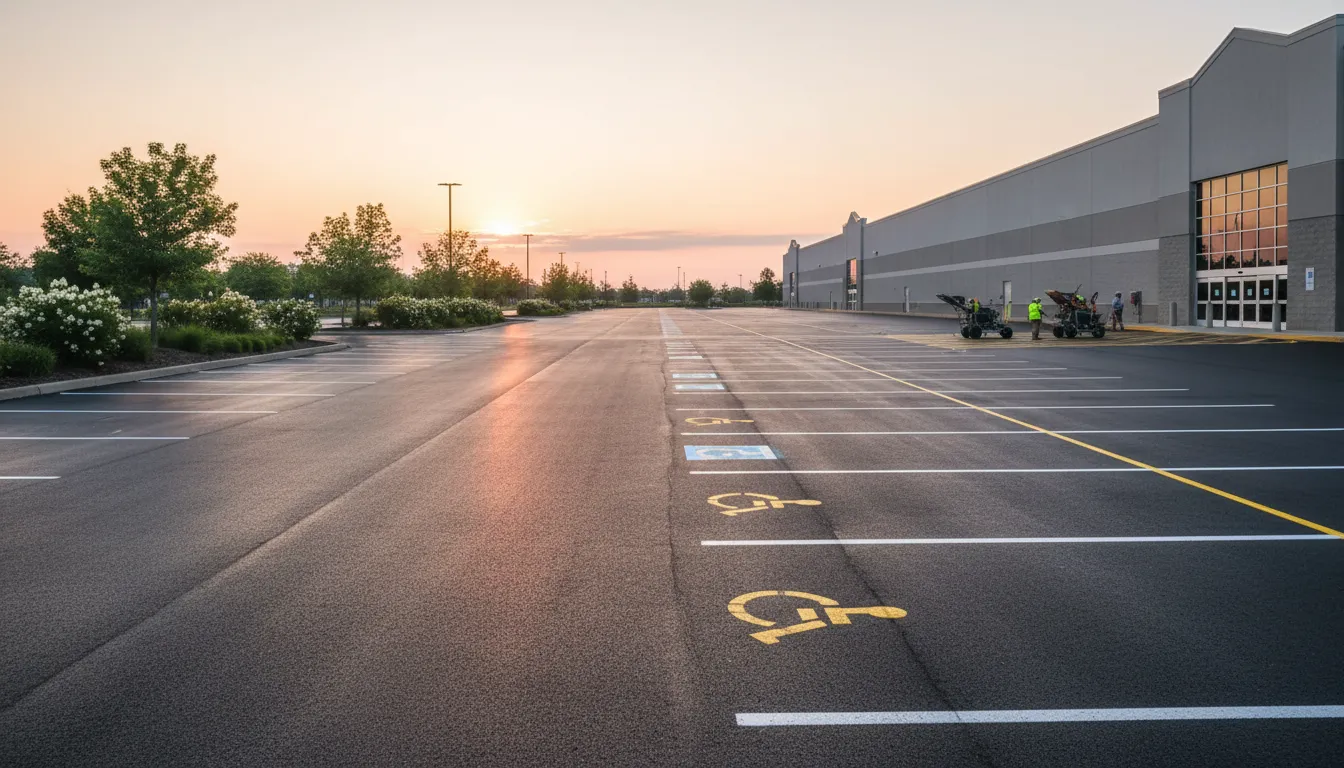
Find the Best Parking Lot Striping Companies for Your Business
No obligation • Fast responses • Nationwide coverage
Why you can trust Tidy Parking
Tidy Parking is a leading U.S. source for parking lot maintenance services, including striping, sealcoating, sweeping, paving, resurfacing, and repairs. Our content is created independently, and providers cannot pay to influence ratings or recommendations.
Search providers near you
Top Parking Lot Striping Companies in College Station, Texas Ranked
A well-marked parking lot is a critical component of safe, efficient, and legally compliant property management in College Station. Parking lot striping, also known as line painting or pavement marking, involves applying clear, durable lines and symbols to define traffic flow, parking stalls, and safety zones. This service is essential not only for organizing vehicle and pedestrian movement but also for adhering to strict state and local codes that govern fire lanes and accessible parking. For property managers, business owners, and facility operators, understanding these requirements is the first step. This guide will help you navigate the regulations, understand the scope of work, and identify key considerations for selecting a professional line striping service in the Brazos Valley.
Pacific Asphalt Paving
College Station, TX
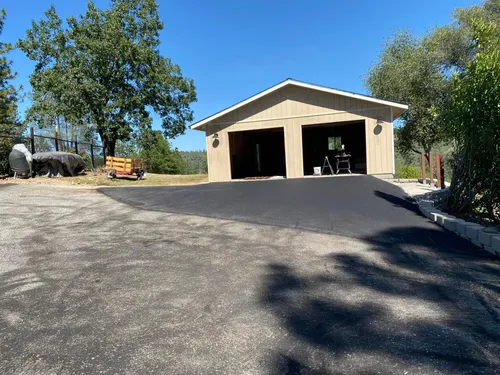
Pacific Asphalt Paving is an asphalt contractor based in College Station, TX, offering a range of services including asphalt paving, patching, striping, sealcoating, and driveway construction. They serve both residential and commercial clients, providing durable and visually appealing asphalt surfaces designed to withstand the local climate. The company uses advanced equipment and premium materials to deliver precise and long-lasting results. Pacific Asphalt Paving has years of industry experience and focuses on tailored solutions to meet specific project needs.
EverLine Coatings and Services
College Station, TX
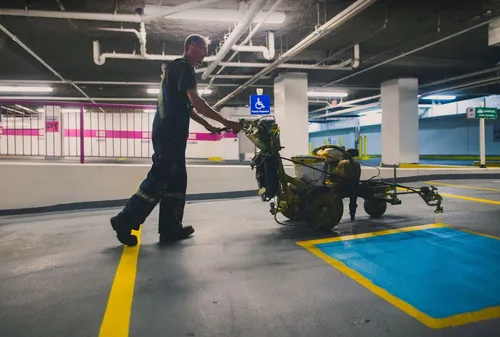
EverLine Coatings and Services is a parking lot maintenance company based in College Station, TX. They provide a range of services including parking lot striping, sealcoating, asphalt repair, and custom parking space design. The company manages multi-site maintenance programs for various clients, including restaurant, retail, and healthcare chains, ensuring projects are completed on time and according to brand standards. Their Preventative Pavement Maintenance Program aims to extend the lifespan of parking lots through coordinated and comprehensive care.
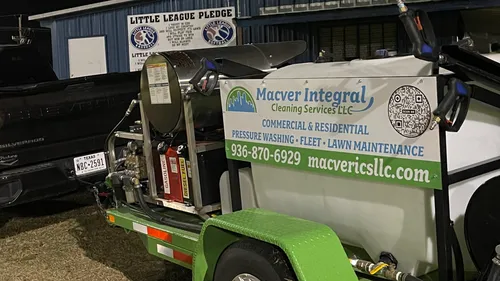
Macver Integral Cleaning Services
Houston, TX
Macver Integral Cleaning Services is a family-owned company based in Houston, TX, with over 25 years of experience in cleaning and facility maintenance. They offer a wide range of services including parking lot striping, power washing, epoxy and concrete coatings, junk removal, and lawn maintenance. Their parking lot striping service uses premium materials and precise application to improve safety, organization, and traffic flow. The company also supports local community projects and schools, reflecting their commitment to the areas they serve.
Understanding Local Striping Regulations and Codes
In College Station, parking lot marking is not a matter of simple aesthetics; it is a regulated activity governed by a combination of state and municipal law. The primary frameworks are the Texas Accessibility Standards (TAS), which align with the federal Americans with Disabilities Act (ADA), and the City of College Station's own Site Design Standards 1. Failure to comply can result in significant fines, increased liability, and even the towing of improperly parked vehicles at the owner's expense.
The local Fire Marshal and building officials enforce these standards during inspections for new construction, renovations, and routine business operations. Compliance is an ongoing responsibility, as faded, worn, or incorrect markings do not meet the legal requirement for visibility and clarity. Regular maintenance and restriping are necessary to avoid penalties and ensure the safety of all users.
Fire Lane Marking Requirements
Fire lane markings are among the most critical and strictly enforced elements of parking lot striping in Texas. Their purpose is to keep access roads clear for emergency vehicles at all times. College Station's code specifies exact dimensions, colors, and wording.
- Curb Marking: Where a curb borders a fire lane, it must be painted solid red. On this red background, white lettering at least four inches high must state: "FIRE LANE - NO PARKING - TOW AWAY ZONE." This wording must be repeated at intervals no greater than 15 feet apart along the entire length of the fire lane 2.
- Surface Marking: If no curb is present, a continuous eight-inch wide red stripe must be painted on the driving surface itself to delineate the fire lane3.
- Width and Signage: The fire lane must maintain a minimum clear width of 20 feet. In addition to paint, the Fire Marshal may require the installation of standardized red and white "No Parking - Fire Lane" signs 4.
The consequence for violating fire lane rules is immediate: vehicles can be towed without warning5. Ensuring these markings are bright, legible, and correctly placed is a non-negotiable aspect of property management.
Accessible Parking Space Specifications
Creating compliant accessible parking, often referred to as handicap or ADA parking, involves precise dimensions for both the space and its access aisle, proper signage, and correct slope. The number of required spaces is based on the total number of parking spots in your lot.
- Quantity Required: For lots with up to 100 total spaces, a minimum of one accessible space is required for every 25 spaces. Furthermore, one in every six accessible spaces must be designated as "van-accessible"6.
- Standard Accessible Space: Each standard accessible stall must be at least 96 inches (8 feet) wide. It must be accompanied by a 60-inch (5-foot) wide access aisle, which can be shared between two adjacent spaces 7.
- Van-Accessible Space: Van-accessible spaces have two configuration options: a 132-inch (11-foot) wide space with a standard 60-inch aisle, or a standard 96-inch wide space with a wider 96-inch (8-foot) access aisle8.
- Access Aisle Markings: The access aisle is arguably the most important part of the setup, as it provides room for wheelchair lifts and ramps. It must be clearly marked, typically with diagonal hatch lines, and the words "NO PARKING" should be stenciled on the surface9 10. The maximum slope allowed for the entire space and aisle is 1:48 (2.08%) in all directions11.
- Signage: Each accessible space must have a vertical sign displaying the International Symbol of Accessibility. The bottom of the sign must be at least 60 inches above the ground. Van-accessible spaces must include an additional "Van Accessible" plaque on the sign12 13.
Find the perfect parking lot striping companies for your needs
Get personalized recommendations and expert advice
Additional Essential Markings
A fully compliant and functional parking lot involves more than just stalls and fire lanes. Other key markings include:
- Crosswalks: Pedestrian crosswalks, especially those providing a path from accessible parking to building entrances, should be clearly marked with high-visibility white paint or thermoplastic14.
- Loading Zones: For facilities that serve passengers, such as medical offices or schools, accessible passenger loading zones require a 5-foot wide, 20-foot long access aisle adjacent to the vehicle pull-up space.
- Traffic Flow Lines: Directional arrows, stop lines, yield markings, and one-way indicators in yellow or white paint are crucial for managing safe vehicle movement and preventing accidents.
- Symbols and Legends: Stenciled symbols like "NO PARKING," "RESERVED," or "COMPACT CAR" help communicate specific rules for different areas of the lot.
The Professional Striping Process: Materials and Methods
Understanding what needs to be marked is half the battle. The other half is ensuring it's done correctly with the right materials. Professional parking lot striping contractors in College Station typically follow a systematic process.
- Site Assessment and Layout: A professional will first survey your lot, taking measurements and noting existing conditions, drainage points, and light poles. They will then plan a layout that maximizes space efficiency while ensuring 100% compliance with all TAS and city codes.
- Surface Preparation: For a long-lasting job, the surface must be clean, dry, and free of debris, oil stains, and old, peeling paint. Power washing or mechanical scrubbing is often a necessary first step.
- Stencil and Layout Application: Using chalk lines, string, and specialized layout tools, the crew will map out the entire lot. Pre-cut stencils are used for handicap symbols, letters, and numbers to ensure uniformity and professional appearance.
- Application of Paint or Thermoplastic: The marking material is then applied. The two most common options are:
- Water-Based Traffic Paint: A cost-effective and quick-drying option suitable for most lots. It requires reapplication every 12-24 months depending on traffic volume.
- Thermoplastic: A melted plastic material that is applied hot and sets quickly. It is significantly more durable than paint, lasting 3-5 years or more, and offers superior reflectivity. It is often used for high-traffic areas, crosswalks, and symbols where longevity is key.
- Curing and Reopening: The lot must be closed to traffic until the markings are fully dry or cured. A professional will provide a clear timeline for when vehicles can safely park on the new lines.
Cost Considerations for Parking Lot Striping
The cost of line painting in College Station is not a flat fee; it varies based on the size of your lot, the complexity of the layout, the materials chosen, and the condition of the existing pavement. Contractors often provide estimates based on linear feet for lines and a per-stall or per-symbol cost for other elements.
Based on industry estimates for restriping an existing lot, you can expect a general range for common elements 15:
- Standard Parking Space Lines (4-inch white or yellow): $2 - $5 per linear foot.
- Fire Lane Markings (8-inch red line + text): $5 - $10 per linear foot, given the additional color and stencil work.
- Handicap Symbol (Blue background & white stencil): $50 - $150 per stall.
- "NO PARKING" Stenciling in Access Aisles: $10 - $20 per word.
- Crosswalk (white thermoplastic): $3 - $8 per linear foot.
These are illustrative estimates. The most accurate way to determine your project's cost is to obtain detailed quotes from several licensed and insured local contractors. Be sure each quote includes a clear breakdown of labor, materials (specifying paint vs. thermoplastic), and any necessary surface preparation.
Maintaining Your Parking Lot Markings
Once your lot is freshly striped, a maintenance plan will protect your investment and ensure ongoing compliance. Texas sun, rain, and constant traffic will cause even the best thermoplastic to fade over time. Schedule annual inspections of your markings, particularly focusing on accessible spaces and fire lanes. Planning for a full restriping every 1-3 years for paint, or 3-5 years for thermoplastic, is a prudent part of facility budgeting. Proactive maintenance is far less costly than dealing with fines, lawsuits, or preventable accidents caused by unclear markings.
Frequently asked questions
Sources
Footnotes
-
2023-4454 - Ordinance - 08/10/2023 - https://opendoc.cstx.gov/DocArc/DocView.aspx?id=1828115&searchid=106913d6-62b3-4bfb-8d8f-53bbbf087988&dbid=0&repo=DOCUMENT-SERVER ↩
-
Site Design Standards - cstx.gov - https://www.cstx.gov/media/2tpbd5ji/sitedesignstandards22019.pdf ↩
-
Fire Lane Requirements | Cstx.gov - https://www.cstx.gov/media/qpzlp4a5/fire-lane-requirements.pdf ↩
-
Fire Lane Legal Requirements in Texas: What Property ... - https://www.northtexaslinestriping.com/blog/fire-lane-legal-requirements-in-texas-what-property-owners-need-to-know ↩
-
ordinance no. - https://cdnsm5-hosted.civiclive.com/UserFiles/Servers/Server_12410832/File/Departments/PDS/BLDG/FirePreventionandProtection.pdf ↩
-
Accessible Parking Spaces | ADA.gov - https://www.ada.gov/topics/parking/ ↩
-
Accessible Parking - ADA National Network - https://adata.org/factsheet/parking ↩
-
Texas ADA Parking Lot Compliance Checklist - https://www.northtexaslinestriping.com/blog/texas-ada-parking-lot-compliance ↩
-
Commercial Parking Lot Striping: Costs, Standards + Pro Tips - https://www.getonecrew.com/post/commercial-parking-lot-striping ↩
-
Chapter 1: Application and Administration - https://www.tdlr.texas.gov/ab/2012TAS/2012tasChap5.pdf ↩
-
Texas Accessibility Standards Parking Lot Codes - SMR Striping - https://smrstriping.com/texas-ada-parking-lot-codes/ ↩
-
Texas Law About Parking Lot Striping - https://underwaycs.com/parking-lots/texas-law-about-parking-lot-striping/ ↩
-
Accessible Parking - Office of the Texas Governor - https://gov.texas.gov/organization/disabilities/parking ↩
-
part 3. markings table of contents - https://www.dot.state.tx.us/trf/mutcd/2006part3.pdf ↩
-
Parking Lot Striping Laws & ADA Compliance in Texas - https://www.compassrefresh.com/post/parking-lot-striping-laws-ada-compliance-texas ↩