Find the Best Parking Lot Striping Companies for Your Business
No obligation • Fast responses • Nationwide coverage

Why you can trust Tidy Parking
Tidy Parking is a leading U.S. source for parking lot maintenance services, including striping, sealcoating, sweeping, paving, resurfacing, and repairs. Our content is created independently, and providers cannot pay to influence ratings or recommendations.
Search providers near you
Top Parking Lot Striping Companies in Denton, Texas Ranked
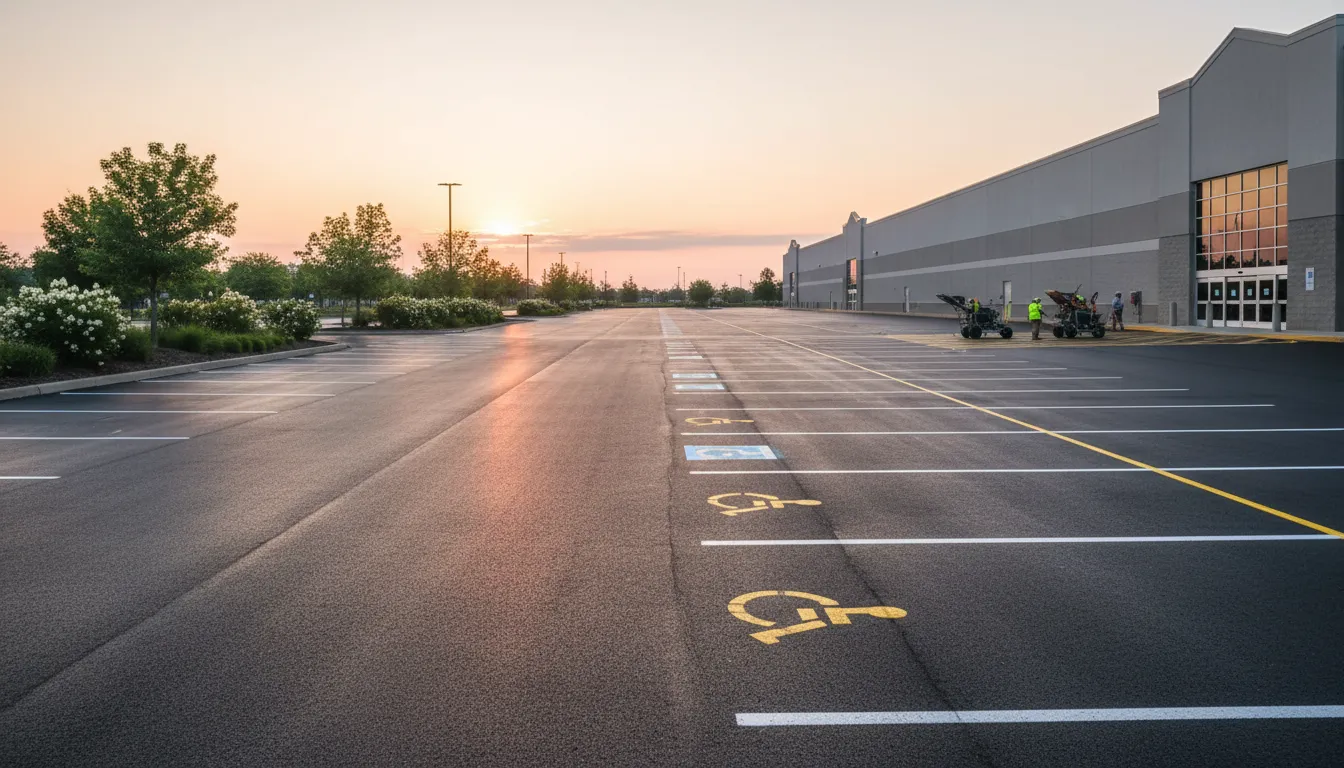
Maintaining clear, compliant pavement markings is a critical part of property management in Denton. Proper parking lot striping and pavement marking ensure safety, maximize space, and fulfill legal obligations under the Americans with Disabilities Act (ADA) and local fire codes. Faded or incorrect lines can lead to confusion, accidents, and significant fines. This guide explains the specific requirements for line striping in Denton and how to connect with qualified local professionals to maintain your property's pavement markings.
Lonestar Lot Maintenance
Dallas, TX
Lonestar Lot Maintenance is a locally owned and operated company based in Dallas, TX, specializing in parking lot maintenance services including striping and pressure washing. They serve clients throughout North Texas, including Arlington, Prosper, Fort Worth, and Garland. The company is known for quality workmanship and certified expertise, offering services that enhance property value and curb appeal. Lonestar Lot Maintenance also handles parking lot repairs and can accommodate scheduling needs around client operations.
Parking Lot Striping DFW
Dallas, TX
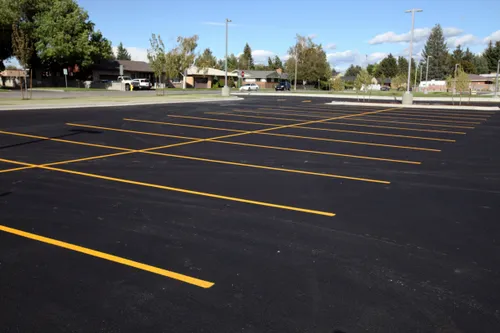
Parking Lot Striping DFW provides parking lot striping, sealcoating, and paving services in Dallas, TX. They offer commercial line striping to improve safety and traffic flow, as well as asphalt sealcoating to protect surfaces from damage caused by UV rays, water, and oil. With experience serving the Irving area and a skilled team, they handle projects of various sizes using modern technology and tools to ensure smooth completion.
Firemans Paving Contractors
2313 East Loop 820 N, Fort Worth, TX 76118
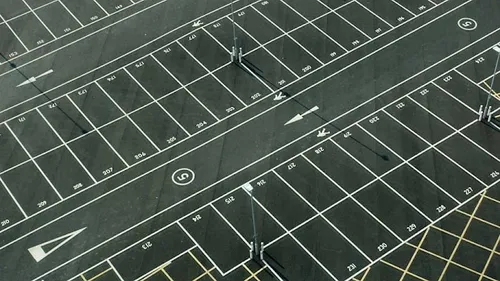
Firemans Paving Contractors is a certified woman-owned full-service paving company based in Fort Worth, TX. They provide a range of services including parking lot striping, paving construction, resurfacing, repairs, and maintenance for asphalt and concrete surfaces. The company operates with a focus on safety and compliance with federal, state, and local regulations, offering a one-year warranty on workmanship. Firemans Paving Contractors supports local firefighter associations by donating a portion of their profits and follows a business model inspired by the Fireman's Code of Honor, emphasizing ethical conduct and client satisfaction.
PMP Parking Lot Striping & Sealcoating
17110 Dallas Pkwy #160, Dallas, TX 75248
PMP Parking Lot Striping & Sealcoating is a Dallas, TX-based company specializing in parking lot striping and sealcoating services. They focus on enhancing the safety, organization, and visual appeal of parking areas through precise line striping, symbol marking, and designated parking space design. Their services include creating no parking zones to improve traffic flow and emergency access. With years of industry experience, PMP Parking Lot Striping & Sealcoating emphasizes quality craftsmanship and compliance in every project.

Dallas Paving Company
8111 Lyndon B Johnson Fwy, Dallas, TX 75240
Dallas Paving Company is a paving contractor serving Dallas, TX, and the surrounding Dallas-Fort Worth area. Since 1968, they have provided asphalt paving, parking lot striping, resurfacing, repairs, and concrete construction for commercial, industrial, municipal, and residential properties. Their services include new asphalt installation, targeted repairs, maintenance programs, and concrete curbs and sidewalks, all designed to ensure durable, well-drained, and functional surfaces that withstand local weather and traffic conditions. The company emphasizes proper base preparation, compaction, grading, and drainage to extend pavement life and reduce long-term costs.
Why Proper Striping Matters in Denton
Beyond simple aesthetics, professional parking lot line painting serves several vital functions. First, it organizes traffic flow, directing vehicles safely from entry to parking stall and preventing congestion. Second, it designates specific areas for accessible parking, fire lanes, and loading zones, which are legally mandated. In Denton, adherence to the City Transportation Criteria Manual and Texas Accessibility Standards (TAS) is not optional 1 2. Non-compliance can result in costly penalties and, more importantly, create barriers for individuals with disabilities. Finally, fresh, bright markings project an image of care and professionalism, enhancing the experience for customers, tenants, and employees.
Understanding Denton's Specific Striping Requirements
Denton has adopted clear standards for pavement markings to ensure consistency and safety across the city. Whether you're planning a new layout or refreshing an existing lot, understanding these rules is the first step.
Standard Stall Markings and Layout
The foundation of any parking lot is its standard stalls. In Denton, these are to be marked with durable white traffic paint. Key spacing rules include maintaining a minimum clearance of 20 feet from any crosswalk and 5 feet from driveways to ensure visibility and access 3. Proper stall dimensions (typically 9 feet wide by 18 feet deep for standard angles) and clear aisle ways are crucial for efficient use of space and to prevent vehicle damage.
ADA-Compliant Accessible Parking
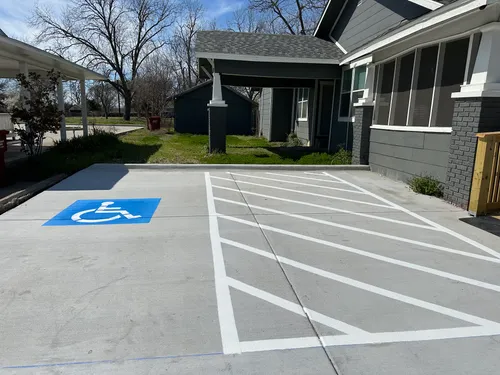
ADA parking space striping is one of the most regulated aspects. The requirements are precise:
- Quantity: The number of required accessible spaces depends on the lot's total capacity. For example, lots with 1-25 total spaces must have at least one accessible space, while lots with 51-75 need three.
- Dimensions: Each accessible space must be at least 96 inches wide. It must be paired with a 60-inch wide access aisle, marked with diagonal stripes, to allow for ramp deployment. Van-accessible spaces require a 96-inch wide access aisle 4.
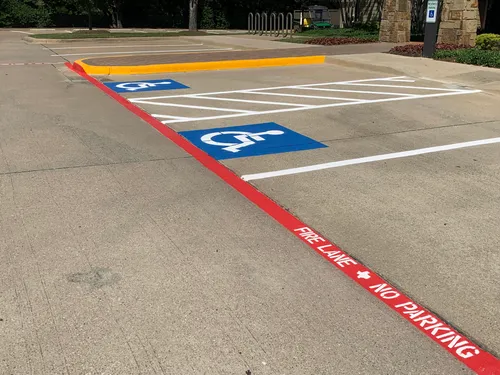
- Markings: The space itself must be outlined in blue, with the International Symbol of Accessibility painted in white within the stall. The adjacent access aisle must also be clearly marked with diagonal blue lines 5.
- Signage: A compliant sign displaying the accessibility symbol must be mounted in front of the space, positioned at least 60 inches above the pavement surface 6.
Fire Lane Markings
Fire lane striping is governed by strict city and county codes to ensure emergency vehicle access is never blocked.
- Curb/Striping Color: Fire lanes must be delineated with 6-inch wide red traffic paint. This is often applied to the vertical face of the curb.
- Surface Text: The words "NO PARKING FIRE LANE" must be stenciled in 4-inch high white letters on the pavement or curb, repeated at intervals not exceeding 25 feet.
- Signage: In addition to pavement markings, reflective "NO PARKING FIRE LANE" signs (12"x18") must be installed. These signs must be mounted approximately 6 feet 6 inches above grade and spaced no more than 50 feet apart throughout the fire lane.
Other Essential Pavement Markings
A complete striping project includes more than just parking stalls.
- Crosswalks: Clearly marked crosswalks, typically with solid white parallel lines or high-visibility continental stripes, are essential for pedestrian safety.
- Directional Arrows & Symbols: One-way arrows, stop bars, speed bumps markings, and "yield" triangles help control the flow and speed of traffic within the lot.
- Loading Zones: These areas must be clearly marked and connected to the building via an accessible route.
Find the perfect parking lot striping companies for your needs
Get personalized recommendations and expert advice
The Professional Striping Process
Engaging a professional service ensures the job is done correctly, efficiently, and in compliance with all codes. A typical project follows these steps:
- Consultation and Site Assessment: A contractor will visit your property to assess the current condition of the asphalt, measure the lot, review the existing layout, and discuss your needs and any compliance concerns.
- Layout Planning and Staking: Before any paint is applied, the new stall and line layout is planned. Professionals use chalk lines or stakes to map out the entire design, ensuring optimal space utilization and compliance with dimension requirements.
- Surface Preparation: The existing pavement must be clean and dry. This often involves power sweeping to remove dirt, oil, gravel, and old, flaking paint. Proper preparation is key to paint adhesion and longevity.
- Paint Application: Using professional airless or aerosol striping machines, contractors apply high-quality, fast-drying traffic paint. They use stencils for symbols like the accessibility icon and fire lane text. For longevity, some contractors may offer thermoplastic or preformed tape options, though paint is most common for maintenance work.
- Curing and Re-Opening: The paint needs a short period to cure before vehicles can drive over it. A professional will advise on the safe timeline to re-open the lot, often just 30-60 minutes for water-based paints under good conditions.
Cost Considerations for Parking Lot Marking in Denton
Costs can vary based on the size of your lot, the complexity of the layout, the amount of surface preparation needed, and the type of paint used. Based on local service data, here are some general benchmarks:
- Restriping Standard Stalls: The cost to repaint a standard parking space can range from approximately $10 to $30 per space.
- ADA Space Repainting: Refreshing an accessible stall, including the blue outline and accessibility symbol, may cost between $100 and $200 per stall due to the additional detail work.
- Fire Lane Repainting: Repainting fire lane curbs and stenciling the required text typically costs between $5 and $10 per linear foot 7. For a typical commercial property maintenance project involving the restriping of all spaces and refreshing key compliance areas, total costs often range from $1,500 to $5,000 or more, depending on the total number of spaces and linear feet of fire lane 8.
Maintaining Your Striping Investment
Parking lot markings degrade over time due to traffic, UV exposure, and weather. To maintain safety and compliance, a proactive maintenance plan is recommended.
- Regular Inspection: Walk your lot seasonally. Look for fading paint, cracked symbols, and worn curb markings.
- Annual Refresh: For high-traffic lots, an annual touch-up of high-wear areas (like stop bars and arrows) can keep the lot looking sharp.
- Full Restriping Cycle: Depending on traffic volume and paint quality, a full parking lot restriping is typically needed every 18 to 24 months to ensure lines remain visible and compliant.
- Prompt Repair: Address specific damage immediately, such as re-stenciling a faded ADA symbol or repainting a section of fire lane after asphalt repair.
Choosing a Local Striping Provider
When selecting a contractor for your pavement marking needs in Denton, consider the following:
- Local Knowledge: Ensure they are familiar with the specific requirements of the City of Denton Transportation Criteria Manual and Denton County fire lane specifications.
- Proof of Compliance: Ask for examples of past work, specifically regarding ADA and fire lane projects.
- Insurance and Licensing: Verify the contractor carries adequate liability insurance and any required state or local business licenses.
- Detailed Quote: A professional quote should break down costs by activity (e.g., surface prep, standard striping, ADA symbols, fire lane work) and specify the type of materials to be used.
Frequently asked questions
Sources
Footnotes
-
FIRE ACCESS ROAD/FIRE LANE LAYOUT PLAN - https://www.dentoncounty.gov/DocumentCenter/View/403/Fire-Access-Road-and-Fire-Lane-Layout-Plan-PDF ↩
-
City of Denton - https://www.cityofdenton.com/DocumentCenter/View/4426/Transportation-Criteria-Manual-PDF ↩
-
Parking Guidelines | Denton, TX - https://www.cityofdenton.com/311/Parking-Guidelines ↩
-
Chapter 1: Application and Administration - https://www.tdlr.texas.gov/ab/2012TAS/2012tasChap5.pdf ↩
-
ADA Compliance Guide for Parking Lot Line Striping - https://www.pavementsolutions.org/ada-compliance-guide-for-parking-lot-line-striping/ ↩
-
Texas ADA Parking Lot Compliance Checklist - https://www.northtexaslinestriping.com/blog/texas-ada-parking-lot-compliance ↩
-
Fire Lane Striping & Signage Texas | Safety Compliance - https://lineupparkinglotstriping.com/fire-lane-striping-and-signage/ ↩
-
Parking Lot Striping and ADA Compliance in Austin - https://integritypavingtexas.com/parking-lot-striping-ada-compliance-austin/ ↩