Find the Best Parking Lot Striping Companies for Your Business
No obligation • Fast responses • Nationwide coverage
Why you can trust Tidy Parking
Tidy Parking is a leading U.S. source for parking lot maintenance services, including striping, sealcoating, sweeping, paving, resurfacing, and repairs. Our content is created independently, and providers cannot pay to influence ratings or recommendations.
Search providers near you
Top Parking Lot Striping Companies in Vancouver, Washington Ranked
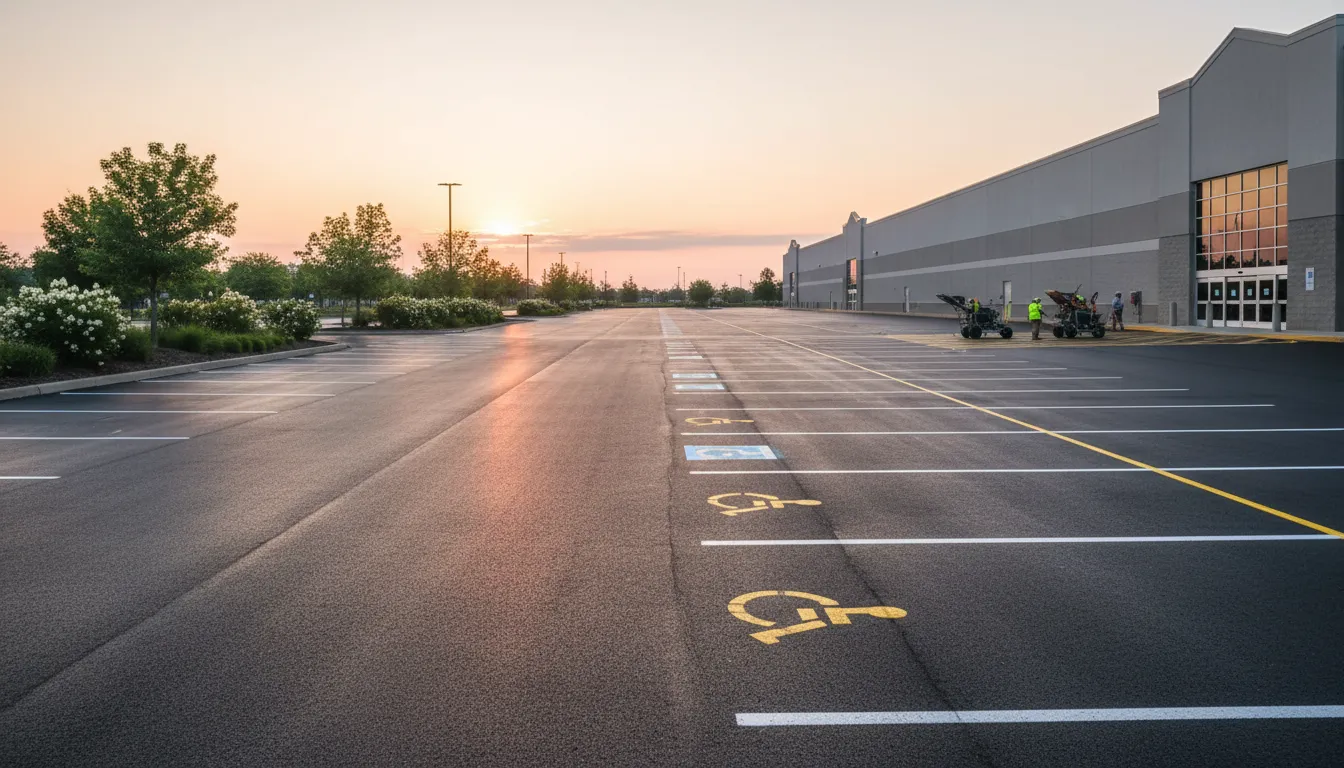
A clearly marked parking lot is essential for safety, efficiency, and legal compliance for any business or property in Vancouver. Professional parking lot striping involves applying precise pavement markings to define stalls, directional arrows, crosswalks, and other critical zones. This service matters because it directly impacts customer experience, reduces liability, and ensures adherence to strict local and federal regulations, including the Americans with Disabilities Act (ADA) and Vancouver Fire Department standards. This guide will help you understand the specific requirements and processes for line striping in Vancouver, empowering you to maintain a safe, functional, and compliant property.
Black Diamond Sealcoating
940 NW Dunbar Ave #100, Troutdale, OR 97060
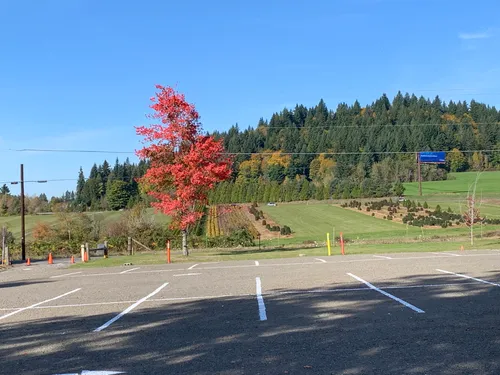
Black Diamond Sealcoating is a parking lot sealcoating, paving, striping, sweeping, and repair company serving Portland, OR, and the surrounding metro area. Their services include sealcoating to protect paved surfaces, crack sealing, parking lot striping with ADA and specialty stenciling, lot sweeping, and asphalt paving for commercial and residential properties. They cover a broad area including Troutdale, Gresham, Sandy, Vancouver, and extend to the Columbia River Gorge, Willamette Valley, and south to Salem. Black Diamond is fully licensed, bonded, and insured, offering expertise in maintaining and extending the life of asphalt surfaces.
360 Paving of Washington
11410 NE 72nd Ave, Vancouver, WA 98686
360 Paving of Washington is a paving contractor serving Portland, OR, specializing in commercial and residential asphalt services. They handle projects of all sizes, including parking lot striping, sealcoating, paving, patchwork repairs, and installation of speed bumps and curbs. With over three generations of experience, the company offers personalized solutions and 1-year workmanship warranties on their work. Their team is skilled in asphalt repair and paving, ensuring durable and low-maintenance surfaces for driveways and parking lots.
William Stanley & Sons Paving
5933 NE Win Sivers Dr #205, Portland, OR 97220
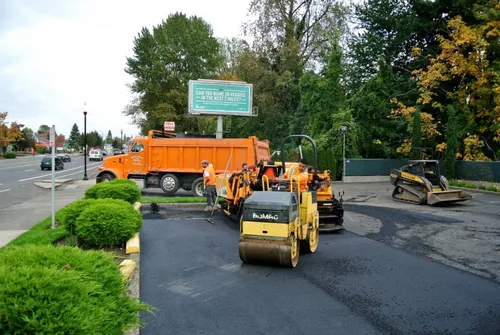
William Stanley & Sons Paving is a third-generation, family-owned paving company serving Portland, OR, and the surrounding metro area. With over 30 years of experience, they provide residential and commercial paving services including driveway installations, parking lot paving, sealcoating, striping, grading, crack sealing, and asphalt resurfacing. Their expertise extends to ADA-compliant parking striping and eco-friendly permeable asphalt solutions. The company emphasizes quality craftsmanship and local knowledge, working year-round to meet diverse paving needs.
Sams Sealcoat and Striping LLC
806 NW 22nd St, Battle Ground, WA 98604
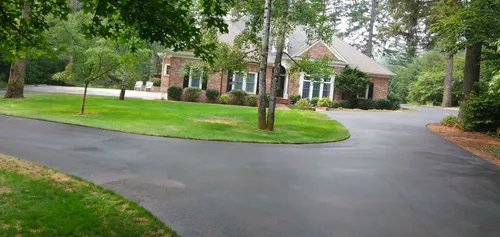
Sams Sealcoat and Striping LLC provides parking lot striping and sealcoating services in Vancouver, WA. They help maintain asphalt surfaces by applying sealcoat to protect against sun, rain, and traffic damage. The company also offers parking lot striping to improve traffic flow, maximize parking spaces, and ensure compliance with accessibility standards. Additionally, they provide pressure washing to remove moss, algae, and grime common in the Pacific Northwest, helping to preserve property appearance and surface integrity.
Affordable Asphalt Maintenance, LLC
13721 SE Mountain Crest Dr, Happy Valley, OR 97086
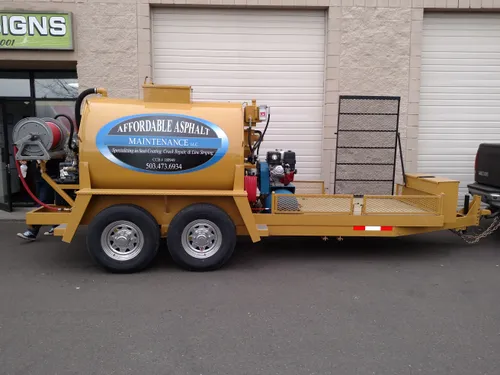
Affordable Asphalt Maintenance, LLC is a parking lot maintenance company based in Portland, OR, serving the Portland metro area since 2008. They specialize in sealcoating, parking lot striping, sweeping, and repair services. Sealcoating involves applying an asphalt-based emulsion to protect and extend the life of asphalt surfaces by creating a barrier against salts, chemicals, and water damage. Their services also include crack sealing, driveway and parking lot cleaning, line striping, and pressure washing. The company uses state-of-the-art equipment to ensure quality results and has experience working across many cities in the greater Portland area.
Why Professional Pavement Markings Are Critical
Beyond simple aesthetics, a well-striped parking lot serves as a critical traffic control system on private property. Faded, incorrect, or non-existent markings can lead to confusion, traffic congestion, and an increased risk of vehicle collisions or pedestrian accidents. For business owners, this translates to potential liability issues and a negative first impression for customers. In Vancouver, the stakes are even higher due to specific city ordinances and fire codes that mandate exact specifications for things like fire lanes and accessible parking. Properly executed lot striping is not a suggestion; it's a fundamental aspect of responsible property management and risk mitigation.
Enhancing Safety and Traffic Flow
The primary function of pavement markings is to create order. Clear lines guide drivers, delineate parking spaces, and establish safe pathways for pedestrians. Key elements include:
- Stall Markings: White lines define individual parking spaces, optimizing space usage and preventing overcrowding.
- Directional Arrows: These are crucial for one-way aisles and directing the flow of traffic to exits and entrances, reducing chaotic movement.
- Stop Bars and Yield Markings: Applied at intersections within the lot, these markings reinforce right-of-way rules.
- Speed Bump Markings: Highlighting speed control devices with alternating white and black stripes increases their visibility.
A logical layout with bright, fresh markings minimizes driver hesitation and conflict points, creating a safer environment for everyone.
Navigating Vancouver's Specific Striping Regulations
Vancouver, Washington, has adopted clear standards that go beyond basic line painting. Property owners and contractors must be aware of these local specifications to avoid fines and ensure public safety.
ADA Accessible Parking Compliance
The Americans with Disabilities Act (ADA) sets federal requirements, which are enforced locally. Non-compliance can result in significant penalties. Key rules for accessible parking spaces in Vancouver include:
- Designation: Spaces must be marked with the International Symbol of Accessibility (ISA) on the pavement. Crucially, a vertical sign with the ISA must also be installed, even if the pavement is marked1.
- Sign Specifications: The required blue-and-white sign must be mounted at least 60 inches high to the bottom of the sign.
- Location: Accessible spaces must be located on the shortest accessible route from the parking area to the accessible building entrance.
- Access Aisles: Each accessible space must have an adjacent access aisle. Standard accessible spaces require a 60-inch-wide aisle. Van-accessible spaces require a 96-inch-wide aisle2. These aisles must be marked with diagonal hatch lines and are for ramp deployment only-never for parking.
- Quantity: The required number of accessible spaces is based on the total number of spaces in the lot. For lots with over 500 spaces, a minimum of 2% must be accessible.
Fire Lane Marking Requirements
The Vancouver Fire Marshal has precise standards for designating fire lanes, which are essential for emergency vehicle access. The details are outlined in Standard F503-B:
- Curb Painting: Where a fire lane is bordered by a curb, the top and the side of the curb facing the lane must be painted red.
- Stenciling: The words "NO PARKING FIRE LANE" must be stenciled on the curb in 4-inch white letters. This lettering must be repeated every 20 feet on center and at every change in direction.
- Width-Based Rules: For fire lanes not bordered by curbs, signage is required. Specific rules apply for painting red curbs based on lane width: if the lane is less than 28 feet wide, both curbs must be painted red; if it's between 28 and 36 feet wide, only one side needs red paint3.
Crosswalk and Loading Zone Standards
The City of Vancouver has specific policies for pedestrian and loading areas4 5:
- Crosswalks: For new installations or updates, the city's policy favors high-visibility "continental" crosswalk markings. These consist of thick, solid white longitudinal bars that are much more visible to drivers than traditional two parallel lines.
- Loading Zones: These areas must be designated with appropriate signage. Curb markings for loading zones are typically yellow or white, depending on whether they are for passenger or commercial loading, to ensure clear access is maintained.
Find the perfect parking lot striping companies for your needs
Get personalized recommendations and expert advice
The Professional Striping Process: What to Expect
Understanding the process can help you plan and communicate effectively with a service provider.
- Site Assessment & Planning: A reputable contractor will first evaluate your lot's condition, size, and current layout. They will review local code requirements (ADA, fire lane) and discuss your needs. A detailed plan and quote are developed at this stage.
- Surface Preparation: For a long-lasting result, the pavement must be clean and dry. This often involves power sweeping to remove dirt, debris, and loose gravel. Any significant cracks or potholes should be repaired before striping, as markings over damaged asphalt will quickly fail.
- Layout & Measurement: Using precise measuring tools, the crew will lay out the entire parking lot design with chalk lines or a chalk box. This step ensures all stalls are the correct size, aisles are properly aligned, and all regulatory elements (like ADA stalls and access aisles) are placed accurately.
- Application: Professional contractors use specialized airless or air-assisted striping machines to apply high-quality, fast-drying traffic paint or thermoplastic. Stencils are used for symbols like the ISA, handicap logos, and fire lane lettering.
- Curing & Reopening: The paint or thermoplastic needs time to cure before vehicles can drive over it. The contractor will provide guidance on drying times based on the material used and weather conditions.
Understanding Costs for Parking Lot Line Striping in Vancouver
Costs for parking lot marking can vary widely based on the scope of work, pavement condition, and specific regulatory requirements. Below are general price ranges, but always request a detailed, site-specific quote6 7 8.
- Standard Stall Re-Striping: $5 to $15 per stall. This is the base cost for re-marking standard white lines for a parking space.
- ADA Accessible Stall Re-Striping: $150 to $300 per stall. This higher cost accounts for the blue paint, the ISA symbol stencil, marking the required access aisle with diagonal hatch lines, and often includes verification of compliance.
- Fire Lane Marking: $2 to $5 per linear foot. This covers painting the red curb and applying the required "NO PARKING FIRE LANE" white stencil lettering.
- Minimum Mobilization Fee: Many contractors have a $500 to $1,000 minimum project fee to cover travel, setup, and equipment costs for smaller jobs.
Important Note: These costs are highly dependent on the condition of the existing pavement and the total size of the job. A lot in poor condition that requires extensive cleaning or layout correction will cost more. A large project with hundreds of stalls will typically have a lower per-unit cost due to efficiencies of scale.
Maintaining Your Parking Lot Markings
Pavement markings degrade over time due to traffic wear, UV exposure, and weather. To maintain safety and compliance, a regular maintenance schedule is recommended.
- Re-Striping Frequency: Most parking lots require re-striping every 12 to 24 months, depending on traffic volume and paint quality. Thermoplastic markings last significantly longer (3-5 years) but have a higher upfront cost.
- Regular Inspection: Periodically walk your lot to check for fading, especially before winter, when rain and snow can make faint lines invisible. Pay special attention to ADA and fire lane markings.
- Prompt Repairs: If specific areas (like a high-traffic entrance or an ADA stall) fade faster than the rest of the lot, consider spot repairs to maintain continuous compliance and safety.
Investing in professional parking lot striping and adhering to Vancouver's specific codes is a smart business decision. It protects your investment, safeguards your customers and visitors, and ensures you meet all legal obligations.