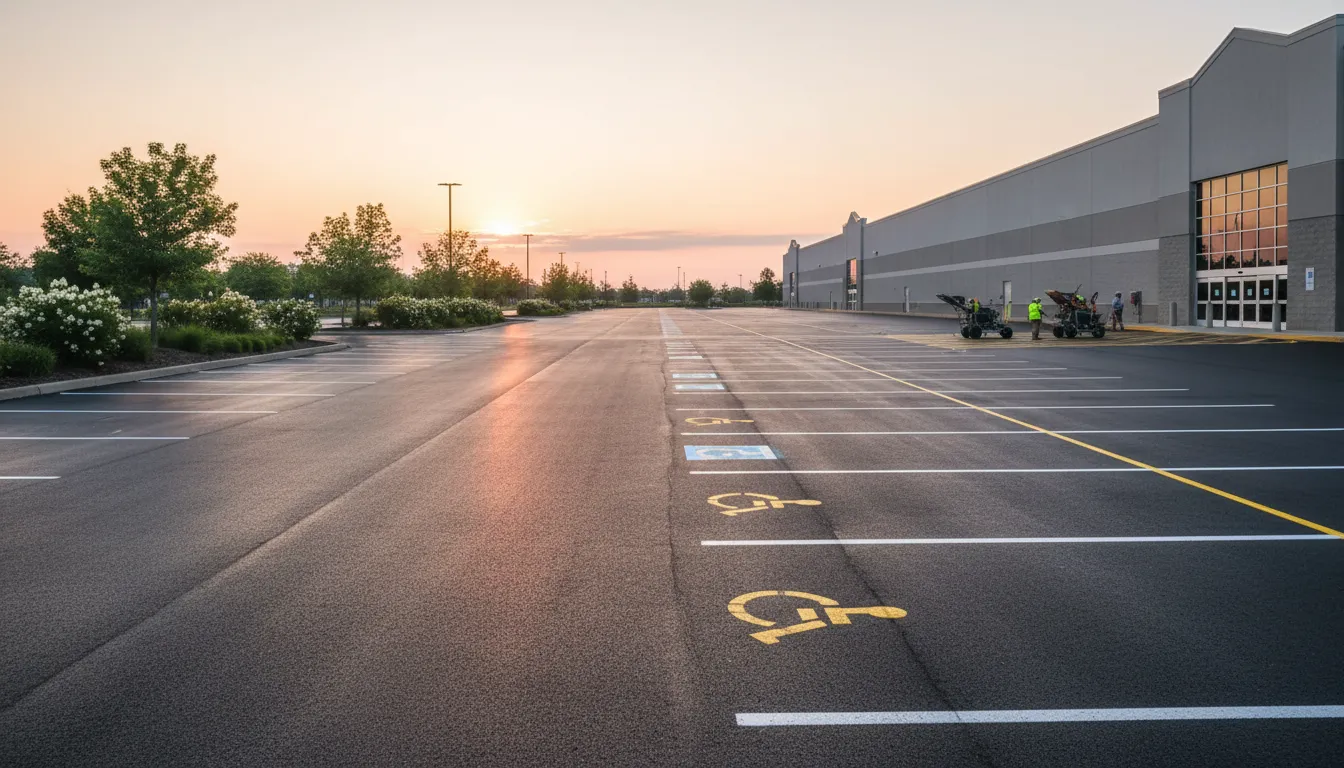
Find the Best Parking Lot Striping Companies for Your Business
No obligation • Fast responses • Nationwide coverage
Why you can trust Tidy Parking
Tidy Parking is a leading U.S. source for parking lot maintenance services, including striping, sealcoating, sweeping, paving, resurfacing, and repairs. Our content is created independently, and providers cannot pay to influence ratings or recommendations.
Search providers near you
Top Parking Lot Striping Companies in Pittsburgh, Pennsylvania Ranked
A well-marked parking lot is essential for safety, efficiency, and legal compliance for any Pittsburgh business or property. Parking lot striping involves applying clear, durable lines, symbols, and stencils to define spaces, direct traffic, and meet strict accessibility codes. In a city with harsh winters and heavy salting, these markings degrade faster than you might think. This guide explains the local requirements, best practices, and costs for line painting in Pittsburgh, helping you understand what to look for when connecting with experienced local professionals.
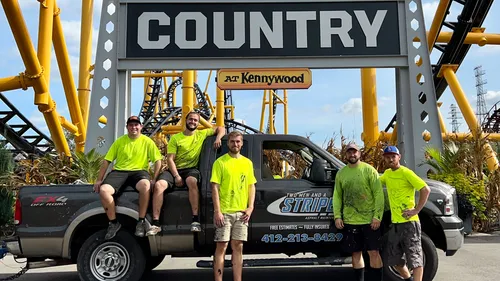
Two Men And A Striper - Parking Lot Sealcoating And Line Striping
Pittsburgh, PA
Two Men And A Striper - Parking Lot Sealcoating And Line Striping provides parking lot maintenance services in Pittsburgh, PA. They offer sealcoating, asphalt crack sealing, asphalt patching, and line striping and painting. Their work is visible throughout Pittsburgh and nearby areas such as North Hills, Shaler Township, Cranberry Township, Sewickley, Moon Township, Fox Chapel, and Monroeville. The company focuses on keeping clients informed about the latest industry standards and parking lot maintenance practices.
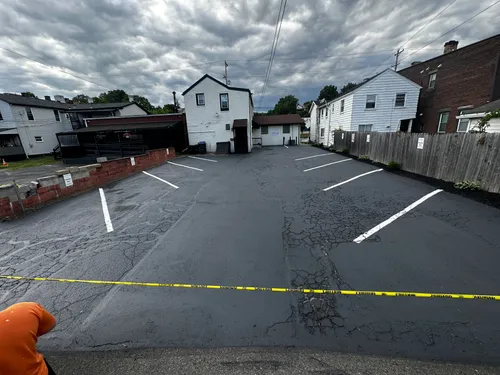
JMD Sealcoating LLC
550 Union Ave, Pittsburgh, PA 15229
JMD Sealcoating LLC is a veteran-owned company based in Pittsburgh, PA, serving a 30-mile radius around the city. They provide parking lot maintenance services including sealcoating, line stripping, crack sealing, and pothole repair for both commercial and residential clients. The company focuses on using quality materials and equipment to ensure durable workmanship. Their local presence and veteran ownership are notable aspects of their business identity.
G-FORCE Parking Lot Striping of Pittsburgh
Pittsburgh, PA
G-FORCE Parking Lot Striping of Pittsburgh provides parking lot striping, sealcoating, and repair services in Pittsburgh, PA, and surrounding areas including parts of Pennsylvania and West Virginia. The company offers a wide range of services such as line striping, thermoplastic markings, warehouse floor markings, ADA-compliant parking layouts, asphalt sealcoating, bollard installation, crack sealing, fire lane striping, pothole repair, and athletic field markings. They use state-of-the-art equipment and premium traffic paints to ensure precise and durable results. The business is veteran-owned and emphasizes quality, safety, and customer satisfaction in all projects.
Pittsburgh Line Striping
1497 Celtic St, Pittsburgh, PA 15210
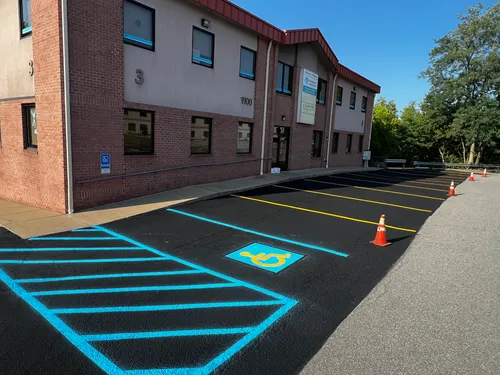
Pittsburgh Line Striping provides a range of asphalt and pavement services in Pittsburgh, PA. They specialize in parking lot striping, sealcoating, pavement markings, and power washing for various surfaces including parking lots, roadways, sports courts, airport runways, and residential driveways. The company handles projects of different sizes and aims to complete work efficiently and on schedule, weather permitting.
Adams Commercial Property Maintenance Service
Pittsburgh, PA
Adams Commercial Property Maintenance Service has been providing commercial property maintenance in Pittsburgh, PA, and Western Pennsylvania since 1989. They offer a wide range of services including parking lot striping, sealcoating, sweeping, paving, resurfacing, and repair. Their comprehensive approach allows property owners and managers to rely on one provider for various maintenance needs, helping to maintain attractive and well-kept commercial properties. The company serves diverse property types such as shopping centers, office buildings, industrial facilities, and healthcare institutions.
Why Proper Striping is Critical in Pittsburgh
Beyond simple organization, effective pavement marking serves several vital functions. It maximizes the usable space in your lot, guides traffic flow to prevent accidents, and ensures compliance with federal, state, and local laws. In Pittsburgh, the combination of freeze-thaw cycles, snow plowing, and corrosive road salt can cause paint to fade and crack rapidly. Faded lines are not just an eyesore; they create confusion, increase liability, and can lead to significant fines for non-compliance, especially with accessibility standards. Regular maintenance through re-striping is a proactive investment in safety and risk management.
Key Regulations for Pittsburgh Parking Lots
Navigating the rules for line painting can be complex. Pittsburgh properties must adhere to a layered set of regulations.
ADA and Pennsylvania Accessible Parking Standards
The Americans with Disabilities Act (ADA) and Pennsylvania state law (including PA Act 132) set forth precise requirements for accessible spaces 1.
- Space Dimensions: A standard car-accessible space must be at least 96 inches (8 feet) wide. The adjacent access aisle must be at least 60 inches (5 feet) wide and must be marked with diagonal or hatched lines to keep it clear 2.
- Van-Accessible Spaces: These require more room. Options include a 132-inch (11-foot) wide space with a 60-inch aisle, or a 96-inch wide space with a 96-inch wide aisle. Van-accessible spaces also require a minimum vertical clearance of 98 inches 3.
- Markings and Signage: The International Symbol of Access (ISA) must be painted on the pavement within the space. Crucially, a vertical sign with the ISA must also be posted. Pennsylvania mandates specific wording on this sign, such as "Handicapped Parking-Permit Required". The sign must be mounted with the bottom at least 60 inches above the pavement 4.
- Location: Accessible spaces must be located on the shortest accessible route to the building entrance, with a surface slope not exceeding 1:48 (2.08%) 5 6.
Fire Lane Marking Requirements
Clearly marked fire lanes are non-negotiable for emergency access. Pittsburgh follows strict guidelines for their designation.
- Color and Markings: The curb adjacent to a fire lane must be painted red, and the pavement itself must also be marked with red traffic paint.
- Lettering: The words "NO PARKING - FIRE LANE" must be stenciled in white or yellow on the pavement at intervals no greater than 50 feet 7.
- Width and Clearance: Fire lanes must be a minimum of 20 feet wide. A clearance of at least 15 feet must be maintained on each side of any fire hydrant 8.
- Signage: Posted signs must be at least 12 by 18 inches with red lettering on a white background 9.
Loading Zones and Special Areas
For commercial properties, loading zones are essential. In Pittsburgh, authorized loading zones are for short-term use (typically a maximum of 30 minutes) and must be clearly painted, often with white or yellow curb markings, and maintained by the property owner 10. The city has also implemented innovative "Purple Zones" in certain downtown areas, which provide 15 minutes of free parking for delivery vehicles-these are designated by specific purple signage.
Crosswalks and Traffic Control
Within private parking lots, marked crosswalks and stop lines significantly enhance pedestrian safety. For high-traffic areas, Pittsburgh guidelines recommend high-visibility striping patterns, such as transverse lines (12-24 inches wide) or longitudinal lines 11. A stop line should be painted 4 feet in advance of a crosswalk to ensure vehicles come to a complete stop before the pedestrian path 12.
Find the perfect parking lot striping companies for your needs
Get personalized recommendations and expert advice
The Pittsburgh Climate: Impact on Striping Longevity
Western Pennsylvania's weather is a primary factor in parking lot maintenance schedules. The constant winter cycle of freezing, thawing, and the application of de-icing salts is highly abrasive and corrosive to pavement paint 13. This environmental stress means that even high-quality, thermoplastic striping will degrade faster here than in milder climates. For standard commercial lots in Pittsburgh, industry experts recommend a re-striping schedule of every 18 to 24 months 13. High-traffic lots, like those for retail stores or busy offices, may need attention every 12 to 18 months to maintain clarity and compliance. Proactive maintenance based on this timeline is more cost-effective than waiting for lines to become illegible or facing violation notices.
Understanding Striping Costs in Pittsburgh
The cost for line painting services can vary based on the size of your lot, the complexity of the layout, and the specific markings required. The figures below are average estimates for the Pittsburgh area 14.
- Standard Parking Stall: Stripping a single standard stall typically costs between $2 and $5.
- ADA-Compliant Space: Creating a fully compliant accessible space, including painting the space, stenciling the ISA, and ensuring proper access aisle markings, ranges from $100 to $300 per space. This cost often does not include the required vertical sign, which is a separate installation.
- Fire Lane Marking: Painting a red curb and stenciling "NO PARKING - FIRE LANE" lettering averages $2 to $4 per linear foot.
- Full Lot Re-striping: For a complete refresh of a standard 100-space lot, total costs generally fall between $1,500 and $3,000. Lots that require extensive layout changes, multiple coats of paint due to severe fading, or numerous special markings (like crosswalks or directional arrows) will be on the higher end of the scale.
It's important to view these costs alongside the potential financial risk of non-compliance. Penalties for ADA violations in Pennsylvania can be severe, with fines reaching up to $75,000 for a first offense 15 16.
Best Practices for a Successful Striping Project
When planning your lot marking project, following these steps will ensure a smooth process and a durable result.
- Conduct a Pre-Work Audit: Before contacting professionals, walk your lot. Note all faded lines, cracked stencils, and areas where drainage or pavement damage might affect new paint. Check the condition and placement of all accessible space signs.
- Verify Local Codes: While professionals should know the rules, it's helpful to understand the basics. Confirm the latest requirements with the City of Pittsburgh's Department of Mobility and Infrastructure (DOMI), especially for loading zones or special district rules 17 18.
- Schedule Strategically: Plan your striping project for dry, mild weather. Paint and thermoplastic require specific temperature and humidity conditions to cure properly. Spring and early fall are often ideal in Pittsburgh.
- Prepare the Surface: The most critical step for paint adhesion is a clean surface. Professional contractors will power wash the area to remove dirt, oil, salt residue, and loose debris. Any significant cracks or potholes should be repaired before lines are applied.
- Choose the Right Materials: Discuss material options with your service provider. While paint is common, thermoplastic or pre-formed tape can offer longer longevity in high-wear areas, which may be a worthwhile investment given Pittsburgh's climate 19 20.
- Plan for Traffic Control: The lot will need to be closed or sections cordoned off while the paint dries. A clear plan for redirecting tenants, customers, or employees is essential for safety and minimal disruption.
Frequently asked questions
Sources
Footnotes
-
Americans with Disabilities Act (ADA) - PA Lottery - https://www.palottery.pa.gov/about-pa-lottery/americans-with-disabilities-act/pa-lottery-retailers-accessibility-standards.aspx ↩
-
Accessible Parking Spaces - ADA.gov - https://www.ada.gov/topics/parking/ ↩
-
Accessible Parking - ADA National Network - https://adata.org/factsheet/parking ↩
-
ADA Parking Striping Services in Pittsburgh, PA | G-FORCE - https://www.gogforce.com/pittsburgh-pa/service/ada-parking-striping-services/ ↩
-
How to Stripe ADA-Compliant Parking Lots - https://theasphaltpro.com/wp-content/uploads/2020/09/How-to-Stripe-ADA-Parking-Lots-V2.pdf ↩
-
ADA Compliance Brief: Restriping Parking Spaces - https://archive.ada.gov/restriping_parking/restriping2015.pdf ↩
-
No Parking Fire Lane: Letter Heights, Placements & Proven Paint ... - https://1800stencil.com/blogs/default-blog/no-parking-fire-lane-letter-heights-placements-proven-paint-systems ↩
-
Part 7: Fire Lanes - Borough of Sharpsburg, PA - eCode360 - https://ecode360.com/43457007 ↩
-
Fire Lane Marking Requirements Pittsburgh PA - https://restripeit.com/blog/fire-lane-marking-requirements-pittsburgh ↩
-
CHAPTER 541: General Parking Regulations - City of ... - https://ecode360.com/45463855 ↩
-
PennDOT LTAP - technical - https://gis.penndot.gov/BPR_PDF_FILES/Documents/LTAP/TechSheets/TS_193.pdf ↩
-
Chapter 3B. Pavement and Curb Markings - MUTCD - https://mutcd.fhwa.dot.gov/htm/2003r1/part3/part3b2.htm ↩
-
How Often to Re-Stripe a Parking Lot - https://restripeit.com/blog/how-often-restripe-parking-lot ↩ ↩2
-
Commercial Parking Lot Striping: Costs, Standards + Pro Tips - https://www.getonecrew.com/post/commercial-parking-lot-striping ↩
-
ADA Parking Lot Requirements PA - https://restripeit.com/blog/ada-parking-lot-requirements-pennsylvania ↩
-
Parking Lot Restriping: A Comprehensive Guide - https://www.seton.com/when-to-restripe-a-parking-lot ↩
-
PURPLE CURB ZONE GUIDE - https://downtownpittsburgh.com/wp-content/uploads/2024/02/PurpleZoneSheetFinal.pdf ↩
-
APPLICATION FOR LOADING ZONE - PittsburghPA.gov - https://www.pittsburghpa.gov/files/assets/city/v/1/domi/documents/policies-and-standards/15550_loading_zone_.pdf ↩
-
Parking Lot Striping Best Practices: Tips For Optimal Visibility And ... - https://wedolines.com/parking-lot-striping-best-practices-tips-for-optimal-visibility-and-safety/ ↩
-
How Line Striping Enhances Parking Lot Safety in Pittsburgh - https://townsendskurskypavingllc.com/how-line-striping-enhances-parking-lot-safety-in-pittsburgh/ ↩