Find the Best Parking Lot Striping Companies for Your Business
No obligation • Fast responses • Nationwide coverage
Why you can trust Tidy Parking
Tidy Parking is a leading U.S. source for parking lot maintenance services, including striping, sealcoating, sweeping, paving, resurfacing, and repairs. Our content is created independently, and providers cannot pay to influence ratings or recommendations.
Search providers near you
Top Parking Lot Striping Companies in New York, New York Ranked
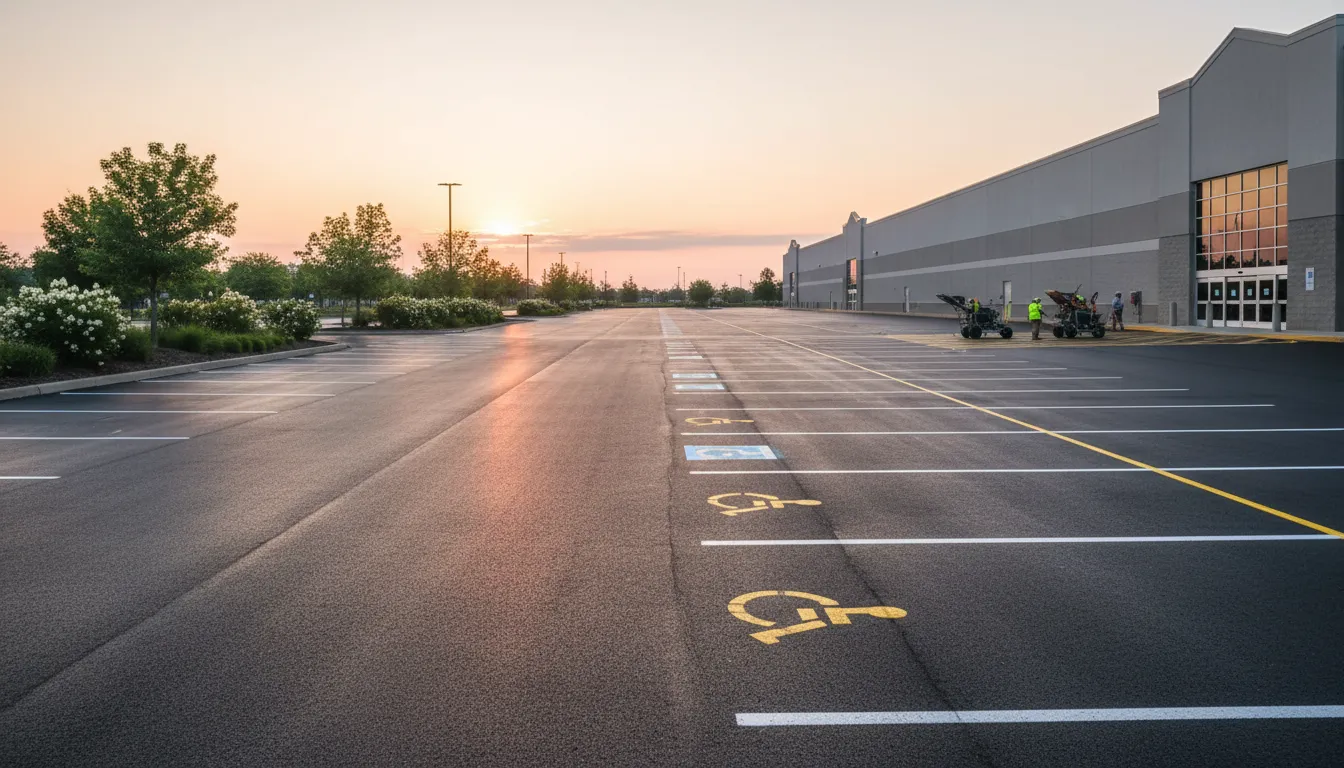
Proper parking lot striping is a critical component of property management, safety, and legal compliance in New York City. It involves the application of clear, durable markings to define parking stalls, traffic flow, and essential safety zones. In a dense, regulated environment like NYC, these pavement markings are not just a suggestion-they are a legal requirement enforced by city, state, and federal authorities. This guide explains the complex regulations, typical costs, and best practices for line marking in the five boroughs, helping you understand what's needed to maintain a safe, functional, and compliant parking facility.
United Blacktop
New York, NY
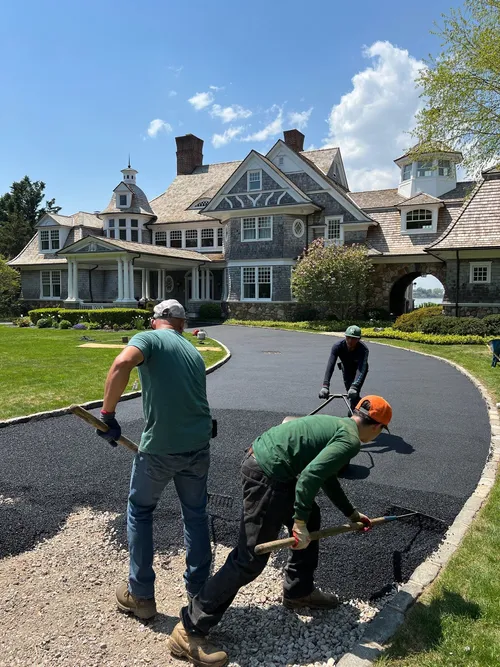
United Blacktop is a family-owned asphalt and paving company serving New York, NY, with over 20 years of industry experience. They provide a range of services including driveway sealcoating, crack filling and repair, sports court resurfacing, asphalt paving, concrete and brick pavers, as well as commercial parking lot maintenance. Their team is known for using premium materials and offering warranties on all workmanship and materials.
Just Paving Inc
60 Dartmouth Ave, Yonkers, NY 10701
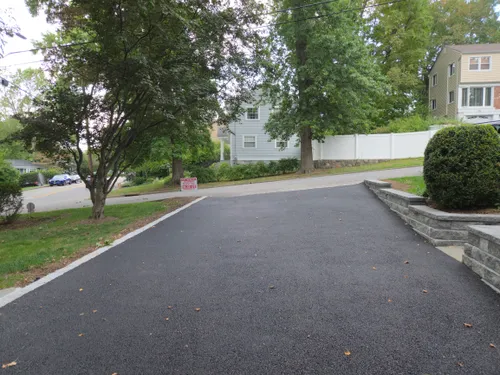
Just Paving Inc is a paving and masonry company based in New York, NY, serving residential and commercial clients in Yonkers and Westchester County. They offer a range of services including driveway paving, parking lot paving, resurfacing, repairs, and lot striping. Their expertise extends to masonry work such as retaining walls, patios, fire pits, and concrete steps. Established in 2000, Just Paving Inc has over two decades of experience delivering durable and visually appealing paving solutions. They focus on quality materials and craftsmanship to enhance property appearance and functionality.
Bonardi Construction Inc
15-19 128th St, College Point, NY 11356
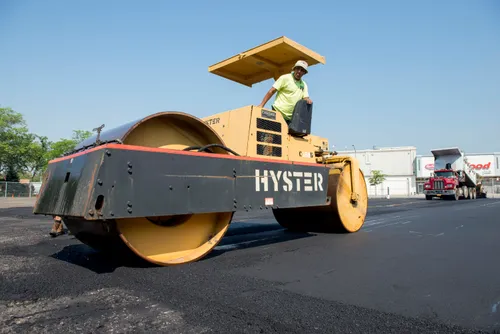
Bonardi Construction Inc is a general contracting company serving Jersey City, NJ, and the greater New York City area. They offer a range of services including parking lot striping, sealcoating, paving, and repair for both commercial and residential properties. Their team has over 30 years of experience and provides specialized capabilities such as asphalt paving and concrete work. Bonardi Construction emphasizes quality craftsmanship and a client-focused approach throughout each project.
MACH PAVING
Yonkers, NY
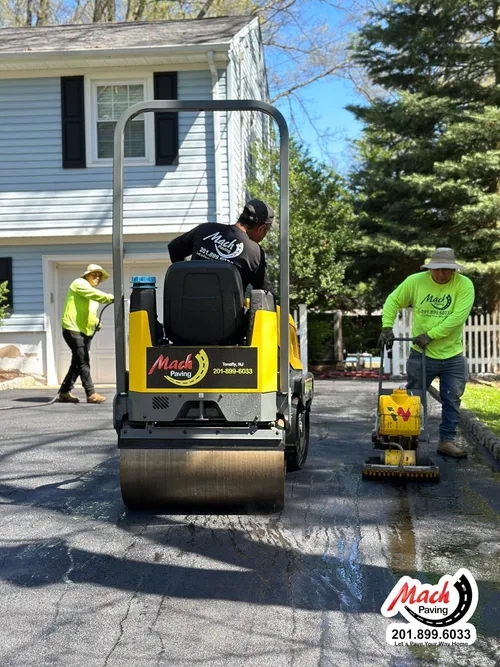
MACH PAVING is a family-owned paving company serving Yonkers, NY, and the surrounding New York and New Jersey areas. With over 20 years of experience, they provide residential and commercial paving services including parking lot paving, resurfacing, striping, seal coating, and custom concrete projects. Their team uses high-quality materials and advanced techniques to deliver durable and visually appealing surfaces. They also offer specialized services such as ADA compliant handicap parking markings and Belgium block installation.
Vali Construction LLC
673 Jerusalem Rd, Scotch Plains, NJ 07076
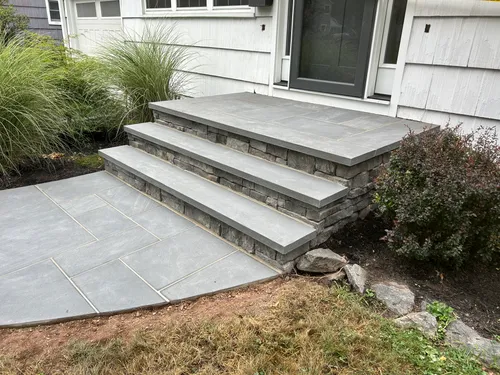
Vali Construction LLC is a paving and masonry company based near New York, NY. They provide a range of services including residential and commercial paving, parking lot striping, sealcoating, and various masonry and hardscaping projects such as patios, walkways, and retaining walls. Their capabilities include asphalt paving for projects of all sizes, from residential driveways to large commercial parking lots and municipal roadways. They also offer site work services like excavation, grading, and concrete flat work for contractors and builders.
Understanding NYC's Regulatory Landscape for Pavement Markings
Parking lot striping in New York City operates under a strict, multi-layered regulatory framework. Property owners and managers must comply with the federal Americans with Disabilities Act (ADA), the New York State Building Code, and the NYC Fire Code, along with local Department of Transportation (DOT) rules. Non-compliance isn't just an inconvenience; it can lead to substantial fines from the NYPD, lawsuits, and increased liability. The primary goal of these regulations is to ensure safe, orderly, and accessible use of parking areas for all drivers and pedestrians.
Key Requirements for Accessible (ADA) Parking Spaces
Creating accessible parking is one of the most regulated aspects of lot layout. The rules are specific and non-negotiable.
- Quantity Required: A minimum of 5% of the total parking spaces in a lot must be designated as accessible 1. Medical facilities face stricter requirements, often needing 10-20% of spaces to be accessible.
- Space Dimensions: Each standard accessible parking space must be at least 8 feet wide. Van-accessible spaces are also 8 feet wide but require additional features 2.
- The Critical Access Aisle: New York State has a special rule that goes beyond federal guidelines: every accessible parking space must be served by an access aisle that is at least 8 feet wide 3. This aisle provides room for wheelchair lifts and ramps.
- Markings and Signage: Access aisles must be marked with diagonal stripes, typically in blue paint, and stenciled with "NO PARKING ANYTIME" 4. Each space must also be identified with a posted sign bearing the International Symbol of Accessibility, mounted so the bottom of the sign is at least 5 feet above the ground.
- Surface Slope: The ground within the space and access aisle must be nearly level, with a maximum slope of 1:48 (2.08%) in all directions to ensure stability for wheelchairs 5.
Fire Lane Markings: A Non-Negotiable Safety Feature
The NYC Fire Code mandates clear access for emergency vehicles. Proper fire lane striping is a major focus of enforcement.
- Regulation: NYC Fire Code 503 establishes requirements for fire lanes, where parking is prohibited at all times to ensure unimpeded emergency access 6.
- Dimensions: Fire lanes must maintain a minimum clear width of 20 feet.
- Markings: These zones must be conspicuously marked. Common methods include painting the curb red or using yellow paint with black lettering. The surface must be stenciled with 4-inch white letters reading "NO PARKING-FIRE LANE" at intervals no greater than every 25 feet 7 8.
- Hydrant Clearance: No parking is permitted within 15 feet of either side of a fire hydrant.
Standards for Loading Zones and Pedestrian Safety
Efficient traffic flow and pedestrian safety are paramount in the city's bustling environment.
- Loading Zones: Designated for active loading and unloading, these areas are crucial for commercial operations. They are often marked with yellow curb paint and "LOADING ONLY" signage. Regulations require these zones to facilitate "expeditious" activity, and vehicles typically need an active permit 9. They are often sized at around 40 feet to accommodate delivery trucks 10.
- Crosswalks and Pedestrian Markings: White lines are used for crosswalks, stop bars, and lane lines. A key safety concept is "daylighting"-maintaining a 20-foot area free of parked vehicles from a crosswalk or intersection to ensure visibility between pedestrians and drivers 11 12. Pedestrians always have the right of way in marked or unmarked crosswalks 13.
Typical Costs for Line Striping and Marking in NYC
Parking lot striping costs in New York City are generally higher than the national average due to elevated labor rates, the density of work sites, and environmental regulations that often require more expensive, low-VOC (volatile organic compound) or water-based paints.
- Restriping (Over Existing Lines): The simplest service, involving repainting faded lines, typically costs between $0.25 and $0.60 per linear foot.
- New Layout or Complete Restriping: This includes designing a new stall layout, painting all lines, and applying necessary stencils. The cost is often calculated per space, ranging from $2.50 to $5.00 per parking space14.
- ADA Compliance Upgrades: Adding or modifying accessible spaces is more costly due to the precise requirements for 8-foot aisles, specialized blue striping, and the installation of compliant signage (which can cost $200-$400 per sign) 15 16.
- Project Example: A complete restriping project for a small lot with 50 spaces, including standard stalls, ADA spaces, and fire lane markings, can easily range from $1,500 to over $3,000 in New York City 17.
Find the perfect parking lot striping companies for your needs
Get personalized recommendations and expert advice
Choosing the Right Paint and Materials
Durability and compliance are key when selecting materials for pavement marking in NYC's climate.
- Paint Types: Water-based acrylic paints are common for their fast drying time and environmental compliance. Thermoplastic is a more durable (and expensive) option, melted onto the pavement for long-lasting lines in high-traffic areas. Epoxy paints offer a balance of durability and cost 18 19.
- Color Codes: Colors are not arbitrary. White is standard for lane lines, crosswalks, and stall markings. Yellow designates caution, no-parking zones (often paired with black text for fire lanes), and loading areas. Blue is reserved exclusively for accessible parking spaces and their adjacent access aisles 20.
- Stencils: Pre-cut stencils made from durable plastic or metal are used for consistent application of symbols like the handicapped logo, "NO PARKING," and directional arrows.
Maintenance and Resurfacing Considerations
Pavement markings degrade over time due to traffic, weather, and snow plowing. A proactive maintenance plan is essential.
- Inspection Schedule: Conduct a formal review of all markings at least twice a year, ideally in spring (after winter damage) and fall. Check for fading, chipping, and regulatory changes.
- Restriping Frequency: Most lots require a full restriping every 12 to 24 months to maintain clarity and compliance. High-traffic areas like entrances, exits, and accessible spaces may need touch-ups more frequently.
- Coordinating with Paving: If you are planning asphalt sealcoating, resurfacing, or paving, line striping must be completely redone afterward. Always budget for marking as a final, essential step in any pavement renovation project.
Consequences of Non-Compliance
Ignoring striping regulations carries significant risk in New York City. The NYPD and NYC DOT actively enforce parking rules, and private individuals can file ADA-related lawsuits.
- Fines: Violations for blocked fire lanes, improper ADA spaces, or parking in loading zones can result in fines ranging from hundreds to over a thousand dollars per incident 21.
- Liability: Poorly marked lots contribute to accidents, slips, and falls. In the event of an incident, non-compliant markings can be used as evidence of negligence, increasing liability for property owners.
- Lawsuits: Lack of ADA-compliant parking is a common source of litigation. Plaintiffs' attorneys frequently survey properties for violations, which can lead to costly legal settlements and mandatory corrective action 22.
A well-marked parking lot is an investment in safety, efficiency, and legal protection. By understanding and adhering to New York City's specific requirements for stall marking, traffic paint, and signage, property managers can create a functional environment that serves all users and avoids costly penalties.
Frequently asked questions
Sources
Footnotes
-
Expert NYC Parking Lot Striping: Essential Facilities ... - https://www.myshyft.com/blog/parking-lot-striping-services-new-york-new-york/ ↩
-
Accessible Parking Spaces | ADA.gov - https://www.ada.gov/topics/parking/ ↩
-
Blog: Accessible Parking Requirements-Not as Clear Cut as You ... - https://northeastada.org/blog/accessible-parking-requirements-not-as-clear-cut-as-you-may-think-part-1 ↩
-
How to Comply with ADA Parking Requirements - Seton - https://www.seton.com/ada-parking-space-requirements ↩
-
The ADA and Parking | The Northeast ADA Center - https://northeastada.org/resource/the-ada-and-parking ↩
-
Chapter 5 Fire Operations Features Section FC 501 General 501.1 ... - https://www.nyc.gov/assets/fdny/downloads/pdf/about/Chapter-05.pdf ↩
-
Cortland, NY - https://www.cortlandny.gov/DocumentCenter/View/138/Fire-Lanes-Regulations-PDF ↩
-
503.4 Fire Lanes - UpCodes - https://up.codes/s/fire-lanes ↩
-
Loading Zones Regulations - NYC Rules - https://rules.cityofnewyork.us/rule/loading-zones-regulations/ ↩
-
Neighborhood Loading Zones (NLZ) - NYC.gov - https://www.nyc.gov/html/dot/downloads/pdf/nlz-mn-bsc-apr2021.pdf ↩
-
Less parking, more daylighting in NYC - https://www.youtube.com/shorts/V1uVHlmlrLA ↩
-
Additional Information | The State of New York - NY.Gov - https://www.ny.gov/pedestrian-safety/additional-information ↩
-
Chapter 7: Parallel Parking - NY DMV - https://dmv.ny.gov/new-york-state-drivers-manual-and-practice-tests/chapter-7-parallel-parking ↩
-
Commercial Parking Lot Striping: Costs, Standards + Pro Tips - https://www.getonecrew.com/post/commercial-parking-lot-striping ↩
-
What Are ADA Parking Signs? Complete Requirements and Standards - https://www.myparkingsign.com/blog/what-are-ada-parking-signs-complete-requirements-and-standards/ ↩
-
N.Y. Comp. Codes R. & Regs. Tit. 8 § 572.3 - Special regulations - https://www.law.cornell.edu/regulations/new-york/8-NYCRR-572.3 ↩
-
Parking Lot Striping in New York | Line Marking Experts - https://www.dppavingny.com/striping/ ↩
-
The Importance of Parking Lot Striping - https://www.ppm.us/proper-praking-lot-striping/ ↩
-
Parking Lot Striping: Everything You Need To Know - https://www.calvacpaving.com/parking-lot-striping-need-to-know/ ↩
-
Parking Lot Markings: Why It's Important That You Understand Them - https://www.semperfistriping.com/post/parking-lot-markings-why-it-s-important-that-you-understand-them ↩
-
NYC DOT - Parking Regulations - https://www.nyc.gov/html/dot/html/motorist/parking-regulations.shtml ↩
-
Manage Parking Lot Traffic Paint, Signage, and Compliance - https://www.enrightasphalt.com/manage-parking-lot-traffic-paint-signage-compliance/ ↩