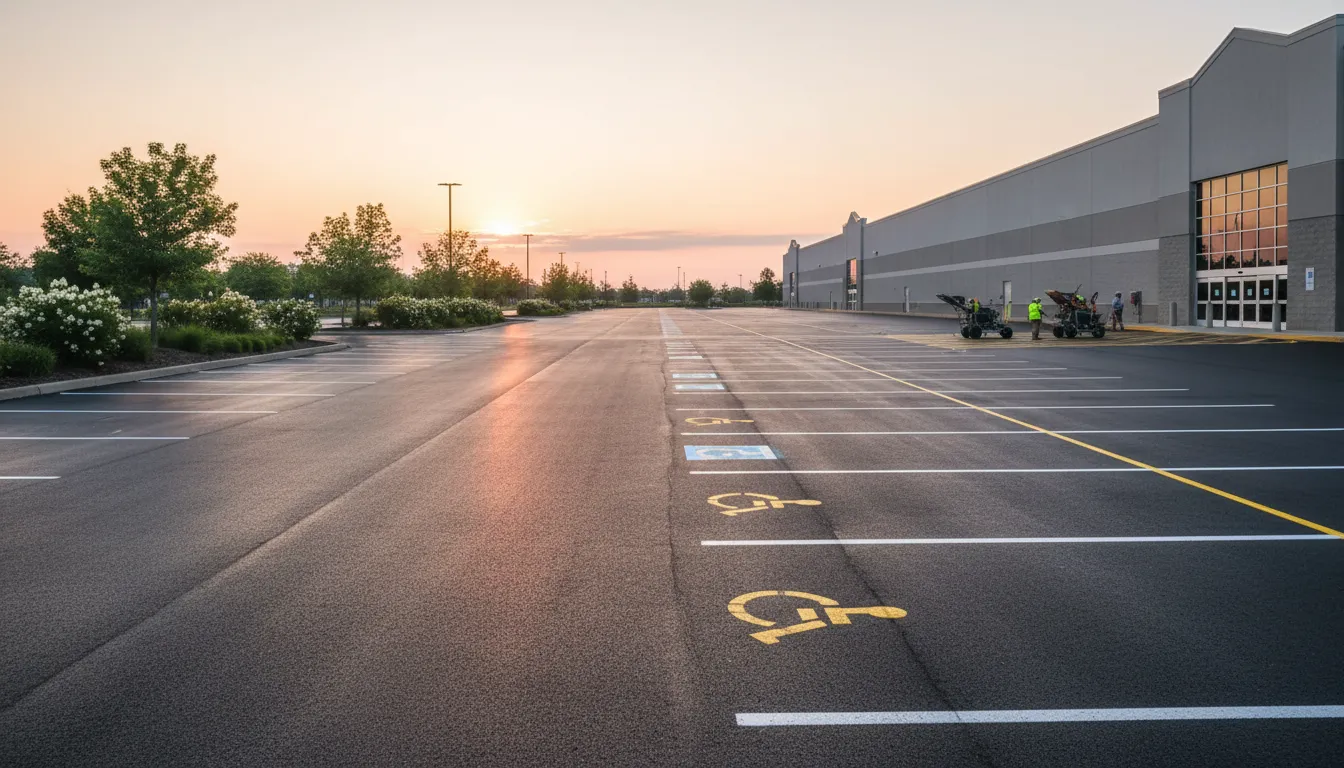
Find the Best Parking Lot Striping Companies for Your Business
No obligation • Fast responses • Nationwide coverage
Why you can trust Tidy Parking
Tidy Parking is a leading U.S. source for parking lot maintenance services, including striping, sealcoating, sweeping, paving, resurfacing, and repairs. Our content is created independently, and providers cannot pay to influence ratings or recommendations.
Search providers near you
Best Parking Lot Striping Companies in New York Ranked
Clear, compliant parking lot striping is a critical component of property management and public safety in New York. Properly marked stalls, accessible spaces, and fire lanes ensure efficient traffic flow, meet legal obligations, and protect your business from liability. This guide explains the specific regulations, standards, and best practices for line striping in the Empire State, helping you understand what's required to maintain a safe and lawful parking facility.
Mid-State Sealcoating
Syracuse, NY
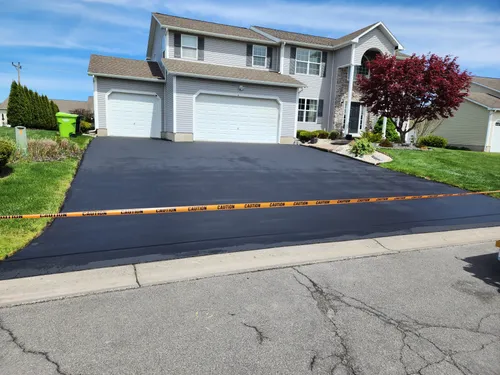
Mid-State Sealcoating is a parking lot and driveway maintenance company based in Syracuse, NY. They offer services including paving, asphalt crack filling and repair, sealcoating, and parking lot striping for commercial properties. Their paving process involves excavation, crusher run and binder application, followed by a top coat of asphalt, with milling services available as needed. They use high-quality commercial grade asphalt materials and apply sealcoating with a specific brush technique to enhance adhesion. The owner personally inspects each job to ensure quality.
United Blacktop
New York, NY
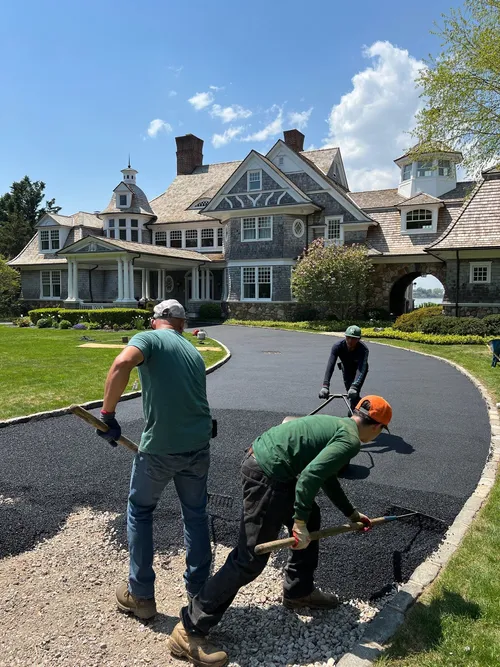
United Blacktop is a family-owned asphalt and paving company serving New York, NY, with over 20 years of industry experience. They provide a range of services including driveway sealcoating, crack filling and repair, sports court resurfacing, asphalt paving, concrete and brick pavers, as well as commercial parking lot maintenance. Their team is known for using premium materials and offering warranties on all workmanship and materials.
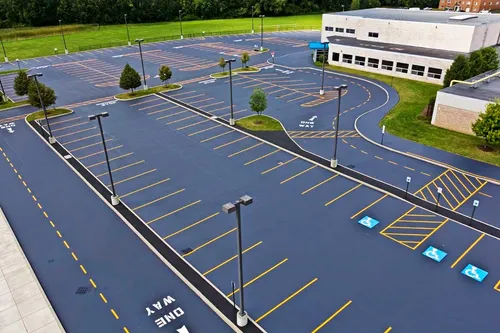
Manel Sealers Inc
65 Weicher St, Rochester, NY 14606
Manel Sealers Inc is a parking lot striping, sealcoating, sweeping, paving, and repair company based in Rochester, NY. Serving Rochester and Monroe County, they offer a range of asphalt services including parking lot sealcoating, crack repair, striping, cleaning, and asphalt milling and patching. Established in 1952, the company has three generations of experience and uses state-of-the-art equipment and materials to deliver their services. Manel Sealers Inc is known for its comprehensive asphalt maintenance and repair capabilities.
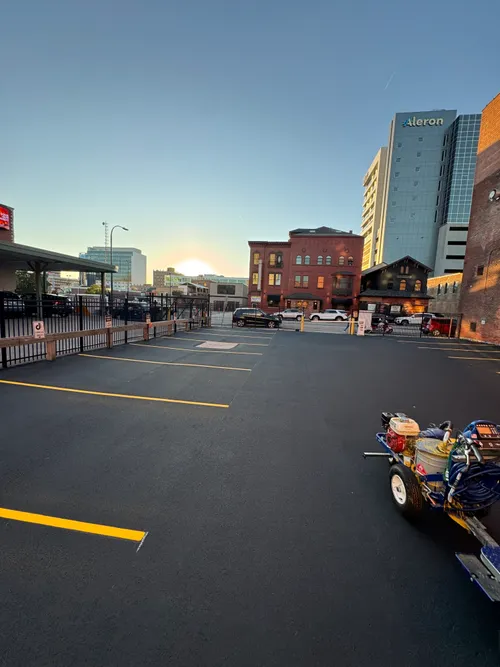
Proper Stripe, LLC
3275 N Benzing Rd, Orchard Park, NY 14127
Proper Stripe, LLC is a parking lot maintenance company based in Buffalo, NY, offering services such as seal coating, line striping, crack filling, commercial sweeping, power washing, and parking lot repairs. They serve a wide range of clients including commercial, industrial, and residential properties throughout Buffalo and Western New York. The company uses modern equipment and eco-friendly materials to maintain parking lots, ensuring safety, accessibility, and an attractive appearance. Proper Stripe also provides 24/7 availability for urgent parking lot maintenance needs.
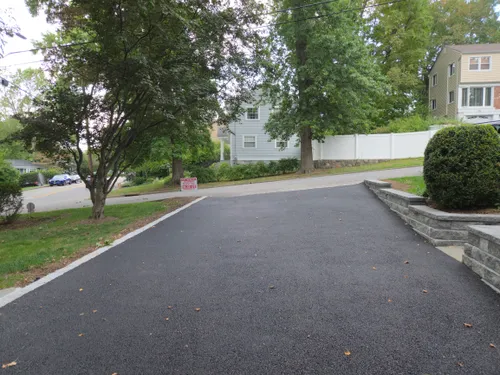
Just Paving Inc
60 Dartmouth Ave, Yonkers, NY 10701
Just Paving Inc is a paving and masonry company based in New York, NY, serving residential and commercial clients in Yonkers and Westchester County. They offer a range of services including driveway paving, parking lot paving, resurfacing, repairs, and lot striping. Their expertise extends to masonry work such as retaining walls, patios, fire pits, and concrete steps. Established in 2000, Just Paving Inc has over two decades of experience delivering durable and visually appealing paving solutions. They focus on quality materials and craftsmanship to enhance property appearance and functionality.
Understanding New York's Regulatory Framework
Parking lot markings in New York are governed by a layered system of regulations. At the federal level, the Americans with Disabilities Act (ADA) sets the baseline for accessible parking. New York State enforces these through the Uniform Fire Prevention and Building Code, which incorporates ADA standards. Local municipalities, such as New York City, often have additional, more stringent requirements outlined in zoning resolutions. Compliance is not optional; failure to meet these standards can result in fines and legal exposure. Regular restriping, typically every 18 to 36 months, is essential to maintain visibility and compliance, especially in regions with harsh winters where snow plows can damage markings.
ADA Accessible Parking Space Requirements in NY
New York has specific, detailed rules for marking accessible parking spaces that go beyond federal minimums.
Dimensions and Layout:
- Standard Accessible Space: Must be at least 8 feet (96 inches) wide.
- Access Aisle: A 5-foot (60-inch) wide access aisle must adjoin the space, marked with diagonal white or blue lines to prevent parking.
- Van-Accessible Space: Requires an 8-foot wide space with an 8-foot aisle, or an 11-foot wide combined space with a 5-foot aisle 1.
- Slope: The surface of the space and aisle must be firm, stable, and have a slope no greater than 1:48 (2.08%) in all directions 2.
Markings and Symbols:
- Color: The parking space itself must be outlined in blue paint.
- Symbol: A blue square containing the white International Symbol of Accessibility (ISA) must be painted within the stall. New York officially encourages the use of an "active-style" wheelchair symbol 3. The symbol size should be between 24"x28" and 36"x41" 4.
- Aisle Markings: The access aisle must be clearly marked with diagonal stripes.
Signage: Each accessible space must have a vertical sign. New York State specifies that these signs must be 12 inches wide by 18 inches high, with green lettering and borders on a white background, mounted 5 to 7 feet above the ground 5 6 7.
Fire Lane Marking Regulations
Fire lanes are crucial for emergency vehicle access and are strictly regulated. Local fire officials typically designate these areas.
Marking Options: Fire lanes can be marked in several approved ways 8:
- Red Curb with White Lettering: The curb is painted solid red. The words "NO PARKING-FIRE LANE" in 4-inch high white letters are stenciled at intervals not exceeding 25 feet.
- Yellow Curb with Black Lettering: The curb is painted solid yellow with 4-inch black "NO PARKING-FIRE LANE" lettering.
- Surface Marking (No Curb): If no curb exists, a 6-inch wide yellow or red line must be painted on the pavement along the fire lane. Diagonal hash marks and the "NO PARKING-FIRE LANE" stencil are applied within this zone.
Signage: Reflective signs stating "NO PARKING FIRE LANE" (often with "TOW AWAY ZONE") are required. These signs typically have red letters on a white reflective background and must be 12"W x 18"H 9.
Standard Parking Lot Striping Specifications
For non-accessible stalls and traffic control, standard practices apply.
- Line Width: Parking space lines and traffic directional arrows are typically 4 inches wide.
- Colors: White paint is standard for regular parking stalls and directional markings. Yellow is used for no-parking zones, curb warnings, and cross-hatching.
- Stall Dimensions: In New York City, standard parking spaces are commonly 8 feet 6 inches wide by 18 feet long. Dimensions can vary elsewhere based on local code and lot design.
- Drive Aisles: Aisles must accommodate safe traffic flow. For two-way traffic, a minimum width of 24 feet is standard. One-way aisles can range from 12 feet for parallel parking to 18-24 feet for angled stalls 10.
- Environmental Regulations: New York has strict limits on Volatile Organic Compounds (VOCs) in paints. Contractors must often use water-based or other low-VOC formulations to comply with state air quality regulations.
Find the perfect parking lot striping companies for your needs
Get personalized recommendations and expert advice
Cost Considerations for Parking Lot Striping in New York
Project costs vary significantly based on the lot's location (NYC versus upstate), size, condition, and the complexity of the markings required 11.
Typical Cost Breakdown:
- Per Stall Restriping: Stripping standard parking spaces typically costs between $4 and $8 per space.
- ADA-Compliant Spaces: Marking an accessible space, including the blue outline, ISA symbol, and access aisle, ranges from $25 to $50 per space 12 13.
- Fire Lane Marking: Painting curbs or surface lines for fire lanes averages $1 to $4 per linear foot 14.
- Stencils and Lettering: Adding words like "NO PARKING" or directional arrows costs approximately $3 to $5 per letter or symbol 15.
- Mobilization Fee: Many contractors charge a one-time fee of $150 to $350 to cover travel, equipment setup, and site preparation, especially for smaller projects 16.
- Total Project Example: A small-to-medium lot with 25 to 50 spaces might have a total project cost ranging from $400 to $1,200, depending on the factors above 17.
Best Practices for Maintenance and Planning
Proactive maintenance is more cost-effective than emergency repairs or dealing with violations.
- Schedule Regular Restriping: Industry experts recommend restriping every 12 to 24 months to ensure maximum visibility and safety 18. In snowy regions, inspect markings each spring for plow damage.
- Conduct an ADA Audit: Before striping, review the number and layout of accessible spaces. The required number is based on the total spaces in your lot, as per ADA and state code 19 20.
- Hire Knowledgeable Contractors: Choose a service provider familiar with New York State and local municipal codes. They should understand VOC-compliant paints and proper symbol specifications.
- Integrate with Pavement Maintenance: Plan striping to follow sealcoating or asphalt repair projects. Fresh pavement provides the best surface for long-lasting markings.
- Keep Detailed Records: Maintain documentation of your striping schedule, contractor invoices, and any compliance reviews. This can be invaluable if questions about compliance arise.
Proper parking lot striping is a vital investment in safety, accessibility, and risk management for any New York property owner or manager. By adhering to the detailed state and local codes, you create an orderly environment, serve all visitors effectively, and fulfill your legal responsibilities.
Frequently asked questions
Sources
Footnotes
-
ADA Compliance Brief: Restriping Parking Spaces - https://archive.ada.gov/restriping_parking/restriping2015.pdf ↩
-
Expert NYC Parking Lot Striping: Essential Facilities ... - https://www.myshyft.com/blog/parking-lot-striping-services-new-york-new-york/ ↩
-
How do I sign/stipe a parking space for persons with ... - https://nysltap.org/nysltap-local-roads/how-do-i-signstipe-parking-space-for-persons-disabilities-street ↩
-
ADA Compliance Guide for Parking Lot Line Striping - https://www.pavementsolutions.org/ada-compliance-guide-for-parking-lot-line-striping/ ↩
-
New York State Handicap Parking Signs - ADA Sign Depot - https://www.adasigndepot.com/products/new-york-reserved-handicap-parking-sign ↩
-
NEW YORK - State Specific Signs - https://www.compliancesigns.com/media/resource-bulletins/CRB-State-New-York.pdf ↩
-
Parking signs in New York | MyParkingSign.com Blog - https://www.myparkingsign.com/blog/parking-signs-in-new-york/ ↩
-
Cortland, NY - https://www.cortlandny.gov/DocumentCenter/View/138/Fire-Lanes-Regulations-PDF ↩
-
FIRE LANE REQUIREMENTS | epcesd1 - https://www.epcesd1.com/wp-content/uploads/2022/03/Fire-Lane-Requirements.pdf ↩
-
Article 51: Off-Street Parking, Loading and Stacking Regulations - https://ecode360.com/15526178 ↩
-
Parking Lot Striping & ADA Compliance: What to Know - https://brixco.co/parking-lot-striping-ada-compliance/ ↩
-
How Much Does it Cost to Stripe a Parking Lot? - SealMaster.net - https://sealmaster.net/faq/much-cost-stripe-parking-lot/ ↩
-
How Much Does It Cost to Stripe a Parking Lot? [2025 Data] - https://www.homeadvisor.com/cost/outdoor-living/parking-lot-striping/ ↩
-
How to Bid Parking Lot Striping: 2026 Contractor Guide - OneCrew - https://www.getonecrew.com/post/bid-parking-lot-striping ↩
-
How Much Does Parking Lot Striping Cost? (2026) - HomeGuide - https://homeguide.com/costs/parking-lot-striping-cost ↩
-
How to Start a Parking Lot Striping Business in 2026 - OneCrew - https://www.getonecrew.com/post/parking-lot-striping-business ↩
-
How Much Does Striping a Parking Lot Cost? [2026 Data] | Angi - https://www.angi.com/articles/stripe-parking-lot-cost.htm ↩
-
Parking Lot Striping Standards: Measurements, Colors, and More - https://www.getonecrew.com/post/parking-lot-striping-standards ↩
-
Accessible Parking Spaces | ADA.gov - https://www.ada.gov/topics/parking/ ↩
-
Basics of an ADA-Compliant Parking Lot - https://www.tuckerpaving.com/basics-of-an-ada-compliant-parking-lot/ ↩