Find the Best Parking Lot Striping Companies for Your Business
No obligation • Fast responses • Nationwide coverage

Why you can trust Tidy Parking
Tidy Parking is a leading U.S. source for parking lot maintenance services, including striping, sealcoating, sweeping, paving, resurfacing, and repairs. Our content is created independently, and providers cannot pay to influence ratings or recommendations.
Search providers near you
Top Parking Lot Striping Companies in Salem, Massachusetts Ranked
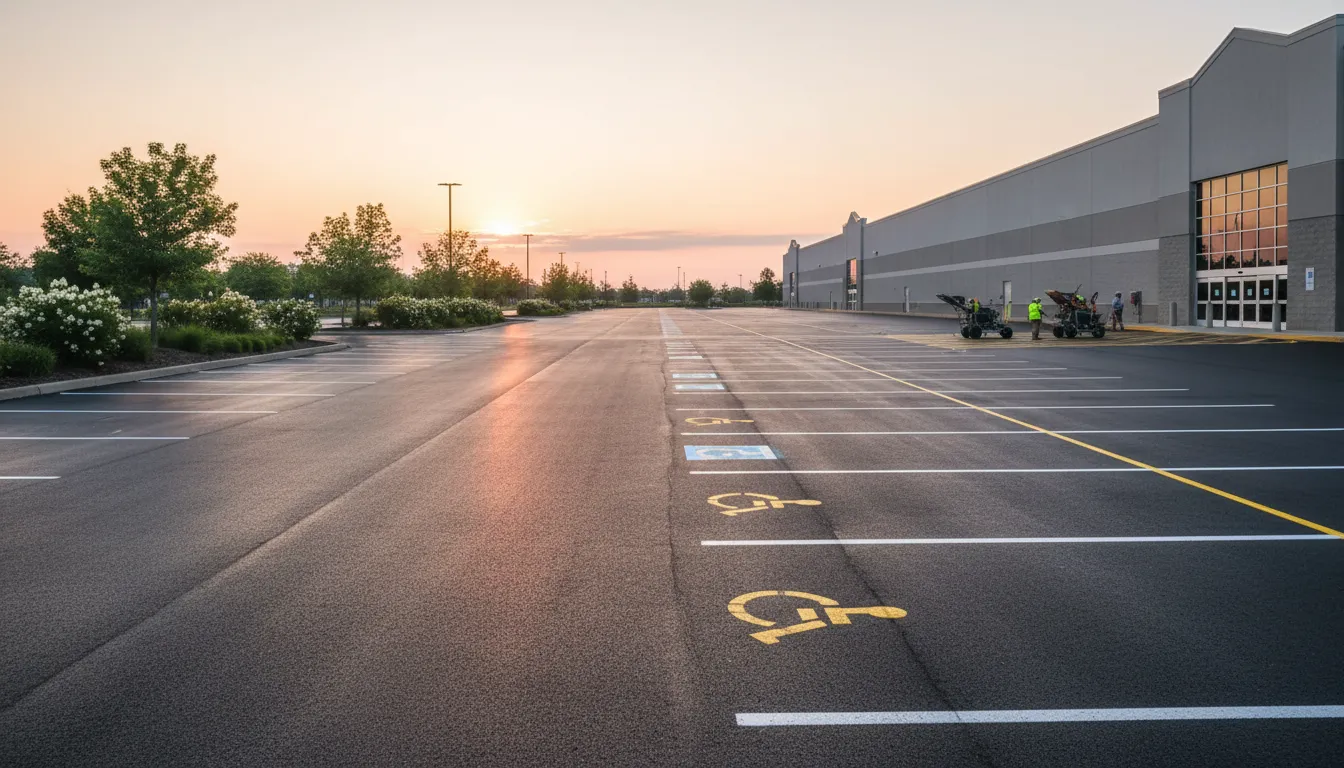
Proper parking lot striping is far more than just painting lines on asphalt. In Massachusetts, it is a critical safety and legal requirement that ensures efficient traffic flow, maximizes space, and, most importantly, guarantees accessibility for all. This work must comply with strict state and federal regulations, including the Americans with Disabilities Act (ADA) and the Massachusetts Architectural Access Board (MAAB) rules. This guide explains the key requirements, costs, and best practices for line striping and pavement marking in the Bay State, helping property owners and managers understand what's needed to maintain a safe, functional, and compliant parking area.
Baystate Sealcoating & Paving
166 Cross St, Winchester, MA 01890
Baystate Sealcoating & Paving is a parking lot striping, sealcoating, paving, and repair company serving Boston, MA. They provide a full range of asphalt maintenance services including driveway sealcoating, crack filling, pothole repair, parking lot maintenance, and line striping. Their capabilities include professional asphalt paving and protective sealant application designed to extend the life of asphalt surfaces and improve safety and appearance. Baystate Sealcoating & Paving serves multiple cities across Massachusetts and is known for using top-grade materials and thorough preparation to ensure durable results.
Absolute Asphalt
Boston, MA
Absolute Asphalt is an asphalt contractor serving Boston, MA, specializing in residential and commercial asphalt paving, patching, striping, sealcoating, and driveway installation. They provide comprehensive asphalt services including parking lot resurfacing and repair, using high-quality materials and advanced techniques to ensure durable and visually appealing surfaces. The company is fully licensed and insured, prioritizes safety, and operates with a skilled team experienced in delivering tailored asphalt solutions. Absolute Asphalt is based in Waltham, MA, and focuses on meeting customer needs with transparent pricing and detailed project estimates.
Oasis Asphalt
Boston, MA
Oasis Asphalt is a parking lot paving contractor based in Boston, MA, specializing in asphalt installations, repairs, sealcoating, and line striping. They provide customized solutions for various surfaces including driveways, parking lots, and walkways, focusing on quality materials and precise craftsmanship. The company emphasizes thorough project assessment and uses advanced techniques to ensure durable and visually appealing results. Oasis Asphalt also offers ongoing maintenance and support to extend the lifespan of asphalt surfaces.
Boston Paving Solutions
76 Georgia St, Boston, MA 02121
Boston Paving Solutions is a licensed asphalt contractor based in Boston, MA, offering a range of paving services for residential and commercial properties. Their expertise includes asphalt paving, patching, striping, sealcoating, and parking lot resurfacing. The company uses high-quality materials to ensure durable and long-lasting surfaces that withstand heavy traffic and New England weather. With a focus on safety and curb appeal, Boston Paving Solutions provides well-marked parking lots and smooth driveways that meet local regulations and enhance property appearance. They have years of experience delivering tailored asphalt solutions to the Boston area.

Arsenal Eco Pavers
31 Green St, Waltham, MA 02451
Arsenal Eco Pavers is a paving contractor based in Boston, MA, specializing in sustainable and traditional paving solutions. They offer services including parking lot striping, asphalt paving, permeable paving installations, and custom sod installations. As the leading TrueGrid partner in New England, Arsenal Eco Pavers provides professional installation and distribution of permeable paving grids known for their durability and environmental benefits. The company supports residential, commercial, and industrial projects with expertise in permeable paving that helps manage water runoff effectively. Arsenal Eco Pavers serves the entire New England region and emphasizes eco-friendly materials and innovative paving technologies.
Understanding Massachusetts Striping Regulations
Parking lot striping in Massachusetts is governed by a combination of federal ADA standards and the more stringent state-specific regulations enforced by the MAAB. The MAAB's rules, found in the 521 CMR (Code of Massachusetts Regulations), often exceed federal minimums, making local compliance particularly important 1. These regulations cover everything from the number and size of accessible parking spaces to the color and layout of fire lanes. Non-compliance can result in significant fines, legal liability, and safety hazards. Therefore, any striping project, whether for a new lot or a maintenance restripe, must be planned with these rules as the foundation.
ADA and MAAB Accessible Parking Requirements
Accessible parking is a primary focus of compliance. Massachusetts requires a minimum of 5% of the total parking spaces in a lot to be designated as accessible, which can be more than the federal baseline in some cases 2. Each of these spaces must meet precise specifications:
- Space Dimensions: A standard accessible parking space must be at least 8 feet wide. The adjacent access aisle-the area used for deploying wheelchairs and lifts-must be a minimum of 5 feet wide 3.
- Van-Accessible Spaces: For every six accessible spaces, at least one must be van-accessible. These require an 8-foot-wide access aisle to accommodate side-loading wheelchair lifts 4.
- Access Aisle Markings: Access aisles must be clearly marked to prevent parking. The MAAB requires these aisles to be marked with diagonal striping (hatching) in a high-contrast color like yellow or white. The markings must extend the full length of the aisle, and the area should often be labeled "No Parking" 5.
- Signage: Each accessible space must have a sign displaying the International Symbol of Accessibility. In Massachusetts, these signs must have a blue background and be mounted so the bottom of the sign is at least 60 inches above the pavement 6. Van-accessible spaces require an additional "Van Accessible" plaque.
- Slope: The surface of both the parking space and the access aisle cannot exceed a slope of 2.08% (1:48) in any direction to ensure stability for wheelchairs 7.
Fire Lane Striping and Safety Markings
Fire lane striping is a non-negotiable safety requirement. These lanes provide emergency vehicle access and must be kept clear at all times.
- Width and Location: In Massachusetts, fire lanes must be a minimum of 20 feet wide to accommodate fire trucks and apparatus 8. They are typically required within 50 feet of building entrances and around hydrants.
- Markings and Color: Fire lanes must be distinctly marked with red paint or thermoplastic. The word "FIRE LANE" is often stenciled in large, white letters on the red background, and "NO PARKING" markings are added at regular intervals 9 10.
- Signage: Complementary signage stating "No Parking Fire Lane" is almost always required and is enforced by local fire departments.
Standard Stall and Traffic Flow Markings
Beyond accessible spaces and fire lanes, general striping ensures order and safety. This includes:
- Stall Lines: Standard parking space lines are typically 4 inches wide and painted in white or yellow.
- Directional Arrows: Used to guide one-way traffic flow within the lot.
- Stop Bars & Crosswalks: Marked at intersections and pedestrian pathways.
- Loading Zones & No-Parking Areas: Clearly demarcated to prevent obstructions.
Cost Factors for Parking Lot Striping in Massachusetts
The cost of parking lot striping in Massachusetts is not a flat fee; it varies based on the scope, materials, and specific compliance needs of your project. Understanding these factors can help in budgeting effectively.
Typical Price Ranges:
- Standard Line Striping: For basic stall lines and traffic markings, costs generally range from $0.10 to $0.40 per linear foot of paint applied.
- ADA-Compliant Markings: Specialized work like painting the International Symbol of Accessibility on the pavement typically costs between $35 and $75 per symbol. The diagonal hatching for access aisles can range from $1.50 to $3.00 per linear foot due to the detailed labor involved.
- Signage: Installing compliant accessible parking signs, including the post, sign, and labor, can cost between $150 and $300 per sign 11.
Find the perfect parking lot striping companies for your needs
Get personalized recommendations and expert advice
What Influences the Final Price?
- Lot Condition & Preparation: A cracked, faded, or dirty surface may require power washing, patching, or even milling before new paint will adhere properly, adding to the cost.
- Paint vs. Thermoplastic: Standard latex or acrylic paint is less expensive but less durable. Thermoplastic is more costly upfront but lasts 3-5 times longer, making it a cost-effective choice for high-traffic areas.
- Complexity of Layout: A simple grid pattern is faster to stripe than a lot with angled spaces, compact car spots, multiple accessible spaces, and intricate traffic arrows.
- Scope of Compliance Work: A project that involves adding new accessible spaces, widening aisles, or installing multiple new signs will be more expensive than a simple refresh of existing, compliant lines.
- Local Permits and Regulations: Some municipalities may have specific colors or requirements that necessitate additional labor or materials.
The Striping Process: From Planning to Curing
A professional striping job follows a systematic process to ensure quality and compliance.
- Site Assessment & Planning: A reputable contractor will first survey your lot, take measurements, and review local MAAB and town requirements. They will create a detailed layout plan.
- Surface Preparation: The existing pavement must be thoroughly cleaned. This usually involves power washing to remove dirt, oil, and old, flaking paint. Any necessary repairs are made at this stage.
- Layout and Stenciling: Using chalk lines, string, or laser guides, the technician lays out the entire parking lot design. Stencils are positioned for symbols like handicap icons, arrows, and fire lane lettering.
- Application: Paint or thermoplastic is applied using professional striping machines. Thermoplastic is heated to a liquid state and applied, where it cools to form a thick, durable marking.
- Signage Installation: Posts are set, and compliant signs are mounted at the required height and location.
- Curing and Reopening: The lot must be closed until the markings are fully dry and cured. This can take a few hours for paint to 24 hours or more for thermoplastic, depending on weather conditions.
Maintaining Your Striped Parking Lot
Maintenance is key to ongoing compliance and safety. Faded markings are a liability and can be considered non-compliant. A good rule of thumb is to restripe your lot every 1-2 years for paint, or as needed based on wear. Thermoplastic can last 3-5 years. Regular sweeping to remove debris and prompt repair of pavement damage will also extend the life of your markings. It's advisable to conduct an annual review of your lot to ensure all signage is intact and visible and that no new pavement issues have created slope problems in accessible areas.
Choosing a Professional Striping Contractor in Massachusetts
Given the regulatory complexity, selecting the right contractor is crucial. Look for a service provider with:
- Proven Experience in Massachusetts: They should be intimately familiar with 521 CMR and MAAB regulations, not just general ADA guidelines.
- Proper Licensing and Insurance: Verify they carry general liability and workers' compensation insurance.
- Portfolio and References: Ask for examples of previous work, especially for lots similar to yours (commercial, retail, municipal, etc.).
- Detailed Written Estimates: The quote should break down costs for labor, materials (specifying paint type), signage, and any preparatory work.
- Knowledge of Local Codes: They should be aware of any specific requirements in your city or town regarding fire lane approval, permit needs, or signage details.
Frequently asked questions
Sources
Footnotes
-
Code of Massachusetts Regulations, Title 950 CMR 51.00, Section ... - https://regulations.justia.com/states/massachusetts/950-cmr/title-950-cmr-51-00/section-51-02/ ↩
-
Boston's Essential Guide To Professional Parking Lot Striping Services - https://www.myshyft.com/blog/parking-lot-striping-services-boston-massachusetts/ ↩
-
ADA Compliance Brief: Restriping Parking Spaces - https://www.ada.gov/resources/restriping-parking-spaces/ ↩
-
Accessible Parking Spaces | ADA.gov - https://www.ada.gov/topics/parking/ ↩
-
Boston's Essential Guide To Professional Parking Lot Striping Services - https://www.myshyft.com/blog/parking-lot-striping-services-boston-massachusetts-2/ ↩
-
Parking Lot Striping & ADA Compliance: What to Know - https://brixco.co/parking-lot-striping-ada-compliance/ ↩
-
ADA Compliance in Striping: Stalls, Aisles, Signs - - https://asphaltinc.com/ada-parking-striping-stalls-aisles-signs/ ↩
-
Round Up: Fire Lane Requirements in the US as of 2025 - https://blog.asphaltkingdom.com/fire-lane-requirements-2025 ↩
-
Fire Lane Striping | Unlimited Line Striping Massachusetts - https://unlimitedlinestriping.com/fire-lane-striping-2/ ↩
-
How to Keep Your Parking Lot ADA Compliant by Fire Lane Striping - https://asphaltcareservices.com/parking-lot-ada-compliant-with-fire-lane/ ↩
-
ADA Parking Lot Requirements - The Pavement Network - https://pavementnetwork.com/ada-parking-lot-requirements/ ↩