Find the Best Parking Lot Resurfacing Contractors for Your Business
No obligation • Fast responses • Nationwide coverage

Why you can trust Tidy Parking
Tidy Parking is a leading U.S. source for parking lot maintenance services, including striping, sealcoating, sweeping, paving, resurfacing, and repairs. Our content is created independently, and providers cannot pay to influence ratings or recommendations.
Search providers near you
Top Parking Lot Resurfacing Contractors in Honolulu, Hawaii Ranked
A parking lot resurfacing project is a strategic investment to extend the life of your asphalt pavement by 8-15 years, typically for surfaces under two decades old with a sound foundation. In Honolulu, this process is crucial for maintaining safe, functional, and aesthetically pleasing commercial and residential properties. This guide explains the local process, costs, regulations, and environmental considerations to help you plan your pavement restoration project and connect with qualified local contractors.

Understanding the Resurfacing Process
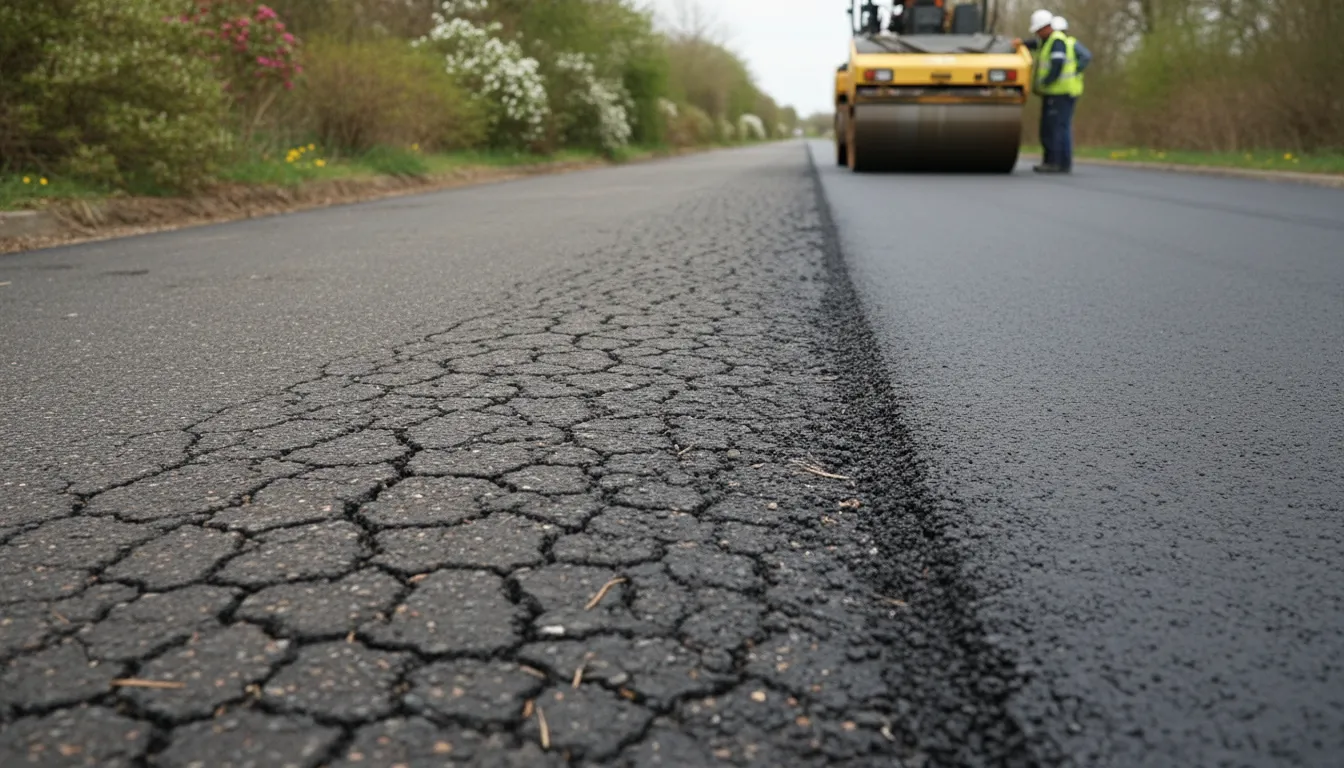
Parking lot resurfacing, also known as an asphalt overlay, involves placing a new layer of hot-mix asphalt over the existing pavement. This is distinct from a full reconstruction, which requires tearing out the old base. The goal is to restore a smooth, durable surface and correct minor issues like surface cracks and weathering. The standard process involves several key steps to ensure a long-lasting result.
Site Inspection & Preparation
Every successful overlay begins with a thorough evaluation. Contractors will assess the pavement's condition, looking for alligator cracking, potholes, and base failures. Essential preparation includes cleaning oil spots and filling significant cracks to prevent them from reflecting through the new surface 1. Proper drainage is also verified, as Honolulu regulations require a minimum 2% slope to prevent water ponding.
Milling or Grinding
For many projects, the first physical step is milling (or grinding). This involves mechanically removing the top 1.5 to 3 inches of the existing, worn asphalt. This serves multiple purposes: it creates a uniform surface for the new layer, helps maintain proper drainage elevations, and allows for the removal of debris and deteriorated material. The milled material is often recycled.
Base Repair
Before new asphalt is laid, any underlying damage must be addressed. This involves excavating areas where the base has failed, removing the compromised asphalt and sub-base material. A new aggregate base is then compacted to at least 95% density to provide a solid foundation 2. Skipping this step for damaged areas will lead to premature failure of the new overlay.
Tack Coat Application & Asphalt Installation
A critical bonding step is the application of a tack coat-a thin layer of asphalt emulsion sprayed onto the existing surface3. This ensures the new layer adheres properly. Immediately following, hot-mix asphalt is delivered and placed in lifts (layers), typically 1.5 to 3 inches thick for a resurfacing project. It is then meticulously spread and compacted with heavy rollers to achieve the required density and smoothness 4.
Striping & Final Curing
After the new asphalt has been placed and compacted, it needs time to cool and harden. New pavement markings and striping are usually applied 24 to 48 hours after paving. In Honolulu, contractors often schedule work to allow traffic to return by the late afternoon, such as 3:30 p.m.5. Some local projects may use specialized treatments like slurry seal, a thin, protective mixture of asphalt emulsion and aggregate6.
Find the perfect parking lot resurfacing contractors for your needs
Get personalized recommendations and expert advice
Honolulu Regulations and Permit Requirements
Navigating local regulations is a vital part of planning a parking lot overlay in Honolulu. Failure to obtain the proper permits can result in fines and work stoppages.
Key Permits for Paving Projects
The primary permits often required include:
- Grading Permit: Required from the Department of Planning and Permitting (DPP) if your project involves excavation or fill greater than 50 cubic yards or 3 feet in height7.
- Street Usage Permit: If the work impacts a public roadway, sidewalk, or requires staging equipment on a city street, a permit from the Department of Transportation Services (DTS) is mandatory. This requires a submitted traffic control plan at least two weeks in advance8 9.
- Special Management Area (SMA) Permit: For properties near the shoreline, an additional SMA permit may be required due to Honolulu's coastal zone regulations10.
Compliance with Local Standards
All work must comply with the Revised Ordinances of Honolulu (ROH). Contractors are typically responsible for notifying the Department of Facility Maintenance at least one week prior to starting work11. The design must adhere to the 2% minimum slope standard for drainage11. It's advisable to consult with your contractor or the DPP early in the planning process to confirm all requirements for your specific site.
Environmental and Climatic Factors in Hawaii
Honolulu's unique tropical climate presents specific challenges and considerations for asphalt paving and overlay work that differ from mainland projects.
Rain and High Humidity
Moisture is the enemy of a successful asphalt installation. High humidity and frequent rain showers can prevent proper bonding of the tack coat and hinder the curing process. Paving is avoided during wet weather, and the existing base must be completely dry before new asphalt is applied. Contractors must carefully monitor weather forecasts and plan projects for extended dry periods, typically favoring late spring through early fall.
Intense Sunlight and UV Radiation
The intense tropical sun accelerates the oxidation of asphalt binders, making the surface brittle and prone to a deterioration process called raveling (the loss of surface aggregate)12 13. This makes timely sealing after the new overlay cures especially important in Hawaii to protect the asphalt from UV damage.
Temperature Considerations
While Hawaii lacks the destructive freeze-thaw cycles seen in colder climates, high ambient temperatures can make asphalt too soft during installation, affecting compaction and final smoothness14. Local contractors use mix designs tailored for warmer climates to ensure optimal performance.
Cost Considerations for Honolulu Projects
The cost of parking lot resurfacing in Honolulu is influenced by material prices, site conditions, and project scale. Local data provides a helpful framework for budgeting.
Typical Cost Ranges
For a standard 2-inch asphalt overlay, costs in Honolulu are approximately $2.53 per square foot, with a typical range of $2.37 to $2.68 per square foot15. Overall resurfacing costs generally fall between $1 and $3 per square foot16. Follow-up protective sealing adds roughly $0.55 per square foot for residential-scale projects, with a wide range from $0.36 to $0.7315. Restriping costs around $6.75 per 18-foot line15.
Factors Affecting Your Final Price
- Project Size: Smaller lots often have a higher per-square-foot cost due to fixed mobilization and equipment fees. Larger projects benefit from economies of scale but may require sectional paving to keep parts of the lot operational, which can increase labor time and complexity17.
- Site Conditions: Extensive base repairs, poor drainage correction, and difficult site access will add to the project cost.
- Material Fluctuations: Asphalt costs are tied to oil prices, which can vary. Always get updated, site-specific quotes from local contractors.
- Permit Fees: The costs for required grading and street usage permits should be factored into the overall project budget.
A well-executed parking lot overlay is a cost-effective way to renew your pavement, enhance safety, and improve curb appeal for your Honolulu property.
Frequently asked questions
Sources
Footnotes
-
A Complete Guide On Parking Lot Resurfacing - Ace Avant - https://www.aceavant.com/a-complete-guide-on-parking-lot-resurfacing/ ↩
-
Pavement Maintenance Proposal - https://cocoabeach.granicus.com/MetaViewer.php?view_id=2&clip_id=4274&meta_id=228222 ↩
-
How to Sealcoat a Parking Lot or Driveway - SealMaster.net - https://sealmaster.net/faq/sealcoat-parking-lot-driveway/ ↩
-
Asphalt Repair in Honolulu - https://pacificpaving.net/service/asphalt-repair/ ↩
-
Parking Lot Resurfacing: Complete Cost Guide & Process [2025] - https://www.candcsuperseal.com/parking-lot-resurfacing-complete-cost-guide-process-2025/ ↩
-
Pavement Maintenance Methods in Hawaii Preserve Roads ... - https://theasphaltpro.com/articles/pavement-maintenance-methods-in-hawaii-preserve-roads-for-perpetuity/ ↩
-
Grading Permits | Department of Planning and ... - Honolulu.gov - https://www.honolulu.gov/dpp/permitting/sdd/ceb/gp/ ↩
-
TTD - Street Usage Permits for Construction - Honolulu.gov - https://www.honolulu.gov/dts/street-usage-permits-for-construction/ ↩
-
Street Usage Permits for Construction - Honolulu.gov - https://www.honolulu.gov/dts/street-usage-permits-for-construction/ ↩
-
Department of Planning and Permitting - Honolulu.gov - https://www.honolulu.gov/dpp/permitting/ ↩
-
Parking Lots - Hawaii Asphalt Paving Industry - http://hawaiiasphalt.org/guide/modules/02_design_catalog/02_parking_lots.htm ↩ ↩2
-
How Weather Conditions Affect Asphalt Paving Projects - https://harwickpaving.com/blog/how-weather-conditions-affect-asphalt-paving-projects ↩
-
Environment - Hawaii Asphalt Paving Industry - http://hawaiiasphalt.org/guide/modules/06_design_factors/06_environment.htm ↩
-
How Weather and Temperature Impact Asphalt Paving Quality - https://asphaltcoatingscompany.com/blog/how-weather-and-temperature-impact-asphalt-paving-quality/ ↩
-
Hawaii Parking Lots Costs & Prices - ProMatcher Cost Report - https://parking-lots.promatcher.com/cost/hawaii.aspx ↩ ↩2 ↩3
-
Parking Lot Resurfacing: Complete Cost Guide & Process [2025] - https://www.candcsuperseal.com/parking-lot-resurfacing-complete-cost-guide-process-2025/ ↩
-
Commercial Parking Lot Paving Costs and Timelines - https://www.kandlindustries.com/commercial-parking-lot-paving-costs/ ↩