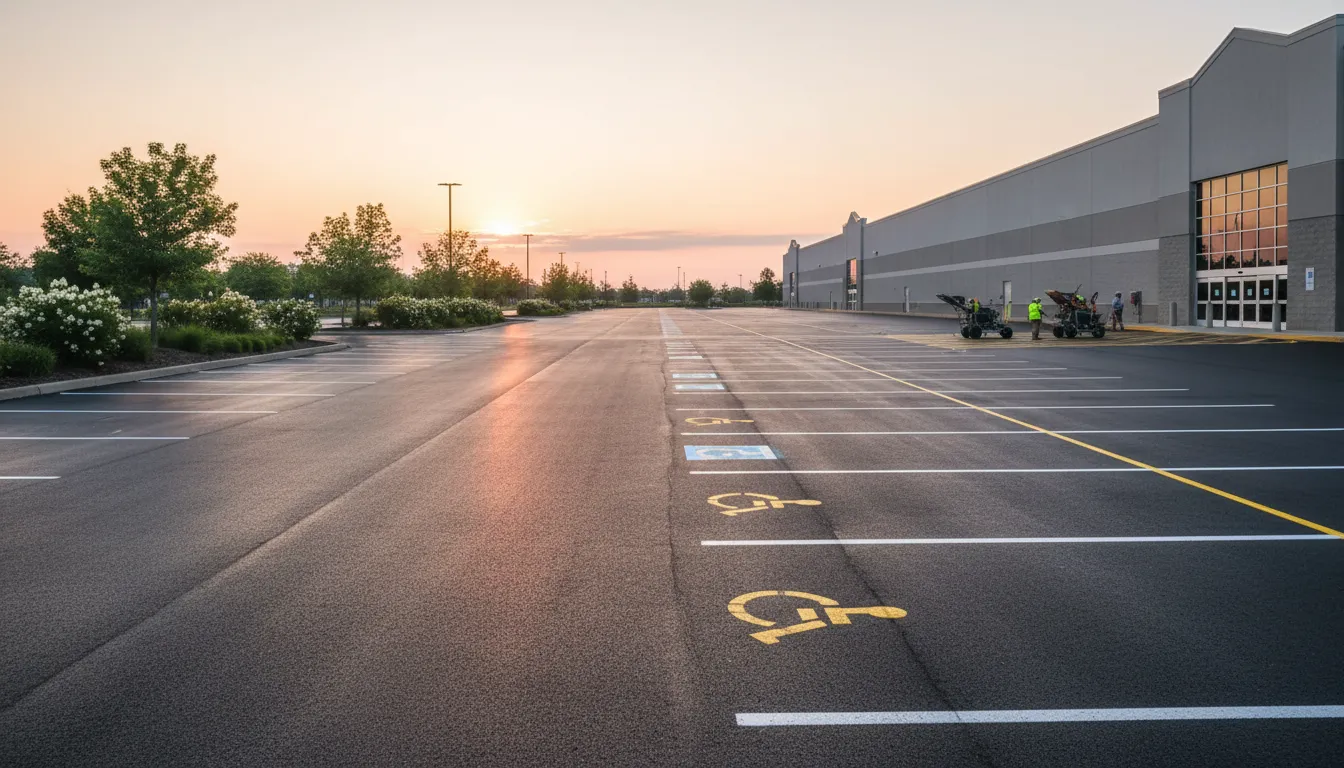
Find the Best Parking Lot Striping Companies for Your Business
No obligation • Fast responses • Nationwide coverage

Why you can trust Tidy Parking
Tidy Parking is a leading U.S. source for parking lot maintenance services, including striping, sealcoating, sweeping, paving, resurfacing, and repairs. Our content is created independently, and providers cannot pay to influence ratings or recommendations.
Search providers near you
Top Parking Lot Striping Companies in Cleveland, Ohio Ranked
Maintaining clear, compliant pavement markings is a critical aspect of property management and public safety in Cleveland. Proper parking lot striping and pavement marking guide traffic flow, maximize space efficiency, and ensure accessibility for all. More than just paint on asphalt, these markings are legal requirements governed by federal ADA standards and local Cleveland ordinances. Failing to meet these codes can result in significant fines and create liability risks. This guide explains the key regulations, best practices, and considerations for property owners and managers seeking professional line striping services in the Cleveland area.
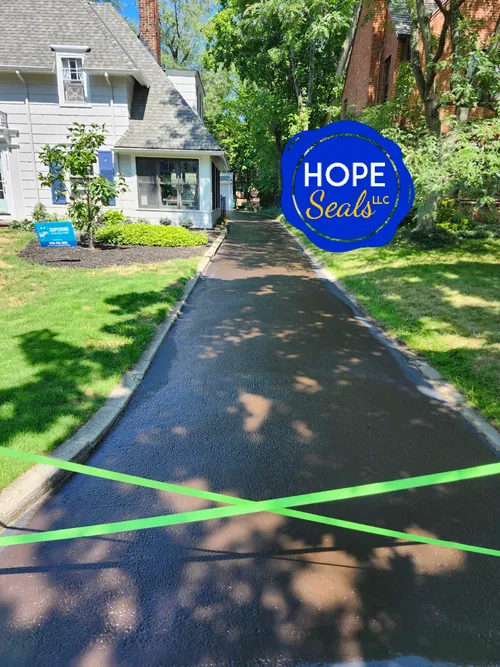
Hope Seals
7930 Euclid Chardon Rd, Kirtland, OH 44094
Hope Seals is a parking lot striping, sealcoating, and resurfacing contractor based in Cleveland, OH. They provide residential and commercial asphalt services throughout Lake, Cuyahoga, and Geauga counties. The company is committed to restoring pavement while supporting individuals seeking a fresh start after incarceration. Their services include sealcoating, crack filling, striping, and resurfacing, with projects completed in various communities such as Mentor, Richmond Heights, and Cleveland Heights. Hope Seals employs individuals with criminal records, aiming to positively impact both their workforce and local communities.
G-FORCE Parking Lot Striping of Cleveland
Akron, OH
G-FORCE Parking Lot Striping of Cleveland is a veteran-owned business serving Akron, OH, and surrounding areas with parking lot striping, sealcoating, and repair services. They specialize in pavement markings including ADA compliance, warehouse floor markings, athletic field lines, and custom signage installation. Using Sherwin-Williams premium traffic paints and advanced striping equipment, they deliver durable and precise results. With combined military experience and a commitment to safety and integrity, G-FORCE also offers pothole repair, crack sealing, and thermoplastic markings to enhance lot longevity and compliance.
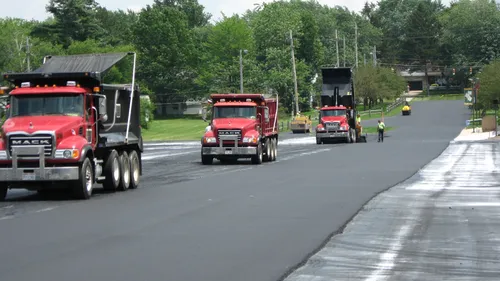
Advanced Asphalt Paving, Inc.
1499 Enterprise Pkwy, Twinsburg, OH 44087
Advanced Asphalt Paving, Inc. is a family-owned paving contractor serving Cleveland, OH, and nearby areas since 1992. They provide commercial asphalt and concrete paving services, including parking lot striping, sealcoating, resurfacing, repairs, and catch basin installation and maintenance. Their expertise includes detailed site inspections and proper grading to ensure durable, weather-resistant pavement suited for Cleveland's climate. The company offers a 1-year service and labor warranty and uses advanced equipment to deliver long-lasting results.
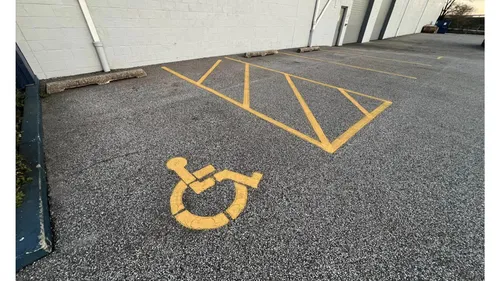
Eastside Striping Solutions
Cleveland, OH
Eastside Striping Solutions provides asphalt maintenance, driveway repair, sealcoating, and power washing services in Cleveland, OH. They specialize in crack sealing, patching, and preventive care to extend the life and safety of asphalt surfaces. Their sealcoating service protects against UV rays, water, oil, and environmental wear, helping to maintain the appearance and durability of driveways and parking lots. Serving Painesville and surrounding areas within a 40-mile radius, Eastside Striping Solutions offers comprehensive asphalt care including line striping to improve traffic flow and safety.
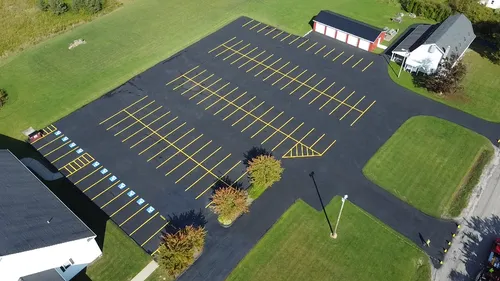
Surface Engineering
18400 Syracuse Ave, Cleveland, OH 44110
Surface Engineering is a parking lot paving contractor based in Cleveland, OH. They offer commercial asphalt paving, parking lot maintenance, sealcoating, and line striping services for industrial facilities, retail centers, and municipal properties. With over 50 years of experience, Surface Engineering has established a long history of serving the Cleveland area and its surroundings.
Understanding Local and Federal Striping Regulations
In Cleveland, your parking lot markings must satisfy two primary layers of regulation: the federal Americans with Disabilities Act (ADA) and the municipal codes of the City of Cleveland. Compliance isn't optional; it's a legal mandate designed to protect public safety and accessibility. Violations can lead to fines, which for local parking ordinance infractions can be up to $500 1 2. More specifically, the state of Ohio mandates a minimum fine of $250 for improper marking of disability parking spaces 3. Adhering to these rules from the start is the most cost-effective and responsible approach.
ADA-Compliant Accessible Parking Standards
ADA-compliant striping is one of the most detailed aspects of parking lot layout. The requirements are precise and non-negotiable.
- Space Dimensions: A standard accessible parking space must be at least 96 inches (8 feet) wide. Adjacent to it, a clearly marked access aisle of at least 60 inches (5 feet) wide is required.
- Van-Accessible Spaces: For every six accessible spaces, at least one must be van-accessible. This requires either a 132-inch (11-foot) wide space with a 60-inch aisle, or a 96-inch wide space with a 96-inch wide access aisle.
- Marking the Aisle: The access aisle must be marked with diagonal hatch marks to visually discourage parking in this crucial zone.
- Signage: Each accessible space must have a vertical sign displaying the International Symbol of Accessibility. This sign must be mounted so the bottom is at least 60 inches above the pavement 4.
- Slope and Surface: The surface of both the parking space and the access aisle must be nearly level, with a maximum slope of 2.08% in all directions to ensure safety for wheelchair users 5.
- Quantity Required: The number of required accessible spaces depends on your lot's total capacity. For example, a lot with 1 to 25 total spaces requires at least one van-accessible space. A lot with 26 to 50 spaces requires two accessible spaces, one of which must be van-accessible 6 7.
Cleveland Fire Lane Marking Requirements
Fire lane marking is strictly governed by Cleveland city code to ensure unobstructed access for emergency vehicles. Key requirements include:
- When Required: Fire lanes are mandated if a building is set back more than 150 feet from a public roadway, or if a building exceeds 30 feet in height and is set back more than 50 feet.
- Pavement and Curb Markings: The pavement within a fire lane must be outlined with a 6-inch wide red line. Additionally, the adjacent curb must be painted red 8.
- Stenciled Lettering: The words "NO PARKING - FIRE LANE -- TOW AWAY ZONE" must be stenciled in white letters at least 3 inches high on the pavement within the lane. These markings must be repeated at intervals not exceeding 50 feet 9.
- Lane Width: To accommodate fire trucks, these lanes must be a minimum of 18 to 20 feet wide 10 11.
- Maintenance: Due to heavy wear from weather and traffic, fire lane paint and stenciling typically require repainting every two years to remain legally valid and clearly visible.
Additional Safety and Accessibility Markings
Beyond ADA and fire lanes, a well-designed lot includes other critical markings.
- Loading Zones: Within fire lanes, specific short-term loading/unloading areas for passengers or merchandise can be designated, but they must be clearly marked to differentiate them from the no-parking fire lane 12.
- Crosswalks and Corners: Maintaining clear corners and marked crosswalks is essential for pedestrian safety. Cleveland's Street Safety Toolkit encourages these markings to increase visibility and prevent accidents.
- Curb Ramps: At pedestrian crossings, a 4-foot by 4-foot clear space must be maintained at the bottom of curb ramps, and the ramp itself should be contained within the crosswalk markings for proper ADA compliance 13 14.
Find the perfect parking lot striping companies for your needs
Get personalized recommendations and expert advice
Best Practices for Parking Lot Layout and Maintenance
A strategic layout does more than meet code-it improves user experience, maximizes capacity, and enhances safety. Professional contractors use precise measurements and planning software to design efficient traffic patterns that minimize congestion and confusion. Key considerations include the direction of traffic flow, the placement of entrances and exits, and the logical sequencing of stalls, accessible spaces, and pedestrian pathways. Properly angled stalls (commonly 90° or 60°) can significantly impact how easily drivers can park and maneuver.
Maintenance is not a one-time event. Even the highest-quality paint and thermoplastic markings degrade over time due to traffic, UV exposure, and Cleveland's freeze-thaw cycles. For high-traffic commercial lots, restriping is recommended every 18 to 24 months. For lots with lower traffic volumes, a 2 to 3-year cycle is often sufficient to maintain optimal visibility and safety 15. Proactive maintenance prevents markings from becoming dangerously faint, which can lead to parking chaos and accidents.
Material Choices for Pavement Markings
The choice of material impacts the durability, cost, and performance of your lot's markings.
- Water-Based Latex Paint: This is the most common and economical choice for standard line striping. It's quick-drying and suitable for most climates, but it offers the shortest lifespan, typically requiring more frequent reapplication.
- Solvent-Based (Oil-Based) Paint: More durable than water-based paint, solvent-based formulas better resist weather and chemical spills like oil and gasoline. They are a good mid-range option for lots expecting moderate to heavy use.
- Thermoplastic: This is a premium, melted material applied hot to the pavement. It is extremely durable, highly reflective (especially with glass beads mixed in), and can last 3-5 times longer than paint. It's an excellent choice for high-traffic areas, stop bars, crosswalks, and symbols where longevity is critical.
- Preformed Thermoplastic Tape: This is a less common but effective option involving adhesive-backed plastic strips. It offers consistent thickness and reflectivity and can be applied without specialized heating equipment.
The Professional Striping Process
Hiring a professional ensures compliance, quality, and efficiency. The typical process involves:
- Site Assessment and Layout Planning: A contractor will measure your lot, assess the pavement condition, and design a layout that meets all codes and optimizes space.
- Surface Preparation: For a lasting result, the pavement must be clean, dry, and free of debris, oil, and old, peeling paint. Power washing and, in some cases, grinding may be necessary.
- Stenciling and Masking: For symbols like the accessibility logo, handicap stencils, arrows, or fire lane lettering, precise masking or stencil placement is crucial.
- Application: Using professional airless or air-assisted striping machines, technicians apply the chosen material in straight, consistent lines. For thermoplastic, a specialized melter/applicator is used.
- Reflective Bead Application: For night visibility, reflective glass beads are often dropped onto wet paint or embedded into hot thermoplastic immediately after application.
- Curing and Reopening: The contractor will provide a safe curing time before the lot can be reopened to traffic.
Understanding Project Costs in Cleveland
Costs for parking lot striping in Cleveland vary based on the scope, materials, and lot condition. Here is a general overview of common price ranges:
- Standard Stall Painting: $5.00 - $15.00 per stall.
- ADA-Compliant Stall: $100 - $250 per stall. This higher cost accounts for the additional painting, hatch-marking the access aisle, and applying the required stencils.
- Fire Lane Painting: $2.00 - $5.00 per linear foot (includes red curb and/or pavement line).
- ADA Sign Installation: $150 - $300 per sign, including the sign post, compliant sign, and labor for installation 16.
As an example, a small restriping project involving 20 standard spaces, 2 ADA-compliant spaces, and 100 linear feet of fire lane marking could have a total estimated cost in the range of $500 to $1,200, depending on specific conditions and contractor rates 17 18.
Frequently asked questions
Sources
Footnotes
-
§ 451.03 Statutory Prohibited Standing or Parking Places - https://codelibrary.amlegal.com/codes/cleveland/latest/cleveland_oh/0-0-0-24240 ↩
-
Parking Lot Striping Best Practices: Tips For Optimal Visibility And ... - https://wedolines.com/parking-lot-striping-best-practices-tips-for-optimal-visibility-and-safety/ ↩
-
Accessible Parking Guide - Ohio Secretary of State - https://www.ohiosos.gov/globalassets/elections/eoresources/peo-training/adaparkingdiagram.pdf ↩
-
Accessible Parking & Drop Off Areas - https://ood.ohio.gov/wps/portal/gov/ood/accessible-ohio/ao-resources/accessible-parking-drop-off-areas ↩
-
Accessible Parking Spaces | ADA.gov - https://www.ada.gov/topics/parking/ ↩
-
Accessible Parking Spaces | ADA.gov - https://www.ada.gov/topics/parking/ ↩
-
Accessible Parking Guide - Ohio Secretary of State - https://www.ohiosos.gov/globalassets/publications/election/ada/adaparkingguide2021.pdf ↩
-
1515.03 MARKING OF FIRE LANES. - American Legal Publishing - https://codelibrary.amlegal.com/codes/richmondhts/latest/richmondhts_oh/0-0-0-23441 ↩
-
§ 451.15 Fire Lanes on Public and Private Property - https://codelibrary.amlegal.com/codes/cleveland/latest/cleveland_oh/0-0-0-24323 ↩
-
FIRE LANE REQUIREMENTS | epcesd1 - https://www.epcesd1.com/wp-content/uploads/2022/03/Fire-Lane-Requirements.pdf ↩
-
Fire Lanes, Access Roads, and Signage Requirements - https://www.truegridpaver.com/fire-lane-requirements/ ↩
-
1501.03 FIRE LANES. - American Legal Publishing - https://codelibrary.amlegal.com/codes/urbana/latest/urbana_oh/0-0-0-18999 ↩
-
ADA-Compliant: Curb Ramp Measuring Guide | Ohio Department of ... - https://www.transportation.ohio.gov/working/engineering/roadway/ada/ada-compliant-curb-ramp-measuring-guide ↩
-
Street Safety Toolkit | City of Cleveland Ohio - https://www.clevelandohio.gov/transportation-mobility/street-safety-toolkit ↩
-
Commercial Lot Line Striping & Restriping - https://www.advancedasphaltpaving.com/commercial-lot-line-striping-and-restriping ↩
-
ADA Compliance Checkup for Ohio Parking Lots - SKAsphalt - https://skasphaltconcrete.com/ada-compliance-checkup-for-ohio-parking-lots/ ↩
-
Line Striping & Pavement Markings | ADA-Compliant Parking Lot Striping - https://parkingareamaintenance.com/line-striping/ ↩
-
Cheat Sheet for ADA-Compliant Parking Qualifications - Paveman Pro - https://www.pavemanpro.com/article/ada-compliant-parking-cheatsheet/ ↩