Find the Best Parking Lot Striping Companies for Your Business
No obligation • Fast responses • Nationwide coverage
Why you can trust Tidy Parking
Tidy Parking is a leading U.S. source for parking lot maintenance services, including striping, sealcoating, sweeping, paving, resurfacing, and repairs. Our content is created independently, and providers cannot pay to influence ratings or recommendations.
Search providers near you
Top Parking Lot Striping Companies in Piscataway, New Jersey Ranked
Maintaining clear, compliant, and durable pavement markings is a critical aspect of property management in Piscataway. Proper parking lot striping, line painting, and pavement marking ensure safety, maximize space, and keep your property in line with local and state regulations. This guide explains the specific requirements for Piscataway, New Jersey, helping property owners and managers understand what's needed for a successful project, from ADA-compliant spaces to fire lane designations.
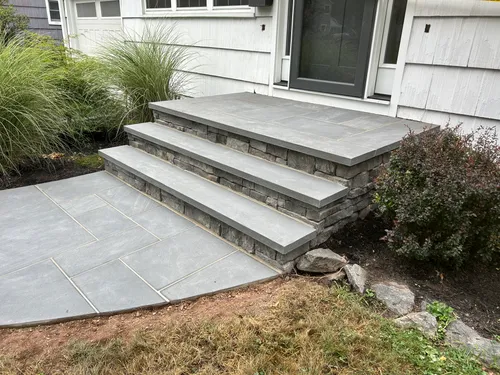
Vali Construction LLC
673 Jerusalem Rd, Scotch Plains, NJ 07076
Vali Construction LLC is a paving and masonry company based near New York, NY. They provide a range of services including residential and commercial paving, parking lot striping, sealcoating, and various masonry and hardscaping projects such as patios, walkways, and retaining walls. Their capabilities include asphalt paving for projects of all sizes, from residential driveways to large commercial parking lots and municipal roadways. They also offer site work services like excavation, grading, and concrete flat work for contractors and builders.

Oscar's Asphalt & Sealcoating
New York, NY
Oscar's Asphalt & Sealcoating provides asphalt sealcoating, crack filling, pothole patching, and parking lot striping services in New York, NY. They focus on maintaining driveways and parking lots to withstand local weather and heavy traffic. The company uses top-grade materials to ensure durable results and offers 24/7 availability for their services. Their work covers a range of pavement maintenance needs to keep properties safe and looking professional.
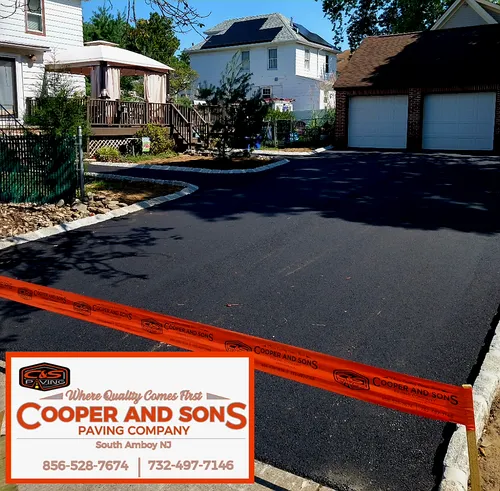
Cooper And Sons Paving
3010 Bordentown Ave, Parlin, NJ 08859
Cooper And Sons Paving is a family-owned asphalt paving contractor serving New York, NY, and surrounding areas. With over 50 years of experience, they provide a full range of residential and commercial paving services including parking lot paving, striping, sealcoating, resurfacing, and repair. Their expertise covers driveway paving, patching, crack filling, and installation of Belgian blocks and bumper posts. The company operates primarily in central New Jersey counties but extends services to nearby locations. Cooper And Sons uses quality materials and equipment to ensure durable pavement solutions tailored to each project.
Primetime Paving
Paterson, NJ
Primetime Paving is a parking lot striping, sealcoating, paving, and repair company based in Paterson, NJ. They provide tailored paving solutions for residential driveways, commercial parking lots, and municipal projects, using high-quality materials and advanced techniques to ensure durable and visually appealing surfaces. Their services include new installations, repairs, maintenance, sealcoating, crack filling, and line striping. Primetime Paving emphasizes expert craftsmanship and precision, working closely with clients to meet specific needs and preferences. They also offer ongoing support and maintenance to keep paved surfaces in optimal condition.
JC Line Striping LLC
1122b Easton Ave, Somerset, NJ 08873
JC Line Striping LLC is a parking lot striping company based in New York, NY, serving commercial and industrial properties across New Jersey and nearby states. They specialize in parking lot striping, ADA-compliant markings, sign and wheel stop installation, and use premium-grade, DOT-approved traffic paints and thermoplastic tape to ensure durable and code-compliant results. With over a decade of experience, JC Line Striping offers flexible scheduling including nights and weekends to accommodate various project needs.
Understanding Piscataway's Parking Lot Regulations
In Piscataway Township, parking lot design and marking are governed by a combination of local ordinances and New Jersey state codes. The primary local reference is Article 36: Parking Lot and Loading Area Design Standards. Any restriping or resurfacing project that involves re-marking parking spaces triggers compliance requirements, particularly with the New Jersey Barrier Free Subcode and the federal Americans with Disabilities Act (ADA) 1. This means you cannot simply repaint old lines; you must ensure the new layout meets current accessibility standards. Non-compliance can lead to enforcement action from local police, with fines ranging from $250 to $500 per violation 2.
The goal of these regulations is to create safe, orderly, and accessible environments for all users. Beyond just painting lines, a professional striping project involves careful planning around stall dimensions, traffic flow, pedestrian crosswalks, and designated zones for loading and emergency access.
ADA & Accessible Parking Space Requirements
Creating accessible parking is not optional; it's a legal requirement with precise specifications. In Piscataway, as throughout New Jersey, these rules are strictly enforced.
Space and Aisle Dimensions:
- Standard Accessible Space: Must be at least 8 feet wide, though a 12-foot width is often preferred in New Jersey localities to provide more room. The stall length remains the standard 18 feet.
- Access Aisle: A 5-foot wide access aisle must be adjacent to the space. This aisle is part of the accessible route and cannot be blocked by vehicles.
- Van Accessible Spaces: For every six accessible spaces, one must be van accessible. These require an 8-foot wide access aisle. An alternative design allows for an 11-foot wide space with a 5-foot aisle 3.
Markings and Signage:
- Cross-Hatching: The access aisle must be marked with diagonal lines (cross-hatching) to visually prohibit parking 4.
- International Symbol of Accessibility (ISA): The ISA must be painted on the pavement within the space. New Jersey often requires this symbol to be a large 60 inches by 60 inches 5.
- Signage: Each accessible space must have a permanent sign mounted 5 to 7 feet above the ground. The sign must display the ISA and include language about the penalty for illegal use (e.g., "$250 fine") 6 7. Van accessible spaces must have additional "Van Accessible" text on the sign.
Location Planning: Accessible spaces must be located on the shortest accessible route from the parking area to the building's entrance, avoiding the need for pedestrians to cross vehicular traffic lanes where possible. This is a crucial planning consideration often overlooked during simple restriping jobs.
Fire Lane Striping and Signage Standards
Fire lanes are essential for emergency vehicle access, and their marking is governed by Chapter 173 of Piscataway's code 8. Incorrectly marked fire lanes can impede first responders and result in costly fines.
- Dimensions: Fire lanes must have a minimum clear width of 18 to 20 feet to accommodate fire trucks.
- Striping Specifications: The perimeter of the fire lane is defined by 4-inch wide solid yellow lines. The interior of the lane is filled with 4-inch wide diagonal yellow lines spaced approximately 5 feet apart 9.
- Pavement Lettering: The words "NO PARKING FIRE LANE" must be painted in yellow block letters, typically 12 to 18 inches high, at repeated intervals within the lane.
- Reflective Signs: In addition to pavement markings, reflective signs (often 12" x 18") stating "NO PARKING FIRE LANE" must be posted at intervals of 25 to 50 feet along the lane 10.
Standard Stall Dimensions and Traffic Flow
For general parking, efficiency and safety are key. Standard parking stalls in Piscataway are typically 9 feet wide by 18 feet long. Properly sized stalls prevent door dings and make parking easier for customers and employees.
Effective traffic flow is managed through additional markings:
- Directional Arrows: Guide one-way traffic and prevent conflicts.
- Stop Bars: Painted at intersections within the lot and at exits onto public streets to indicate where vehicles must come to a complete stop.
- Crosswalks: Clearly marked crosswalks are vital for separating pedestrian and vehicular traffic. New Jersey law prohibits parking within 25 feet of a marked crosswalk, a rule that must be reflected in your striping layout 11 12.
Loading Zones and Other Designated Areas
Loading zones in Piscataway are not arbitrarily created. Their designation is approved by the Township Board for specific site applications. Once designated, the striping must clearly delineate these areas. Regulations state that vehicles may only stop in a loading zone for the time actively required for loading or unloading. Proper marking prevents these crucial zones from being used as long-term parking spots.
For larger parking areas with more than 25 spaces, local standards encourage, where possible, the use of separate entrance and exit points to improve traffic flow and safety.
Find the perfect parking lot striping companies for your needs
Get personalized recommendations and expert advice
The Importance of Professional Pavement Marking
While the regulations may seem complex, a professional contractor familiar with Piscataway and New Jersey codes will handle these details. They ensure that your line painting project is not only visually crisp but also legally compliant. This protects you from fines and liability. Professionals also use high-quality, durable traffic paint or thermoplastic materials suited to New Jersey's climate, ensuring your markings last through snow, plowing, and heavy traffic.
Proper layout planning by an expert can often optimize the number of legal parking spaces on your property, improving its utility and value. They will conduct a site survey to account for existing curbs, light poles, landscaping, and building entrances, creating a cohesive and functional plan.
Common Striping Projects and Associated Costs
Understanding potential costs helps in budgeting for maintenance. Prices can vary based on lot condition, materials used, and the complexity of the layout. The following ranges are based on industry standards for the region 13:
- Standard Parking Stalls: Repainting typically costs between $4 and $8 per stall.
- Accessible Space (including symbol and aisle markings): Due to the detailed work, these cost more, generally ranging from $75 to $125 per space.
- Fire Lane Marking: Often priced by the linear foot, ranging from $1.50 to $3.00 per foot.
- Directional Arrows: Approximately $25 to $40 each.
- Stop Bars: Typically $30 to $50 each.
Remember, the lowest price may not account for full regulatory compliance or material longevity. Investing in a proper job saves money on frequent re-striping and potential non-compliance penalties.
Maintaining Your Parking Lot Markings
Parking lot striping isn't a one-time task. Over time, paint fades due to UV exposure, tire friction, and winter weather. A best practice is to have your lot's line painting evaluated annually. A good rule of thumb is to plan for a full restriping every 18 to 24 months to maintain optimal visibility and safety. Scheduling this work during milder spring or fall weather is ideal for paint curing. Before a restriping project, consider if sealcoating or crack filling is needed, as new markings should be applied on a clean, sound pavement surface for best results.
Frequently asked questions
Sources
Footnotes
-
ADA Compliance Checkup for New Jersey Parking Lots - https://www.gspavement.com/ada-compliance-checkup-for-new-jersey-parking-lots/ ↩
-
NJ Parking Lot Striping Regulations 2025 | Compliance Guide - https://randysealcoatingandstriping.com/learning-center/nj-parking-lot-striping-regulations-2025 ↩
-
The ADA and Parking - https://northeastada.org/resource/the-ada-and-parking ↩
-
The Importance of ADA-Compliant Parking Lot Striping - Rose Paving - https://www.rosepaving.com/blog/the-importance-of-ada-compliant-parking-lot-striping/ ↩
-
New Jersey Guide to Accessible Parking - NJ.gov - https://www.nj.gov/humanservices/dds/documents/BROCHURES/2024/Guide-to-Accessible-Parking.pdf ↩
-
Article 36: Parking Lot and Loading Area Design Standards - https://ecode360.com/13493205 ↩
-
Guide to Accessible Parking - NJ.gov - https://www.nj.gov/humanservices/dds/documents/BROCHURES/2020/New_Jersey_Guide_to_Accessible_Parking_Booklet_2019.pdf ↩
-
Chapter 173: Fire Lanes and Fire Zones - eCode360 - https://ecode360.com/8531640 ↩
-
Article III: Fire Lanes - Municipality of Princeton, NJ - eCode360 - https://ecode360.com/36791403 ↩
-
Article I: Adoption of Standards; Fire Prevention - eCode360 - https://ecode360.com/27521360 ↩
-
N.J. Admin. Code § 19:66-7.2 - Parking lot design standards - LII - https://www.law.cornell.edu/regulations/new-jersey/N-J-Admin-Code-SS-19-66-7.2 ↩
-
Know the distances when parking... In New Jersey, you ... - Facebook - https://www.facebook.com/mountlaurelpd/posts/know-the-distances-when-parkingin-new-jersey-you-cannot-park-within-10-feet-of-a/1146781714160513/ ↩
-
Understanding New Jersey Parking Lot Striping Regulations - https://randysealcoatingandstriping.com/blog/nj-parking-lot-striping-regulations-2025 ↩