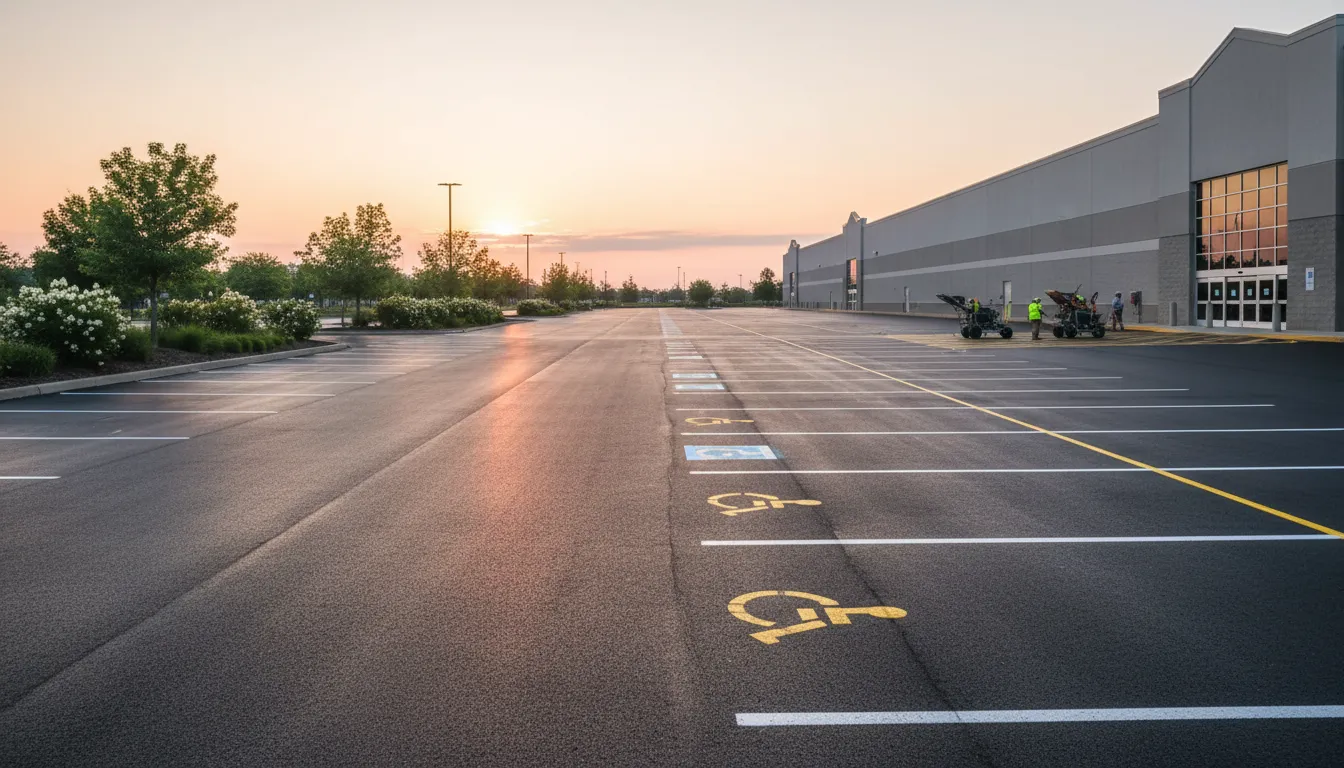
Find the Best Parking Lot Striping Companies for Your Business
No obligation • Fast responses • Nationwide coverage
Why you can trust Tidy Parking
Tidy Parking is a leading U.S. source for parking lot maintenance services, including striping, sealcoating, sweeping, paving, resurfacing, and repairs. Our content is created independently, and providers cannot pay to influence ratings or recommendations.
Search providers near you
Top Parking Lot Striping Companies in Newark, New Jersey Ranked
Parking lot striping is the critical process of applying clear, durable markings to define parking stalls, traffic flow, fire lanes, and accessible spaces. In Newark, this isn't just about aesthetics-it's a legal requirement that ensures safety, accessibility, and efficient use of space for your property. Proper pavement marking helps prevent accidents, directs traffic, and is mandated by a complex web of New Jersey state and federal regulations, including the Americans with Disabilities Act (ADA) and the New Jersey Uniform Fire Code. This guide explains the specific requirements for Newark property owners and managers, helping you understand what's needed to maintain a compliant and functional parking area.
Just Paving Inc
60 Dartmouth Ave, Yonkers, NY 10701
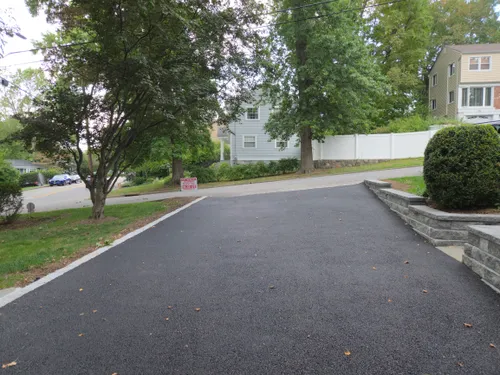
Just Paving Inc is a paving and masonry company based in New York, NY, serving residential and commercial clients in Yonkers and Westchester County. They offer a range of services including driveway paving, parking lot paving, resurfacing, repairs, and lot striping. Their expertise extends to masonry work such as retaining walls, patios, fire pits, and concrete steps. Established in 2000, Just Paving Inc has over two decades of experience delivering durable and visually appealing paving solutions. They focus on quality materials and craftsmanship to enhance property appearance and functionality.
Bonardi Construction Inc
15-19 128th St, College Point, NY 11356
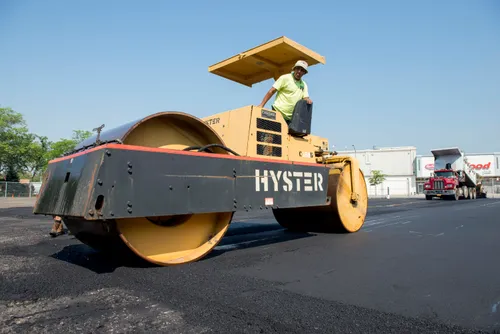
Bonardi Construction Inc is a general contracting company serving Jersey City, NJ, and the greater New York City area. They offer a range of services including parking lot striping, sealcoating, paving, and repair for both commercial and residential properties. Their team has over 30 years of experience and provides specialized capabilities such as asphalt paving and concrete work. Bonardi Construction emphasizes quality craftsmanship and a client-focused approach throughout each project.
MACH PAVING
Yonkers, NY
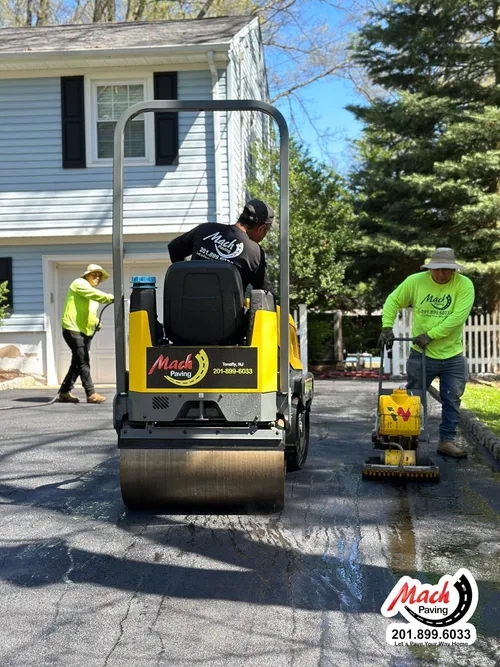
MACH PAVING is a family-owned paving company serving Yonkers, NY, and the surrounding New York and New Jersey areas. With over 20 years of experience, they provide residential and commercial paving services including parking lot paving, resurfacing, striping, seal coating, and custom concrete projects. Their team uses high-quality materials and advanced techniques to deliver durable and visually appealing surfaces. They also offer specialized services such as ADA compliant handicap parking markings and Belgium block installation.
Vali Construction LLC
673 Jerusalem Rd, Scotch Plains, NJ 07076
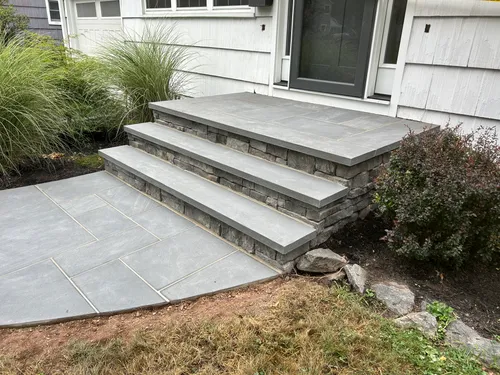
Vali Construction LLC is a paving and masonry company based near New York, NY. They provide a range of services including residential and commercial paving, parking lot striping, sealcoating, and various masonry and hardscaping projects such as patios, walkways, and retaining walls. Their capabilities include asphalt paving for projects of all sizes, from residential driveways to large commercial parking lots and municipal roadways. They also offer site work services like excavation, grading, and concrete flat work for contractors and builders.
Oscar's Asphalt & Sealcoating
New York, NY
Oscar's Asphalt & Sealcoating provides asphalt sealcoating, crack filling, pothole patching, and parking lot striping services in New York, NY. They focus on maintaining driveways and parking lots to withstand local weather and heavy traffic. The company uses top-grade materials to ensure durable results and offers 24/7 availability for their services. Their work covers a range of pavement maintenance needs to keep properties safe and looking professional.
Understanding Newark's Regulatory Landscape
Parking lot line painting in Newark is governed by overlapping regulations. At the federal level, the ADA Standards for Accessible Design set the baseline for accessible parking spaces and routes 1. New Jersey state law, including the Uniform Fire Code (N.J.A.C. 5:70) and statutes like NJSA 39:4-138, adds specific requirements for fire lane dimensions, signage, and penalties 2. Crucially, undertaking any restriping or resurfacing project can trigger a legal obligation to bring the entire parking facility into full ADA compliance 2. This means you cannot simply repaint old, non-compliant lines; you must update the layout to meet current accessibility standards.
ADA-Compliant Accessible Parking Requirements
Creating accessible parking is a core component of compliant lot marking. The requirements are precise and non-negotiable.
Location and Number: Accessible spaces must be located on the shortest accessible route to the building entrance. The number required depends on the total number of spaces in the lot. For lots with 1 to 25 spaces, at least one must be accessible. The requirements scale up from there, with one in every six accessible spaces needing to be van-accessible.
Dimensions and Layout:
- Standard Accessible Car Space: Must be at least 8 feet wide (96 inches) with an adjacent access aisle that is at least 5 feet wide.
- Van-Accessible Space: Can be configured in two ways: an 11-foot-wide space with a 5-foot aisle, or an 8-foot-wide space with an 8-foot-wide aisle 3 4.
- Access Aisle Marking: The access aisle must be marked with diagonal stripes or a similar pattern to clearly indicate it is not a parking space. This aisle is part of the accessible route and must be kept clear at all times 5.
Signage: Each accessible space requires a mounted sign. The R7-8 sign (featuring the international symbol of accessibility) must be installed, with the bottom of the sign at least 60 inches above the ground 6 7. New Jersey adds an extra requirement: a "penalty sign" stating the fine for unauthorized use (a $250 fine for a first offense) must be posted alongside the accessibility sign 6.
Surface and Maintenance: The surface of accessible spaces and their access aisles must be stable, firm, and slip-resistant. Furthermore, Newark property owners must ensure these spaces are cleared of snow and ice within 48 hours after a storm ends, with potential fines ranging from $200 to $500 for non-compliance 8 9 10.
Fire Lane Striping and Signage Standards
Fire lane pavement marking is vital for emergency vehicle access and is strictly regulated by New Jersey fire code.
Marking Specifications: All fire lane pavement markings and adjacent curbing must be painted yellow and should be reflectorized for visibility at night. The words "NO PARKING FIRE LANE" must be painted on the pavement in yellow, with letters typically 18 to 24 inches high.
Dimensions: Fire lanes are generally required to be a minimum of 18 feet in width to accommodate fire apparatus, though local fire officials may approve a 12-foot width in certain circumstances 11.
Signage: "No Parking Fire Lane" signs must be installed along the fire lane, typically spaced every 50 to 100 feet. These signs should be mounted approximately 7 feet above the ground 12 13.
Standard Parking Stall and Traffic Markings
Beyond accessible and fire lanes, general parking lot layout has its own set of best practices and legal guidelines.
Stall Dimensions: While local codes can vary, a common standard for a standard angled or perpendicular parking stall is 8 feet 6 inches to 9 feet in width and 18 to 20 feet in depth 14. Proper stall striping maximizes capacity while ensuring vehicles can open doors safely.
Traffic Flow and Safety Markings:
- Directional Arrows: Used to guide one-way traffic and are essential for safe circulation.
- Stop Bars and Crosswalks: Clearly marked crosswalks provide safe pedestrian pathways from parking areas to buildings. New Jersey law prohibits parking within 25 feet of a crosswalk at an intersection 15 16.
- Loading Zones: Commercial properties often require designated loading zones, which must be clearly marked with yellow curb paint or specific "Loading Only" signage to prevent unauthorized parking 17.
Find the perfect parking lot striping companies for your needs
Get personalized recommendations and expert advice
Materials, Durability, and Maintenance
The longevity of your parking lot markings depends on the materials used and the condition of the pavement. Thermoplastic striping is a popular choice for its exceptional durability and reflectivity, often lasting 3-5 years or more. High-performance traffic paint is a cost-effective option for lots in good condition, though it may require reapplication every 1-2 years. The surface must be clean, dry, and free of oil or debris for proper paint adhesion. Regular maintenance, including prompt repainting of faded lines and re-striping after sealcoating, is necessary to maintain compliance and safety.
The Cost of Parking Lot Striping in Newark
Costs for line painting can vary based on the lot's size, condition, and the complexity of the layout. Prices are often broken down by the type of marking:
- Standard Parking Space: $4-$8 per space.
- Accessible Space (with symbol and aisle): $75-$125 per space.
- Fire Lane Marking: $1.50-$3.00 per linear foot.
- Directional Arrows: $25-$40 each.
- Stop Bars: $30-$50 each 18.
These are estimated ranges. The final cost will depend on the specific contractor, the materials chosen, and the preparatory work needed. It's important to view striping not as an expense but as an investment in safety, liability protection, and property value.
Consequences of Non-Compliance
Ignoring parking lot marking regulations carries significant risk. Beyond the safety hazards of a poorly organized lot, property owners face:
- Substantial Fines: Municipal code enforcement and fire officials can issue fines for missing or faded fire lane markings, inaccessible parking violations, and improper signage.
- Increased Liability: In the event of an accident or injury-such as a pedestrian struck in an unmarked crosswalk or someone injured due to inaccessible features-non-compliance can be used as evidence of negligence in a lawsuit.
- ADA Lawsuits: Failure to provide compliant accessible parking can lead to costly private legal action under the ADA.
Regular audits of your parking lot markings are a prudent way to identify and correct issues before they result in penalties or litigation.
Frequently asked questions
Sources
Footnotes
-
The ADA and Parking | The Northeast ADA Center - https://northeastada.org/resource/the-ada-and-parking ↩
-
ADA Compliance Checkup for New Jersey Parking Lots - https://www.gspavement.com/ada-compliance-checkup-for-new-jersey-parking-lots/ ↩ ↩2
-
Commercial Parking Lot Striping: Costs, Standards + Pro Tips - https://www.getonecrew.com/post/commercial-parking-lot-striping ↩
-
Chapter 5: Parking Spaces - Access-Board.gov - https://www.access-board.gov/ada/guides/chapter-5-parking/ ↩
-
ADA Compliance Brief: Restriping Parking Spaces - https://www.ada.gov/resources/restriping-parking-spaces/ ↩
-
New Jersey Guide to Accessible Parking - NJ.gov - https://www.nj.gov/humanservices/dds/documents/BROCHURES/2024/Guide-to-Accessible-Parking.pdf ↩ ↩2
-
Buy New Jersey Handicap Parking Signs | Orders Over $49 Ship Free - https://www.parkingsign.com/new-jersey-handicap-parking-signs ↩
-
Guide to Handicapped Parking - NJ.gov - https://www.nj.gov/humanservices/dds/documents/DDS_GuideToHandicappedPkg.pdf ↩
-
Requirements for Off-Street Parking and Loading Areas - https://ecode360.com/36730669 ↩
-
Understanding ADA-Compliant Parking Lots: What Every Business Needs to Know - https://buckbros.com/blog/understanding-ada-compliant-parking-lots/ ↩
-
N.J. Admin. Code § 5:21-4.16 - Parking lots | State Regulations - https://www.law.cornell.edu/regulations/new-jersey/N-J-A-C-5-21-4-16 ↩
-
Article VII: Fire Lane and Fire Hydrant Parking Regulations - https://ecode360.com/38079216 ↩
-
Article I: Adoption of Standards; Fire Prevention - eCode360 - https://ecode360.com/27521360 ↩
-
Parking Lot Striping Standards: Best Practices for Busy Lots - https://www.themonrazcompany.com/parking-lot-striping-standards ↩
-
Pedestrian Laws - https://njbikeped.org/pedestrian-laws/ ↩
-
Know the distances when parking... In New Jersey, you ... - Facebook - https://www.facebook.com/mountlaurelpd/posts/know-the-distances-when-parkingin-new-jersey-you-cannot-park-within-10-feet-of-a/1146781714160513/ ↩
-
§ 42-409. STOPPING, STANDING, OR PARKING IN PASSENGER CURB LOADING ZONE. - https://codelibrary.amlegal.com/codes/alvaok/latest/alva_ok/0-0-0-6329 ↩
-
Understanding New Jersey Parking Lot Striping Regulations - https://randysealcoatingandstriping.com/blog/nj-parking-lot-striping-regulations-2025 ↩