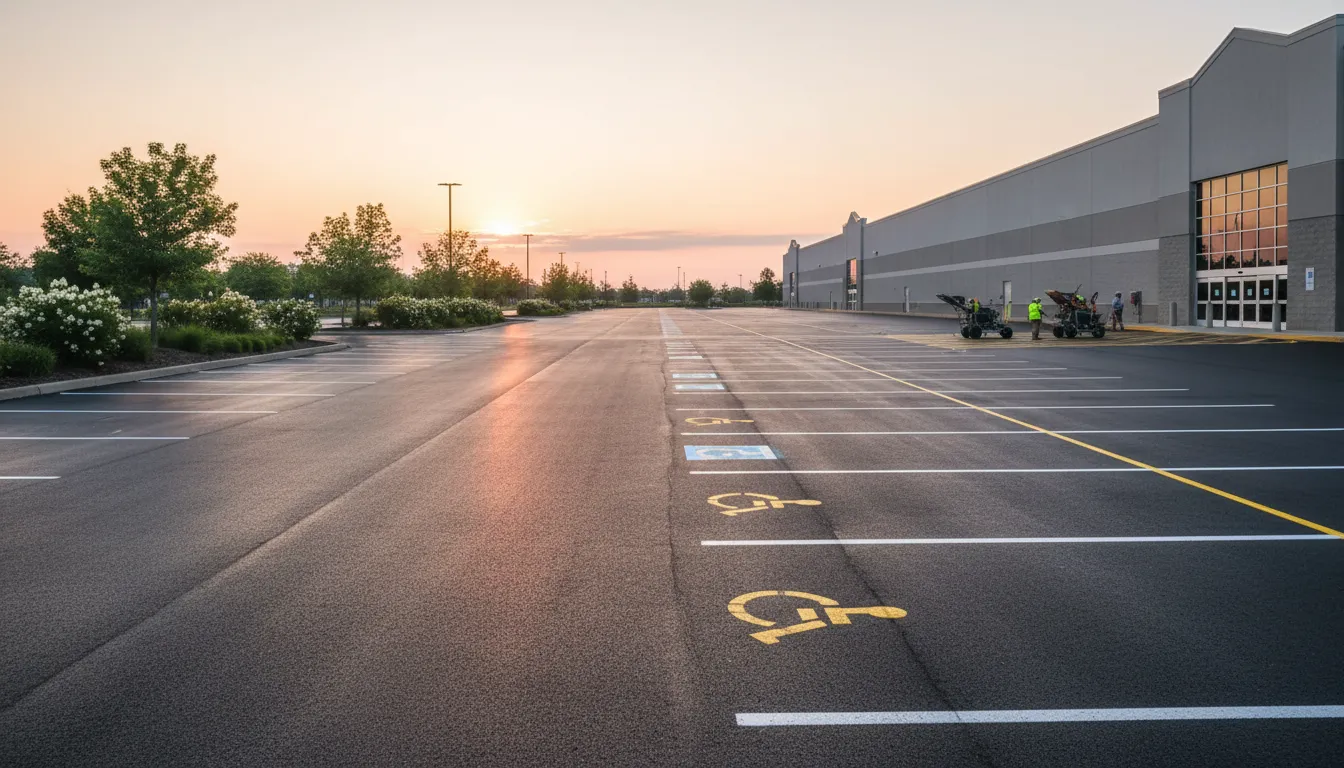
Find the Best Parking Lot Striping Companies for Your Business
No obligation • Fast responses • Nationwide coverage

Why you can trust Tidy Parking
Tidy Parking is a leading U.S. source for parking lot maintenance services, including striping, sealcoating, sweeping, paving, resurfacing, and repairs. Our content is created independently, and providers cannot pay to influence ratings or recommendations.
Search providers near you
Top Parking Lot Striping Companies in Hamilton, New Jersey Ranked
Parking lot striping is the process of applying painted lines, symbols, and markings to define traffic flow, parking spaces, and safety zones. In Hamilton Township, this is far more than just paint on pavement; it's a critical component of legal compliance, safety, and property maintenance. Proper pavement markings ensure efficient use of space, guide drivers and pedestrians safely, and help property owners avoid significant fines. This guide explains the specific local regulations and best practices for line striping in Hamilton, helping you understand what's required to maintain a compliant and functional parking area.
Three Sons Driveway Maintenance LLC
Philadelphia, PA
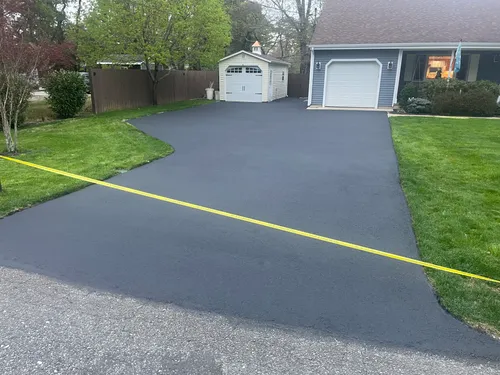
Three Sons Driveway Maintenance LLC is a family-owned business serving residential and commercial customers in Philadelphia, PA. They provide parking lot sealcoating, line striping, crack sealing, patching, and tar and chip services. The company specializes in maintaining and repairing parking lots and driveways with services such as hot crack filling and sport surface maintenance. Operating locally in South Jersey, they are licensed and insured, offering free estimates and price matching for reasonable local competitor quotes.
MACK SEAL - Sealcoating - Line Striping - Asphalt
537 E County Line Rd, Hatboro, PA 19040
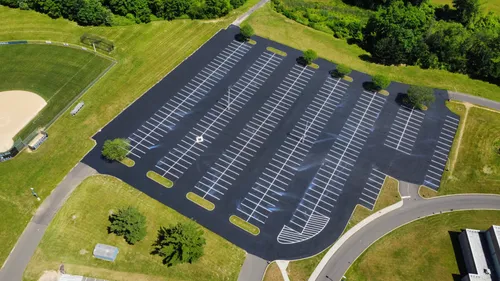
MACK SEAL - Sealcoating - Line Striping - Asphalt is a family-owned business serving Philadelphia, PA, and the surrounding areas. With over 20 years of experience, they specialize in residential and commercial sealcoating and parking lot line striping. Their services include asphalt maintenance and professional line striping, supported by licensed and insured contractors. The company emphasizes quality workmanship and has completed over 500 projects, making them a recognized provider in the region.
Cooper And Sons Paving
3010 Bordentown Ave, Parlin, NJ 08859
Cooper And Sons Paving is a family-owned asphalt paving contractor serving New York, NY, and surrounding areas. With over 50 years of experience, they provide a full range of residential and commercial paving services including parking lot paving, striping, sealcoating, resurfacing, and repair. Their expertise covers driveway paving, patching, crack filling, and installation of Belgian blocks and bumper posts. The company operates primarily in central New Jersey counties but extends services to nearby locations. Cooper And Sons uses quality materials and equipment to ensure durable pavement solutions tailored to each project.
Custom Striping and Sealcoating LLC
Philadelphia, PA
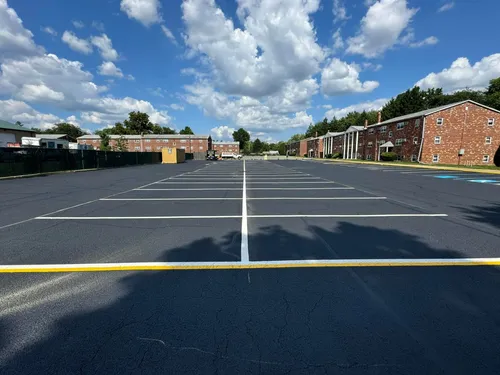
Custom Striping and Sealcoating LLC is a parking lot striping, sealcoating, and repair company serving Philadelphia, PA, and surrounding counties. They provide asphalt maintenance services including seal coating, crack sealing, line striping, asphalt repair, traffic sign installation, snow plowing, and salting. With over seven years of experience, they offer a two-year warranty on their work and ensure ADA-compliant parking lot lines. The company also provides emergency availability and seasonal contracts for snow services.
Monster Paving
669 Tennis Ave, Ambler, PA 19002
Monster Paving is a parking lot and driveway contractor based near Philadelphia, PA. They offer a wide range of outdoor services including asphalt paving, sealcoating, parking lot striping, concrete curbing, and Belgian block masonry. With over 20 years of experience, the company also provides landscaping design, stamped concrete, fire pits, and property maintenance such as grass cutting and bush trimming. Their comprehensive approach allows customers to manage multiple outdoor projects with a single contractor.
Understanding Hamilton Township's Striping Regulations
Navigating the rules for parking lot markings in Hamilton requires understanding a combination of state mandates and local ordinances. New Jersey's accessibility laws set a baseline, but Hamilton Township has its own specific zoning and land development codes that dictate everything from fire lane dimensions to the placement of accessible spaces. These local requirements are enforced by the Township Engineer, and non-compliance can lead to fines and operational headaches. Whether you're managing a commercial plaza, an office building, or an apartment complex, your parking lot layout and line painting must adhere to these standards.
The purpose of these regulations is threefold: to ensure safety for all users, to provide equitable access as required by the Americans with Disabilities Act (ADA), and to maintain orderly traffic circulation. Ignoring them isn't just a legal risk-it can create liability issues if an accident or injury occurs due to poorly marked or non-compliant pavement.
Key Requirements for Accessible Parking Spaces
Creating accessible parking is one of the most regulated aspects of lot striping. In Hamilton, as throughout New Jersey, the specifications are precise and non-negotiable.
- Space Dimensions: Each standard accessible parking space must be at least 8 feet (96 inches) wide. This is wider than a typical 9-foot space to allow for vehicle door clearance and mobility device deployment.
- Access Aisles: A striped access aisle at least 5 feet wide must be adjacent to the accessible space. This aisle is part of the accessible route and must be kept clear at all times; it cannot be used for parking 1.
- Van-Accessible Spaces: For every six accessible spaces, at least one must be van-accessible. These require either an 8-foot wide access aisle or an 11-foot wide parking space with a standard 5-foot aisle 2.
- Markings & Symbols: The International Symbol of Accessibility (ISA) must be painted on the pavement within each accessible space. Regulations specify common sizes of 36"x36" or 60"x60" 3. The access aisle must be marked with diagonal hatch lines to discourage parking.
- Signage: A vertical sign must be installed for each space, mounted 5 to 7 feet above the ground. The sign must display the ISA and include the penalty notice: "$250 Fine First Offense" 4.
- Location: Accessible spaces must be located on the shortest accessible route from the parking area to an accessible building entrance. They cannot be placed in remote or less convenient areas of the lot 5.
Failing to maintain these markings clearly can be costly. Parking in an accessible space without a permit carries a $250 fine for a first offense in New Jersey, with higher penalties for repeat violations 6. Furthermore, property owners are responsible for keeping these spaces and their access aisles clear of snow and ice within 48 hours after a storm ends.
Fire Lane Marking Specifications
Fire lane striping is critical for emergency access. Hamilton Township's codes provide explicit instructions to ensure fire apparatus can reach any part of a building unimpeded.
- Color and Width: All fire lane pavement markings must be yellow. The lane itself must be designated at a minimum width of 12 feet, though the Township Engineer may require 18 to 20 feet where feasible to accommodate larger fire trucks.
- Striping Pattern: The perimeter of the fire lane must be outlined. Within this boundary, 4-inch wide yellow diagonal stripes must be painted, spaced 5 feet apart on center 7.
- Lettering: The words "NO PARKING FIRE LANE" must be stenciled in yellow paint at regular intervals along the lane.
- Signage: Reflective "No Parking Fire Lane" signs, typically 12x18 inches in size, must be posted at intervals not exceeding 100 feet, or as directed by the Township Engineer 8. Blocking a designated fire lane can result in fines ranging from $100 to $500.
Find the perfect parking lot striping companies for your needs
Get personalized recommendations and expert advice
Markings for Loading Zones, Crosswalks, and Traffic Flow
Beyond parking stalls and fire lanes, a fully compliant lot requires several other types of markings.
- Loading Zones: These spaces must be clearly striped according to the site plan approved by the township. They are often marked with yellow paint to distinguish them from standard white-lined parking spaces 9 10.
- Pedestrian Safety: Crosswalks and defined pedestrian walkways through parking lots are essential for safety. In Hamilton, crosswalks must be a minimum of 6 feet wide. They should be "conspicuously marked," often with high-visibility white thermoplastic or epoxy, and are sometimes constructed with brick pavers for added definition 11. These are particularly important on the path connecting accessible parking to building entrances.
- Traffic Control: Stop bars, directional arrows, and yield markings are required to manage the flow of vehicles. A standard white stop bar is typically 4 to 6 inches wide. Directional arrows guide one-way traffic and help prevent accidents at intersections within the lot.
Maintenance Schedule and Restriping Costs
Pavement markings fade due to traffic wear, weather, and snow plowing. In New Jersey's climate, with its freeze-thaw cycles and winter maintenance, markings can degrade quickly. Industry experts recommend restriping parking lots every 1 to 2 years to maintain clarity and compliance 12. A good rule of thumb is to repaint when markings have lost about 25% of their visibility.
Costs for line striping in New Jersey vary based on the complexity and type of marking. Here are some common benchmarks:
- Standard Parking Space (9'x20'): $4 - $8 per space.
- Accessible Parking Space: $75 - $125 per space (includes space, aisle, and symbol).
- Fire Lane Marking: $1.50 - $3.00 per linear foot.
- Stop Bar: $30 - $50 each.
- Directional Arrow: $25 - $40 each.
Most municipalities in New Jersey, including Hamilton Township, require a permit for parking lot work that includes restriping, especially if the layout is being altered. It is always advisable to check with the Township Engineering Department before starting a project.
The Importance of Professional Pavement Marking
Given the precise nature of the regulations-from the angle of diagonal hatch lines to the reflectivity of fire lane signs-professional application is key. Experienced contractors understand the local codes, use durable, weather-resistant paints and thermoplastics, and have the equipment to apply crisp, straight lines that last. They can also help you navigate the permit process and ensure your site plan matches the markings on the ground.
Proper parking lot striping is an investment in safety, accessibility, and risk management. Clear markings reduce driver confusion, minimize "fender benders," and demonstrate a commitment to compliance and customer care.
Frequently asked questions
Sources
Footnotes
-
ADA Compliance Guide for Parking Lot Line Striping - https://www.pavementsolutions.org/ada-compliance-guide-for-parking-lot-line-striping/ ↩
-
GUIDE TO ACCESSIBLE PARKING | NJ.gov - https://www.nj.gov/humanservices/dds/documents/BROCHURES/2021/guide-to-accessible-parking-booklet-English-web21.pdf ↩
-
GUIDE TO ACCESSIBLE PARKING | NJ.gov - https://www.nj.gov/humanservices/dds/documents/BROCHURES/2021/guide-to-accessible-parking-booklet-English-web21.pdf ↩
-
ADA Compliance Checkup for New Jersey Parking Lots - https://www.gspavement.com/ada-compliance-checkup-for-new-jersey-parking-lots/ ↩
-
New Jersey Guide to Accessible Parking - NJ.gov - https://www.nj.gov/humanservices/dds/documents/BROCHURES/2024/Guide-to-Accessible-Parking.pdf ↩
-
Guide to Handicapped Parking - NJ.gov - https://www.nj.gov/humanservices/dds/documents/DDS_GuideToHandicappedPkg.pdf ↩
-
Chapter 550 Land Development - Hamilton Township - https://www.hamiltonnj.com/DocumentCenter/View/4894 ↩
-
county of mercer, new jersey - Hamilton Township - https://www.hamiltonnj.com/DocumentCenter/View/5234 ↩
-
Understanding New Jersey Parking Lot Striping Regulations - https://randysealcoatingandstriping.com/blog/nj-parking-lot-striping-regulations-2025 ↩
-
chapter 7. parking, loading and circulation - Hamilton Township - https://www.hamilton-township.org/media/economic-development/Codes_Chapter7.pdf ↩
-
township of hamilton county of mercer, new jersey - https://www.hamiltonnj.com/DocumentCenter/View/4355 ↩
-
NJ Parking Lot Striping Regulations 2025 | Compliance Guide - https://randysealcoatingandstriping.com/learning-center/nj-parking-lot-striping-regulations-2025 ↩