Find the Best Parking Lot Striping Companies for Your Business
No obligation • Fast responses • Nationwide coverage
Why you can trust Tidy Parking
Tidy Parking is a leading U.S. source for parking lot maintenance services, including striping, sealcoating, sweeping, paving, resurfacing, and repairs. Our content is created independently, and providers cannot pay to influence ratings or recommendations.
Search providers near you
Top Parking Lot Striping Companies in Camden, New Jersey Ranked
Maintaining clear, compliant parking lot markings is a critical responsibility for any Camden property owner or manager. Parking lot striping, also known as line painting or pavement marking, is far more than just applying paint; it's a safety and legal necessity. In Camden, these markings are governed by a strict combination of federal Americans with Disabilities Act (ADA) standards and New Jersey state and local ordinances, which are actively enforced by local authorities on private property. Faded or incorrect lines can lead to safety hazards, traffic confusion, fines, and even liability issues. This guide explains the key regulations, best practices, and local considerations for effective parking lot line painting in Camden to help you ensure your property is safe, functional, and legally compliant.
Premier Sealcoating Line Striping & Asphalt Maintenance LLC
Allentown, PA
Premier Sealcoating Line Striping & Asphalt Maintenance LLC provides comprehensive asphalt maintenance services in Allentown, PA. Their offerings include crack sealing, sealcoating, line striping, pothole patching, resurfacing sports courts, and traffic sign installation. The company uses high-quality materials such as Sherwin-Williams traffic marking paints and premium sealers fortified with silica sand to enhance durability and appearance. They serve a wide area across Pennsylvania and New Jersey, including cities like Bethlehem, Harrisburg, and Philadelphia. Premier Sealcoating is fully licensed and insured, with certifications including COSTARS, PennDOT DBE, Pennsylvania SDB, and WBENC, emphasizing their commitment to quality and compliance.
Abc sealcoating llc
30 Acres Dr, Ridley Park, PA 19078
Abc Sealcoating LLC is a paving contractor based near Philadelphia, PA, offering a range of services including parking lot striping, sealcoating, paving, and repair. With over 20 years of experience, the company handles projects from large commercial parking lots to residential driveway repairs. Their capabilities include asphalt maintenance such as fixing potholes and unstable walkways, as well as professional sealcoating to protect and restore pavement surfaces. Abc Sealcoating LLC serves the Ridley Park area and is equipped to manage both small and large paving jobs.
MACK SEAL - Sealcoating - Line Striping - Asphalt
537 E County Line Rd, Hatboro, PA 19040
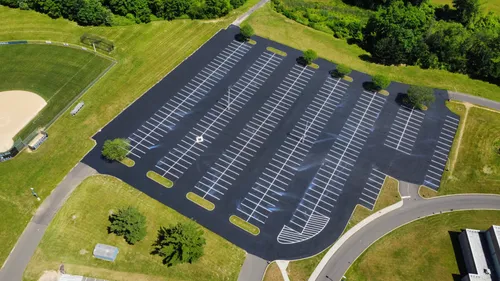
MACK SEAL - Sealcoating - Line Striping - Asphalt is a family-owned business serving Philadelphia, PA, and the surrounding areas. With over 20 years of experience, they specialize in residential and commercial sealcoating and parking lot line striping. Their services include asphalt maintenance and professional line striping, supported by licensed and insured contractors. The company emphasizes quality workmanship and has completed over 500 projects, making them a recognized provider in the region.
Beyond Sealcoating, LLC
2011 W Main St Rear Garage, Norristown, PA 19403
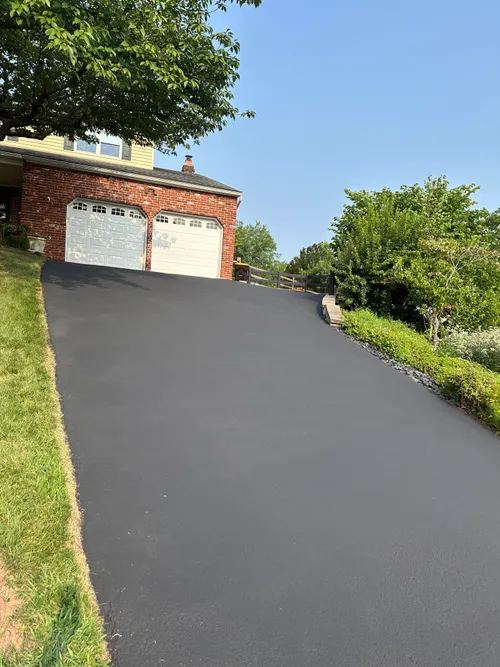
Beyond Sealcoating, LLC is a family-owned and fully insured company based near Philadelphia, PA, specializing in sealcoating, crack sealing, and parking lot striping. They serve Montgomery County and surrounding areas, focusing on protecting and extending the life of asphalt surfaces for both residential and commercial clients. Their services include hand-brushed residential sealcoating, hot rubberized tar crack sealing, and professional line striping to maintain ADA standards. Beyond Sealcoating uses high-quality sealers and crack fillers, such as Neyra Jennite AE with Diamond Shield additives and Sealmaster hot tar products, to enhance durability and appearance.
All Out Parking Lots
501 Abbott Dr, Broomall, PA 19008
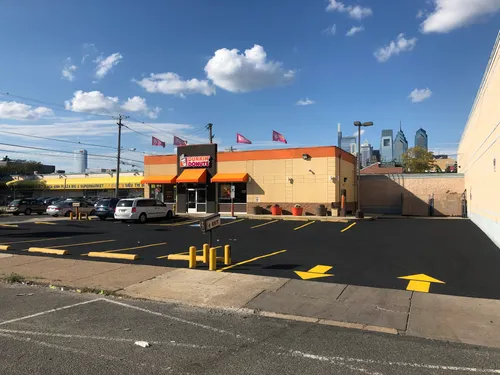
All Out Parking Lots is a full-service parking lot contractor based in Philadelphia, PA, offering a comprehensive range of asphalt and concrete services. Their expertise includes asphalt repair, sealcoating, pavement marking, paving, and concrete replacement, serving commercial clients with flexible solutions for parking lot projects. They have worked on multiple high-profile sites in the Greater Philadelphia region, providing services such as overlays, pothole remediation, and ADA-compliant pavement marking. The company emphasizes safety and quality in all projects and has experience managing large-scale multi-site facility partnerships.
Understanding Camden's Regulatory Landscape
Parking lot markings in Camden are not a matter of preference but of law. Enforcement is rigorous, and the rules come from multiple levels of government. At the forefront is the federal ADA, which sets the baseline for accessible parking. These federal requirements are then supplemented and enforced through New Jersey's own administrative code (N.J.A.C. 5:21-4.16) and local Camden County ordinances 1. Local police have the authority to issue citations for violations on private property, such as improperly marked fire lanes or accessible spaces. Crucially, in New Jersey, any project that involves resurfacing or restriping your parking lot triggers a legal obligation to bring the entire lot's markings into full compliance with the current ADA standards-you cannot simply repaint old, non-compliant lines.
Key Authorities and Enforcement
- Americans with Disabilities Act (ADA): Federal civil rights law mandating accessible design.
- New Jersey Administrative Code (N.J.A.C.): State-level regulations detailing accessible parking and site design.
- Local Municipal Codes (e.g., eCode360): Camden-area ordinances specifying fire lane dimensions, curb painting, and prohibited zones 2.
- Local Police Departments: Actively enforce parking regulations on both public and private property 3.
Essential Marking Requirements for Compliance
A compliant parking layout involves several specific types of markings, each with precise dimensions and placement rules.
Accessible Parking Spaces
Accessible spaces are among the most scrutinized markings. Compliance involves more than just painting the international symbol.
- Standard Car Space: Must be at least 96 inches (8 feet) wide. An adjacent access aisle of at least 60 inches (5 feet) wide is required. This aisle must be marked, typically with diagonal hatch marks, to clearly indicate it is not for parking 4.
- Van-Accessible Space: Two configurations are acceptable: a 132-inch (11-foot) wide space with a 5-foot aisle, or an 8-foot wide space with an 8-foot wide access aisle 5.
- Signage: Each accessible space must be paired with a sign featuring the International Symbol of Accessibility mounted at least 60 inches above the ground. New Jersey further requires a specific penalty sign stating "$250 Fine, Tow-Away Zone" to be posted 6.
- Location & Slope: Spaces must be on the shortest accessible route to the building entrance. The surface must be nearly level, with a maximum slope of 1:48 (2.08%) in any direction 7 8.
Fire Lanes
Clearly marked fire lanes are vital for emergency vehicle access. Local codes provide strict specifications.
- Width: Fire lanes must be a minimum of 20 feet wide, with 24 feet being the preferred standard to accommodate modern fire apparatus.
- Marking: The curb must be painted solid yellow, or a 6-inch wide red line must be applied directly to the pavement along the lane's edge 9.
- Lettering: The words "NO PARKING-FIRE LANE" or "FIRE LANE" must be painted on the pavement in white letters at least 12 inches high. This lettering should be repeated every 25 to 50 feet along the lane 10.
- Signage: Reflective "No Parking Fire Lane" signs must be installed at regular intervals as required by the local fire marshal 11.
Traffic and Safety Markings
These markings organize the flow of vehicles and pedestrians, preventing accidents.
- Crosswalks: Must be clearly marked, especially where sidewalks or primary pedestrian paths cross vehicle traffic lanes. They should align with ADA-compliant curb ramps 12.
- Stop Bars & Directional Arrows: White stop bars (4-6 inches wide) should be placed at all stop signs. Directional arrows painted in traffic aisles guide one-way flow and reduce conflicts 13.
- Prohibited Parking Zones: New Jersey State Statute 39:4-138 prohibits parking within 10 feet of a fire hydrant, 25 feet of a crosswalk, or 50 feet of a stop sign 14. These areas should be clearly indicated, often with yellow curb paint or signage.
Loading Zones
For commercial properties, loading areas must be thoughtfully integrated.
- Design: Off-street loading spaces should be positioned so they do not block fire lanes, standard parking, or traffic aisles 15.
- Location: Local design standards often prefer loading areas to be located in the rear or side yard of a property, rather than the front, to maintain aesthetics and traffic flow 16.
Find the perfect parking lot striping companies for your needs
Get personalized recommendations and expert advice
Maintenance Schedule and Local Considerations for Camden
The harsh Northeastern climate directly impacts the longevity of your pavement markings. New Jersey's seasonal extremes-from hot, humid summers to freezing winters with snow plowing-accelerate wear and fading.
- Restriping Frequency: Industry professionals in the region recommend a complete restriping of your parking lot every 1 to 2 years to maintain visibility and compliance. High-traffic areas like entrances, accessible spaces, and stop bars may need touch-ups even more frequently.
- Material Selection: Using high-quality, durable traffic paint or thermoplastic markings can provide a longer service life, offering better value over time despite a higher initial cost. The right material can better withstand Camden's weather and the abrasion from snow plows.
- Pre-Work Inspection: Before hiring a contractor, walk your property. Note any cracks or potholes that need repair before lines can be painted, and identify any areas where current markings may not meet the latest codes.
Understanding Project Costs
The cost for lot striping in Camden varies based on the scope, materials, and specific markings required. Below is a general estimate based on regional pricing data 17 18.
| Feature | Estimated Cost | Notes |
|---|---|---|
| Standard Striping | $4 - $8 per stall | Includes layout of lines for standard spaces. |
| Accessible Space | $75 - $125 per space | Includes stencil for the handicap symbol and access aisle markings. |
| Fire Lane Marking | $1.50 - $3.00 per linear foot | Includes yellow/red curb painting or pavement line application. |
| Stop Bars | $30 - $50 each | White lines at stop signs. |
| Directional Arrows | $25 - $40 each | For controlling traffic flow in aisles. |
| Signs (Installed) | $100 - $200 per sign | Includes ADA-compliant or fire lane signs with post and installation. |
Important Note: These are estimated ranges. Always obtain detailed, written quotes from local contractors that itemize all work, including layout, surface preparation, paint type, and any necessary signage.
Frequently asked questions
Sources
Footnotes
-
Borough of Bradley Beach, NJ Parking Regulated - https://ecode360.com/7044375 ↩
-
Article VI: Fire Protection Standards Enforcement - eCode360 - https://ecode360.com/28217126 ↩
-
City Cracking Down on Parking on Sidewalks, Medians, Alleys ... - https://www.tapinto.net/towns/camden/sections/government/articles/city-cracking-down-on-parking-on-sidewalks-medians-alleys-and-crosswalks ↩
-
Accessible Parking Spaces | ADA.gov - https://www.ada.gov/topics/parking/ ↩
-
guide to accessible parking - East Rutherford, NJ - https://www.eastrutherfordnj.net/documentcenter/view/197 ↩
-
GUIDE TO ACCESSIBLE PARKING | NJ.gov - https://www.nj.gov/humanservices/dds/documents/BROCHURES/2021/guide-to-accessible-parking-booklet-English-web21.pdf ↩
-
ADA Compliance Checkup for New Jersey Parking Lots - https://www.gspavement.com/ada-compliance-checkup-for-new-jersey-parking-lots/ ↩
-
Accessible Parking - ADA National Network - https://adata.org/factsheet/parking ↩
-
Chapter 35: Fire Lanes or Zones - Borough of Rutherford, NJ - https://ecode360.com/11343889 ↩
-
ADA Compliance Brief: Restriping Parking Spaces - https://www.ada.gov/resources/restriping-parking-spaces/ ↩
-
FIRE LANE REQUIREMENTS | epcesd1 - https://www.epcesd1.com/wp-content/uploads/2022/03/Fire-Lane-Requirements.pdf ↩
-
Chapter 5: Crossing the Street - NJ.gov - https://www.nj.gov/transportation/community/srts/pdf/szdgchapter5.pdf ↩
-
Understanding New Jersey Parking Lot Striping Regulations - https://randysealcoatingandstriping.com/blog/nj-parking-lot-striping-regulations-2025 ↩
-
Know the distances when parking... In New Jersey, you ... - Facebook - https://www.facebook.com/mountlaurelpd/posts/know-the-distances-when-parkingin-new-jersey-you-cannot-park-within-10-feet-of-a/1146781714160513/ ↩
-
Article XXIX: Design Standards for Subdivision and Site Plans - https://ecode360.com/28225848 ↩
-
N.J. Admin. Code § 19:66-7.3 - Loading area design standards - https://www.law.cornell.edu/regulations/new-jersey/N-J-Admin-Code-SS-19-66-7.3 ↩
-
NJ Parking Lot Striping Regulations 2025 | Compliance Guide - https://randysealcoatingandstriping.com/learning-center/nj-parking-lot-striping-regulations-2025 ↩
-
Understanding New Jersey Parking Lot Striping Regulations: A 2025 Compliance Guide - https://randysealcoatingandstriping.com/blog/nj-parking-lot-striping-regulations-2025 ↩