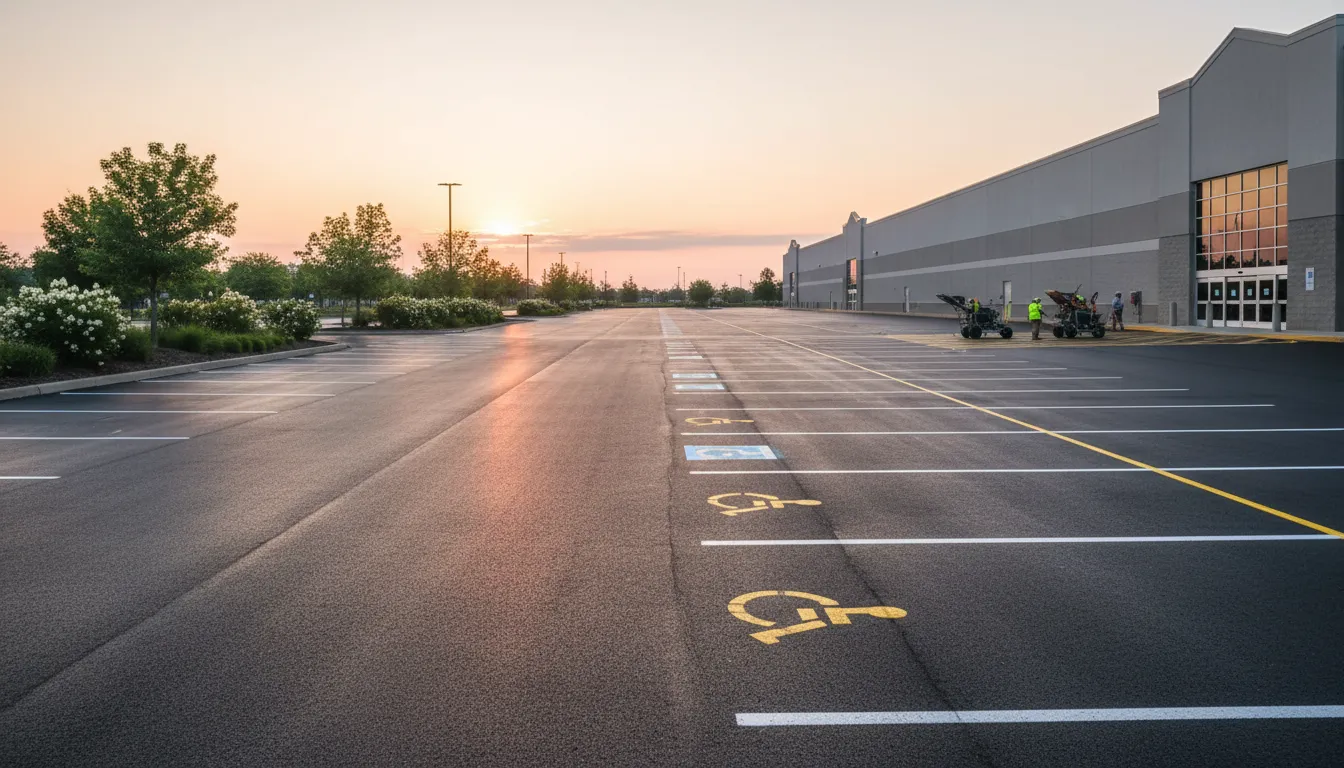
Find the Best Parking Lot Striping Companies for Your Business
No obligation • Fast responses • Nationwide coverage
Why you can trust Tidy Parking
Tidy Parking is a leading U.S. source for parking lot maintenance services, including striping, sealcoating, sweeping, paving, resurfacing, and repairs. Our content is created independently, and providers cannot pay to influence ratings or recommendations.
Search providers near you
Top Parking Lot Striping Companies in Berkeley, New Jersey Ranked
Maintaining clear, compliant parking lot striping is a critical responsibility for property owners and managers across New Jersey. Proper pavement markings ensure safety, maximize space efficiency, and are a legal requirement under state and federal law. This guide explains New Jersey's specific regulations for parking lot striping, including ADA-accessible spaces and fire lanes, and provides practical information to help you understand the scope of work and connect with qualified local professionals for your project.
MACH PAVING
Yonkers, NY
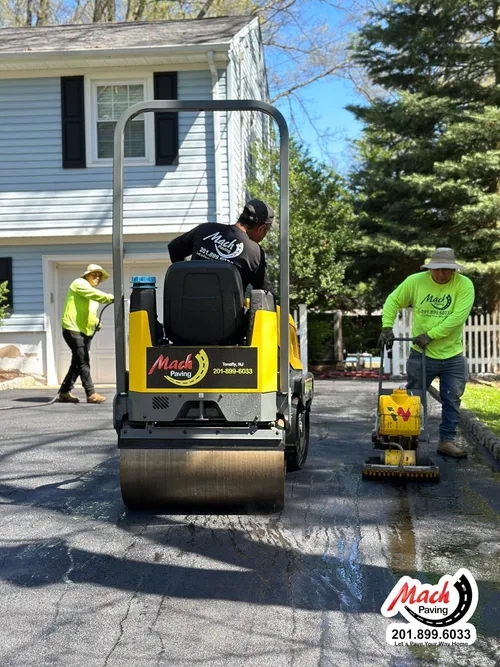
MACH PAVING is a family-owned paving company serving Yonkers, NY, and the surrounding New York and New Jersey areas. With over 20 years of experience, they provide residential and commercial paving services including parking lot paving, resurfacing, striping, seal coating, and custom concrete projects. Their team uses high-quality materials and advanced techniques to deliver durable and visually appealing surfaces. They also offer specialized services such as ADA compliant handicap parking markings and Belgium block installation.
Vali Construction LLC
673 Jerusalem Rd, Scotch Plains, NJ 07076
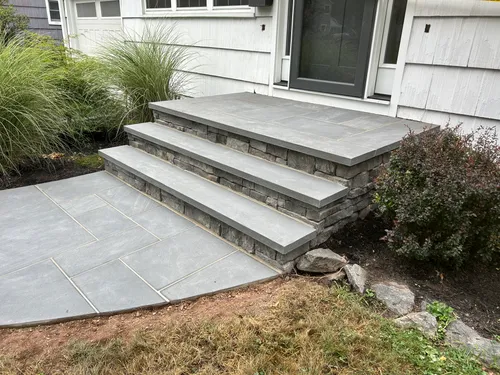
Vali Construction LLC is a paving and masonry company based near New York, NY. They provide a range of services including residential and commercial paving, parking lot striping, sealcoating, and various masonry and hardscaping projects such as patios, walkways, and retaining walls. Their capabilities include asphalt paving for projects of all sizes, from residential driveways to large commercial parking lots and municipal roadways. They also offer site work services like excavation, grading, and concrete flat work for contractors and builders.
Oscar's Asphalt & Sealcoating
New York, NY
Oscar's Asphalt & Sealcoating provides asphalt sealcoating, crack filling, pothole patching, and parking lot striping services in New York, NY. They focus on maintaining driveways and parking lots to withstand local weather and heavy traffic. The company uses top-grade materials to ensure durable results and offers 24/7 availability for their services. Their work covers a range of pavement maintenance needs to keep properties safe and looking professional.
Cooper And Sons Paving
3010 Bordentown Ave, Parlin, NJ 08859
Cooper And Sons Paving is a family-owned asphalt paving contractor serving New York, NY, and surrounding areas. With over 50 years of experience, they provide a full range of residential and commercial paving services including parking lot paving, striping, sealcoating, resurfacing, and repair. Their expertise covers driveway paving, patching, crack filling, and installation of Belgian blocks and bumper posts. The company operates primarily in central New Jersey counties but extends services to nearby locations. Cooper And Sons uses quality materials and equipment to ensure durable pavement solutions tailored to each project.
1-800-STRIPER of Queens
30-60 Review Ave, Long Island City, NY 11101
1-800-STRIPER of Queens is a parking lot striping company serving New York, NY. They provide commercial and industrial striping services, including directional markings for retail parking lots, interior warehouse floor markings, playgrounds, and sport courts. Their experienced crew uses advanced equipment to deliver durable results. The company has decades of experience refining their process to meet the needs of business owners, property managers, and contractors in the region.
Understanding New Jersey's Striping Regulations
Parking lot striping in New Jersey is governed by a combination of the federal 2010 ADA Standards for Accessible Design and state and local fire codes. Compliance is not optional; it is a legal mandate for nearly all public accommodations and commercial properties. The regulations specify precise dimensions, colors, and layouts for all types of parking spaces and traffic control markings. Regular maintenance and restriping are required to keep these markings legible and effective, as faded lines can lead to safety hazards and non-compliance penalties.
The primary goal of these regulations is to create a safe, organized, and accessible environment for all users. Clear markings direct traffic flow, prevent accidents, designate accessible areas for individuals with disabilities, and ensure emergency vehicle access is never blocked. For business owners, compliant striping also protects against costly lawsuits and fines.
ADA Parking Space Requirements in NJ
The Americans with Disabilities Act (ADA) sets the baseline for accessible parking, which New Jersey properties must follow. Key requirements include:
- Space Dimensions: A standard accessible parking space must be at least 96 inches (8 feet) wide. It must be paired with an adjacent access aisle that is at least 60 inches (5 feet) wide. The access aisle can be shared between two spaces.
- Van-Accessible Spaces: Van-accessible spaces have two options: a 132-inch (11-foot) wide space with a standard 60-inch aisle, or a standard 96-inch wide space with a 96-inch (8-foot) wide access aisle. A minimum vertical clearance of 98 inches is required for van access.
- Markings: The access aisle must be marked, most commonly with diagonal blue or white stripes, to clearly indicate it is not a parking area. The entire accessible space, including the aisle, should be level with a slope not exceeding 1:48 (2.08%) in all directions 1 2.
- Signage: Each accessible space must be identified by a vertical sign featuring the International Symbol of Accessibility (ISA). This sign must be mounted 5 to 7 feet above the ground. Van-accessible spaces must include the additional text "Van Accessible" on the sign 3.
- Quantity and Location: The required number of accessible spaces depends on the total number of spaces in the lot. At least one of every six accessible spaces must be van accessible. Crucially, accessible spaces must be located on the shortest accessible route from the parking area to the building's accessible entrance 4 5.
Fire Lane Striping and Signage Standards
New Jersey municipalities enforce strict fire lane regulations to guarantee unimpeded access for emergency vehicles. These rules are typically detailed in local township codes.
- Markings: Fire lanes must be clearly marked on the pavement. According to local codes like those in Franklin Township, this is typically done with 4-inch wide solid yellow lines painted parallel to the curb or pavement edge, usually 3 to 4 feet from the curb 6. The words "NO PARKING FIRE LANE" are often stenciled in yellow at regular intervals within the lane.
- Signage: "No Parking" signs designating the fire lane are required. Local guidelines, such as those from Jackson Township, specify that these signs should have a white background with a red border and red lettering. The lettering for "No Parking" is often 3 inches high, with "Fire" or "Fire Lane" at 2 inches 7.
- Maintenance: Property owners are legally responsible for maintaining all fire lane markings and signs in a clearly legible and well-repaired condition at all times. Faded paint or missing/damaged signs can result in fines 8.
Typical Costs for Parking Lot Striping in New Jersey
The cost of striping a parking lot in New Jersey varies based on the size of the lot, the number of spaces, the complexity of the layout, and the type of markings required. Below is a general overview of common pricing structures based on industry estimates 9.
- Standard Parking Space: Restriping an existing standard space typically costs between $4 and $8 per space.
- ADA Accessible Space: Due to the additional stenciling (ISA symbol) and precise layout requirements, an ADA space costs significantly more, ranging from $75 to $125 per space.
- Linear Markings: Painting fire lane lines, stop bars, and other line work is often priced per linear foot. Fire lane lines can cost $1.50 to $3.00 per linear foot.
- Symbols and Legends: Directional arrows or word stencils (like "STOP" or "ENTRANCE") may be priced individually, with arrows costing $25 to $40 each and stop bars $30 to $50 each.
- Project Estimates:
- A small lot of about 50 spaces may range from $1,500 to $3,000.
- A medium-sized lot of around 200 spaces may range from $4,000 to $8,000.
These are estimates, and obtaining detailed quotes from local contractors is essential for accurate budgeting.
Find the perfect parking lot striping companies for your needs
Get personalized recommendations and expert advice
The Importance of Regular Maintenance and Restriping
Parking lot markings degrade over time due to traffic wear, weather, and sun exposure. Faded, chipped, or missing lines create confusion, reduce parking capacity, and increase liability. The ADA specifically considers restriping to be "readily achievable" maintenance for providing accessible parking 10.
A proactive restriping schedule, typically every 1-2 years for high-traffic lots, ensures continuous compliance and safety. It is far more cost-effective than dealing with the consequences of an accident or a violation. Before restriping, a professional contractor will assess your lot's current layout to ensure it still meets all dimensional and quantity requirements for accessible spaces.
Penalties for Non-Compliance
Ignorance of the law is not a defense. Non-compliance with ADA parking regulations can lead to significant financial penalties. In New Jersey, fines for ADA violations can reach up to $500 per non-compliant space 11. Beyond fines, businesses face the risk of private lawsuits from individuals or advocacy groups, which can result in costly settlements, mandatory corrective action, and legal fees.
Similarly, violations of local fire lane ordinances can result in tickets and fines from municipal code enforcement or the fire bureau. Repeated violations may lead to higher penalties.
Choosing a Professional Striping Contractor
Given the technical and legal complexities, hiring an experienced, knowledgeable contractor is crucial. Look for professionals who:
- Demonstrate a clear understanding of both federal ADA standards and New Jersey's specific state and local codes.
- Provide detailed, written quotes that break down costs for standard spaces, ADA spaces, linear footage, and symbols.
- Use high-quality, durable traffic paint or thermoplastic materials suitable for New Jersey's climate.
- Can provide references or examples of previous commercial work in the state.
- Are properly insured and licensed to operate in New Jersey.
A reputable contractor will conduct a site survey, discuss your needs, and ensure the final striping plan meets all legal requirements for safety and accessibility.
Frequently asked questions
Sources
Footnotes
-
New Jersey Guide to Accessible Parking - NJ.gov - https://www.nj.gov/humanservices/dds/documents/BROCHURES/2024/Guide-to-Accessible-Parking.pdf ↩
-
guide to accessible parking - East Rutherford, NJ - https://www.eastrutherfordnj.net/documentcenter/view/197 ↩
-
Buy New Jersey Handicap Parking Signs | Orders Over $49 Ship Free - https://www.parkingsign.com/new-jersey-handicap-parking-signs ↩
-
Accessible Parking Spaces - ADA.gov - https://www.ada.gov/topics/parking/ ↩
-
Guide to Accessible Parking - NJ.gov - https://www.nj.gov/humanservices/dds/documents/BROCHURES/2020/New_Jersey_Guide_to_Accessible_Parking_Booklet_2019.pdf ↩
-
Article V: Fire Lanes - Township of Franklin, NJ - eCode360 - https://ecode360.com/6342821 ↩
-
NO PARKING - Jackson Township - https://www.jacksontwpnj.net/DocumentCenter/View/16464/Traffic-Plan-ORIG-Approved ↩
-
Marlboro Township Fire Bureau - https://www.marlboro-nj.gov/_Content/pdf/Fire-Lane-Requirements.pdf ↩
-
Understanding New Jersey Parking Lot Striping Regulations - https://randysealcoatingandstriping.com/blog/nj-parking-lot-striping-regulations-2025 ↩
-
ADA Compliance Brief: Restriping Parking Spaces - https://www.ada.gov/resources/restriping-parking-spaces/ ↩
-
ADA Compliance Checkup for New Jersey Parking Lots - https://www.gspavement.com/ada-compliance-checkup-for-new-jersey-parking-lots/ ↩