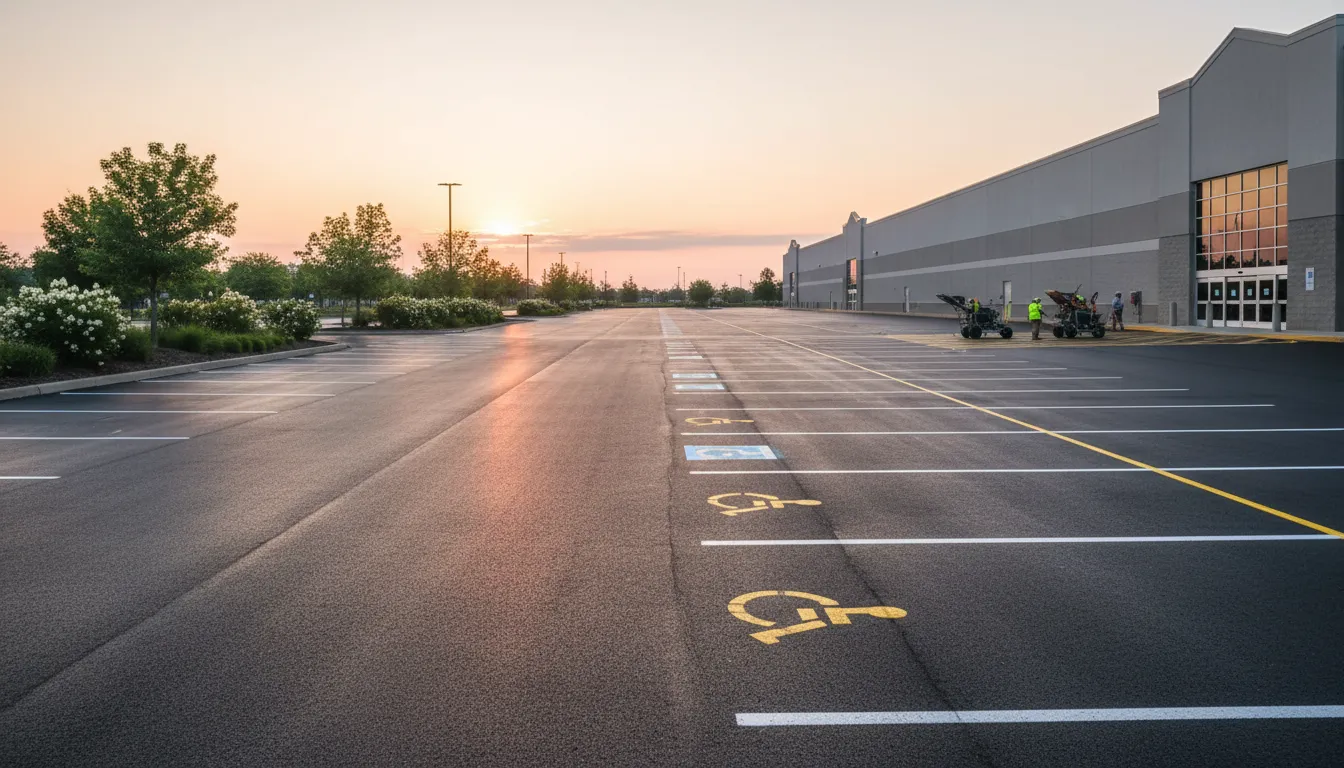
Find the Best Parking Lot Striping Companies for Your Business
No obligation • Fast responses • Nationwide coverage

Why you can trust Tidy Parking
Tidy Parking is a leading U.S. source for parking lot maintenance services, including striping, sealcoating, sweeping, paving, resurfacing, and repairs. Our content is created independently, and providers cannot pay to influence ratings or recommendations.
Search providers near you
Top Parking Lot Striping Companies in Plymouth, Minnesota Ranked
Maintaining clear, compliant parking lot markings is a critical aspect of property management in Plymouth. Proper line striping ensures efficient traffic flow, maximizes space, and, most importantly, guarantees safety and accessibility for all visitors. This guide details the specific regulations, best practices, and considerations for parking lot marking in Plymouth, helping you understand what's required to keep your property functional, safe, and legally compliant.
Doctor Asphalt, LLC
1949 Atlantic St, Maplewood, MN 55109
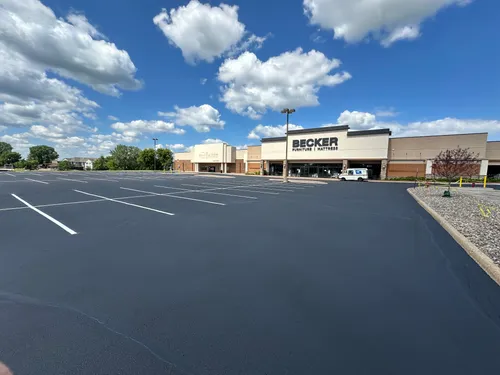
Doctor Asphalt, LLC is a parking lot paving and repair company based in St Paul, MN. They provide services including parking lot striping, sealcoating, crack filling, patching, and asphalt replacement. The company is known for working across the Twin Cities Metro Area and offers detailed proposals tailored to customer needs. Their team handles projects efficiently, often working around business schedules to minimize disruption. Doctor Asphalt has built a reputation for solid workmanship and clear communication, with a focus on practical solutions and customer perspectives.
The Asphalt Company, Inc.
3680 Kent St, Shoreview, MN 55126
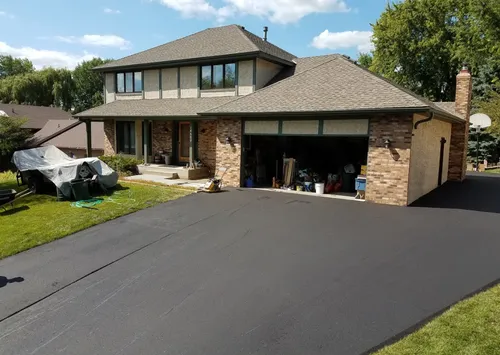
The Asphalt Company, Inc. is a parking lot paving and repair contractor based in Minneapolis, MN. They provide a range of asphalt services including driveway paving, parking lot resurfacing, patching, and pavement striping for commercial and residential clients in the Twin Cities metro area. Founded in 2006, the company has over 15 years of experience and offers personalized solutions with a focus on affordability and quality workmanship. Their service area includes Minneapolis and many surrounding communities in Minnesota.
ACT Asphalt Specialties
530 Shoreview Park Rd, Shoreview, MN 55126
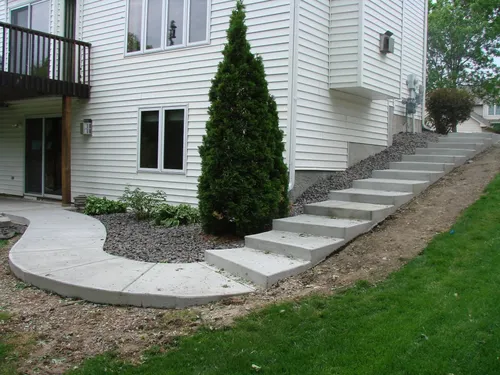
ACT Asphalt Specialties is a paving and concrete company based in Shoreview, serving Minneapolis, MN, and the greater Twin Cities metro area. With over 40 years of experience, they provide residential and commercial asphalt and concrete services, including parking lot paving, striping, resurfacing, and repairs. The company offers capabilities such as driveway installation, crack filling, and ADA retrofits. ACT Asphalt Specialties is licensed, insured, and provides a 10-year warranty on new installations.

Asphalt Paving Company
2136 Ford Pkwy Unit 8104G, St Paul, MN 55116
Asphalt Paving Company provides commercial asphalt paving, sealcoating, striping, and repair services in Minneapolis, MN. They specialize in durable asphalt solutions designed for high-traffic commercial properties, including parking lots, driveways, curbs, and drains. The company uses professional-grade materials suited for commercial equipment and offers services such as pothole repair and asphalt crack filling to maintain pavement integrity. Their expertise includes commercial asphalt paving that resists weather damage and heavy use, helping extend the lifespan of paved surfaces. Asphalt Paving Company serves the Minneapolis area with a focus on commercial clients and offers warranties on their work to ensure long-term durability.
Understanding Local and State Striping Regulations
In Plymouth, parking lot striping is governed by a combination of federal, state, and local codes. The primary standards are set by the Americans with Disabilities Act (ADA) and the 2020 Minnesota Accessibility Code. These regulations are not optional guidelines but legal requirements for nearly all public accommodations and commercial properties. Adherence ensures that individuals with disabilities have equal access, and non-compliance can result in significant fines and legal liability. Local fire codes also dictate specific markings for emergency access lanes, which are strictly enforced to ensure first responders can reach a building without obstruction.
The Minnesota Department of Labor and Industry provides summaries and enforcement of the state's accessibility code, which incorporates and often expands upon federal ADA standards 1. For property owners and managers, this means that any parking lot restriping, repair, or new construction project must be planned with these detailed specifications in mind from the outset. Ignorance of the code is not a defense, making it essential to work with knowledge or hire professionals familiar with Minnesota's specific requirements.
ADA & Accessibility Parking Space Specifications
Creating accessible parking is about much more than painting a symbol on the ground. The requirements are precise and cover dimensions, signage, and location.
- Space and Aisle Dimensions: Each standard accessible parking space must be at least 8 feet wide. An adjacent access aisle of at least 5 feet wide is required beside the space. For van-accessible spaces, the access aisle must be a full 8 feet wide. These aisles provide room for wheelchair lifts and ramps and must be kept clear at all times. Two accessible spaces may share one common access aisle.
- Vertical Signage: A painted symbol on the pavement is insufficient on its own. Each accessible space must be identified by a vertical sign displaying the International Symbol of Accessibility. In Minnesota, this sign must also include the wording "Minimum Fine $200" 2 3. The sign must be mounted between 60 and 66 inches from the ground to the bottom of the sign, ensuring visibility from a vehicle.
- Location and Slope: Accessible spaces must be located on the shortest accessible route to the building's entrance. The slope of both the parking space and the access aisle is strictly regulated, generally not exceeding 1:48 (2%) in all directions to ensure stability for wheelchairs 4 5.
Color Coding and Marking Standards for Safety
A standardized color system is used in parking lot marking to convey immediate, universal instructions to drivers and pedestrians.
- White Lines: White paint is used for standard parking stall lines, directional arrows, and crosswalks. Standard line width is typically 4 inches.
- Blue Markings: The color blue is reserved for designating accessible parking stalls. This includes the painted wheelchair symbol within the stall.
- Yellow Lines and Curbs: Yellow indicates caution and no-parking zones. It is used for loading zones, fire hydrant areas, and to mark the edges of driving lanes where parking is prohibited 6.
- Red Markings: Red is exclusively for fire lanes. These areas must be painted red and have the words "FIRE LANE" stenciled at regular intervals, typically every 25 feet, to ensure clear visibility for emergency vehicle access 7.
The Importance of Fire Lane Markings
Clearly marked fire lanes are a non-negotiable safety requirement. Plymouth fire codes mandate that these zones be unmistakably identified to prevent parking that could block fire trucks, ambulances, or other emergency equipment. The standard requires red paint and bold, repeated stenciling. Keeping these areas clearly marked and enforcing no-parking rules is a crucial part of a property's emergency preparedness plan and can be a focal point during routine fire marshal inspections.
Planning Your Striping Project: Layout and Frequency
A well-planned layout does more than just fit cars; it improves safety and user experience. Considerations include the angle of stalls (90°, 60°, 45°), the width of driving aisles (often 24 feet for two-way traffic), and the logical placement of accessible spaces near entrances. Pedestrian crosswalks should be clearly marked to direct foot traffic safely across driving lanes.
Over time, exposure to Minnesota's harsh weather, snow plowing, salt, and UV rays will cause paint to fade. Industry experts generally recommend restriping a parking lot every 18 to 24 months to maintain optimal visibility and compliance. A proactive re-striping schedule is more cost-effective than dealing with an accident or ADA lawsuit stemming from poorly marked areas.
Find the perfect parking lot striping companies for your needs
Get personalized recommendations and expert advice
Factors Influencing Striping and Marking Costs
The cost of a parking lot striping project in Plymouth is not a flat fee but varies based on several key factors. Understanding these can help in budgeting and comparing service quotes.
- Scope and Layout Complexity: A simple grid of standard stalls will cost less per stall than a complex layout with multiple angles, compact car spaces, and numerous accessible stalls. Each ADA-compliant space requires more detailed painting, including the access aisle hatch marks and symbol, which increases the time and material cost for that stall 8.
- Paint and Material Quality: There are different grades of traffic paint, from standard oil-based to more durable thermoplastic or epoxy. While higher-quality materials have a higher upfront cost, they often last longer, potentially extending the time between restriping projects.
- Surface Preparation: If old, faded lines need to be removed (often by grinding or water-blasting) before new paint is applied, this adds to the project's labor and time. A clean, well-maintained asphalt or concrete surface allows for the best paint adhesion and longevity.
- Measurement and Pricing: Contractors typically price line striping by the linear foot or by the individual stall. Costs can range from $0.20 to over $0.50 per linear foot, with full ADA stalls costing significantly more due to the additional markings 9. Always ensure quotes detail what is included, such as stenciling for symbols and lettering.
Maintaining Your Striping for Longevity
To protect your investment in fresh parking lot markings, consider a comprehensive pavement maintenance plan. Sealcoating the asphalt every few years provides a protective layer that shields the pavement-and the paint on it-from oil, gas, and weather damage. Promptly repairing cracks and potholes prevents water intrusion that can undermine the pavement base and cause paint to chip and flake. Scheduling parking lot sweeping removes abrasive debris that can accelerate wear on the painted lines.
Choosing a Professional Striping Service
For a compliant and durable result, selecting an experienced local contractor is key. Look for a provider with verifiable experience specifically with commercial parking lot striping in Minnesota. They should be intimately familiar with the 2020 MN Accessibility Code and ADA requirements. Ask for references from similar projects and proof of insurance. A reputable contractor will conduct a site visit, discuss your specific needs, and provide a detailed written estimate that outlines the scope, materials, and compliance measures for the project.
Frequently asked questions
Sources
Footnotes
-
2020 MN Accessibility Code Summary - https://www.dli.mn.gov/sites/default/files/pdf/bc_accessibility_summary_IBC.pdf ↩
-
ADA & Minnesota Accessibility Parking Requirements - https://download.fargond.gov/0/parking_pamphlet_mn_feb_2015b.pdf ↩
-
Disability Parking | Minnesota Council on Disability - https://www.disability.state.mn.us/technical-assistance/disability-parking/ ↩
-
ADA Compliance and your Parking Lot - https://westwoodps.com/recent-blog-posts/ada-compliance-and-your-parking-lot ↩
-
ON STREET ACCESSIBLE PARKING - https://www.dot.state.mn.us/trafficeng/pavement/typicaldetail/parking.pdf ↩
-
ADA Compliance Brief: Restriping Parking Spaces - https://www.ada.gov/resources/restriping-parking-spaces/ ↩
-
Understanding Your Parking Lot Line Striping Requirements - https://www.ppm.us/parking-lot-striping-requirements/ ↩
-
Parking Lot Striping and ADA Compliance: Everything You ... - https://theparkinglotpro.com/parking-lot-striping-and-ada-compliance-everything-you-need-to-know/ ↩
-
Commercial Parking Lot Striping: Costs, Standards + Pro Tips - https://www.getonecrew.com/post/commercial-parking-lot-striping ↩