Find the Best Parking Lot Striping Companies for Your Business
No obligation • Fast responses • Nationwide coverage

Why you can trust Tidy Parking
Tidy Parking is a leading U.S. source for parking lot maintenance services, including striping, sealcoating, sweeping, paving, resurfacing, and repairs. Our content is created independently, and providers cannot pay to influence ratings or recommendations.
Search providers near you
Top Parking Lot Striping Companies in Minneapolis, Minnesota Ranked
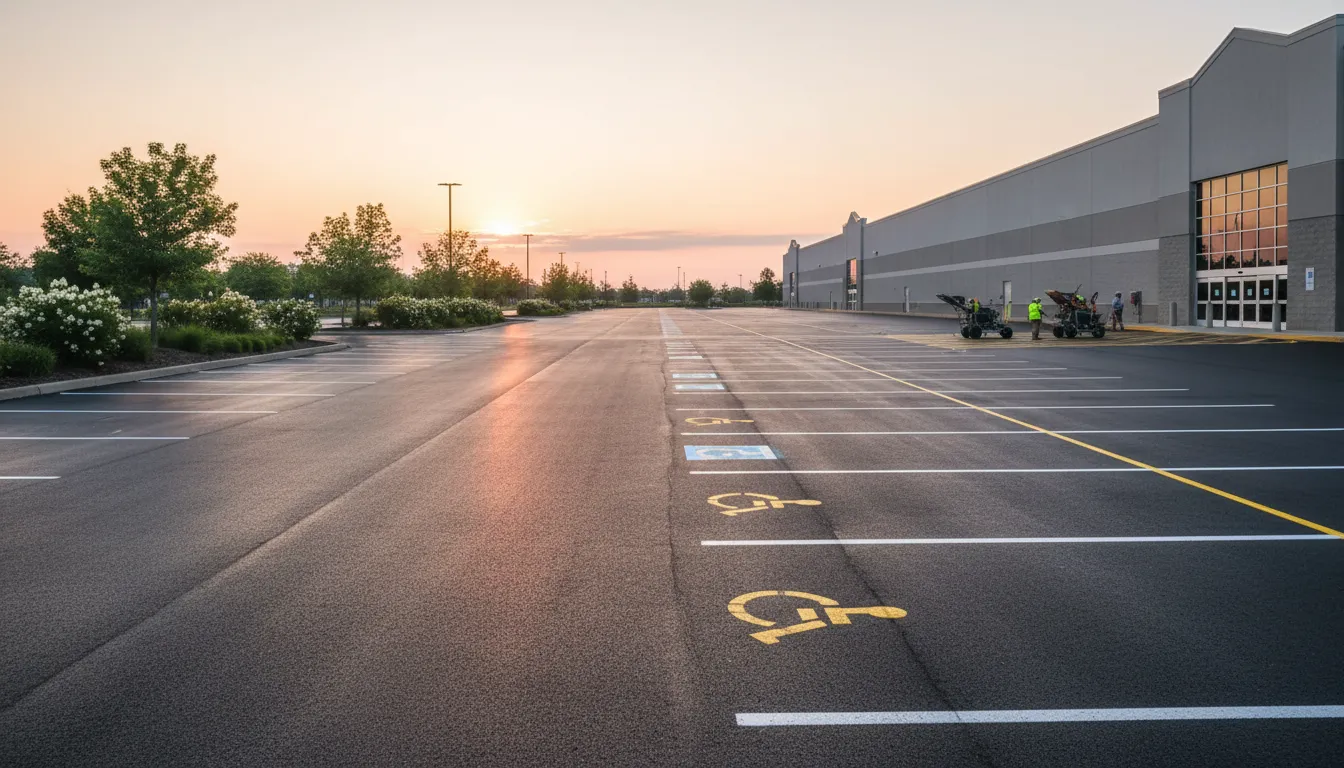
A well-marked parking lot is essential for safety, efficiency, and legal compliance. Parking lot striping, also known as line marking or pavement marking, involves applying painted lines, symbols, and stencils to define traffic flow, parking stalls, and safety zones. In Minneapolis, this work is governed by strict federal and state accessibility codes, making professional expertise critical. This guide explains local requirements, costs, and best practices to help you identify qualified local professionals for your pavement marking project.
Doctor Asphalt, LLC
1949 Atlantic St, Maplewood, MN 55109
Doctor Asphalt, LLC is a parking lot paving and repair company based in St Paul, MN. They provide services including parking lot striping, sealcoating, crack filling, patching, and asphalt replacement. The company is known for working across the Twin Cities Metro Area and offers detailed proposals tailored to customer needs. Their team handles projects efficiently, often working around business schedules to minimize disruption. Doctor Asphalt has built a reputation for solid workmanship and clear communication, with a focus on practical solutions and customer perspectives.
Schroeder Striping
Minneapolis, MN
Schroeder Striping is a parking lot striping company based in Minneapolis, MN. They provide comprehensive striping services aimed at enhancing parking lot safety and organization. The company is known for its attention to detail and flexibility, often able to respond to jobs within a day's notice depending on location. Schroeder Striping has completed numerous projects, focusing on precise layout and restriping work to meet client needs.
The Asphalt Company, Inc.
3680 Kent St, Shoreview, MN 55126
The Asphalt Company, Inc. is a parking lot paving and repair contractor based in Minneapolis, MN. They provide a range of asphalt services including driveway paving, parking lot resurfacing, patching, and pavement striping for commercial and residential clients in the Twin Cities metro area. Founded in 2006, the company has over 15 years of experience and offers personalized solutions with a focus on affordability and quality workmanship. Their service area includes Minneapolis and many surrounding communities in Minnesota.
ACT Asphalt Specialties
530 Shoreview Park Rd, Shoreview, MN 55126
ACT Asphalt Specialties is a paving and concrete company based in Shoreview, serving Minneapolis, MN, and the greater Twin Cities metro area. With over 40 years of experience, they provide residential and commercial asphalt and concrete services, including parking lot paving, striping, resurfacing, and repairs. The company offers capabilities such as driveway installation, crack filling, and ADA retrofits. ACT Asphalt Specialties is licensed, insured, and provides a 10-year warranty on new installations.

Asphalt Paving Company
2136 Ford Pkwy Unit 8104G, St Paul, MN 55116
Asphalt Paving Company provides commercial asphalt paving, sealcoating, striping, and repair services in Minneapolis, MN. They specialize in durable asphalt solutions designed for high-traffic commercial properties, including parking lots, driveways, curbs, and drains. The company uses professional-grade materials suited for commercial equipment and offers services such as pothole repair and asphalt crack filling to maintain pavement integrity. Their expertise includes commercial asphalt paving that resists weather damage and heavy use, helping extend the lifespan of paved surfaces. Asphalt Paving Company serves the Minneapolis area with a focus on commercial clients and offers warranties on their work to ensure long-term durability.
Understanding Minneapolis & ADA Striping Requirements
Parking lot striping in Minneapolis is not merely about aesthetics; it's a regulated activity designed to ensure safe and accessible environments for all. Compliance is mandatory and enforced at both the federal and local levels. The Americans with Disabilities Act (ADA) sets the baseline, which is then supplemented by Minnesota's own accessibility codes and City of Minneapolis ordinances for fire safety and traffic control. Non-compliance can result in significant penalties, liability issues, and a negative experience for visitors and customers.
The core purpose of these regulations is "barrier removal" in existing facilities, meaning property owners have an ongoing obligation to maintain accessible routes and features 1. Proper line striping is a fundamental part of meeting this obligation. Whether you're managing a retail plaza, an office building, or an apartment complex, understanding these rules is the first step in planning your lot marking project.
Key Regulations for Accessible Parking Spaces
Creating accessible parking is a primary focus of striping codes. The requirements are precise and must be followed exactly.
- Stall and Aisle Dimensions: A standard accessible parking space must be at least 8 feet wide. It must be accompanied by a 5-foot wide access aisle. For van-accessible spaces, the access aisle must be a full 8 feet wide 2. These aisles, marked with hatched diagonal lines, are crucial for deploying wheelchair ramps and lifts and must be kept clear at all times 3.
- Location and Route: Accessible spaces must be located on the shortest possible accessible route from the parking area to the building's accessible entrance. The path must be stable, firm, slip-resistant, and have a slope no greater than 1:48 (2.08%) in any direction 4 5.
- Signage: Each accessible space must be identified by a sign featuring the International Symbol of Accessibility. The sign must be mounted at a height where the bottom edge is at least 60 inches above the ground 6. While striping contractors often handle the pavement markings, signage installation is a complementary but separate component of full compliance.
- Space Count Requirements: The number of required accessible spaces depends on your lot's total capacity:
- 1 to 25 total spaces: 1 accessible space.
- 26 to 50 total spaces: 2 accessible spaces.
- 51 to 75 total spaces: 3 accessible spaces 7. Furthermore, at least one out of every six accessible spaces must be van-accessible 8 9.
Fire Lane and Traffic Safety Markings
Beyond ADA compliance, Minneapolis has specific rules for traffic and fire safety markings.
- Fire Lanes: These zones must be clearly marked to ensure emergency vehicle access is never blocked. City of Minneapolis codes require fire lanes to be designated by painted red curbs, red striping on the pavement, and/or posted signs stating "No Parking Fire Lane" 10. Signs must be placed at the beginning, end, and at intervals no greater than 60 feet apart 10.
- Standard Color Codes: Uniform colors communicate clear instructions to drivers. White is standard for parking stall lines and directional arrows. Yellow typically denotes no-parking zones, loading areas, or cross-hatching for safety. Blue is reserved exclusively for the pavement markings of accessible parking spaces 11 12.
- Crosswalks and Stop Bars: Clearly marked pedestrian crosswalks and vehicle stop lines at intersections within the lot are vital for preventing accidents and organizing traffic flow.
The Professional Striping Process
A professional parking lot marking project involves several key steps to ensure durability, accuracy, and compliance.
- Site Assessment & Layout Planning: A reputable contractor will first evaluate your existing pavement condition, measure the lot, and review local code requirements. For a re-layout, they will plan the most efficient stall arrangement to maximize capacity while meeting all legal mandates.
- Surface Preparation: The pavement must be clean, dry, and free of debris, oil, and loose material. This often involves power sweeping or blowing. For a restripe over old, faded lines, minimal preparation may be needed. For a full re-layout, old lines may need to be removed or obscured.
- Stenciling and Layout: Using chalk lines, string, or laser guides, the contractor will lay out the entire lot. Stencils for symbols (handicap, arrows, letters) are carefully positioned.
- Application: Professional-grade, fast-drying traffic paint or thermoplastic is applied using specialized striping machines. Thermoplastic is more durable and reflective but also more expensive, often used for high-traffic areas.
- Curing and Reopening: The paint or thermoplastic needs adequate time to cure before traffic can be allowed back on the surface. A professional will provide clear guidance on drying times.
Find the perfect parking lot striping companies for your needs
Get personalized recommendations and expert advice
Cost Factors for Parking Lot Striping in Minneapolis
The cost of a striping project can vary widely based on scope, materials, and lot conditions. Here's a general breakdown based on industry data:
- Per-Linear-Foot Cost: A common pricing method is by the linear foot of paint applied. Costs generally range from $0.10 to $0.50 per linear foot, depending on paint type and project complexity.
- Project-Based Estimates:
- Small Restriping Project: Refreshing existing lines on a lot with 50 or fewer spaces might cost between $500 and $1,500.
- Large Re-layout Project: Completely redesigning and remarking a larger lot, which includes new layout planning, stenciling, and full marking, can range from $2,000 to $10,000 or more.
- Additional Cost Items:
- Stencils: Letters, numbers, and symbols (like "LOADING" or "FIRE LANE") typically add $15 to $35 per stencil.
- ADA Symbols: Painting the blue handicapped symbol on the pavement generally costs $50 to $100 per symbol 13.
- Material Upgrade: Switching from standard traffic paint to longer-lasting, reflective thermoplastic will increase the price.
- Surface Repair: If significant crack filling or patching is needed before striping, this will be an additional cost.
Maintaining Your Parking Lot Markings
Striping is not a one-time expense. Faded, worn markings are a liability and can be deemed non-compliant. Maintenance is key.
- Recoating Schedule: In a climate like Minneapolis, with harsh winters, plowing, and salt, parking lot paint typically needs to be refreshed every 12 to 24 months for optimal visibility and compliance. High-traffic areas may need more frequent touch-ups.
- Regular Inspection: Property managers should visually inspect their lot markings seasonally, especially after winter. Look for fading, chipping, or any damage that obscures the lines or symbols.
- Proactive Repairs: Address faded markings promptly. Not only does this maintain safety and accessibility, but it is also more cost-effective than letting them degrade to the point where a full restripe is necessary.
Choosing a local contractor familiar with Minneapolis codes ensures your investment is protected and your property remains safe, functional, and legally sound for years to come.
Frequently asked questions
Sources
Footnotes
-
Guide to Minnesota ADA Compliance for Parking Lots - https://www.ericksonasphalt.com/blog/parking-lot-ada-compliance/ ↩
-
ON STREET ACCESSIBLE PARKING - https://www.dot.state.mn.us/trafficeng/pavement/typicaldetail/parking.pdf ↩
-
ADA Compliance in Striping: Stalls, Aisles, Signs - - https://asphaltinc.com/ada-parking-striping-stalls-aisles-signs/ ↩
-
Parking Lot Striping & ADA Compliance: What to Know - https://brixco.co/parking-lot-striping-ada-compliance/ ↩
-
Chapter 5: Parking Spaces - Access-Board.gov - https://www.access-board.gov/ada/guides/chapter-5-parking/ ↩
-
Accessible Parking - City of Minneapolis - https://www.minneapolismn.gov/getting-around/parking-driving/disability-parking/ ↩
-
ADA Parking Requirements & Compliance Services in Maryland, Virginia, Southern Pennsylvania, Delaware & DC - https://chamberlaincontractors.com/ada-parking-requirements/ ↩
-
ADA Compliance Guide for Parking Lot Line Striping - https://www.pavementsolutions.org/ada-compliance-guide-for-parking-lot-line-striping/ ↩
-
The Importance of ADA-Compliant Parking Lot Striping - Rose - https://www.rosepaving.com/blog/the-importance-of-ada-compliant-parking-lot-striping/ ↩
-
city of minneapolis department of regulatory services fire inspection ... - https://www2.minneapolismn.gov/media/content-assets/www2-documents/business/Fire-Vehicle-Access-Roads-5-2.pdf ↩ ↩2
-
Understanding Parking Lot Striping Standards & Traffic Markings - https://www.allsourcebuildingservices.com/understanding-parking-lot-striping-standards-traffic-markings/ ↩
-
Basic Guide to Parking Lot Striping - Traffic Safety Store - https://www.trafficsafetystore.com/blog/guide-to-parking-lot-striping/ ↩
-
Complete Parking Lot Striping Guide 2025 - https://ada-striping.com/complete-parking-lot-striping-guide/ ↩