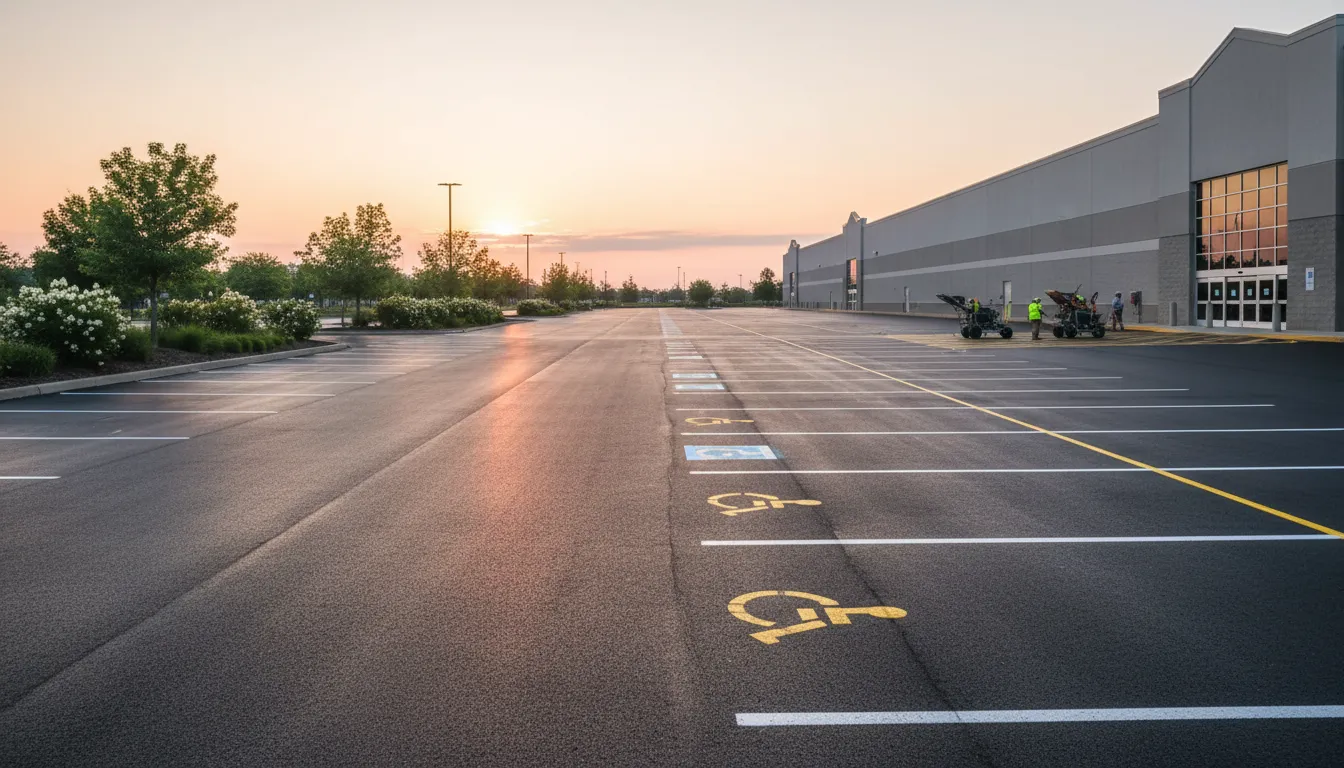
Find the Best Parking Lot Striping Companies for Your Business
No obligation • Fast responses • Nationwide coverage
Why you can trust Tidy Parking
Tidy Parking is a leading U.S. source for parking lot maintenance services, including striping, sealcoating, sweeping, paving, resurfacing, and repairs. Our content is created independently, and providers cannot pay to influence ratings or recommendations.
Search providers near you
Top Parking Lot Striping Companies in Burnsville, Minnesota Ranked
A well-marked parking lot is essential for safety, efficiency, and legal compliance. Parking lot striping, or line marking, provides clear visual guidance for drivers and pedestrians, organizes traffic flow, and ensures your property meets all accessibility standards. In Burnsville, adhering to specific state and federal regulations is not optional-it's a critical responsibility for property owners and managers. This guide will help you understand the requirements, best practices, and local considerations for effective pavement marking to maintain a safe and compliant property.
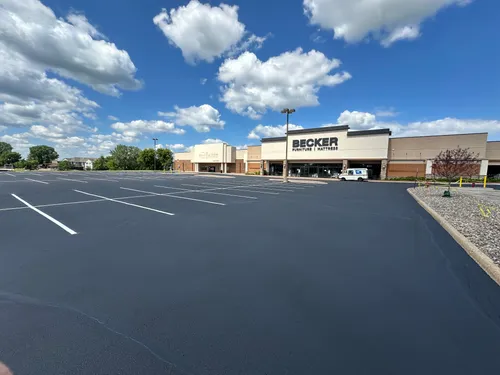
Doctor Asphalt, LLC
1949 Atlantic St, Maplewood, MN 55109
Doctor Asphalt, LLC is a parking lot paving and repair company based in St Paul, MN. They provide services including parking lot striping, sealcoating, crack filling, patching, and asphalt replacement. The company is known for working across the Twin Cities Metro Area and offers detailed proposals tailored to customer needs. Their team handles projects efficiently, often working around business schedules to minimize disruption. Doctor Asphalt has built a reputation for solid workmanship and clear communication, with a focus on practical solutions and customer perspectives.
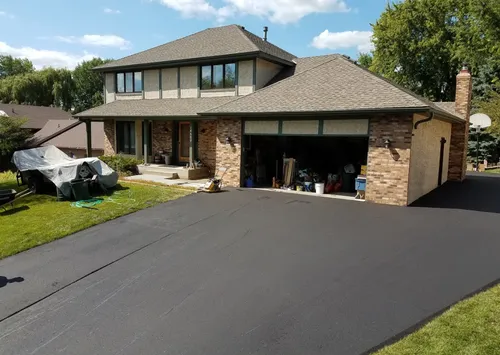
The Asphalt Company, Inc.
3680 Kent St, Shoreview, MN 55126
The Asphalt Company, Inc. is a parking lot paving and repair contractor based in Minneapolis, MN. They provide a range of asphalt services including driveway paving, parking lot resurfacing, patching, and pavement striping for commercial and residential clients in the Twin Cities metro area. Founded in 2006, the company has over 15 years of experience and offers personalized solutions with a focus on affordability and quality workmanship. Their service area includes Minneapolis and many surrounding communities in Minnesota.
ACT Asphalt Specialties
530 Shoreview Park Rd, Shoreview, MN 55126
ACT Asphalt Specialties is a paving and concrete company based in Shoreview, serving Minneapolis, MN, and the greater Twin Cities metro area. With over 40 years of experience, they provide residential and commercial asphalt and concrete services, including parking lot paving, striping, resurfacing, and repairs. The company offers capabilities such as driveway installation, crack filling, and ADA retrofits. ACT Asphalt Specialties is licensed, insured, and provides a 10-year warranty on new installations.

Asphalt Paving Company
2136 Ford Pkwy Unit 8104G, St Paul, MN 55116
Asphalt Paving Company provides commercial asphalt paving, sealcoating, striping, and repair services in Minneapolis, MN. They specialize in durable asphalt solutions designed for high-traffic commercial properties, including parking lots, driveways, curbs, and drains. The company uses professional-grade materials suited for commercial equipment and offers services such as pothole repair and asphalt crack filling to maintain pavement integrity. Their expertise includes commercial asphalt paving that resists weather damage and heavy use, helping extend the lifespan of paved surfaces. Asphalt Paving Company serves the Minneapolis area with a focus on commercial clients and offers warranties on their work to ensure long-term durability.
Understanding ADA and Minnesota Accessibility Requirements
In Burnsville, all parking lot line painting must comply with both the federal Americans with Disabilities Act (ADA) and the 2020 Minnesota Accessibility Code. These regulations are designed to ensure safe and equal access for everyone. Non-compliance can result in significant fines and legal liability, making it crucial to get the details right from the start.
The core of these rules revolves around accessible parking spaces. The number required depends on your lot's total capacity. For example, a lot with 1 to 25 total spaces needs at least one accessible space, while lots with 26 to 50 spaces require two 1. One out of every six accessible spaces must be van-accessible.
Accessible Space Specifications
The dimensions and markings for accessible stalls are precise:
- Standard Accessible Space: Must be at least 8 feet wide with an adjacent 5-foot-wide access aisle.
- Van-Accessible Space: Has two options: an 11-foot-wide space with a 5-foot aisle, or an 8-foot-wide space with an 8-foot aisle. Van spaces also require 98 inches of vertical clearance.
- Location: Accessible spaces must be located on the shortest accessible route to the building entrance 2 3.
- Slope: The surface of the space and access aisle cannot have a slope greater than 2% (a 1:48 ratio) in any direction to ensure stability for wheelchairs 4 5.
- Markings: The space must be outlined, and the International Symbol of Accessibility (the blue wheelchair symbol) must be painted within the stall.
Signage and Aisles
Painting the lines is only part of the job. Proper signage and aisle marking are equally important.
- Signage: Accessible spaces require a sign mounted 60 to 66 inches from the ground to the bottom of the sign. Van-accessible spaces need additional "Van Accessible" text on the sign 6 7.
- Access Aisles: These are crucial loading zones and must be kept clear at all times. They should be marked with diagonal crosshatching in a high-contrast color (like yellow or white) and accompanied by "No Parking" signs to prevent obstruction.
Beyond ADA: Essential Striping for Safety and Order
While ADA compliance is a major focus, comprehensive lot marking involves several other critical elements that contribute to overall site safety and functionality.
Fire Lanes and Loading Zones
Clearly marked fire lanes are non-negotiable for emergency access. These areas are typically designated with red paint on curbs or with diagonal red stripes on the pavement, accompanied by bold "No Parking Fire Lane" stenciling 8. Similarly, loading zones and other restricted areas should be distinctly marked with crosshatching and signage to prevent unauthorized parking.
Crosswalks and Pedestrian Safety
Protecting pedestrians is a primary goal of effective pavement marking. Crosswalks in parking lots and drive aisles should be highly visible, often using two solid white parallel lines or diagonal zebra striping. Using reflective, durable paint enhances visibility during Minnesota's early nightfalls and in poor weather conditions, guiding pedestrians safely across traffic lanes 9.
Standard Stall and Traffic Markings
The backbone of any parking lot layout is its standard stall and directional markings.
- Stall Dimensions: Standard parking stalls are typically 9 feet wide by 18 feet deep, though compact spaces can be smaller if properly signed.
- Traffic Flow: Arrows, stop bars, and directional symbols must be clearly painted to guide one-way traffic and indicate right-of-way at intersections.
- Curb Marking: Colors on curbs convey instant messages: yellow often means loading only, red means no stopping or fire lane, and blue is reserved for accessible parking.
Find the perfect parking lot striping companies for your needs
Get personalized recommendations and expert advice
The Striping Process: From Planning to Application
A successful line marking project involves more than just spraying paint on asphalt. It's a multi-stage process that ensures longevity, clarity, and compliance.
- Assessment and Planning: A professional will first evaluate your existing lot layout, checking for compliance issues, measuring dimensions, and planning the optimal stall count and traffic pattern. This is the stage to correct any underlying pavement issues like cracks or potholes, as striping over damaged asphalt is a temporary fix.
- Surface Preparation: The pavement must be thoroughly cleaned of all dirt, oil, gravel, and old, flaking paint. This is often done with power blowers, sweepers, and pressure washers. A clean surface is essential for the new paint to adhere properly.
- Layout and Stenciling: Using chalk lines, measuring tapes, and stencils, technicians meticulously lay out the entire parking lot design. This step double-checks all measurements, especially for accessible spaces, before any permanent paint is applied.
- Paint Application: Professionals use specialized airless spray equipment to apply durable, traffic-grade paint. Thermoplastic or pre-formed tape are other long-lasting options, especially for high-traffic areas. The application must be done in suitable weather conditions-typically when temperatures are above 50°F and the surface is dry.
- Curing and Signage Installation: The paint needs time to dry and cure before vehicles can drive over it. Finally, all necessary signs, including ADA placards and traffic control signs, are installed at their regulated heights.
Cost Considerations for Parking Lot Marking in Burnsville
The cost of parking lot striping varies based on the size of your lot, the complexity of the layout, the type of paint or material used, and the amount of preparation needed. While prices can fluctuate, here are some general benchmarks based on industry standards 10:
- Standard Line Striping: Can range from approximately $0.50 to $1.00 per linear foot.
- Accessible Stall (including symbol): Painting a single ADA-compliant stall often costs between approximately $150 and $300, factoring in the detailed stenciling required.
- Fire Lane Marking: Using durable red paint typically ranges from approximately $2 to $4 per linear foot.
- Signage Installation: The cost to supply and install a compliant sign, including the post, can range from approximately $100 to $200 per sign.
It's important to view professional line marking not as an expense, but as an investment. Properly maintained markings reduce accident liability, improve customer experience, and prevent costly fines for non-compliance. Regular re-striping (generally every 1-2 years for painted lines, longer for thermoplastic) is part of responsible property maintenance.
Local Burnsville Factors and Best Practices
Minnesota's climate presents unique challenges for pavement markings. The freeze-thaw cycles, snow plowing, and use of ice melt chemicals can cause paint to deteriorate faster than in milder climates. When selecting a local provider for your lot marking, discuss their use of high-quality, weather-resistant paints and their timing-scheduling the work for late spring through early fall is ideal.
Furthermore, property owners must plan for snow storage. Piles of snow should never be placed in access aisles or on top of crosswalks, as this blocks accessible routes and creates hazards when the snow melts 11. Your striping layout should account for designated snow storage areas to keep critical pathways clear all winter long.
A clear, well-organized parking lot creates a positive first impression, promotes safety, and demonstrates that you value all visitors and customers. By understanding the regulations and partnering with a knowledgeable local professional, you can ensure your Burnsville property remains functional, safe, and compliant for years to come.
Frequently asked questions
Sources
Footnotes
-
The Importance of ADA-Compliant Parking Lot Striping - Rose Paving - https://www.rosepaving.com/blog/the-importance-of-ada-compliant-parking-lot-striping/ ↩
-
ADA Compliance Brief: Restriping Parking Spaces - https://www.ada.gov/resources/restriping-parking-spaces/ ↩
-
ADA Compliance and your Parking Lot - https://westwoodps.com/recent-blog-posts/ada-compliance-and-your-parking-lot ↩
-
2020 MN Accessibility Code Summary - https://www.dli.mn.gov/sites/default/files/pdf/bc_accessibility_summary_IBC.pdf ↩
-
Guide to Minnesota ADA Compliance for Parking Lots - https://www.ericksonasphalt.com/blog/parking-lot-ada-compliance/ ↩
-
ADA & Minnesota Accessibility Parking Requirements - https://download.fargond.gov/0/parking_pamphlet_mn_feb_2015b.pdf ↩
-
ADA Compliance in Striping: Stalls, Aisles, Signs - - https://asphaltinc.com/ada-parking-striping-stalls-aisles-signs/ ↩
-
Basic Guide to Parking Lot Striping - Traffic Safety Store - https://www.trafficsafetystore.com/blog/guide-to-parking-lot-striping/ ↩
-
Complete Parking Lot Striping Guide 2025 - https://ada-striping.com/complete-parking-lot-striping-guide/ ↩
-
Commercial Parking Lot Striping: Costs, Standards + Pro Tips - https://www.getonecrew.com/post/commercial-parking-lot-striping ↩
-
Parking Lot Striping & ADA Compliance: What to Know - https://brixco.co/parking-lot-striping-ada-compliance/ ↩