Find the Best Parking Lot Striping Companies for Your Business
No obligation • Fast responses • Nationwide coverage

Why you can trust Tidy Parking
Tidy Parking is a leading U.S. source for parking lot maintenance services, including striping, sealcoating, sweeping, paving, resurfacing, and repairs. Our content is created independently, and providers cannot pay to influence ratings or recommendations.
Search providers near you
Top Parking Lot Striping Companies in New Haven, Connecticut Ranked
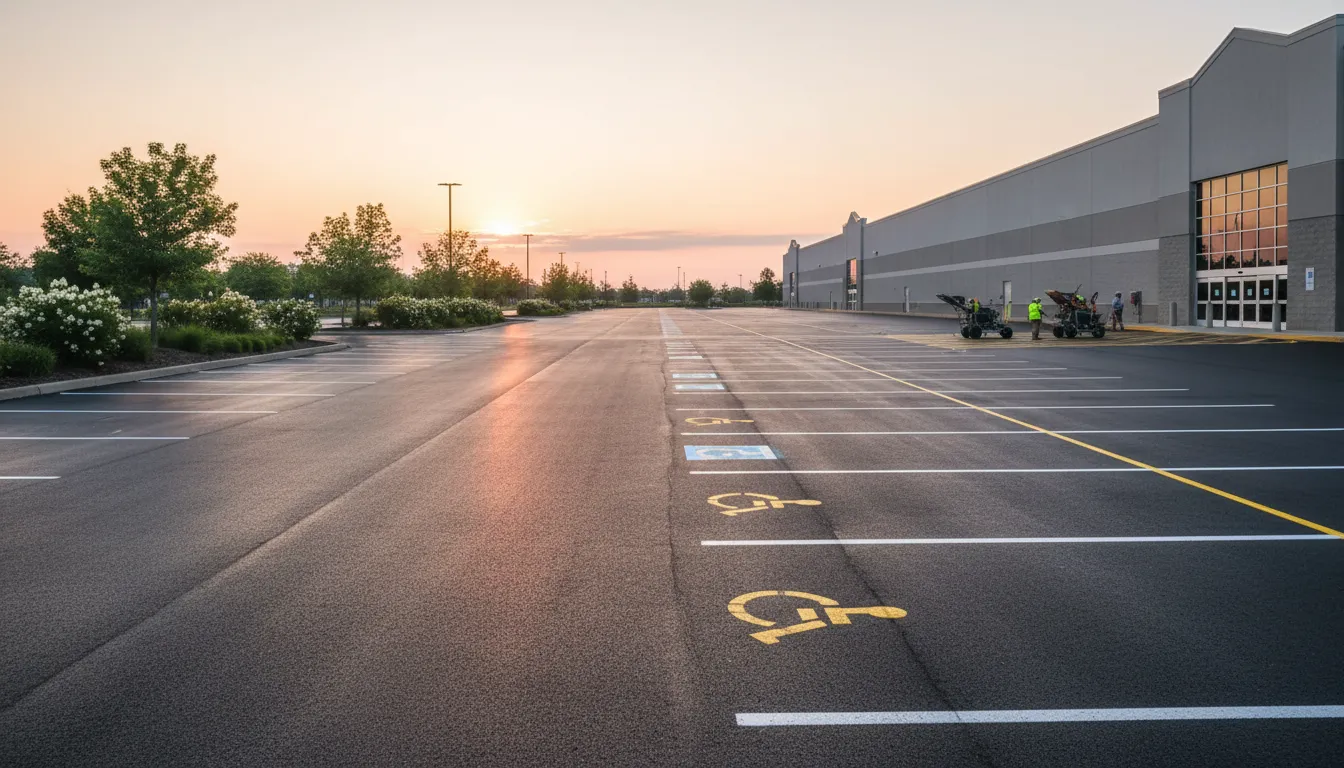
Clear, compliant parking lot striping is a critical component of property management in New Haven. It's not just about aesthetics; it's a legal requirement that ensures safety, accessibility, and efficient traffic flow for your customers, employees, and visitors. Proper line painting and pavement marking help prevent accidents, designate accessible areas, and keep fire lanes clear for emergency responders. This guide explains the specific regulations for New Haven and Connecticut, outlines the standards for different markings, and provides a resource to connect with local professionals who can ensure your property is up to code.
United Blacktop
New York, NY
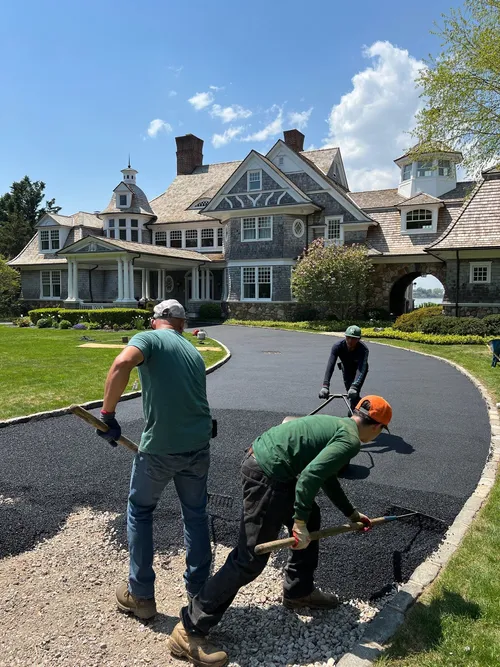
United Blacktop is a family-owned asphalt and paving company serving New York, NY, with over 20 years of industry experience. They provide a range of services including driveway sealcoating, crack filling and repair, sports court resurfacing, asphalt paving, concrete and brick pavers, as well as commercial parking lot maintenance. Their team is known for using premium materials and offering warranties on all workmanship and materials.
Crossroads Paving CT | Driveway Paving - Commercial Paving - Driveway Sealing
679 Main St, Plymouth, CT 06782
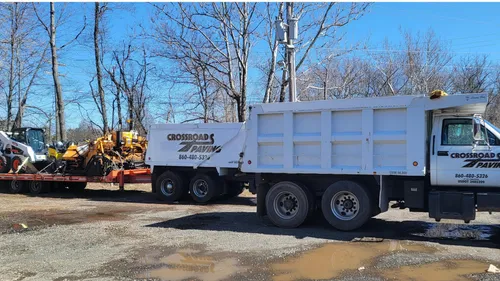
Crossroads Paving CT | Driveway Paving - Commercial Paving - Driveway Sealing is a paving contractor based in Waterbury, CT. They offer a range of services including driveway paving, commercial paving, asphalt repair, sealcoating, and concrete installation. The company has expertise in handling both residential and commercial projects, using modern equipment and quality materials to ensure durable results. With three generations of asphalt contractors behind them, Crossroads Paving CT has over 30 years of experience in the industry. The owner is actively involved on every job site, ensuring attention to detail and quality workmanship.
GWS Paving
Bridgeport, CT
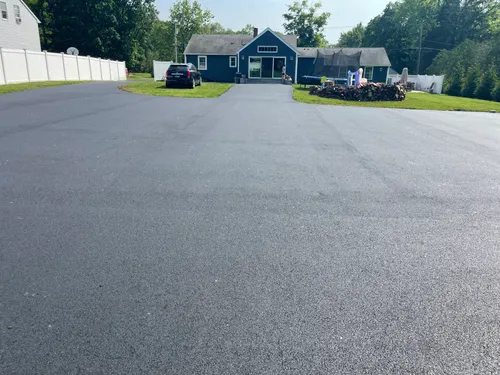
GWS Paving is a third-generation asphalt paving contractor based in Bridgeport, CT, serving most of Connecticut. They offer a wide range of services including driveway paving, parking lot striping, sealcoating, resurfacing, and more, using state-of-the-art equipment to ensure efficient project completion. With over 15 years of experience, GWS Paving handles both residential and commercial projects, specializing in driveway paving and parking lot maintenance.
Grizzly Sealcoating - (Formerly Santaniello Driveway Sealers)
Stamford, CT
Grizzly Sealcoating - (Formerly Santaniello Driveway Sealers) provides asphalt care services in Stamford, CT, and surrounding areas. With over 25 years of experience, they specialize in commercial and residential sealcoating, crack filling, and parking lot striping. The company continues the tradition of its predecessor, Santaniello Driveway Sealers, offering reliable asphalt maintenance across Fairfield County.
Lee & Sons Paving LLC
477 W Main St, New Britain, CT 06053
Lee & Sons Paving LLC is a family-owned paving company serving Hartford, CT, and the surrounding Central Connecticut area. Established in 1968, they offer a wide range of residential and commercial paving services including asphalt installation, parking lot striping, seal coating, resurfacing, and repair. Their expertise includes hot crack filling and drainage solutions to ensure durable and well-maintained paved surfaces. With over 50 years of experience, Lee & Sons Paving LLC combines traditional skills with modern techniques to deliver tailored paving solutions. They are available seven days a week to meet various project needs.
Understanding New Haven and Connecticut Striping Regulations
Parking lot striping in New Haven is governed by a combination of local zoning ordinances and state law. Connecticut General Statutes (CGS) incorporate federal requirements from the Americans with Disabilities Act (ADA), making compliance mandatory. For property owners and managers, this means that pavement marking is a legal obligation, not an optional upgrade. Lots with 20 or more spaces have specific compliance mandates. Failure to maintain proper markings can result in fines, liability issues, and create unsafe conditions. The regulations cover everything from the width of a standard stall to the specific color and lettering required for fire lanes.
Key Dimensions and Standards for Parking Spaces
The foundation of any parking lot layout is the individual parking space. In Connecticut, the standard for a typical passenger vehicle space is a minimum of 9 feet wide by 18 feet deep. Lines must be at least 4 inches wide to ensure visibility1. These dimensions are designed to allow safe vehicle entry and exit and provide enough room for car doors to open. When planning a new layout or re-striping, these minimums are the starting point, though many commercial lots opt for slightly larger spaces (e.g., 9.5' x 19') to improve customer satisfaction, especially in retail settings2.
Accessible Parking Space Requirements
ADA-compliant accessible parking is one of the most regulated aspects of lot striping. For spaces constructed or altered after October 2004, the requirements are specific:
- Passenger Accessible Spaces: Must be a total of 15 feet wide, which includes the parking space itself and a 5-foot-wide access aisle marked with diagonal cross-hatch lines.
- Van-Accessible Spaces: Must be a total of 16 feet wide, incorporating an 8-foot-wide access aisle 3.
- Location: Accessible spaces must be located on the shortest accessible route to the building entrance or walkway.
- Surface Marking: The access aisle must be clearly marked, typically with diagonal stripes, to discourage parking in this crucial zone.
- Signage: Each space requires an above-grade sign displaying the International Symbol of Access and wording such as "Reserved Parking Permit Required"4 5. The sign must also state "Violators will be Fined" with the minimum fine amount indicated.
Specialized Pavement Markings and Their Meanings
Beyond standard stalls, a fully compliant parking area requires several other specific markings.
Fire Lane Striping
Fire lanes are essential for ensuring emergency vehicle access. Connecticut law mandates strict marking protocols6 7:
- Curb Color: Any curb adjacent to a designated fire lane must be painted solid red.
- Stenciling: The words "FIRE LANE - NO PARKING - TOW AWAY ZONE" must be stenciled in white on the red curb or directly on the pavement if no curb exists. Letters must be at least 3 inches high.
- Frequency: This stenciling must be repeated at intervals not exceeding 50 feet along the entire length of the fire lane.
- Pavement Stripes: Where there is no curb, the boundary of the fire lane must be marked with a continuous 6-inch-wide red stripe8.
Crosswalks and Traffic Flow Markings
Safe pedestrian movement is managed through crosswalk markings. State regulations specify that crosswalk lines should be solid white lines, not less than 6 inches in width, and spaced at least 6 feet apart9. For enhanced visibility in high-traffic areas like school zones, wider longitudinal or diagonal lines (12 to 24 inches wide) spaced 24 inches apart are recommended9. Directional arrows, stop bars, and yield markings also fall under traffic flow markings and must be applied according to standard traffic control manuals for private property.
Find the perfect parking lot striping companies for your needs
Get personalized recommendations and expert advice
The Importance of Regular Maintenance and Restriping
Parking lot markings fade over time due to UV exposure, weather, and friction from vehicle tires and snow plows. In a climate like New Haven's, with its freeze-thaw cycles and winter maintenance, markings can deteriorate rapidly. Industry experts generally recommend a complete restriping of your lot every 18 to 24 months to maintain clarity, safety, and legal compliance10 11. Regular maintenance isn't just about following the law; it's a proactive measure to reduce liability. Faded lines can contribute to vehicle accidents or pedestrian incidents, for which the property owner may be held responsible.
Materials and Methods for Long-Lasting Markings
The longevity of your pavement markings depends heavily on the material used. The two most common options are:
- Traffic Paint (Water-Based or Solvent-Based): This is the most common and cost-effective material. It is applied quickly and is suitable for most lots. High-quality traffic paints include reflective glass beads mixed in or dropped onto the wet paint to ensure nighttime visibility.
- Thermoplastic: This is a more durable, melted plastic material that is applied hot. It is significantly more resistant to wear and weather, lasting several years longer than paint. It is often used for high-traffic areas, symbols (like the handicap logo), and crosswalks.
The choice between materials often comes down to budget versus long-term value. A professional striping contractor can advise on the best material for your specific lot's traffic patterns and maintenance schedule.
Cost Considerations for Parking Lot Striping Projects
Costs for line painting can vary based on the size of the lot, the complexity of the layout, the material chosen, and the amount of preparatory work needed (like power washing). As a general guide:
- Standard Striping: Costs can range from $0.50 to over $1.00 per linear foot of paint applied12.
- ADA-Compliant Spaces: Marking an accessible space, including the stall and the cross-hatched access aisle, is more labor-intensive and may cost between $150 and $300 per space13.
- Fire Lane Marking: This is often priced per linear foot for curb painting ($3-$6 per foot) or per stencil application ($20-$50 per stencil)14.
Getting detailed quotes from several qualified local contractors is the best way to understand the investment required for your specific property.
Planning Your Striping Project: A Checklist
Before contacting a service provider, you can prepare by gathering some key information:
- Lot Size: Calculate the total square footage or have a rough site plan.
- Current Layout: Note if you are refreshing existing lines or need a completely new design.
- Special Markings: Count the number of accessible spaces, fire lanes, directional arrows, and other symbols needed.
- Surface Condition: Assess if the pavement needs cleaning or minor repairs before striping can begin.
- Budget & Timeline: Have a general idea of your budget and when you would like the work completed (often during low-traffic hours).
Using a resource to compare local specialists can streamline this process, ensuring you find a contractor familiar with New Haven's specific code requirements who can deliver a compliant, professional result.
Frequently asked questions
Sources
Footnotes
-
Parking Lot Stripping Requirements - Town of Perinton - https://perinton.gov/wp-content/uploads/Parking-Lot-Striping-Requirements-Town-Specs.pdf ↩
-
New Haven Retail Parking Requirements: Facilities ... - Shyft - https://www.myshyft.com/blog/parking-requirements-for-retail-stores-new-haven-connecticut/ ↩
-
Accessible Parking - ADA National Network - https://adata.org/factsheet/parking ↩
-
HANDICAPPED PARKING LAWS IN CONNECTICUT - C G A - https://www.cga.ct.gov/2010/rpt/2010-R-0293.htm ↩
-
State of Connecticut Handicapped Parking Spaces and Signs ... - https://www.bristolct.gov/DocumentCenter/View/22637/Handicapped-Parking-PDF?bidId= ↩
-
§ 150.191 FIRE LANE REQUIREMENTS. - American Legal Publishing - https://codelibrary.amlegal.com/codes/anthonynm/latest/anthony_nm/0-0-0-3281 ↩
-
(A). PAINTING EACH FIRE LANE SHALL BE CONTINUOUSLY ... - https://www.webstertx.gov/DocumentCenter/View/8357 ↩
-
FIRE LANE REQUIREMENTS | epcesd1 - https://www.epcesd1.com/wp-content/uploads/2022/03/Fire-Lane-Requirements.pdf ↩
-
Sec. 14-298-622. Crosswalk and crosswalk lines - https://eregulations.ct.gov/eRegsPortal/Browse/getDocument?guid=%7B23F93115-0821-47C1-9433-2D6994F1DF96%7D ↩ ↩2
-
How Long Should A Parking Lot Stripe Be? - https://www.rpmpavement.com/blog/2024/how-long-should-a-parking-lot-stripe-be.html ↩
-
How often should a parking lot be restriped? - Seton - https://www.seton.com/when-to-restripe-a-parking-lot ↩
-
Commercial Parking Lot Striping: Costs, Standards + Pro Tips - https://www.getonecrew.com/post/commercial-parking-lot-striping ↩
-
Basic Guide to Parking Lot Striping - https://www.trafficsafetystore.com/blog/guide-to-parking-lot-striping/ ↩
-
Fire Lane Striping For Easy Access And Safety - https://alliancewashing.com/fire-lane-striping-for-easy-access-and-safety/ ↩