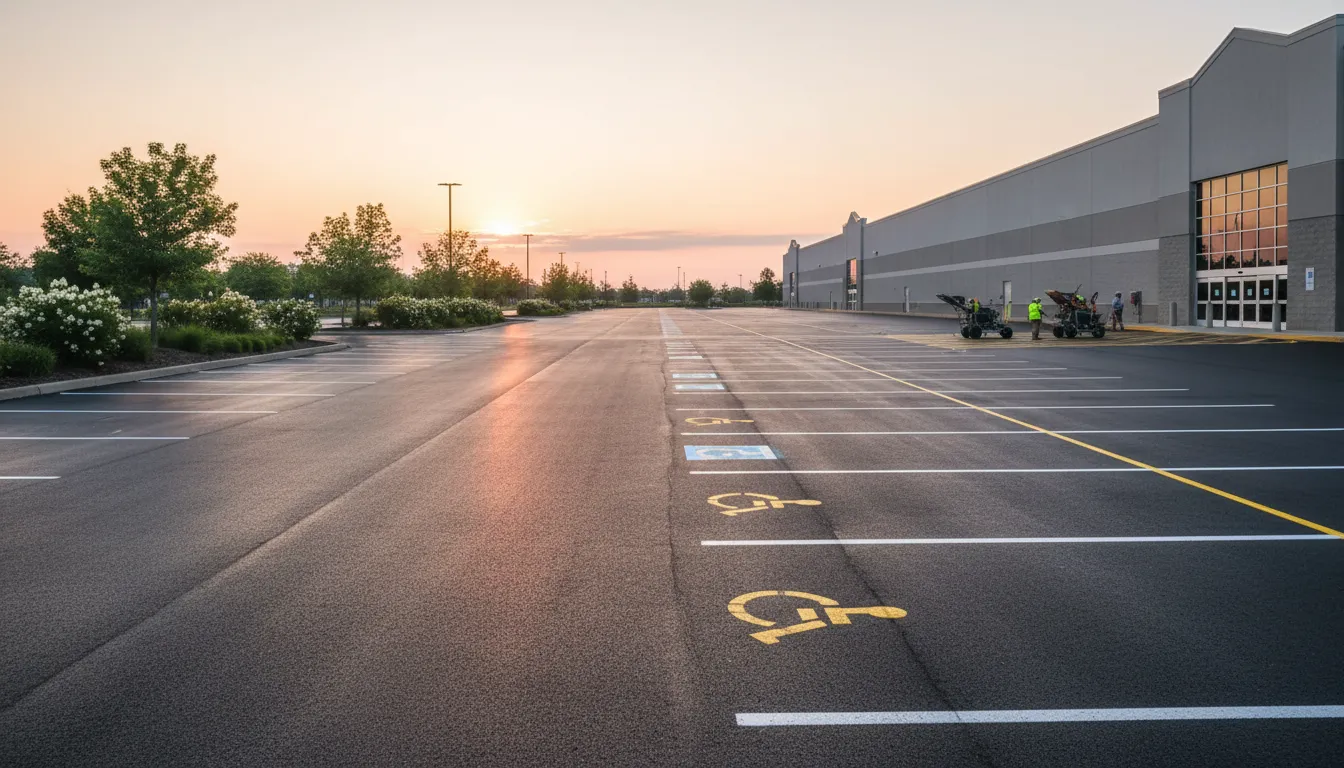
Find the Best Parking Lot Striping Companies for Your Business
No obligation • Fast responses • Nationwide coverage

Why you can trust Tidy Parking
Tidy Parking is a leading U.S. source for parking lot maintenance services, including striping, sealcoating, sweeping, paving, resurfacing, and repairs. Our content is created independently, and providers cannot pay to influence ratings or recommendations.
Search providers near you
Top Parking Lot Striping Companies in Bristol, Connecticut Ranked
Parking lot striping is the process of applying painted lines, symbols, and markings to define parking stalls, traffic flow, and safety zones. In Bristol, proper line marking is not just about organization; it's a critical legal requirement that ensures safety, accessibility, and compliance with state and federal regulations. This guide explains the specific rules for Bristol property owners and managers, detailing everything from ADA-accessible spaces to fire lane specifications, so you can understand what's needed to maintain a safe, functional, and legally compliant parking area.
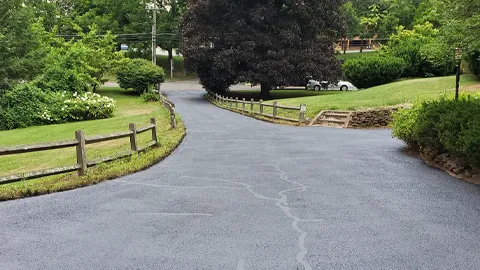
CDS Asphalt Services
44 Glendale Rd, South Windsor, CT 06074
CDS Asphalt Services is a parking lot striping, sealcoating, and repair company based in Hartford, CT. They provide services for both commercial and residential projects, including seal coating, crack filling, line striping, and catch basin maintenance. With over 20 years of experience, CDS Asphalt Services is fully insured and equipped to handle projects of various sizes.
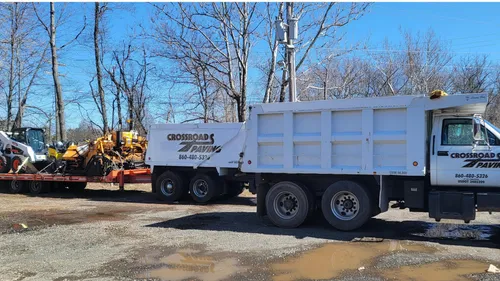
Crossroads Paving CT | Driveway Paving - Commercial Paving - Driveway Sealing
679 Main St, Plymouth, CT 06782
Crossroads Paving CT | Driveway Paving - Commercial Paving - Driveway Sealing is a paving contractor based in Waterbury, CT. They offer a range of services including driveway paving, commercial paving, asphalt repair, sealcoating, and concrete installation. The company has expertise in handling both residential and commercial projects, using modern equipment and quality materials to ensure durable results. With three generations of asphalt contractors behind them, Crossroads Paving CT has over 30 years of experience in the industry. The owner is actively involved on every job site, ensuring attention to detail and quality workmanship.
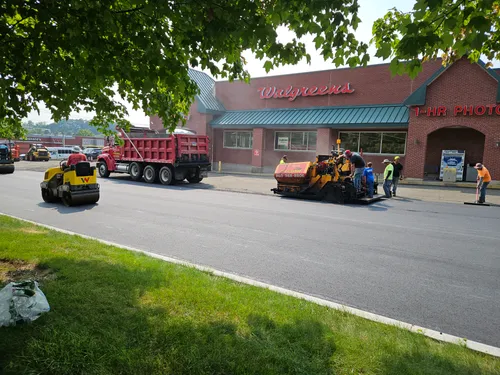
Paving by Custom Construction
309 rear E Center St, Manchester, CT 06040
Paving by Custom Construction is a paving contractor based in Hartford, CT, with 22 years of experience. They offer a variety of services including asphalt paving, parking lot striping, sealcoating, parking lot repair, concrete work, drainage solutions, and stone work. The company provides warranties on complete paving projects and focuses on meeting client goals for cost, schedule, and quality.
GWS Paving
Bridgeport, CT
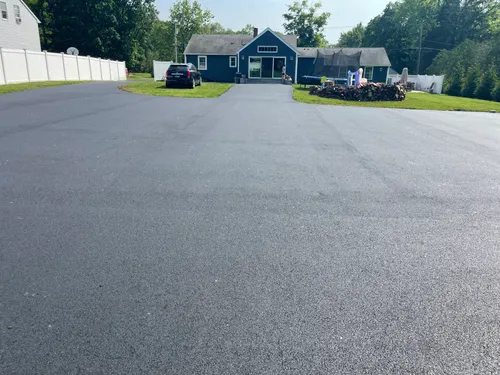
GWS Paving is a third-generation asphalt paving contractor based in Bridgeport, CT, serving most of Connecticut. They offer a wide range of services including driveway paving, parking lot striping, sealcoating, resurfacing, and more, using state-of-the-art equipment to ensure efficient project completion. With over 15 years of experience, GWS Paving handles both residential and commercial projects, specializing in driveway paving and parking lot maintenance.
Premier Sealcoating and Paving
400 Chapel Rd #1C, South Windsor, CT 06074
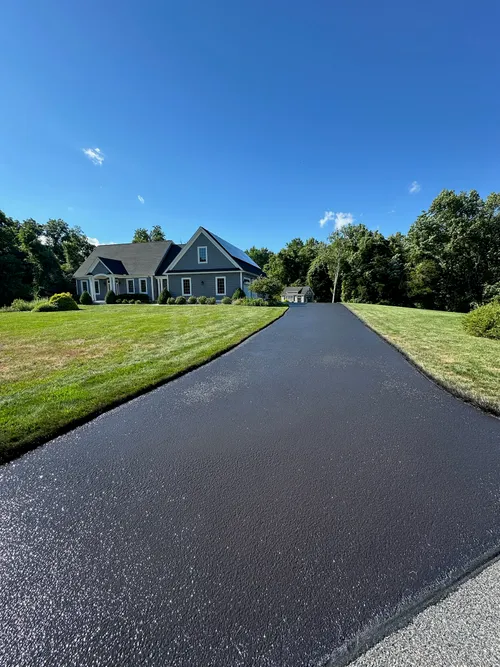
Premier Sealcoating and Paving is a woman-owned business based in Hartford, CT, offering a full range of asphalt services including sealcoating, crack filling, line striping, sweeping, curb repair, asphalt patching, and general maintenance. With over 45 years of industry experience, they serve both commercial and residential clients across Connecticut. Their team uses state-regulated asphalt emulsion sealer, a safer and environmentally friendly alternative to traditional coal tar, to protect and extend the life of asphalt surfaces. Premier Sealcoating and Paving complies with FAA, DOT, and state regulations, ensuring quality and safety in all projects.
Understanding Local Striping Regulations
In Bristol, parking lot markings are governed by a combination of the Americans with Disabilities Act (ADA) and the Connecticut State Building Code, which incorporates the ICC/ANSI A117.1 standards 1. Local enforcement falls to the Bristol Planning and Zoning Department and the Fire Marshal's office. Before beginning any restriping project, it is highly recommended to consult with these local authorities to ensure your plans meet all current requirements, as regulations can be updated.
Failing to comply can result in fines and liability issues. The primary goal of these regulations is to create a safe, navigable environment for all users, including those with disabilities. Proper pavement marking guides drivers, minimizes accidents, and efficiently uses available space.
ADA Compliance: Accessible Parking Spaces
ADA-compliant accessible parking is one of the most regulated aspects of lot striping. The rules are precise and must be followed exactly.
- Space Dimensions: Standard accessible automobile spaces must be at least 15 feet wide, which includes a 5-foot-wide access aisle marked with diagonal cross-hatching 2. Van-accessible spaces require a total width of 16 feet, incorporating an 8-foot-wide access aisle.
- Location: Accessible spaces must be located on the shortest accessible route from the parking area to the building's accessible entrance. They cannot be placed in areas that are less convenient or farther away than other parking 3.
- Markings: The access aisle must be clearly marked with diagonal stripes to discourage parking within it. This aisle is crucial for deploying wheelchair lifts and ramps 4.
- Signage: Each accessible space must have a sign mounted at least 60 inches (5 feet) above the ground to the bottom of the sign. The sign must display the International Symbol of Accessibility and state "Reserved Parking Permit Required" along with the minimum fine for violation 5.
- Quantity: The number of required accessible spaces is based on the total number of spaces in the lot. For example, a lot with 1 to 25 total spaces requires at least one accessible space, while a lot with 26 to 50 spaces requires two 6.
The access aisle must be level, with a maximum slope of 1:48 in any direction, and it must not overlap with the vehicular travel path 7 8.
Fire Lane and Safety Markings
Fire lanes are legally designated "No Parking" zones that must be kept clear for emergency vehicle access. Bristol follows Connecticut fire code provisions for these critical areas.
- Marking Specifications: Fire lanes must be clearly outlined with traffic yellow paint. This often includes painting the curb yellow or using 6-inch-wide lines to define the lane's boundaries 9.
- Surface Lettering: The pavement surface within the fire lane must be marked with the words "NO PARKING - FIRE LANE" in large, legible white or yellow letters that are visible to approaching drivers.
- Maintenance: The Fire Marshal may require that fire lane markings be repainted as often as every two years to ensure maximum visibility and compliance 10. Faded or unclear fire lane markings are a common violation.
Standard Stall Dimensions and Traffic Flow
While not as tightly regulated as accessible spaces, standard parking stall dimensions and layout significantly impact usability and safety.
- Stall Size: A typical standard parking stall is 9 feet wide by 18 feet long. Proper line striping ensures vehicles fit without encroaching on travel aisles or adjacent spaces.
- Traffic Flow: The layout must allow vehicles to enter and exit all parking spaces without needing to move other parked cars. This requires well-planned aisle widths and clear directional arrows painted on the pavement to guide one-way traffic 11.
- Crosswalks: Marked crosswalks, often using 4-inch or wider white lines, are essential for safely guiding pedestrians from parking aisles to building entrances 12.
Find the perfect parking lot striping companies for your needs
Get personalized recommendations and expert advice
Maintenance and Restriping Schedule
Parking lot markings degrade over time due to traffic, weather, and sun exposure. Faded lines are not just an eyesore; they are a safety hazard and a compliance violation.
- Recommended Frequency: For optimal safety and compliance, professional restriping is recommended every 1 to 2 years, depending on traffic volume and weather conditions 13 14.
- Inspection: Property managers should regularly inspect their lot markings, paying special attention to accessible space markings, fire lane lettering, and directional arrows. If markings are significantly faded or damaged, they should be refreshed promptly.
- Process: Restriping typically involves cleaning the pavement, applying new paint or thermoplastic material, and allowing adequate drying time. Using a professional service ensures crisp lines, proper measurements, and adherence to all local codes.
Costs for Parking Lot Striping in Bristol
The cost of a striping project in Bristol varies based on the scope, including the number of stalls, the amount of specialized marking, and the condition of the pavement. Here is a general breakdown based on industry standards:
- Standard Parking Stall: Stripping a single standard stall typically costs between $5 and $15.
- Accessible Space: Due to the additional stencil work for the handicap symbol and access aisle hatching, an accessible space costs more, generally ranging from $50 to $150 per space.
- Fire Lane Marking: Painting fire lane boundaries and lettering is often priced by the linear foot, ranging from $2 to $5 per foot.
- Total Project Cost: For a small commercial lot in Bristol, a complete restriping project might cost between $500 and $1,500. Larger lots with extensive stencil work for arrows, symbols, and safety zones can cost several thousand dollars 15.
Planning Your Project: Key Considerations
- Local Permits: Check with the Bristol Planning Department to see if a permit is required for your restriping work, especially if it involves reconfiguring the layout.
- Professional Contractor: Hire a contractor experienced with Connecticut and ADA regulations. They should provide a detailed plan showing stall dimensions, accessible space placement, and traffic flow patterns.
- Material Choice: Discuss paint options with your contractor. Latex-based traffic paint is common, but more durable thermoplastic markings may be a better long-term investment for high-traffic areas.
- Timing: Schedule work during low-traffic periods to allow paint to cure properly. Weather conditions are also critical; painting should not be done in rain or extreme temperatures.
Frequently asked questions
Sources
Footnotes
-
FIRE LANE REGULATION - C G A - https://www.cga.ct.gov/2005/rpt/2005-R-0397.htm ↩
-
Accessible Parking Spaces - ADA.gov - https://www.ada.gov/topics/parking/ ↩
-
The Importance of ADA-Compliant Parking Lot Striping - Rose Paving - https://www.rosepaving.com/blog/the-importance-of-ada-compliant-parking-lot-striping/ ↩
-
ADA Compliance Brief: Restriping Parking Spaces - https://www.ada.gov/resources/restriping-parking-spaces/ ↩
-
ADA Parking Lot Requirements - The Pavement Network - https://pavementnetwork.com/ada-parking-lot-requirements/ ↩
-
State of Connecticut Handicapped Parking Spaces and Signs ... - https://www.bristolct.gov/DocumentCenter/View/22637/Handicapped-Parking-PDF?bidId= ↩
-
Chapter 5 General Site and Building Elements - UpCodes - https://up.codes/viewer/connecticut/icc-a117.1-2017/chapter/5/general-site-and-building-elements ↩
-
Chapter 5 General Site and Building Elements: Connecticut Accessibility Code 2009 - https://up.codes/viewer/connecticut/icc-a117.1-2009/chapter/5/general-site-and-building-elements ↩
-
FIRE LANE REQUIREMENTS - Horizon Fire Department - https://www.epcesd1.com/wp-content/uploads/2022/03/Fire-Lane-Requirements.pdf ↩
-
Chapter 42: Fire Lanes - City of Norwalk, CT - eCode360 - https://ecode360.com/27049372 ↩
-
Parking Lot Striping: What You Need To Know - https://goodmansonconstruction.com/parking-lot-striping/ ↩
-
Article XXIV: Parking and Loading Performance Standards - https://ecode360.com/9501645 ↩
-
ADA Compliance Guide for Parking Lot Line Striping - https://www.pavementsolutions.org/ada-compliance-guide-for-parking-lot-line-striping/ ↩
-
ADA Requirements for Commercial Parking Lots - DMI Paving & Sealcoating Blog - https://dmipavingandsealcoating.com/blog/ada-parking-lot-requirements/ ↩
-
Parking Lot Striping: Everything You Need To Know - https://www.calvacpaving.com/parking-lot-striping-need-to-know/ ↩