Find the Best Parking Lot Striping Companies for Your Business
No obligation • Fast responses • Nationwide coverage
Why you can trust Tidy Parking
Tidy Parking is a leading U.S. source for parking lot maintenance services, including striping, sealcoating, sweeping, paving, resurfacing, and repairs. Our content is created independently, and providers cannot pay to influence ratings or recommendations.
Search providers near you
Top Parking Lot Striping Companies in Aurora, Colorado Ranked
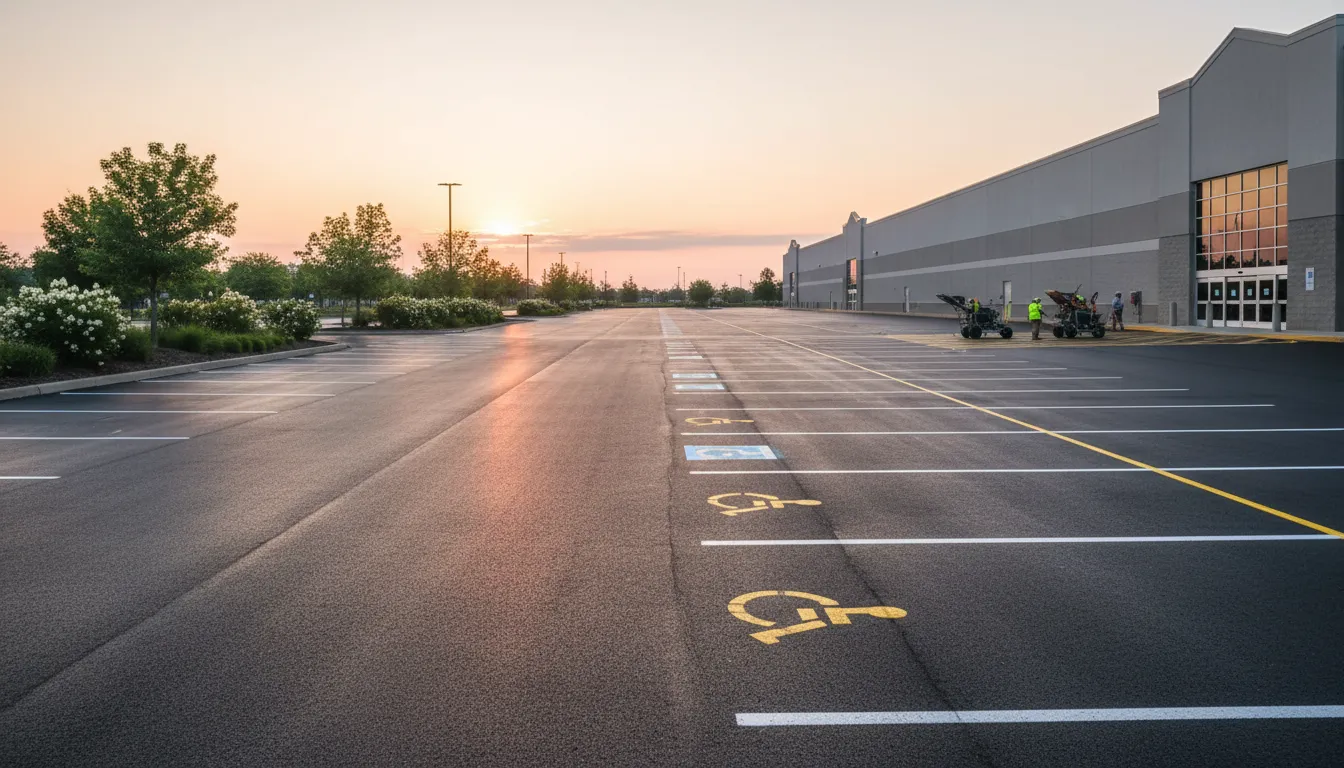
Parking lot striping is the essential practice of applying painted lines, symbols, and markings to asphalt or concrete surfaces to organize traffic flow and designate parking spaces. In Aurora, proper pavement marking is not just about aesthetics; it's a critical component of public safety, accessibility, and legal compliance for any business or property manager. This guide explains the local requirements, best practices, and material choices to help you understand your project needs and connect with qualified professionals in the area.
Stellar Striping and Sealcoating
Denver, CO
Stellar Striping and Sealcoating offers parking lot maintenance and pavement solutions in Denver, CO. They provide residential and commercial services including asphalt repair, sealcoating, crack filling, and pavement marking. Their team uses industrial-grade equipment and high-quality products to maintain and enhance property surfaces. The company also offers concrete services such as driveways, sidewalks, stamped concrete, and retaining walls. Founded by Jack Jungers, Stellar Striping and Sealcoating emphasizes long-lasting pavement solutions to improve both appearance and safety. They provide 24/7 team support for their clients.
Mountain Lot Striping LLC
12135 Elizabeth St, Thornton, CO 80241
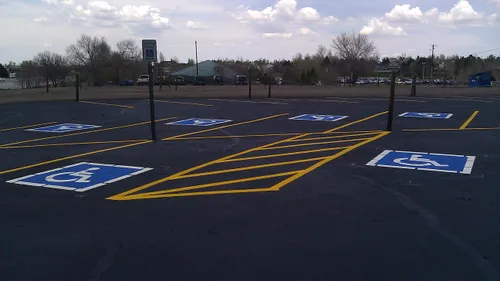
Mountain Lot Striping LLC is a parking lot striping, sealcoating, and repair company serving Denver, CO, and the Colorado Front Range along the I-25 corridor. They offer services including new striping layouts, restriping, ADA-compliant signage installation, wheel stop installation, scarifying and grinding to remove old striping, and comprehensive asphalt repairs such as pothole patching, crack sealing, and full-depth overlays. Their concrete wheel stops are reinforced for stability, and they use specialized core drilling for precise signage placement. Mountain Lot Striping serves a wide range of industries including commercial, residential, industrial, public, medical, and hospitality sectors.
BCT Asphalt Paving
Centennial, CO
BCT Asphalt Paving is a family-owned asphalt paving contractor serving Centennial, CO, with over 25 years of experience. They provide a wide range of services including asphalt paving, sealcoating, parking lot construction and maintenance, resurfacing, pothole repair, crack filling, and professional striping to ensure functional and durable surfaces. The company uses high-quality materials and modern equipment to deliver projects that withstand Colorado's climate. BCT Asphalt Paving also offers driveway and culvert services to enhance property access and drainage. They are fully licensed and insured and provide special discounts for senior citizens, veterans, and first responders.
Colorado Asphalt Works Inc
5390 E 72nd Ave, Commerce City, CO 80022
Colorado Asphalt Works Inc is a paving contractor based in Denver, CO, providing a range of asphalt and concrete services. They specialize in parking lot striping, sealcoating, sweeping, paving, resurfacing, and repair, serving the Front Range and surrounding areas. Established in 1997, the company offers comprehensive parking lot maintenance including crack-filling and overlays, as well as driveway repairs tailored to enhance safety and appearance. Their experienced team focuses on craftsmanship and long-term performance to meet the unique needs of each property.
BlackTop Plus
383 Corona St Suite 504, Denver, CO 80218
BlackTop Plus is a Denver, CO-based company specializing in asphalt paving, parking lot striping, sealcoating, resurfacing, and repair services. They serve both residential and commercial clients in Denver and Northern Colorado, offering a full range of asphalt solutions including driveway and parking lot paving, crack and pothole repairs, sealcoating to protect surfaces, and clean, precise striping for safety and organization. With decades of local experience, BlackTop Plus uses top materials and the latest methods to ensure durable results. The company emphasizes clear communication, respect for property, and on-time project completion.
Why Proper Striping is Non-Negotiable in Aurora
Clear, durable line striping serves as the silent director of traffic in any parking facility. It guides drivers safely to parking stalls, through lanes, and around pedestrians. In Aurora, with its mix of commercial hubs, residential areas, and sprawling retail centers, effective traffic paint prevents accidents, reduces driver confusion, and maximizes the efficient use of space. Beyond functionality, well-maintained markings project a professional image, signaling that a property is cared for and secure. Most importantly, they are your first line of defense against liability issues and city code violations.
Faded, cracked, or missing lines create a hazardous environment. Drivers may park haphazardly, block fire lanes, or encroach on accessible stalls, leading to fines for the property owner. The variable Colorado climate, with intense sun, freeze-thaw cycles, and occasional heavy snowplowing, can accelerate the wear on pavement markings, making a regular maintenance schedule essential.
Navigating Aurora's ADA Compliance Requirements
Adherence to the Americans with Disabilities Act (ADA) is a federal law, and Aurora enforces these standards rigorously. Non-compliance can result in significant fines and legal action, not to mention it excludes customers and visitors. The rules for accessible parking space marking are specific and must be followed precisely.
Space Dimensions and Layout: A standard accessible parking space must be at least 8 feet wide. Adjacent to it, a 5-foot-wide access aisle is required, bringing the total allocated width to 13 feet. For van-accessible spaces, the access aisle must be 8 feet wide, creating a 16-foot total width. This aisle is crucial for deploying wheelchairs and mobility ramps and must always be kept clear.
Markings and Signage: The access aisle must be marked with diagonal blue or white stripes to discourage parking within it. The parking space itself requires the International Symbol of Accessibility painted in blue on the pavement, typically within the stall. Furthermore, each accessible space must be accompanied by a vertical sign displaying the accessibility symbol. This sign must be mounted at a height of at least 60 inches measured to the bottom of the sign to ensure visibility 1. At least one out of every six accessible spaces must be designated as van-accessible 2.
Location Planning: Accessible spaces must be located on the shortest possible accessible route from the parking area to the building's entrance. They should be as level as possible and situated in areas least likely to be obstructed. Proper planning during the initial layout or restriping project is key to meeting these location-based rules 3.
Fire Lane Striping: A Critical Safety Code
Fire lane marking is one of the most critical safety elements in parking lot painting. Aurora follows strict local and national fire codes that mandate how these zones are identified and maintained. A clearly marked fire lane ensures emergency vehicles have unimpeded access to buildings and fire hydrants at all times.
Color and Stenciling Specifications: Fire lanes must be delineated by a continuous red stripe along the curb or pavement edge. Within this red zone, the words "No Parking - Fire Lane" must be stenciled in white paint at intervals not exceeding 30 feet. If there is no curb, an 8-inch-wide red stripe is painted on the pavement with the required white stenciling.
Enforcement and Maintenance: Property owners are responsible for keeping fire lanes clear of parked vehicles and other obstructions. Illegally parked cars in a fire lane can be ticketed and towed at the owner's expense. The red paint and stenciling must be highly visible, which means refreshing this striping is a priority during maintenance cycles, as faded fire lane markings do not fulfill legal requirements 4.
Find the perfect parking lot striping companies for your needs
Get personalized recommendations and expert advice
Standard Markings for Traffic Flow and Safety
Beyond ADA and fire lanes, a comprehensive striping plan includes several other standardized markings that guide daily traffic and enhance safety.
Crosswalks and Pedestrian Paths: Pedestrian safety is paramount. Crosswalks are typically marked with solid white parallel lines or continental-style (zebra) stripes. In some cases, yellow lines may be used for special emphasis. All crosswalk markings in Aurora should follow the guidelines set by the Manual on Uniform Traffic Control Devices (MUTCD) for width, pattern, and visibility 5.
Directional Arrows and Symbols: One-way traffic lanes, turn lanes, and merge areas require large, painted arrows on the pavement. These are usually white and must be of a standard size to be easily understood by drivers. Other common symbols include the "stop" bar at intersections, handicapped symbols, and "loading zone" designations, often marked with yellow curb paint 6.
Loading Zones and Other Special Designations: Areas reserved for commercial loading and unloading are typically marked with yellow paint on the curb and the words "Loading Zone" stenciled on the pavement. These must be clearly distinct from fire lanes (which are red) and standard parking stalls to prevent confusion 7.
Choosing the Right Materials: Paint vs. Thermoplastic
The longevity and visibility of your parking lot markings depend heavily on the material used. The two primary options are water-based traffic paint and thermoplastic.
Water-Based Acrylic Paint: This is the most common and cost-effective material for parking lot line striping. It is easy to apply, dries relatively quickly, and is suitable for most low to medium-traffic areas. In Aurora's climate, acrylic paint typically needs to be refreshed every 1 to 2 years to maintain optimal visibility and compliance. It's an excellent choice for routine maintenance and projects with budget constraints.
Thermoplastic: For high-traffic areas like shopping mall entrances, hospital driveways, or busy school zones, thermoplastic is the superior choice. This material is applied hot and fuses to the asphalt, creating an extremely durable, thick marking that is highly reflective when glass beads are added. Thermoplastic markings can last 5 to 7 years or more, resisting wear from tires and snowplows far better than paint. While the upfront cost is higher, the long lifespan and reduced need for frequent re-application often make it more economical over time.
Understanding Costs and Project Scope
The cost of a striping project in Aurora depends on several variables: the total linear footage of lines, the complexity of the layout (lots of stencils and symbols cost more), the material chosen, and the condition of the existing pavement.
On average, restriping with standard acrylic paint costs between $0.20 and $0.50 per linear foot8 9. However, this base rate can increase significantly for projects requiring full ADA compliance upgrades, extensive fire lane marking, or the use of thermoplastic. A project that involves removing old, faded lines or working on a deteriorated surface may also incur additional preparation costs.
The most valuable step you can take is to get a detailed, site-specific assessment. A professional will measure your lot, discuss your compliance needs, evaluate the pavement condition, and provide a clear quote that outlines the work required for a safe, legal, and durable result.
Maintaining Your Investment
Parking lot striping is not a "set it and forget it" investment. To ensure ongoing safety, compliance, and curb appeal, a proactive maintenance schedule is essential. Plan to have your lines inspected annually. A good rule of thumb is to budget for re-striping every 1-2 years for paint and 5+ years for thermoplastic, though high-traffic areas may need attention more frequently.
Scheduling maintenance during warmer, drier months (late spring through early fall) is ideal in Colorado, as the application requires clean, dry pavement for proper adhesion. Regular maintenance is far more cost-effective than dealing with the consequences of an accident, a lawsuit, or a city fine resulting from non-compliant, faded markings.
Frequently asked questions
Sources
Footnotes
-
Parking Lot Striping & ADA Compliance: What to Know - https://brixco.co/parking-lot-striping-ada-compliance/ ↩
-
Chapter 5: Parking Spaces - Access-Board.gov - https://www.access-board.gov/ada/guides/chapter-5-parking/ ↩
-
Parking Lot Line Striping Requirements | ABC Paving & Sealcoating - https://pavingandsealcoating.com/parking-lot-line-striping-requirements/ ↩
-
Expert Fire Lane Striping in Aurora, CO - https://www.parkinglotstripingaurora.com/fire-lane-striping.html ↩
-
Basic Business Regulations - City of Aurora - https://www.auroragov.org/business_services/development_center/codes_rules/basic_business_regulations ↩
-
Basic Guide to Parking Lot Striping - Traffic Safety Store - https://www.trafficsafetystore.com/blog/guide-to-parking-lot-striping/ ↩
-
What color should fire lanes be marked with? - https://www.facebook.com/groups/656627774545130/posts/2226084414266117/ ↩
-
Parking Lot Striping: Boosting Safety and Aesthetics for Denver ... - https://asphaltcoatingscompany.com/blog/parking-lot-striping-boosting-safety-and-aesthetics-for-denver-businesses/ ↩
-
Complete Parking Lot Striping Guide 2025 - ADA Striping - https://ada-striping.com/complete-parking-lot-striping-guide/ ↩