Find the Best Parking Lot Striping Companies for Your Business
No obligation • Fast responses • Nationwide coverage
Why you can trust Tidy Parking
Tidy Parking is a leading U.S. source for parking lot maintenance services, including striping, sealcoating, sweeping, paving, resurfacing, and repairs. Our content is created independently, and providers cannot pay to influence ratings or recommendations.
Search providers near you
Top Parking Lot Striping Companies in Yucaipa, California Ranked
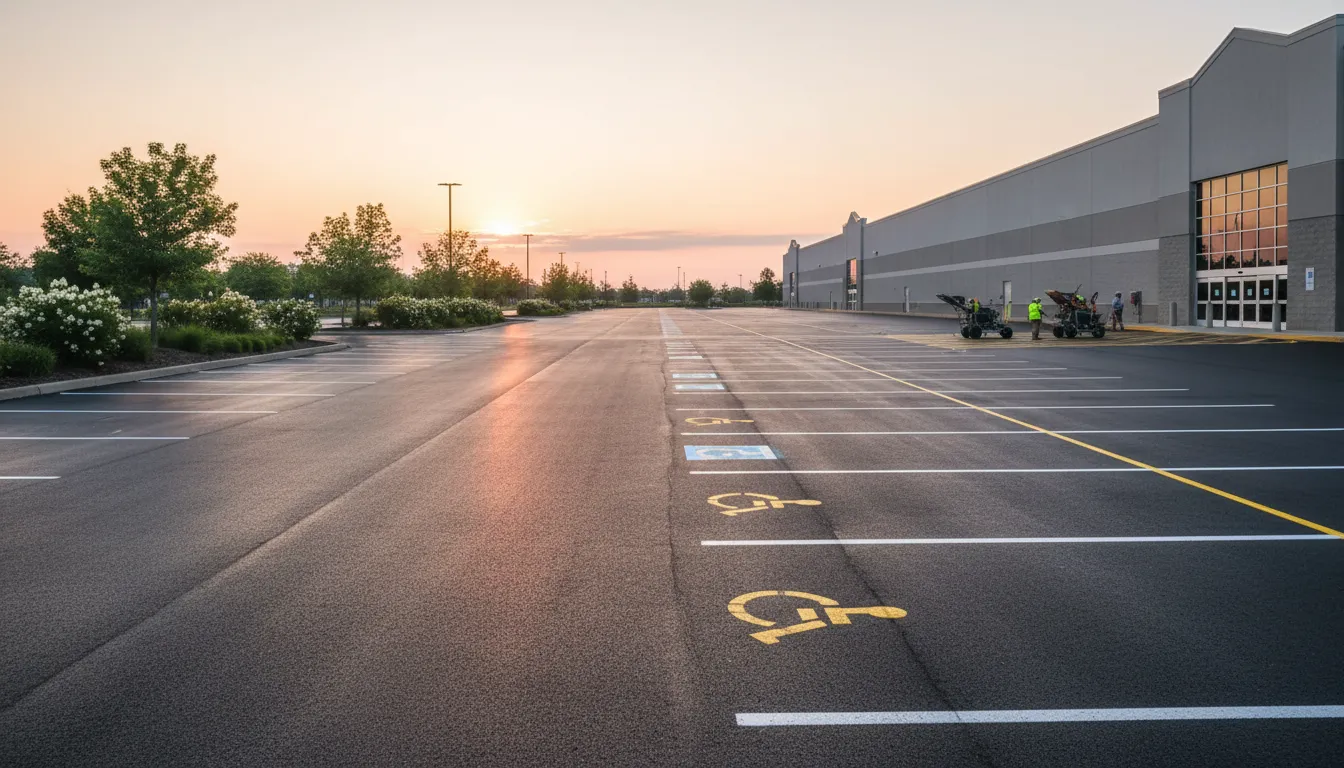
Proper parking lot striping is far more than just painting lines on asphalt; it's a critical component of safety, accessibility, and legal compliance for any property. In Yucaipa, parking lot markings must adhere to a strict set of state and local codes, including the California Building Code, California Vehicle Code, and San Bernardino County Fire Protection District standards. Non-compliance can result in significant penalties, starting at $4,000 per violation. This guide explains the key requirements for pavement marking in Yucaipa, helping property owners and managers understand what's needed to ensure their lots are safe, accessible, and legally sound.
HKY Asphalt Paving of San Bernardino
Riverside, CA
HKY Asphalt Paving of San Bernardino is a paving contractor based in Riverside, CA, offering services including parking lot striping, sealcoating, paving, resurfacing, and repair. They serve residential and commercial clients across San Bernardino, handling everything from small driveways to large parking lots and road construction projects. The company emphasizes proper base preparation and uses commercial-grade materials to ensure durability in local soil and weather conditions. With over 30 years of experience, they also provide demolition and speed bump installation services, managing permits and debris removal as part of their comprehensive approach.
HKY Asphalt Paving
Anaheim, CA
HKY Asphalt Paving is a paving contractor based in Anaheim, CA, serving Riverside and nearby communities. They provide a range of services including asphalt paving, sealcoating, parking lot striping, resurfacing, and repair for residential and commercial properties. The company emphasizes thorough base preparation and proper grading to ensure durable surfaces that withstand local weather conditions. They also offer milling to remove damaged pavement, installation of speed bumps, and full demolition services for site preparation. With over 30 years of experience in the Riverside area, HKY Asphalt Paving has developed local knowledge to address soil and drainage challenges effectively.
Majestic Asphalt
340 Village Rd, Menifee, CA 92584
Majestic Asphalt is a licensed and insured asphalt contractor based in Los Angeles, CA. They offer a range of services including asphalt paving, patching, sealcoating, striping, and driveway installation for residential and commercial clients. Known for using high-grade materials and proven methods, Majestic Asphalt focuses on durable results and quality craftsmanship. The company serves the Los Angeles area and is recognized for its reliable asphalt repair and maintenance work. With years of experience, they provide expert asphalt solutions designed to enhance curb appeal and extend pavement life.
Cortez Paving Inc
Riverside, CA
Cortez Paving Inc provides asphalt, concrete, and sealcoating services in Riverside, CA. They handle residential, commercial, and industrial projects with expertise in parking lot paving, striping, and sealcoating to protect and maintain paved surfaces. The company also specializes in ADA compliance, including handicap parking stalls, signage, and accessible pathways. Cortez Paving uses advanced technology and premium materials to ensure durable and visually appealing results.
Navarro Paving, Asphalt Parking Lots & Sealcoating
Los Angeles, CA
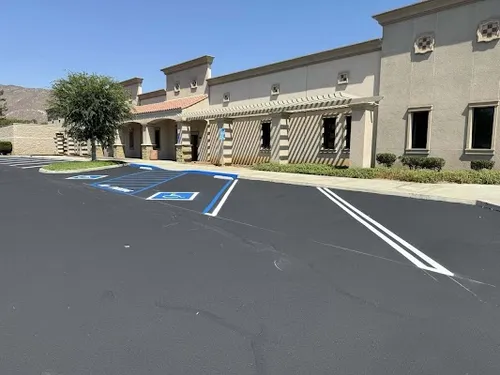
Navarro Paving, Asphalt Parking Lots & Sealcoating is a paving contractor based in Los Angeles, CA, specializing in asphalt paving, sealcoating, resurfacing, striping, and parking lot repair. They serve various areas in Southern California, including Jurupa Valley, San Gabriel Valley, Corona, Santa Ana, Long Beach, Bellflower, Riverside, Mira Loma, and Norco. The company offers concrete ADA ramp installation and repair to ensure compliance and accessibility. With decades of experience, Navarro Paving focuses on providing durable asphalt solutions that protect surfaces from oil, water, and sun damage. The family-run business emphasizes transparent pricing and tailored recommendations for each project.
Understanding the Legal Landscape for Pavement Markings
Before a single line is painted, it's essential to understand the regulatory environment. Parking lot striping in Yucaipa is governed by a layered system of regulations. At the state level, the California Building Code (CBC) Title 24 and the California Vehicle Code (CVC) set the baseline for dimensions, signage, and traffic flow. Locally, the San Bernardino County Fire Protection District enforces additional, often stricter, standards for fire lane access and marking. These agencies conduct inspections, and violations are taken seriously. Ensuring your lot's line painting meets all these codes is not just about avoiding fines-it's about protecting your business from liability and providing safe access for everyone.
ADA Parking Space Requirements: Dimensions and Markings
Accessible parking is one of the most regulated aspects of lot layout. Getting these stall markings wrong is a common and costly mistake.
- Standard Accessible Space Dimensions: Each accessible space must be at least 9 feet (108 inches) wide. An alternative configuration allows for an 8-foot wide space paired with a 5-foot wide access aisle.
- Van-Accessible Spaces: For van-accessible stalls, the requirement is an 8-foot wide space with an 8-foot wide access aisle. Alternatively, an 11-foot wide space with a 5-foot aisle is acceptable. Crucially, one out of every six accessible spaces must be van-accessible1 2.
- Access Aisle Markings: The access aisle, which is part of the accessible route, must be clearly marked with hatched (diagonal) lines. While blue is common, white hatching is also permissible. The words "NO PARKING" must be stenciled in letters at least 12 inches high within the aisle 3.
- The International Symbol: The International Symbol of Accessibility (ISA) must be painted on the pavement within the stall. The symbol must measure 36 inches by 36 inches and be painted in white on a blue background. Its placement is specific: the lower side should be aligned with the end of the parking space4 5.
- Required Signage: Each accessible space must be accompanied by a posted sign featuring the ISA. The bottom of the sign must be at least 60 inches above the pavement, and it must include the phrase "Minimum Fine $250"6 7.
- Surface Slope: The ground surface of both the parking space and its access aisle must have a slope of less than 2% in all directions to ensure stability for wheelchairs and mobility devices8.
Fire Lane Striping and Marking Standards
Fire lane marking is critical for emergency vehicle access and is strictly enforced by local fire authorities. The San Bernardino County Fire Protection District has clear specifications.
- Curb Marking: Where a curb exists, the entire vertical face must be painted solid red. On this red background, white stenciled lettering must read: "FIRE LANE - NO PARKING - CVC 22500.1". This lettering must be at least 3 inches high and repeated at intervals not exceeding 30 feet (or 25 feet in some specialized districts).
- Marking Without a Curb: If there is no curb, a 6-inch wide solid red stripe must be painted on the pavement to delineate the fire lane. The text "FIRE LANE - NO PARKING" must also be painted on the pavement within the lane 9.
- Lane Dimensions: The fire lane itself must be a minimum of 20 feet wide and kept completely free of obstructions at all times10 11.
- Supplemental Signs: While curb or pavement markings are primary, reflective signs (typically 12"x18") may also be required. These must be mounted about 80 inches high and spaced no more than 50 to 75 feet apart12 13.
Loading Zone and Passenger Curb Markings
Properly marked commercial and passenger loading zones help manage traffic flow and prevent congestion.
- Commercial Loading Zones (Yellow Curb): Curbs designated for commercial loading are painted solid yellow. These zones are typically for the active loading/unloading of materials by commercial vehicles, often permitted Monday through Saturday from 7 AM to 6 PM unless other times are posted.
- Passenger Loading Zones (White Curb): Curbs marked with white paint are for passenger loading and unloading only, intended for brief stops to pick up or drop off people and their baggage14.
- Time Limit Markings: When a time limit applies to a loading zone (e.g., 10-minute parking), that limit must be painted on the curb in black letters at least 4 inches high15.
Find the perfect parking lot striping companies for your needs
Get personalized recommendations and expert advice
Pedestrian Safety: Crosswalks and Walkways
Clear pedestrian pathways are a vital safety feature of any well-designed parking area.
- Accessible Route: A marked crosswalk must provide a direct, accessible path from the accessible parking spaces to the building entrance.
- Marking Design: Crosswalks should be highly visible, using white or yellow paint. Designs often include parallel lines, continental stripes (thick, rectangular bars), or diagonal hatching to clearly separate the pedestrian way from driving lanes.
- Curb Ramps: At the junction where a crosswalk meets the vehicular path, curb ramps must include yellow "detectable warnings"-surfaces with truncated domes that are tactilely distinct to warn visually impaired pedestrians of the transition16.
Parking Lot Layout and Stall Dimensions
Beyond accessible spaces, the general layout of your lot impacts efficiency and safety.
- Standard Stall Sizes: A typical parking stall is 9 feet wide by 18-20 feet deep. Compact car spaces can be smaller, usually around 8 feet wide by 16 feet deep, but must be clearly labeled as "COMPACT."
- Aisle Width: The width of driving aisles is determined by the parking angle. For common 90-degree (perpendicular) parking, aisles should be at least 24 feet wide to allow for comfortable turning. For 60-degree angled parking, a 20-foot aisle is often sufficient.
- Directional Arrows and Symbols: One-way traffic flow should be indicated with large painted arrows. Symbols for bicycles, stenciled words like "STOP" or "ENTER," and directional lines are essential for guiding drivers safely and efficiently.
Maintenance and Restriping Frequency
Paint fades, and even the best line striping job won't last forever. Regular maintenance is key to ongoing compliance and safety.
- Recommended Schedule: For high-traffic lots, such as those at busy retail centers or medical facilities, restriping is recommended every 1 to 2 years. For lots with lower traffic volume, such as at office parks or churches, a cycle of every 2 to 4 years may be sufficient.
- Factors Influencing Schedule: The lifespan of your markings depends on asphalt quality, weather exposure, sun degradation, and the amount of vehicle traffic and snow plowing (if applicable). Faded or unclear markings can lead to parking confusion, accidents, and compliance issues.
- Surface Preparation: Before repainting, the surface often requires cleaning to remove dirt, oil, and debris. Old, peeling paint may need to be removed or covered with a primer to ensure the new markings adhere properly and look crisp.
Cost Considerations for Parking Lot Striping
The cost of a striping project in Yucaipa varies based on the scope, complexity, and condition of the lot.
- Per-Stall Cost: Restriping a standard parking stall typically ranges from $5 to $10 per stall.
- ADA Stall Cost: Painting an accessible stall, including the ISA symbol and hatched access aisle, is more labor-intensive and ranges from $150 to $300 per stall.
- ADA Signage: Installing the required compliant sign for an accessible space, including materials and labor, can cost $150 to $300 per sign.
- Fire Lane Marking: Painting a red fire lane curb costs approximately $2 to $5 per linear foot.
- Total Project Estimates:
- A small lot with around 20 spaces and one ADA stall might cost between $1,000 and $2,500 for a full restripe.
- A large lot with 100+ spaces will generally start at $3,000 and can exceed $8,000, depending on the number of ADA stalls, fire lane footage, and the amount of prep work needed17.
- Variable Factors: Final costs are influenced by the current surface condition, the quantity and type of paint required, and any necessary preparation like power washing or old paint removal18.
Frequently asked questions
Sources
Footnotes
-
Complete Parking Lot Striping Guide 2025 - ADA Striping - https://ada-striping.com/complete-parking-lot-striping-guide/ ↩
-
What are the Requirements for ADA Parking in California? - https://www.welovepaving.com/what-are-the-requirements-for-ada-parking-in-california/ ↩
-
The Best Guide to ADA Handicap Parking Requirements for ... - https://coastalpipelineinc.com/the-best-guide-to-ada-handicap-parking-requirements-for-california-properties/ ↩
-
California ADA Parking Requirements 2025 Guide - ADA Striping - https://ada-striping.com/ada-parking-requirements/ ↩
-
1109A.8.8.2 Parking Space Marking - UpCodes - https://up.codes/s/parking-space-marking ↩
-
Accessible Parking - ADA National Network - https://adata.org/factsheet/parking ↩
-
2022 CA Access Parking - Patterson, CA - https://pattersonca.gov/DocumentCenter/View/11397/2022-CA-Access-Parking ↩
-
ADA Compliance for California Parking Lots: A Simple Guide ... - https://theasphaltjungle.com/blog/ada-parking-lot-requirements-california/ ↩
-
Fire Lane Marking - https://www.sccfd.org/wp-content/uploads/2024/08/A-6-Fire-Lane-Marketing-07.01.2020.pdf ↩
-
A - 2 - San Bernardino County Fire Protection District - https://sbcfire.org/wp-content/uploads/sites/46/2023/08/SBCOFPD-STANDARD-A-2-FIRE-APPARATUS-ACCESS-ROAD-DESIGNATION-AND-MARKING-7.1.23.pdf ↩
-
Fire Lane Requirements - Riverside County Fire Department - https://www.rvcfire.org/pdf/fire-marshal/handouts-forms/Form_11_-_Fire_Lane_Requirements_Rev_x2x.pdf ↩
-
Fire Lane Requirements - https://northcountyfire.gov/wp-content/uploads/2021/10/FIRE-LANE-INFORMATION-SHEET-Revised-5-3-18.pdf ↩
-
Fire Lane Striping: Guide to Safety, Compliance & Regulations - https://everlinecoatings.com/us/fire-lane-striping-guide-to-safety-compliance-regulations/ ↩
-
Operations & Support - LADOT Parking - https://ladotparking.org/operations-support/ ↩
-
Establishment of Loading, Parking, and Standing Zones: Curb ... - https://ecode360.com/35893512 ↩
-
A Guide to Accessible Parking for the Construction Industry - https://www.dgs.ca.gov/-/media/Divisions/CCDA/Tabs/Resources-Page/Documents/2024/CCDA-Guide-to-Accessible-Parking-APC-Construction-Industry-2024.pdf ↩
-
Parking Lot Striping: Everything You Need To Know - Calvac Paving - https://www.calvacpaving.com/parking-lot-striping-need-to-know/ ↩
-
Parking Lot Striping Standards in California: Stall Sizes, Blue ... - https://www.retemple-painting.com/painting-articles/parking-lot-striping-standards-california-stall-sizes-blue-curb-fire-lanes ↩