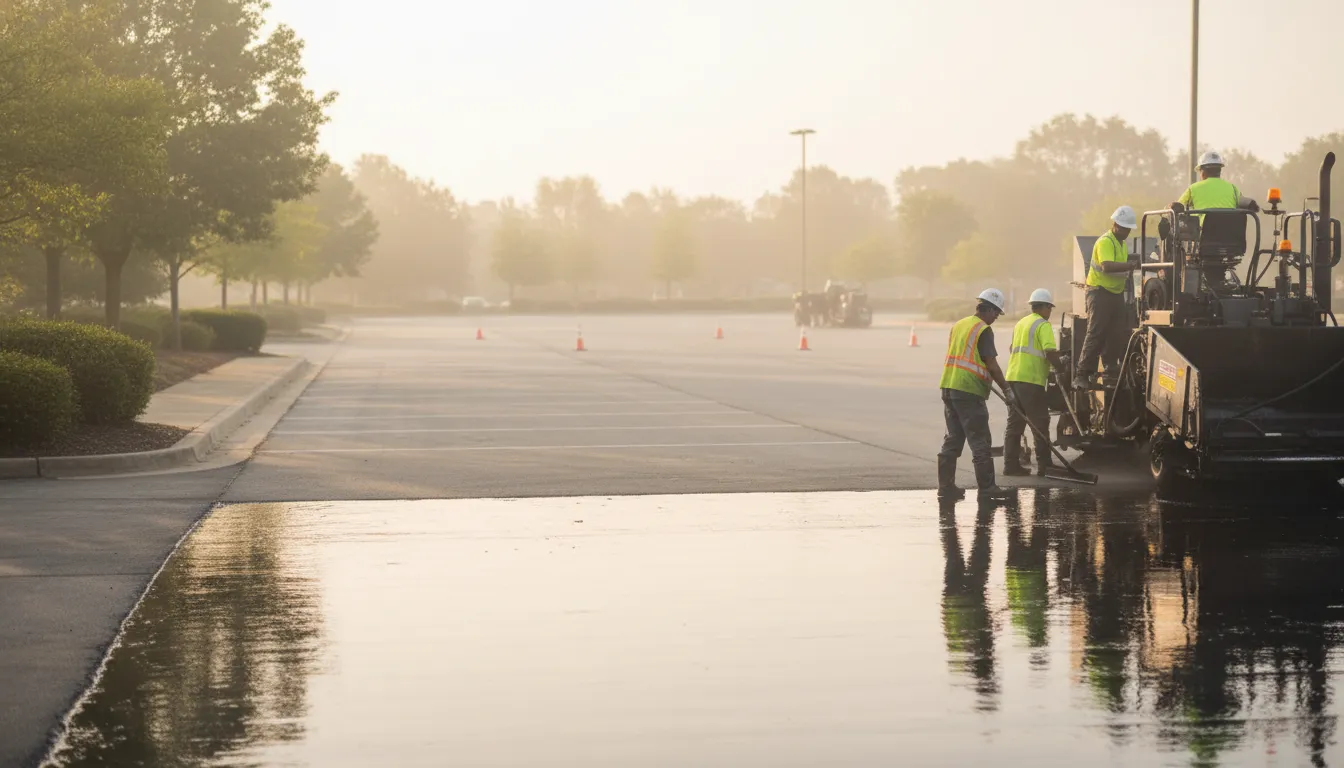
Find the Best Parking Lot Sealcoating Companies for Your Business
No obligation • Fast responses • Nationwide coverage
Why you can trust Tidy Parking
Tidy Parking is a leading U.S. source for parking lot maintenance services, including striping, sealcoating, sweeping, paving, resurfacing, and repairs. Our content is created independently, and providers cannot pay to influence ratings or recommendations.
Search providers near you
Top Parking Lot Sealcoating Companies in Cincinnati, Ohio Ranked
Parking lot sealcoating is a vital protective maintenance service that applies a specialized coating over asphalt pavement. In Cincinnati, this process is essential for shielding your investment from the region's punishing weather and daily wear, preventing costly damage like cracks and potholes. Understanding the local best practices for timing, preparation, and application helps property managers and business owners make informed decisions to extend pavement life. This guide provides the key information needed to evaluate and connect with qualified local professionals for your asphalt sealing project.
Hartz SealCoating
8123 Glendale Milford Rd, Camp Dennison, OH 45111
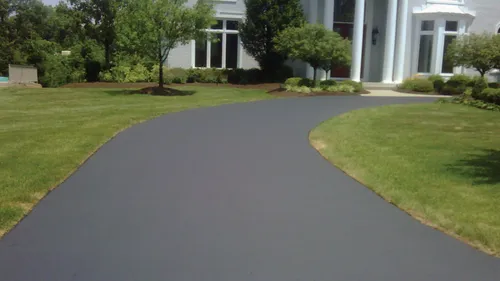
Hartz SealCoating is a parking lot sealcoating company based in Camp Dennison, serving Cincinnati, OH. The company provides sealcoating services primarily for residential driveways on the North and East sides of Cincinnati, including areas such as Blue Ash, Hyde Park, and Mariemont. For commercial clients, their service area extends to a broader region including Mason, West Chester, and Sharonville. Hartz SealCoating has been operating since 2010 and is involved in community support through annual donations to local organizations.
Pave-it LLC
1283 Tri County Hwy, Williamsburg, OH 45176
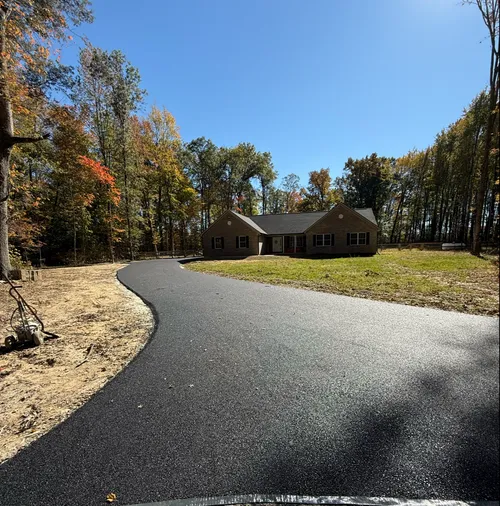
Pave-it LLC is a parking lot sealcoating and paving contractor based in Cincinnati, OH. They provide commercial and driveway paving and sealcoating services, focusing on durable asphalt layers designed to last 15 to 20 years. The company uses high-quality sealcoating products with strong additives to enhance longevity where other providers may fall short. Communication with customers is emphasized to ensure project needs are met before work begins.
Cincy Sealcoat LLC
2265 Venice Blvd, Fairfield, OH 45014
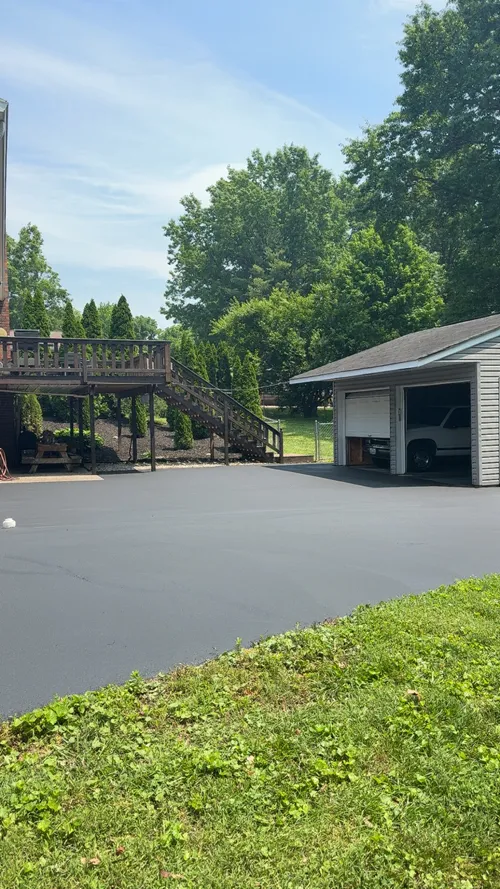
Cincy Sealcoat LLC is a locally owned company based in Cincinnati, OH, providing professional sealcoating, crack filling, line striping, and asphalt repair services. They serve residential driveways and commercial parking lots throughout Greater Cincinnati and nearby tri-state areas, including parts of Ohio, Northern Kentucky, and Southeast Indiana. The company uses commercial-grade sealers and hot rubberized crack filler to protect and extend the life of pavement surfaces. Cincy Sealcoat LLC emphasizes thorough surface preparation and applies two coats of premium sealer for durability. They carry full liability insurance and business licenses to ensure compliance and customer peace of mind.
Black Dawg of Greater Cincinnati
65 Terrace Dr, Cincinnati, OH 45215
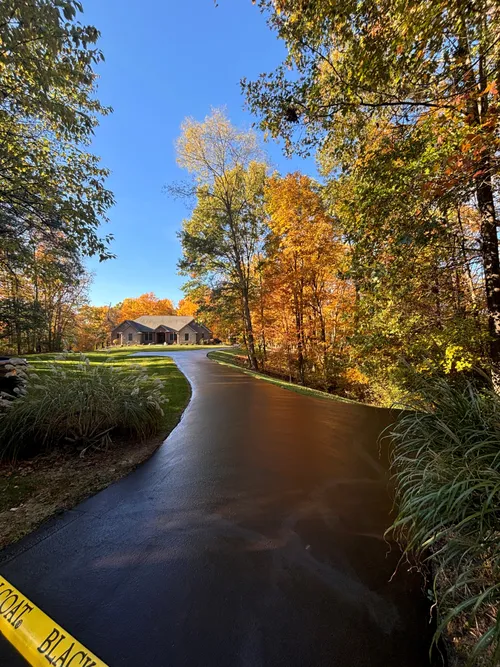
Black Dawg of Greater Cincinnati is a parking lot sealcoating and repair company serving Cincinnati, OH. They provide services including sealcoating, crack sealing, and patchwork for both residential driveways and commercial parking lots. The company uses industrial-grade sealers and premium hot rubber crack filler designed for durability and protection. Black Dawg is part of the Jet-Black Franchise Group, which has completed over 500,000 projects since 1987 and operates across 18 states, emphasizing quality and long-lasting results.

G.O.A.T. Blacktop
1825 Sherman Mount Zion, Dry Ridge, KY 41035
G.O.A.T. Blacktop is a parking lot striping and sealcoating company based in Louisville, KY. They provide blacktop sealing and parking lot striping services for residential, commercial, and municipal clients, including indoor warehouse striping. Their work focuses on protecting and enhancing the longevity of asphalt surfaces with durable sealing solutions.
Why Sealcoating is Critical for Cincinnati Pavement
Cincinnati's climate presents a unique challenge for asphalt surfaces. The combination of hot, humid summers and winters with frequent freeze-thaw cycles accelerates pavement deterioration. Ultraviolet (UV) radiation from the sun breaks down the asphalt binder, making it brittle, while moisture seeps into tiny cracks. When this water freezes and expands, it widens those cracks and can lead to base layer failure and potholes 1. A professionally applied sealcoat acts as a waterproof, UV-resistant barrier, significantly slowing this destructive process and protecting the underlying asphalt investment 2.
Beyond weather protection, a fresh sealcoat offers immediate practical benefits. It restores a deep, uniform black color to faded gray asphalt, dramatically improving your property's curb appeal. A well-maintained lot signals professionalism and care to customers and tenants. The smooth, sealed surface is also easier to clean and maintain, as it resists oil and gas spills better than untreated asphalt.
Determining the Right Sealcoating Schedule for Your Lot
A one-size-fits-all schedule doesn't work for asphalt sealing. The frequency of sealcoating depends heavily on the traffic volume and usage patterns of your specific parking area.
- Low to Moderate Traffic Lots: For office parks, churches, or condominium complexes with consistent but lighter use, a sealcoat application every 2 to 3 years is typically sufficient to maintain protection 3.
- High-Traffic or Heavy-Duty Lots: Parking lots for retail centers, schools, restaurants, or industrial facilities experience much more wear. For these surfaces, a more frequent schedule of every 1 to 2 years is recommended to keep the protective layer intact.
- New Asphalt Installation: If you have a newly paved lot, it's crucial to wait for the asphalt to fully cure. Sealcoating should be scheduled within 6 to 12 months after installation, but never immediately, as the pavement needs time to off-gas and harden 4.
Regular inspections in spring and fall can help you spot early signs of wear, such as fading, small cracks, or surface raveling (loose stones), indicating it's time to plan for sealcoating.
The Ideal Time of Year for Sealcoating in Cincinnati
Timing is everything for a successful asphalt sealing project. The sealant material requires specific conditions to adhere properly and cure into a durable, long-lasting coat.
The prime window for sealcoating in the Cincinnati area runs from late spring through early fall, generally May to September 5. Many local contractors consider late summer into early fall (August through October) an ideal period 5. This timeframe often avoids the spring rain rush and provides consistently warm, dry weather that is perfect for application and curing.
Two critical environmental factors must be met:
- Temperature: Application should only occur when temperatures are consistently above 50°F (10°C) and rising, with an ideal range between 60°F and 85°F 6. Nighttime temperatures should also stay above freezing.
- Dry Conditions: The asphalt surface must be completely dry, and there should be no rain forecast for at least 24 to 48 hours after application. High humidity can also significantly delay the drying process 7.
Scheduling during these optimal conditions ensures the sealant cures correctly, forming a strong bond that will last for years.
Essential Preparation Steps Before Sealcoating
A sealcoat is only as good as the surface it's applied to. Proper preparation is non-negotiable for achieving maximum adhesion and longevity 8. Reputable local contractors will include these steps in their process:
- Thorough Cleaning: The entire lot must be cleared of all dirt, leaves, gravel, and debris. This is often done with commercial sweepers and powerful blowers.
- Pressure Washing: To ensure the sealant bonds directly to the asphalt, oil stains, grease spots, mildew, and embedded grime must be removed with high-pressure washing 9.
- Crack Filling: Any existing cracks, even hairline ones, should be cleaned and filled with a hot-pour or cold-applied crack filler. This prevents moisture from penetrating the crack and undermining the new sealcoat from below 10.
- Pothole and Patch Repair: Any areas of alligator cracking, potholes, or other significant damage must be fully repaired and patched prior to sealing 11.
Skipping or rushing these preparatory steps is a common cause of premature sealcoat failure, leading to peeling and flaking.
Find the perfect parking lot sealcoating companies for your needs
Get personalized recommendations and expert advice
Understanding Sealcoating and Striping Coordination
For lots that need fresh pavement markings, the sequence of work is important. Striping must always be applied after the sealcoating is complete. Applying paint first would result in the new sealcoat covering and obscuring the lines 12.
After the final coat of sealant is applied, you must wait for it to cure sufficiently. Typically, contractors recommend waiting 24 to 48 hours before applying thermoplastic or paint striping 13. The surface should feel completely dry and firm to the touch. Applying striping too soon can cause the paint to mix with the uncured sealant, creating messy, blurred lines.
When Can You Reopen the Lot to Traffic?
Planning for lot closure is a key part of the sealcoating process. The curing time depends on weather conditions and the type of traffic.
- Passenger Vehicles: For standard car traffic, lots can often be reopened 24 to 48 hours after the final sealcoat application 14.
- Heavy Traffic & Trucks: For lots that will see delivery trucks, garbage trucks, or other heavy vehicles, a longer cure time of at least 48 to 72 hours is strongly advised to prevent tire marks and surface damage 15.
Your contractor will provide the best guidance based on the specific product used and the forecasted weather during the cure period.
Cost Considerations for Commercial Sealcoating
The cost to sealcoat a parking lot in Cincinnati is primarily calculated based on the total square footage or the number of parking stalls, with the condition of the existing pavement being a major factor 16. Extensive crack filling and patting will add to the project cost. Here is a general cost framework based on stall count:
- Small Lot (10-20 stalls): Approximately $300-$500 (or $15-$25 per stall).
- Medium Lot (21-50 stalls): Approximately $500-$800 (or $10-$18 per stall) 17.
- Large Lot (51+ stalls): Approximately $800-$1,200+ (or $7-$15 per stall) 18.
It's important to note that if your project includes a full re-striping of the lot with new layouts or symbols, this will be an additional line item, potentially increasing the total project cost by 20-30% 19. Always seek detailed, written estimates that break down preparation, materials, labor, and any additional services like striping or signage installation.
Choosing a Local Sealcoating Professional
Selecting the right contractor is as important as the sealcoat itself. Look for established local companies with verifiable experience, proper insurance, and positive references for similar commercial projects. Ask about the specific materials they use, their preparation process, and their warranty or guarantee policy. A professional assessment should include a review of your lot's condition and a clear recommendation for any necessary repairs before the sealcoat is applied.
Frequently asked questions
Sources
Footnotes
-
How Often Should You Seal Coat Asphalt? - Elcor Construction - https://elcorconstruction.com/how-often-should-you-seal-coat-asphalt/ ↩
-
Asphalt Sealcoating Services in Greater Cincinnati - https://cincyasphalt.com/sealcoating/ ↩
-
How Often Should You Sealcoat a Driveway or Parking Lot? - https://coastalpipelineinc.com/how-often-should-i-sealcoat-a-driveway-or-parking-lot/ ↩
-
When Should I Sealcoat My Asphalt Parking Lot? - DB Krieg - https://dbkrieginc.com/blog/when-to-sealcoat-asphalt-parking-lot/ ↩
-
Why Late Summer Is the Perfect Time for Asphalt Sealcoating ... - https://klekamp.com/why-late-summer-is-the-perfect-time-for-asphalt-sealcoating-in-cincinnati/ ↩ ↩2
-
Is It Too Cold to Sealcoat My Asphalt Parking Lot? - Neyra Paving - https://neyrapaving.com/best-temperature-sealcoating/ ↩
-
When Is The Best Time Of Year For Asphalt Sealcoating? - https://www.raleighpaving.com/resources/blog/when-is-the-best-time-of-year-for-asphalt-sealcoating/ ↩
-
How Often Should You Re-Stripe and Seal Coat Your Parking Lot or ... - https://popestriping.com/blog/index.php/2024/06/24/how-often-should-you-re-stripe-and-seal-coat-your-parking-lot-or-parking-garage/ ↩
-
Hartz Sealcoating - Asphalt Parking Lot Sealcoating and ... - https://www.hartzsealcoating.com/ ↩
-
Cost Factors For Asphalt Sealcoating - https://affordablestriping.com/ahd_faq/cost-factors-asphalt-sealcoating/ ↩
-
Untitled - https://www.mplsd.org/Downloads/Parking%20Lot%20High%20School%20Sealcoating%20Crack%20Filling%20Patching%20Striping%20RFP%206%2024%2019%20to%207%2012%2019.pdf ↩
-
Should You Sealcoat Before or After Striping? - 1-800-striper - https://1800striper.com/sealcoat/ ↩
-
How soon can you stripe after sealcoating? - Asphalt Parking Lot Pros - https://asphaltparkinglotpros.com/2025/05/20/how-soon-can-you-stripe-after-sealcoating/ ↩
-
How Long After Sealcoating Can You Drive on It? - LineLava - https://linelava.com/how-long-after-sealcoating-can-you-drive-on-it/ ↩
-
How Often Should You Sealcoat Your Commercial Parking Lot - https://thepavementgroup.com/commercial-parking-lot-sealcoat/ ↩
-
Sealcoating Cost Planning Guide for Commercial Parking Lots - Daniel B. Krieg - https://dbkrieginc.com/blog/sealcoating-cost-planning-guide-for-commercial-parking-lots/ ↩
-
How Much Does it Cost to Stripe a Parking Lot? - SealMaster - https://sealmaster.net/faq/much-cost-stripe-parking-lot/ ↩
-
Commercial Sealcoating & Crack Fill - https://www.capitalpaving-sealcoating.com/services/commercial/sealcoating-2/ ↩
-
How Much Does It Cost to Stripe a Parking Lot? [2026 Data] - Angie's List - https://www.angi.com/articles/stripe-parking-lot-cost.htm ↩