Find the Best Parking Lot Resurfacing Contractors for Your Business
No obligation • Fast responses • Nationwide coverage
Why you can trust Tidy Parking
Tidy Parking is a leading U.S. source for parking lot maintenance services, including striping, sealcoating, sweeping, paving, resurfacing, and repairs. Our content is created independently, and providers cannot pay to influence ratings or recommendations.
Search providers near you
Top Parking Lot Resurfacing Contractors in Springfield, Illinois Ranked
A parking lot resurfacing project is a strategic investment that restores a worn asphalt surface, extending its life and improving safety and curb appeal. In Illinois, this process is particularly critical due to the state's demanding climate, which can rapidly degrade pavement. This guide explains the key considerations for commercial and municipal property owners in Illinois, from material selection and climate challenges to budgeting and timing. You can use this information to understand the scope of your project and connect with qualified local paving professionals who specialize in the Illinois market.
Illinois Paving
1337 Wabash Ave, Springfield, IL 62704
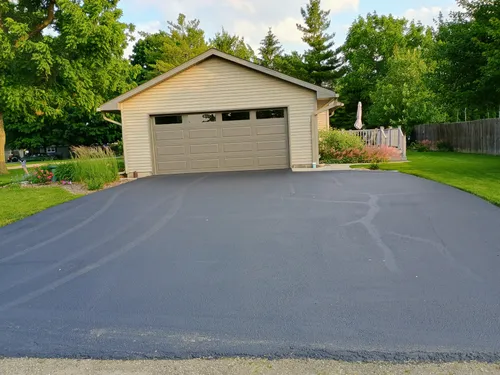
Illinois Paving is a third-generation family-owned business based in Springfield, IL, specializing in asphalt paving, parking lot sealcoating, resurfacing, and repair. They serve Springfield and surrounding areas, offering services such as asphalt paving, recycled asphalt, crushed concrete, hot tar and chip, and crack filling and sealcoating. The company emphasizes safety and uses the latest technologies to ensure durable and visually appealing pavement solutions. Illinois Paving has built its reputation over many years through dedication and hard work, focusing on providing safe work environments and quality craftsmanship.

Flatt Truman & Sons Company
2300 N 16th St, Springfield, IL 62702
Flatt Truman & Sons Company is a parking lot paving and repair contractor based in Springfield, IL. Serving Central Illinois for nearly 100 years, the company offers a range of services including asphalt paving, overlays, patching, oil and chip applications, grading, and maintenance. They also provide cold milling, sewer installation, concrete paving, and dirt excavating. With a long history dating back to the 1930s and now led by the fourth generation of the founding family, Flatt Truman & Sons combines tradition with extensive industry experience.
Why Resurface Your Illinois Parking Lot?
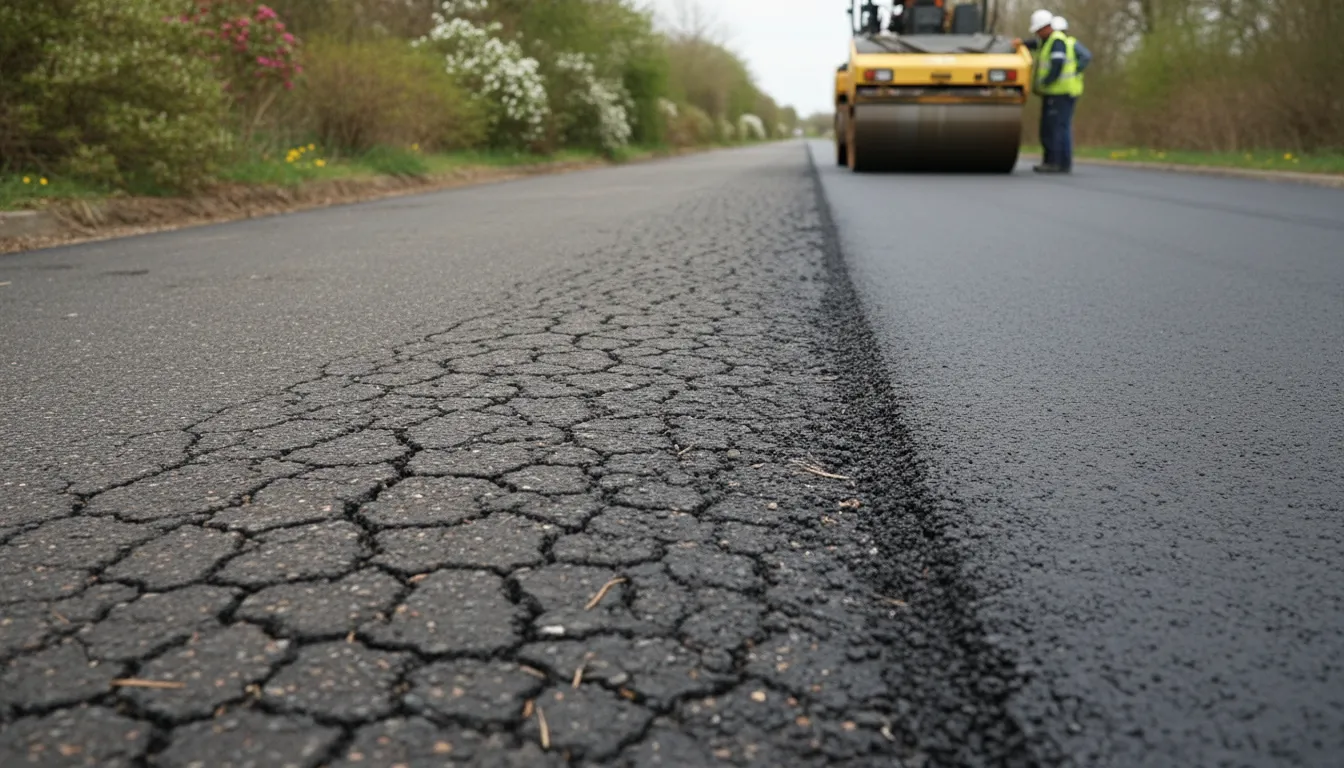
Resurfacing involves applying a new layer of asphalt over an existing, structurally sound base. It's a cost-effective alternative to full reconstruction, designed to address surface-level issues like cracks, fading, and minor roughness. For Illinois properties, timely resurfacing is a proactive defense against the state's harsh weather. The freeze-thaw cycle is the primary enemy of asphalt here; water seeps into small cracks, freezes and expands, then thaws, repeatedly stressing the pavement and leading to potholes and major structural failure. A new, sealed surface prevents water intrusion, protecting your investment.
Beyond weatherproofing, resurfacing enhances safety by restoring clear lane markings and improving traction. It also boosts your property's professional image, which can influence customer and tenant perceptions. When the underlying base is intact, resurfacing can add 8 to 15 years of functional life to your lot.
The Illinois Climate Challenge: Freeze-Thaw and Material Science
Illinois pavement must be engineered for resilience. The intense seasonal temperature fluctuations require an asphalt mix that remains flexible in sub-zero winters and stable in hot, humid summers.
- Freeze-Thaw Cycles: This is the core challenge. Asphalt must have the flexibility to contract and expand without cracking. Specifying the right performance-graded (PG) asphalt binder is non-negotiable for longevity.
- Optimal Timing for Work: Asphalt application requires consistent temperatures above 50°F for proper compaction and curing. This effectively restricts major resurfacing projects in Illinois to the window from late spring through early fall, typically May to October.
- Rutting Resistance: Areas with slow-moving or stationary heavy traffic (like loading docks and drive-thrus) are prone to rutting and shoving. High-stress areas demand high-performance binders to maintain structural integrity under load 1.
Choosing the Right Asphalt Mix for Illinois
The selection of asphalt mix is a technical decision that balances durability, cost, and site-specific needs.
- Hot Mix Asphalt (HMA): This is the industry standard for resurfacing. HMA is heated to 300°F-350°F at the plant, delivered hot, and compacted before it cools. It offers excellent durability, smoothness, and cost-effectiveness for most commercial applications 2 3.
- Performance-Graded Binders: The binder is the "glue" that holds the aggregate together. In Illinois, a binder graded PG 58E-34 is commonly recommended. This designation means it is engineered to perform in pavement temperatures as high as 58°C (136°F) and as low as -34°C (-29°F), providing the necessary flexibility for the Midwest climate 4. For extreme stress areas, polymer-modified binders (SBS/SBR) may be specified for added strength.
- Lift Thickness: A typical resurfacing project involves two layers:
- Binder Course: A minimum 2-inch layer that provides structural strength.
- Surface Course: A 1.5 to 2-inch top layer that provides a smooth, durable, and weather-resistant riding surface.
- This results in a total minimum thickness of 3.5 to 4 inches for most parking areas. For lots expecting frequent heavy truck traffic, a 4-inch minimum total thickness is strongly advised to prevent premature failure 5.
- Porous Asphalt: A sustainable option gaining traction, porous asphalt allows water to drain directly through the pavement into a stone recharge bed below. This significantly reduces stormwater runoff and helps mitigate icing, but requires specialized design and maintenance 6.
Critical Pre-Work: Drainage and Base Evaluation
Resurfacing a failing base is a wasted effort. Proper drainage evaluation is the most important preparatory step.
- Slope and Grading: The pavement must be graded with a minimum pitch (typically 1-2%) to direct water toward drains or perimeters. Standing water accelerates deterioration through surface wear and subsurface weakening 7.
- Subgrade and Base: The soil subgrade must be stable and well-compacted. In areas with poor native soils, a 6-inch compacted aggregate base course is often recommended to provide a stable platform for the new asphalt.
- Drainage Structures: Before paving, all catch basins, inlets, and pipes should be inspected, cleaned, and repaired. Ensuring the entire drainage system is functional is essential for the new surface's longevity.
Find the perfect parking lot resurfacing contractors for your needs
Get personalized recommendations and expert advice
Understanding Costs for Parking Lot Resurfacing in Illinois
Budgeting requires an understanding of both unit costs and the scale of your project. Costs are primarily quoted per square foot.
- Resurfacing Cost Range: For standard HMA resurfacing in Illinois, property owners can expect a range of $1.00 to $3.00 per square foot. The final price depends on project size, accessibility, asphalt mix specifications, site preparation needs, and regional material costs.
- Total Project Cost Examples:
- A small lot (e.g., 4,000 sq. ft. for a strip mall) might cost between $4,000 and $12,000.
- A large commercial lot (e.g., 100,000 sq. ft. for a big-box store or office complex) could range from $100,000 to $300,000 or more 8.
- Cost Breakdown: The per-square-foot cost includes materials (aggregate, asphalt binder), plant production, transportation, labor for installation and compaction, and equipment. Labor for paving typically accounts for $1.50 to $2.00 of the per-square-foot cost 9.
The Resurfacing Process: From Inspection to Striping
A professional resurfacing project follows a defined sequence:
- Site Inspection & Core Sampling: A contractor will assess the existing pavement's condition, check drainage, and may take core samples to evaluate base integrity.
- Preparation: This includes cleaning the entire surface, milling (grinding) off the top layer if needed to maintain curb heights, and making any necessary base repairs. All drainage improvements are completed.
- Tack Coat Application: A thin layer of emulsified asphalt is sprayed onto the existing pavement. This acts as a glue, ensuring a strong bond between the old and new layers.
- Asphalt Placement: The hot mix asphalt is delivered, spread using a paver, and immediately compacted with rollers to achieve proper density and smoothness.
- Cooling & Curing: The new asphalt needs time to cool and harden. The area must be kept closed to all traffic for typically 24-48 hours.
- Final Striping & Sealing: Once fully cured, new pavement markings are applied. It is generally recommended to wait 30-90 days before applying a protective sealcoat to allow the new asphalt to fully cure and off-gas.
Key Decision Factors for Illinois Property Owners
| Factor | Recommendation for Illinois |
|---|---|
| Best Time of Year | Late Spring through Early Fall (consistent temps >50°F) |
| Primary Mix Type | Hot Mix Asphalt (HMA) |
| Minimum Thickness | 3.5 - 4 inches total (Binder + Surface courses) |
| Critical Binder Spec | PG 58E-34 or polymer-modified equivalent for high-stress areas |
| Cost Guide | $1.00 - $3.00 per square foot for resurfacing |
| Expected Lifespan Gain | 8 - 15 years with proper base and drainage |
Frequently asked questions
Sources
Footnotes
-
Asphalt vs. Concrete For Commercial Parking Lots - https://totalpaving.com/asphalt-vs-concrete-for-commercial-parking-lots/ ↩
-
What Type of Asphalt Mix is Used in Your Parking Lot? - PLS - https://www.plsofflorida.com/asphalt-mix/ ↩
-
How to Select the Right Asphalt Mix for Your Parking Lot - https://summitasphalt.com/right-asphalt-mix-for-your-parking-lot/ ↩
-
Parking Lots Paving - Hot Mix Asphalt (HMA) Recommendations - https://www.wsbeng.com/parking-lots-paving-hot-mix-asphalt-hma-recommendations/ ↩
-
The Essential Guide To Asphalt Thickness For Parking Lots - https://www.royalpavementsolutions.com/the-essential-guide-to-asphalt-thickness-for-parking-lots/ ↩
-
IAPA :: Parking Lots - Illinois Asphalt Pavement Association - https://www.il-asphalt.org/asphalt-info/private-commercial/parking-lots/ ↩
-
Commercial Parking Lot Paving Costs and Timelines - KNL Industries - https://www.kandlindustries.com/commercial-parking-lot-paving-costs/ ↩
-
Parking Lot Resurfacing: Complete Cost Guide & Process [2025] - https://www.candcsuperseal.com/parking-lot-resurfacing-complete-cost-guide-process-2025/ ↩
-
How To Budget for Repaving a Parking Lot or Playground - - https://arnoldasphalt.com/how-to-budget-for-repaving-a-parking-lot-or-playground/ ↩