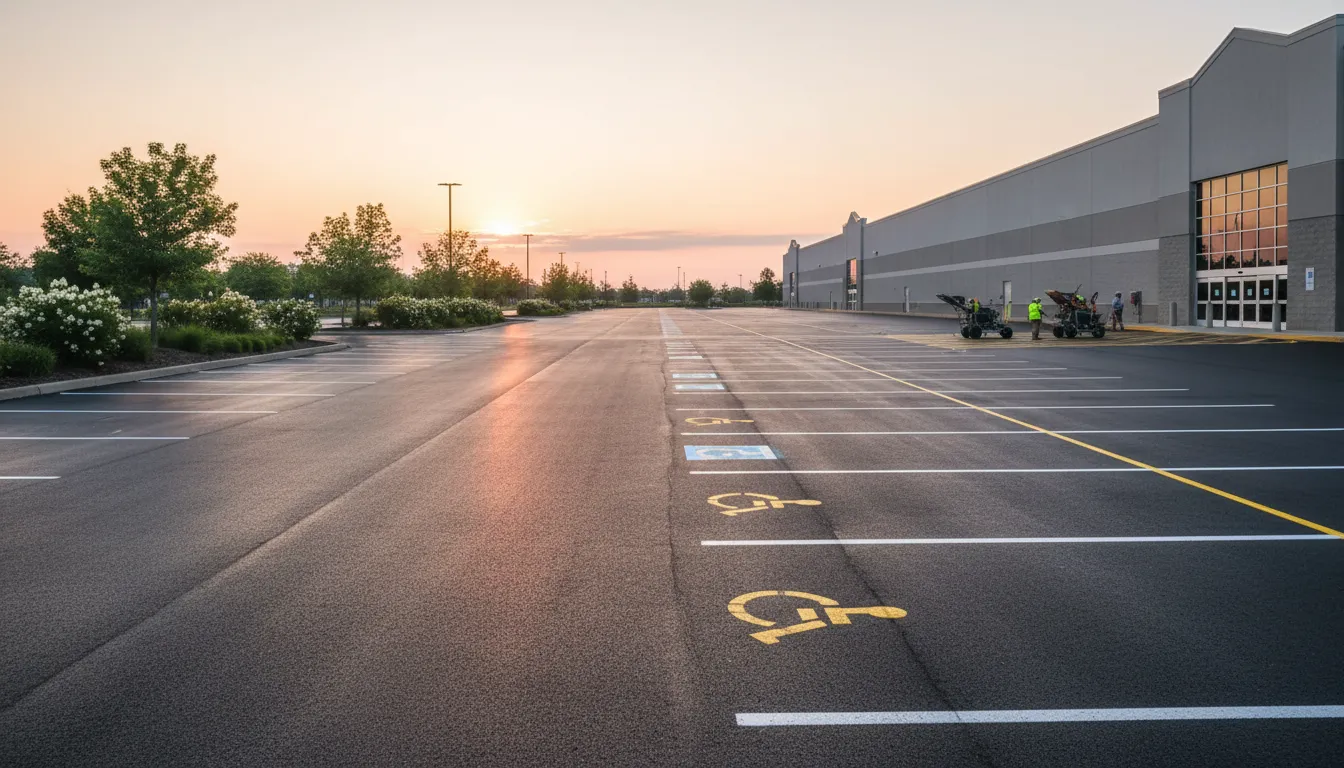
Find the Best Parking Lot Striping Companies for Your Business
No obligation • Fast responses • Nationwide coverage

Why you can trust Tidy Parking
Tidy Parking is a leading U.S. source for parking lot maintenance services, including striping, sealcoating, sweeping, paving, resurfacing, and repairs. Our content is created independently, and providers cannot pay to influence ratings or recommendations.
Search providers near you
Top Parking Lot Striping Companies in Hampton, Virginia Ranked
Maintaining clear and compliant pavement markings is a critical responsibility for any property owner or manager in Hampton. Proper parking lot striping, also known as line painting or pavement marking, is not just about aesthetics-it's a matter of safety, accessibility, and legal compliance. In Hampton, these markings must adhere to a specific set of federal, state, and local regulations, including the Americans with Disabilities Act (ADA), the Virginia Statewide Fire Prevention Code, and city ordinances. This guide explains the key requirements and best practices for parking lot line striping in Hampton, helping you ensure your property is safe, accessible, and avoids costly fines.
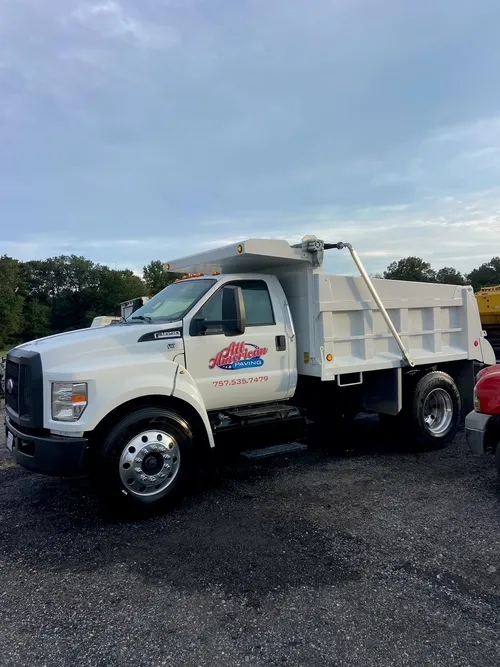
All American Paving
Virginia Beach, VA
All American Paving is a locally owned and operated company based in Virginia Beach, VA, providing asphalt paving, repair, sealcoating, and parking lot striping services. They serve Eastern Virginia and North Carolina, including Hampton Roads and the Outer Banks. With over 29 years of experience, they offer commercial and residential paving, pothole and crack repairs, sealcoating for pavement protection, and precise line striping to ensure ADA compliance and efficient traffic flow. Their work is backed by licensing, insurance, and warranties.
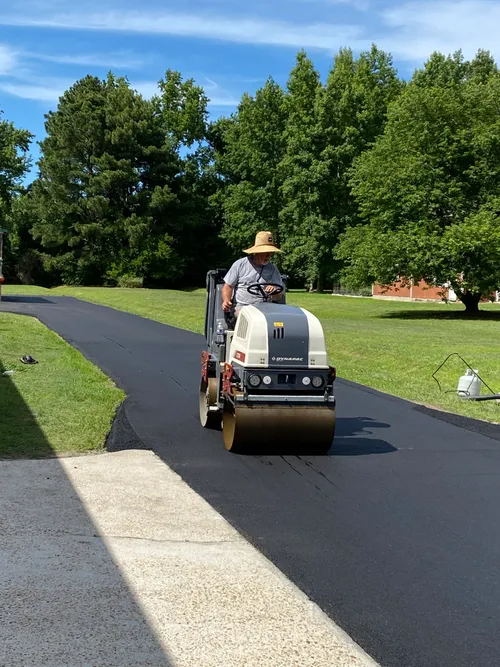
Tidewater Sealcoating and Paving
Chesapeake, VA
Tidewater Sealcoating and Paving is a family-owned company serving Chesapeake, VA, and the surrounding Hampton Roads area. With over 40 years of experience, they specialize in asphalt paving, seal coating, parking lot striping, resurfacing, and repairs for both residential and commercial properties. Their services include crack filling, pothole repair, line striping with ADA compliance, and decorative stone work. The company is licensed and insured, and offers after-hours appointments by request to accommodate customer schedules.
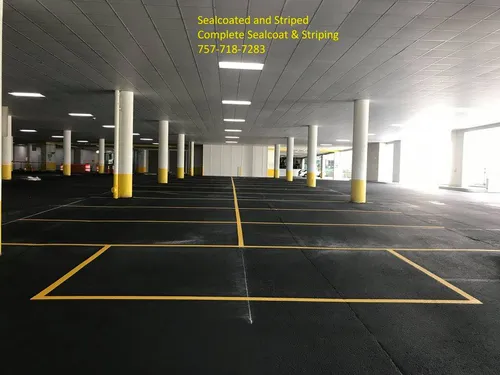
Complete Sealcoat & Striping, LLC
2404 Dewberry Ln, Virginia Beach, VA 23456
Complete Sealcoat & Striping, LLC is a full-service parking lot maintenance company based in Virginia Beach, VA. They provide parking lot striping, sealcoating, and repair services designed to protect and extend the life of asphalt surfaces. With over 40 years of industry experience, the company uses high-quality materials and advanced techniques to ensure durable and effective results. Their services cover Virginia Beach and surrounding areas including Chesapeake, Hampton, Newport News, Norfolk, Poquoson, Portsmouth, and Suffolk.
Brames Gravel Driveway & Repair Co LLC
Chesapeake, VA
Brames Gravel Driveway & Repair Co LLC is a driveway contractor based in Chesapeake, VA, offering services including driveway installation, repair, excavation, parking lot sealcoating, and line striping. They serve Windsor, VA, and nearby areas, providing solutions such as asphalt milling, gravel driveways, and asphalt repair. With over five years of experience, the company uses industry tools to handle both residential and commercial projects. Their parking lot sealcoating helps protect asphalt surfaces, and their line striping ensures accurate markings for high-traffic areas.
APB INC
1231 Carolina Rd, Suffolk, VA 23434
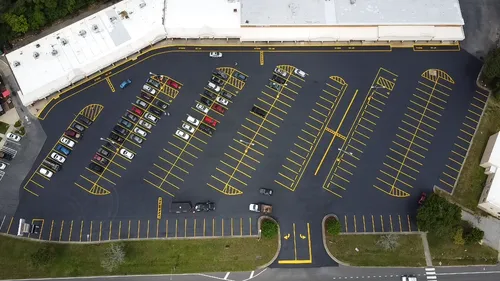
APB INC is a locally owned and operated company based near Chesapeake, VA, specializing in asphalt and concrete services. They offer a wide range of services including parking lot striping, sealcoating, paving, resurfacing, and repair for both residential and commercial clients. Their capabilities include site preparation, excavation, and traffic marking using durable, water-based acrylic paint. With decades of experience, APB INC serves Suffolk and the surrounding areas within a 30-mile radius, focusing on quality workmanship and community care.
Understanding the Regulations: ADA, Fire Codes, and Local Laws
Before planning any line painting project, it's essential to understand the regulatory landscape. Hampton property owners are responsible for maintaining visible, compliant markings for accessible spaces, fire lanes, crosswalks, and standard stalls 1. Non-compliance can lead to significant penalties, including fines ranging from $100 to $500 per violation in Virginia 2. The primary governing rules include:
- The 2010 ADA Standards for Accessible Design: These federal standards dictate the precise dimensions, layout, and signage for accessible parking spaces.
- Virginia Statewide Fire Prevention Code: This code outlines the requirements for marking fire lanes and maintaining access around fire hydrants.
- Hampton City Ordinances: Local codes may provide additional specifications or enforcement mechanisms for pavement markings.
Working with a licensed contractor familiar with these layers of regulation is crucial, as they can ensure your site plan is properly executed and filed.
ADA-Compliant Accessible Parking Spaces
Creating accessible parking is one of the most detailed aspects of lot striping. The ADA specifies exact dimensions and markings to ensure safe and convenient access for individuals with disabilities.
Dimensions and Layout:
- Standard Accessible Spaces: Must be at least 96 inches (8 feet) wide 3.
- Access Aisle: Each space requires an adjacent access aisle that is at least 60 inches (5 feet) wide. This aisle must be marked with diagonal hatch marks to clearly indicate it is not a parking space 4.
- Van-Accessible Spaces: At least one of every six accessible spaces must be van accessible. These require either a 132-inch (11-foot) wide space or a standard 96-inch wide space paired with a 96-inch (8-foot) wide access aisle 5.
- Location: Accessible spaces must be located on the shortest accessible route from the parking area to the building's accessible entrance.
Markings and Signage:
- Paint: The entire space, including the access aisle, is typically painted with a solid blue background. The International Symbol of Accessibility is painted in white within the stall 6.
- Vertical Signage: A sign featuring the International Symbol of Accessibility must be posted at the head of each space. The bottom edge of the sign must be at least 60 inches above the pavement to ensure visibility 7 8.
Properly executing these details often incurs a higher cost than standard line striping due to the precision and additional materials required.
Fire Lane and Fire Hydrant Markings
Clear fire lane markings are a non-negotiable safety requirement. They ensure emergency vehicles have unobstructed access to buildings and hydrants at all times.
Pavement and Curb Markings:
- Curbs: Fire lanes adjacent to a curb must be marked with a 6-inch wide red paint stripe on the top and side of the curb.
- Pavement (No Curb): On roadways without curbs, a 6-inch wide solid red stripe must be painted on the pavement itself to define the lane 9 10.
- Lettering: The words "NO PARKING - FIRE LANE" must be stenciled in 18-inch high white letters on the pavement within the lane, typically at regular intervals 11.
Signage Requirements: Metal signs (typically 12" x 18" with red letters on a white background) must be installed at the beginning and end of the fire lane and at intervals of 50 to 70 feet in between 12.
Fire Hydrant Clearance: Parking is strictly prohibited within 15 feet of a fire hydrant. This area should be kept clear of any obstructions, and it is often marked with yellow curb paint or signage 13.
Crosswalks and Pedestrian Safety Markings
Well-defined crosswalks guide pedestrians safely and alert drivers to yield. In parking lots and along access roads, they are essential at intersections and other high-conflict areas.
- Markings: Crosswalks are marked with solid white lines, usually between 6 and 24 inches wide 14.
- Width: The marked crosswalk should be at least 6 feet wide.
- Application: They are used at intersections, mid-block pedestrian crossings, and especially in areas like school zones or near building entrances with high foot traffic.
Passenger Loading Zones
Designated passenger loading zones, including accessible passenger drop-off areas, have specific marking requirements.
- Markings: These zones are marked with blue and white or yellow markings and must include a defined access aisle 15 16.
- Clearance: A minimum vertical clearance of 98 inches is required for passenger loading zones to accommodate accessible vans and other tall vehicles 17.
Find the perfect parking lot striping companies for your needs
Get personalized recommendations and expert advice
Standard Stall and Traffic Flow Markings
Beyond compliance, effective striping organizes traffic flow and maximizes space. Standard parking stall dimensions (typically 9 feet wide by 18 feet deep for angled parking, or 9' x 20' for perpendicular), directional arrows, stop bars, and handicap symbol stencils all contribute to a safe and efficient lot. Using high-quality, reflective traffic paint ensures longevity and visibility at night and in poor weather.
Maintenance and Restriping Frequency
Pavement markings fade over time due to traffic wear, UV exposure, and weather. In Hampton's climate, with its seasonal variations, maintaining visibility is an ongoing task.
- Recommended Schedule: Industry best practices recommend re-striping your parking lot every 18 to 24 months. High-traffic lots at shopping centers or apartment complexes may need attention more frequently.
- Cost Factors: The cost for parking lot line painting in Hampton varies based on the scope. A small lot might range from a few hundred to a few thousand dollars. Key cost drivers include the total linear feet of lines, the number of complex markings (like ADA stalls with blue fields and hatch marks), and the extent of stenciling required for fire lanes or symbols 18 19.
- The Process: Professional contractors will typically clean the pavement surface, lay out the new markings with precision, apply durable thermoplastic or high-performance paint, and ensure all work meets local code before considering the job complete.
Frequently asked questions
Sources
Footnotes
-
Frequently Asked Questions - CivicPlus.CMS.FAQ - https://www.hampton.gov/faq.aspx?TID=69 ↩
-
Code of Virginia Code - Article 16. Pedestrians - Virginia Law - https://law.lis.virginia.gov/vacodefull/title46.2/chapter8/article16/ ↩
-
Chapter 5: Parking Spaces - Access-Board.gov - https://www.access-board.gov/ada/guides/chapter-5-parking/ ↩
-
How to Stripe ADA-Compliant Parking Lots - https://theasphaltpro.com/wp-content/uploads/2020/09/How-to-Stripe-ADA-Parking-Lots-V2.pdf ↩
-
Accessible Parking Spaces | ADA.gov - https://www.ada.gov/topics/parking/ ↩
-
ADA Parking Lot Striping in Virginia & Maryland - Finley Asphalt - https://finleyasphalt.com/ada-parking-requirements/ ↩
-
Accessible Parking - ADA National Network - https://adata.org/factsheet/parking ↩
-
IS YOUR PARKING LOT ADA COMPLIANT? - What You May Be ... - https://www.johnsonandsonspaving.com/is-your-parking-lot-ada-compliant-what-you-may-be-missing/ ↩
-
Fire Lane Markings - https://pugetsoundfire.org/wp-content/uploads/2016/12/Fire-Lane-Markings.pdf ↩
-
FIRE LANE REQUIREMENTS | epcesd1 - https://www.epcesd1.com/wp-content/uploads/2022/03/Fire-Lane-Requirements.pdf ↩
-
Article III: Fire Lanes and Fire Apparatus Access Roads - eCode360 - https://ecode360.com/12633050 ↩
-
Fire Prevention Bureau marked Fire Lane Requirements - https://s3.us-east-1.amazonaws.com/virginia-beach-departments-docs/fire/Applications-and-Documents/Fire-Regulations/Fire-Lane-Requirements.pdf ↩
-
Fire Lanes & Fire Hydrants - Powhatan County, VA - https://www.powhatanva.gov/DocumentCenter/View/2615/Fire-Lane-and-Fire-Hydrant-Requirements- ↩
-
Chapter 3B. Pavement and Curb Markings - MUTCD - https://mutcd.fhwa.dot.gov/htm/2003r1/part3/part3b2.htm ↩
-
Accessible Parking Spaces - ADA.gov - https://www.ada.gov/topics/parking/ ↩
-
Parking Lot & Asphalt Line Striping & Marking in Virginia, Maryland ... - https://finleyasphalt.com/pavement-markings-and-signs/ ↩
-
Parking Lot Striping Standards: Dimensions, Colors, and ADA Rules - https://www.getonecrew.com/post/parking-lot-striping-standards ↩
-
ADA Parking Lot Compliance & Painting - Finley Asphalt - https://finleyasphalt.com/pavement-markings-and-signs/ada-parking-compliance/ ↩
-
Parking Lot Striping Virginia: When to Re-Stripe - https://www.tibbspaving.com/post/how-often-should-you-re-stripe-your-parking-lot ↩