Find the Best Parking Lot Striping Companies for Your Business
No obligation • Fast responses • Nationwide coverage
Why you can trust Tidy Parking
Tidy Parking is a leading U.S. source for parking lot maintenance services, including striping, sealcoating, sweeping, paving, resurfacing, and repairs. Our content is created independently, and providers cannot pay to influence ratings or recommendations.
Search providers near you
Top Parking Lot Striping Companies in Chapel Hill, North Carolina Ranked
Maintaining clear, compliant pavement markings is a critical part of property management in Chapel Hill. Proper parking lot striping, also known as line painting or pavement marking, ensures safety, maximizes space, and fulfills legal obligations. For property owners and managers, navigating the specific rules for accessible spaces, fire lanes, and traffic flow can be complex. This guide explains the local requirements and best practices to help you understand what's needed for your lot and how to connect with qualified professionals who can perform the work.
Kapusnik Paving
Greensboro, NC
Kapusnik Paving is a paving contractor based in Greensboro, NC, providing services for both residential and commercial properties. They specialize in asphalt paving, parking lot striping, and sealcoating to maintain and improve driveways and parking lots. Their service area includes Greensboro and surrounding cities such as Raleigh, Durham, and Chapel Hill. Kapusnik Paving also offers concrete driveway installation and replacement, covering a broad range of paving needs.
Tier One Asphalt & Sealcoating
Raleigh, NC
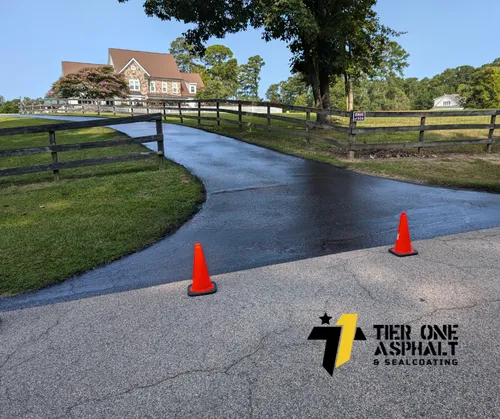
Tier One Asphalt & Sealcoating is a locally owned and family-operated company based in Raleigh, NC, specializing in asphalt paving, repair, sealcoating, and line striping for both residential and commercial properties. They serve Raleigh and surrounding areas including Wake County and Johnston County. Their services include asphalt maintenance projects ranging from small driveway repairs to large parking lot sealcoating and striping, helping to protect and extend the life of asphalt surfaces. Tier One Asphalt & Sealcoating is known for assessing pavement conditions to recommend appropriate repairs such as crack filling and patching before sealcoating, which acts as a protective barrier against weather and wear. The company emphasizes community involvement and quality workmanship in their projects.
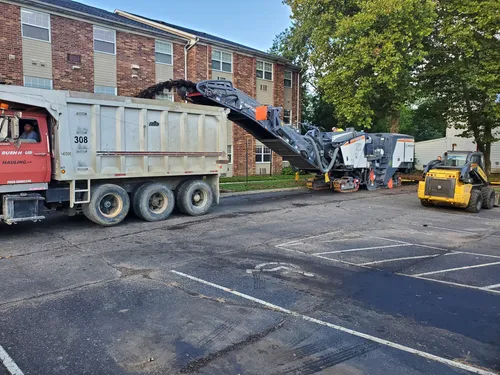
Diamond Solutions - Raleigh
3915 Beryl Rd Suite 125, Raleigh, NC 27607
Diamond Solutions - Raleigh offers parking lot striping, sealcoating, and repair services in Raleigh, NC. They handle projects across multiple states and specialize in managing parking lot maintenance from bid to completion with clear communication and efficient scheduling. Their capabilities include comprehensive parking lot repair and resurfacing, ensuring projects are completed typically within a week. Diamond Solutions is known for working on a wide range of projects, from minor pothole repairs to large capital projects, and they emphasize straightforward processes and customer updates throughout the job.
Raleigh Paving
800 Lufkin Rd, Apex, NC 27539
Raleigh Paving is a family-owned commercial paving company serving Raleigh, NC, with nearly a century of experience since 1925. They provide a wide range of services including asphalt paving, resurfacing, sealcoating, parking lot striping, and concrete work. Their capabilities include asphalt milling, which removes and recycles the top layers of pavement to restore surfaces without full repaving. Raleigh Paving also handles repairs such as crack filling and pothole patching, as well as specialty projects like ADA accessibility and storm drain repair.
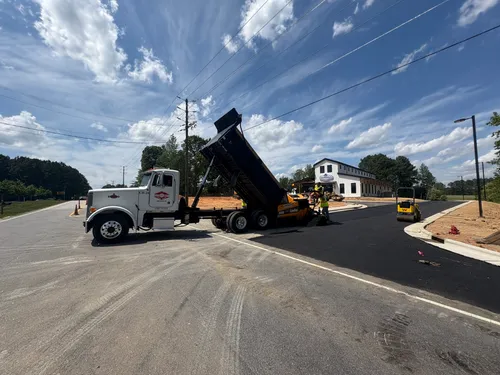
Calvin Ray Paving Contractor Inc.
9205 Bud Smith Rd, Wake Forest, NC 27587
Calvin Ray Paving Contractor Inc. is a parking lot paving and repair company based in Raleigh, NC. They offer a range of asphalt services including parking lot striping, sealcoating, patching, and pothole repair for commercial and residential properties. Their expertise includes asphalt paving for parking lots, streets, and driveways, as well as gravel installation and grading to improve durability and curb appeal. The company focuses on enhancing safety and compliance with local regulations through clear traffic markings and quality repairs.
Understanding Chapel Hill's Parking & Striping Regulations
While Chapel Hill made a significant policy shift by removing mandatory minimum parking requirements for new developments in early 2026, the rules for marking any provided parking spaces remain strict and are tied to safety and accessibility1 2. If you choose to provide parking on your property, you must adhere to a combination of federal, state, and local codes. The primary governing standards are the federal Americans with Disabilities Act (ADA), the North Carolina Building Code, and Town of Chapel Hill ordinances related to fire safety and traffic control 3.
Non-compliance isn't just a theoretical risk; it can lead to liability issues, fines, and difficulties for visitors and emergency responders. Proper line painting and stenciling are the visual language that communicates these rules to drivers, making compliance a practical necessity as much as a legal one.
ADA & Accessibility Requirements for Parking Lots
Creating an accessible parking environment is a legal and ethical priority. The ADA sets the baseline, which is then enforced through North Carolina's building code4. Here's what you need to know for compliant accessible parking space striping and signage in Chapel Hill:
- Space Dimensions: A standard accessible parking space must be at least 8 feet (96 inches) wide. It must be paired with an adjacent access aisle that is at least 5 feet (60 inches) wide 5. For van-accessible spaces, the requirement is either an 11-foot-wide space or an 8-foot-wide space with an 8-foot-wide access aisle6.
- Access Aisle Markings: The access aisle is crucial-it's the zone where wheelchair lifts and ramps deploy. This aisle must be clearly marked, almost always with blue paint and diagonal hatch marks. This distinctive pattern is designed to visually discourage anyone from parking in it7.
- Signage: Each accessible space must be identified with a sign featuring the International Symbol of Accessibility. To be enforceable on private property in North Carolina, the sign must also include the phrase "$250 Max Penalty"8 9. The sign should be mounted so the bottom edge is at least 5 feet above the parking surface.
- Location & Slope: Accessible spaces must be located on the shortest possible accessible route to the building entrance. Furthermore, the slope of the space and access aisle cannot exceed 1:48 (approximately 2.08%) in any direction10.
- Quantity Required: The number of required spaces is based on your lot's total parking count. For example, a lot with 100 total spaces requires a minimum of 4 accessible spaces, one of which must be van-accessible11 12.
Find the perfect parking lot striping companies for your needs
Get personalized recommendations and expert advice
Fire Lane Striping and Stenciling Standards
Fire lanes are essential for ensuring unimpeded access for emergency vehicles. Their marking is regulated by the North Carolina Fire Code and local Town ordinances. The specifications are precise:
- Perimeter Lines: Fire lanes must be outlined with a solid, 4-inch-wide yellow line.
- Interior Markings: The area within the fire lane is typically filled with 4-inch-wide yellow stripes painted at a 45-degree angle to the curb or perimeter line. These diagonal stripes are usually spaced 4 feet apart from center to center.
- Pavement Stencils: The words "FIRE LANE" must be stenciled in large, bold letters within the bordered area. Acceptable colors are yellow, red, or white, chosen for maximum contrast with the pavement13.
- Signage: In addition to pavement markings, reflective signs reading "NO PARKING - FIRE LANE" are required. These signs must be 12 inches by 18 inches with red letters on a white reflective background and placed at intervals not exceeding 50 feet along the fire lane14.
Markings for Traffic Flow and Safety
Beyond accessible spaces and fire lanes, a well-designed lot uses markings to guide drivers and prevent conflicts.
- Loading Zones: Areas designated for commercial loading and unloading must be clearly marked on the pavement. These zones should be designed to allow vehicles to maneuver and back in safely within the property, not from the public street 15.
- Crosswalks and Stop Bars: If your lot includes pedestrian crossings, they must meet Town of Chapel Hill standards. For durability and visibility, the Town often requires long-life materials like thermoplastic for crosswalk markings16. Stop bars (the thick white lines at intersections) should be 24 inches wide and placed approximately 4 feet in advance of a crosswalk17.
- Standard Stall Markings: Typical parking space lines are 4 inches wide and white. Aisles must be wide enough to accommodate the turning radius of vehicles, with 24 feet being a common standard for two-way traffic between rows of 90-degree parking spaces.
- General Prohibitions: It's important to remember that parking is prohibited within 15 feet of a fire hydrant and within 25 feet of an intersection in Chapel Hill, whether on public streets or in private lots that connect to them18. Clear markings and signage help enforce these rules.
Materials, Longevity, and Project Considerations
The choice of marking material impacts durability, cost, and compliance. Latex paint is a common and cost-effective option for standard restriping but may require reapplication every 1-2 years in high-traffic areas like Chapel Hill. Thermoplastic is a premium material that is melted onto the pavement, offering far greater longevity (often 3-5 years or more) and superior reflectivity. For ADA access aisles and symbols, more durable materials are often recommended due to the critical nature of these markings.
Project costs can vary based on the contractor, scope, and materials used. Industry averages suggest:
- Standard stall striping can range from $2 to $5 per stall.
- Painting an ADA symbol or wheelchair logo may cost between $50 and $100 each.
- Fire lane stenciling and striping might be priced at $2 to $4 per linear foot. A full restriping project for a small lot (e.g., 20 spaces with 2 ADA spaces) could range from $500 to $1,000, while larger commercial lots can easily exceed $2,000[^Research Data].
A professional contractor will not only apply the markings but should also conduct a site assessment to ensure the layout itself-the number of spaces, aisle widths, and locations of accessible routes-is compliant before any paint is applied.
Frequently asked questions
Sources
Footnotes
-
Parking reforms in Chapel Hill, North Carolina, United States - https://parkingreform.org/mandates-map/city_detail/ChapelHill_NC.html ↩
-
Town Council Adopts LUMO Amendments | Rewriting our Rules - https://engage.chapelhillnc.gov/re-writing-our-rules-lumo-update/news_feed/town-council-adopts-lumo-amendments ↩
-
Handicapped Parking Considerations for Chapel Hill - Granicus - https://chapelhill.granicus.com/MetaViewer.php?view_id=&event_id=1139&meta_id=155442 ↩
-
ADA Parking Lot Compliance Guide for NC & SC Businesses - https://carolinaasphalt.com/ada-parking-lot-compliance-guide/ ↩
-
A Guide to Accessible Parking - DRNC - https://disabilityrightsnc.org/resources/a-guide-to-accessible-parking/ ↩
-
ADA Compliant Parking Lot Striping & Signage in Charlotte, NC - https://carolinaasphalt.com/ada-parking-requirements/ ↩
-
A Guide to Accessible Parking - DRNC - https://disabilityrightsnc.org/resources/a-guide-to-accessible-parking/ ↩
-
ADA Parking Lot Requirements in North Carolina - https://pavingprosraleigh.com/ada-parking-lot-requirements-north-carolina/ ↩
-
A Complete Guide to ADA Compliance for Parking Lots - https://cpmsweeping.com/a-complete-guide-to-ada-compliance-for-parking-lots/ ↩
-
A Guide to Accessible Parking - Work Together NC - https://worktogethernc.com/wp-content/uploads/a-guide-to-accessible-parking.pdf ↩
-
ADA-Compliant Parking Lot Striping - Carolina Asphalt - https://carolinaasphalt.com/ada-compliant-parking-lots-how-to-design-your-stripes-and-signs/ ↩
-
Parking Lot Striping Standards: Dimensions, Colors, and ADA Rules - https://www.getonecrew.com/post/parking-lot-striping-standards ↩
-
§ 94.20 FIRE LANES. - American Legal Publishing - https://codelibrary.amlegal.com/codes/winterville/latest/winterville_nc/0-0-0-5089 ↩
-
CLEAN VERSION - OSFM - https://www.ncosfm.gov/6-town-boone-fire-prevention-and-protection-ordinances-exhibit-2/open ↩
-
attachment 9 - Town of Chapel Hill - https://townhall.townofchapelhill.org/agendas/ca040614/9-attach%209%20-%20Design%20Guidelines.pdf ↩
-
13 - Town of Chapel Hill - https://townhall.townofchapelhill.org/agendas/2006/01/09/8/8-8.pdf ↩
-
Parking Lot Striping Standards: Measurements, Colors, and More - https://www.getonecrew.com/post/parking-lot-striping-standards ↩
-
Chapel Hill Parking Cheat Sheet - https://parkonthehill.com/chapel-hill-parking-cheat-sheet/ ↩