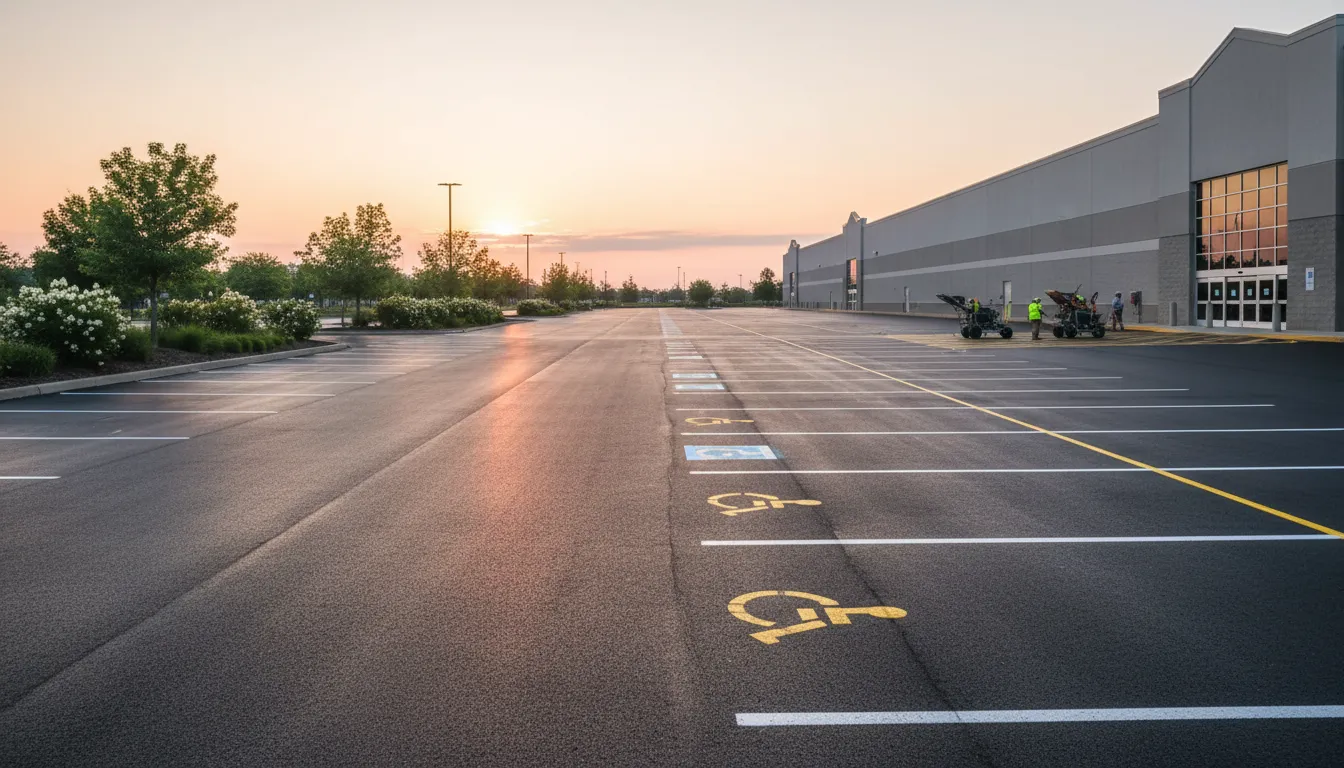
Find the Best Parking Lot Striping Companies for Your Business
No obligation • Fast responses • Nationwide coverage

Why you can trust Tidy Parking
Tidy Parking is a leading U.S. source for parking lot maintenance services, including striping, sealcoating, sweeping, paving, resurfacing, and repairs. Our content is created independently, and providers cannot pay to influence ratings or recommendations.
Search providers near you
Top Parking Lot Striping Companies in Lake Charles, Louisiana Ranked
Maintaining a clear, safe, and compliant parking lot is a critical responsibility for any business or property manager in Lake Charles. Parking lot striping, also known as line marking or pavement marking, involves applying painted or thermoplastic lines to designate parking spaces, traffic flow, fire lanes, and accessible areas. Proper markings are not just about organization; they are a legal requirement that ensures safety, maximizes space, and provides equal access under the Americans with Disabilities Act (ADA). This guide explains the specific regulations, best practices, and material considerations for parking lot striping in Lake Charles, helping you understand what's required to keep your property functional, safe, and compliant with Louisiana and local city codes.
Understanding Local Striping Regulations in Lake Charles
In Lake Charles, parking lot marking is governed by a combination of federal ADA standards, Louisiana state law, and specific municipal ordinances from the City of Lake Charles. Compliance is mandatory, and failure to meet these standards can result in fines, safety hazards, and potential liability issues 1.
The City of Lake Charles provides clear guidelines, particularly for new developments or major renovations. For instance, the city specifies that new pavement markings should use thermoplastic material, which is more durable than standard paint and better suited to withstand the region's heat and humidity. Local regulations also dictate the precise layout for accessibility, fire lane designation, and general traffic control to ensure safety for all users.
ADA Compliance: A Core Requirement
ADA-compliant striping is non-negotiable. The ADA sets forth specific dimensions and markings for accessible parking spaces to ensure they are usable for individuals with disabilities. In Lake Charles, as everywhere in the U.S., these rules must be followed:
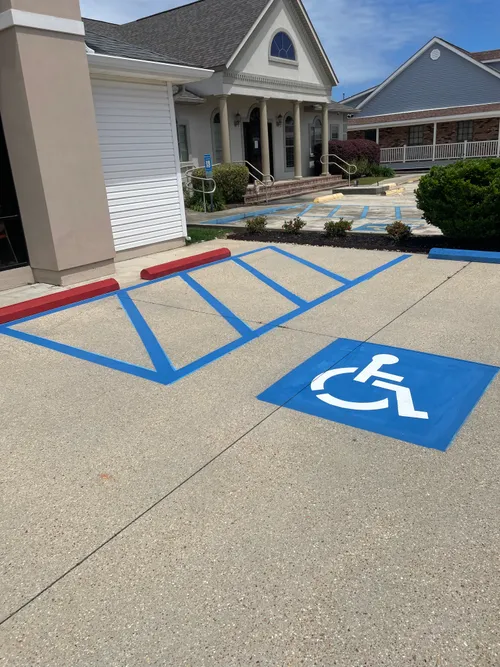
- Space Dimensions: A standard accessible parking space must be at least 8 feet wide, accompanied by a 5-foot-wide access aisle. For van-accessible spaces, the requirement is either an 11-foot-wide space with a 5-foot aisle, or an 8-foot-wide space with an 8-foot aisle.
- Markings: The access aisle must be clearly marked, typically with diagonal blue or white stripes, to communicate that it is not a parking space. The parking space itself must be outlined, and the international symbol of accessibility should be painted on the pavement within the space 2.
- Signage: Each accessible space must have a vertical sign featuring the international symbol of accessibility. This sign must be mounted at least 60 inches (5 feet) above the ground to be visible.
- Location: Accessible spaces must be located on the shortest accessible route from the parking area to the building's entrance, with no obstructions or steep slopes in the path 3.
These requirements are detailed in resources like the ADA Compliance Brief on restriping, which serves as a vital guide for property owners 4.
Essential Markings Beyond Parking Stalls
A fully compliant and safe parking lot involves more than just painting lines for cars. Several other critical markings are required by both best practices and local Lake Charles regulations.
Fire Lanes and Safety Zones
Clearly marked fire lanes are crucial for ensuring emergency vehicles have unobstructed access to buildings. Louisiana fire codes and Lake Charles ordinances require these lanes to be distinctly marked, often with red or yellow paint, and labeled with "NO PARKING" or "FIRE LANE" stenciling. Blocking a designated fire lane is a serious violation that can impede emergency responders and result in significant penalties.
Traffic Flow and Pedestrian Safety
Effective line marking manages the movement of both vehicles and people:
- Directional Arrows and Lane Lines: These guide drivers safely through the lot, preventing confusion and head-on conflicts in aisles.
- Stop Bars and Yield Markings: Placed at intersections within the lot or at exits onto public streets, these enhance decision-making and reduce accident risk.
- Crosswalks: Protecting pedestrians is paramount. Crosswalks should be clearly marked with high-visibility white paint at all major pedestrian crossing points, especially near building entrances and sidewalks 5.
- No-Parking Zones: Areas near corners, hydrants, loading docks, or building entrances should be marked with yellow paint or diagonal stripes to indicate that parking is prohibited 6 7.
Choosing the Right Striping Materials
The choice of material impacts the longevity, visibility, and cost of your parking lot markings. In Lake Charles's climate, durability is a key concern.
- Thermoplastic: As noted in City of Lake Charles guidelines for new markings, thermoplastic is a premium material. It is applied hot and bonds to the asphalt, creating a thick, highly reflective, and extremely durable line that can last 3-5 times longer than paint. It is often recommended for high-traffic areas and is considered best practice for long-term value 8.
- Water-Based & Solvent-Based Paints: These are common, cost-effective options for restriping. Water-based acrylics are more environmentally friendly, while solvent-based paints may dry faster. However, paint generally requires more frequent reapplication, typically every 1-2 years, depending on traffic volume and weather conditions.
- Preformed Thermoplastic Tape: This is an alternative for certain applications, offering durability without the need for specialized heating equipment during installation.
The scope of your project, your budget, and local code requirements will determine the best material. For a standard restriping job, costs can range from $0.25 to $1.00 per linear foot, with specialized work like ADA-compliant stalls or thermoplastic application increasing the overall project price 9.
Find the perfect parking lot striping companies for your needs
Get personalized recommendations and expert advice
The Striping Process: From Planning to Application
A successful striping project involves careful planning and execution.
- Assessment and Layout: A professional will first evaluate your existing asphalt condition. Cracks or potholes should be repaired before striping. Then, they will plan the optimal layout to maximize space while ensuring compliance. This includes calculating the number of standard and accessible spaces, locating fire lanes, and planning traffic flow.
- Surface Preparation: The pavement must be clean, dry, and free of oil, dirt, and debris. This often involves power sweeping or blowing the lot.
- Stenciling and Masking: For symbols like the accessibility icon, handicap logos, or "NO PARKING" text, stencils are laid down. Critical areas are often masked off to ensure crisp lines.
- Application: Using a striping machine for long lines and hand-rolling or spraying for details, the chosen material is applied. Thermoplastic requires a specialized melter/applicator to heat the material to the correct temperature.
- Curing and Reopening: The lot must be closed until the markings are fully dry or cured. Paint may dry in minutes to hours, while thermoplastic cools and hardens quickly but may require brief traffic control.
Maintaining Your Parking Lot Markings
Over time, sun exposure, rain, snowplows, and tire friction will cause markings to fade. Regular maintenance is essential for ongoing compliance and safety. A good practice is to inspect your lot markings annually. If they appear significantly faded, or if the asphalt has been sealcoated (which covers old lines), it's time for restriping. Proactive maintenance is more cost-effective than dealing with a violation or an accident caused by unclear markings.
Keeping your parking lot clearly marked is an ongoing part of responsible property management in Lake Charles. By understanding the local requirements for ADA spaces, fire lanes, and traffic control, and by choosing durable materials suited to the climate, you can ensure your property remains safe, accessible, and legally compliant for years to come.
Frequently asked questions
Sources
Footnotes
-
Understanding Your Parking Lot Line Striping Requirements - Premier Pavement Maintenance. Retrieved from https://www.ppm.us/parking-lot-striping-requirements/ ↩
-
ADA Compliance Guide for Parking Lot Line Striping - Pavement Solutions. Retrieved from https://www.pavementsolutions.org/ada-compliance-guide-for-parking-lot-line-striping/ ↩
-
Parking Lot Striping and ADA Compliance: Everything You Need to Know - The Parking Lot Pro. Retrieved from https://theparkinglotpro.com/parking-lot-striping-and-ada-compliance-everything-you-need-to-know/ ↩
-
ADA Compliance Brief: Restriping Parking Spaces - U.S. Department of Justice. Retrieved from https://archive.ada.gov/restriping_parking/restriping2015.pdf ↩
-
Complete Parking Lot Striping Guide 2025 - ADA Striping. Retrieved from https://ada-striping.com/complete-parking-lot-striping-guide/ ↩
-
Parking Lot Painting in Louisiana - GoGforce. Retrieved from https://www.gogforce.com/louisiana-la/service/parking-lot-markings/ ↩
-
Basic Guide to Parking Lot Striping - Traffic Safety Store. Retrieved from https://www.trafficsafetystore.com/blog/guide-to-parking-lot-striping/ ↩
-
City of Lake Charles, Louisiana - Zoning Ordinance & Subdivision Regulations. Retrieved from https://www.cityoflakecharles.com/egov/documents/1232127299_337127.pdf ↩
-
Zoning Ordinance & Subdivision Regulations - enCodePlus. Retrieved from https://online.encodeplus.com/regs/lakecharles-la/doc-viewer.aspx?secid=607 ↩