Find the Best Parking Lot Striping Companies for Your Business
No obligation • Fast responses • Nationwide coverage
Why you can trust Tidy Parking
Tidy Parking is a leading U.S. source for parking lot maintenance services, including striping, sealcoating, sweeping, paving, resurfacing, and repairs. Our content is created independently, and providers cannot pay to influence ratings or recommendations.
Search providers near you
Top Parking Lot Striping Companies in East Honolulu, Hawaii Ranked
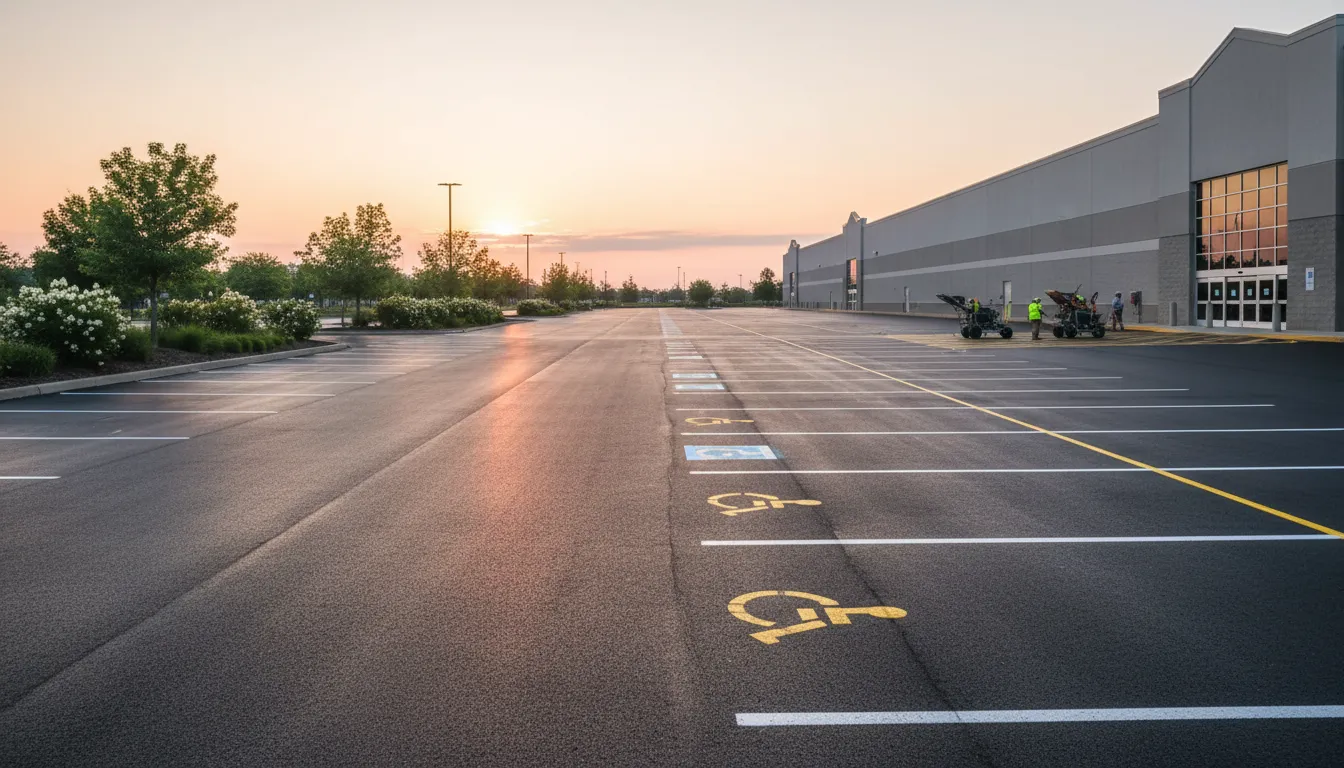
Proper parking lot striping is a critical element of property management, safety, and legal compliance in East Honolulu. It's more than just painting lines; it's a visual communication system that organizes traffic flow, maximizes space, and ensures accessibility for all. In Hawaii, striping must adhere to a specific set of federal, state, and local regulations, with non-compliance carrying significant financial penalties. This guide explains the key requirements, costs, and considerations for line painting and pavement marking in East Honolulu, helping you understand what's needed to maintain a safe, functional, and legally sound parking area.

Understanding Local Striping Regulations
In East Honolulu, pavement marking is governed by a layered framework of rules. At the federal level, the 2010 ADA Standards for Accessible Design set the baseline for accessible parking 1. These are enforced alongside Hawaii Administrative Rules (HAR) Title 11, Chapter 219, and Honolulu City & County traffic codes. The Hawaii Department of Health's Disability and Communication Access Board (DCAB) provides guidance and handles inquiries related to accessible parking 2. Non-compliance can result in fines ranging from $250 to $500 per violation, per day, making it essential for property owners and managers to get it right.
Accessible Parking Space Requirements
Accessible stall marking is one of the most regulated aspects of parking lot layout. The requirements are precise and must be followed exactly.
- Dimensions: A standard accessible parking space must be at least 8 feet wide, adjacent to a 5-foot-wide access aisle. For van-accessible spaces, the options are an 11-foot-wide space with a 5-foot aisle, or an 8-foot-wide space with an 8-foot aisle 3.
- Marking: The space must be outlined on both sides with a 4-inch wide line. While blue is the traditional color for accessibility, white is also acceptable per Hawaii state law 4. The access aisle must be marked with diagonal hatch lines, typically at a 45-degree angle, to discourage parking in this crucial zone.
- Signage: Each accessible space requires a "Reserved Parking" sign featuring the International Symbol of Accessibility (ISA) and the text "$500 Fine." This sign must be mounted so the bottom is at least 60 inches above the ground 5. An additional "Van Accessible" sign is mandatory for van spaces.
- Surface: The space and access aisle must be level with a maximum slope of 1:48 (approximately 2%), and the surface must be firm, stable, and slip-resistant 6.
Fire Lane Marking Specifications
Fire lane striping is crucial for emergency vehicle access and is strictly enforced by the Honolulu Fire Department (HFD). Clear marking involves both curb painting and stenciling.
- Curb Painting: Curbs within fire lanes must be painted red.
- Stenciling: The words "NO PARKING - FIRE LANE -- TOW AWAY ZONE" must be stenciled on the pavement in white letters at least 3 inches tall. This text must be repeated at intervals not exceeding 50 feet along the fire lane.
- Signage: "No Parking" signs must be posted parallel to the curb, typically every 50 feet, to reinforce the restriction.
- Maintenance: Due to Hawaii's climate, repainting of fire lane markings is recommended every two years or as required to remain clearly visible for the HFD 7.
Loading Zone Markings
Loading zones facilitate business operations and are identified by specific curb colors and, often, pavement text.
- Passenger Loading Zones: These areas are designated by red curb paint, similar to fire lanes, but are intended for active loading and unloading of passengers.
- Freight/Commercial Loading Zones: These are marked with yellow curb paint 8 9.
- Combination Zones: Some zones may use alternating red and yellow curb sections, accompanied by signs specifying the allowed times for different uses.
- Dimensions: A typical loading zone is 8 feet wide from the curb and 18 to 22 feet in length to accommodate various vehicles 10.
Crosswalks and Traffic Flow Markings
Well-defined crosswalks and directional arrows are essential for pedestrian safety and efficient traffic movement within a lot.
- Crosswalk Design: Crosswalks are generally marked with 4-inch to 12-inch wide white solid lines. In areas with higher traffic speed or volume, zebra-striped patterns may be used for greater visibility. They must connect to an accessible route to the building entrance.
- Stop Lines, Arrows, and Symbols: White solid lines indicate stop points, while arrows (like one-way indicators) and symbols (like "handicap" icons) must be professionally applied to meet size and reflectivity standards. All markings must be maintained to be clearly visible to drivers 11.
Find the perfect parking lot striping companies for your needs
Get personalized recommendations and expert advice
Material Choices for Pavement Marking
The choice of material impacts the longevity, visibility, and cost of your parking lot lines.
- Water-Based Paint: The most common and economical option for standard line painting. It dries quickly but wears faster, especially in high-traffic areas or Hawaii's sunny, rainy climate. It's suitable for annual or biennial restriping projects.
- Thermoplastic: A melted plastic material applied hot to the pavement. It is significantly more durable and reflective than paint, lasting 3-5 times longer. It is often recommended for high-traffic areas, crosswalks, and symbols that need to withstand heavy wear.
- Pre-formed Tape: An adhesive tape that can be applied to clean, dry pavement. It offers good reflectivity and can be a quicker installation option for some projects, though long-term adhesion in hot climates can be a concern.
Cost Factors for Striping in East Honolulu
Parking lot restriping costs in Hawaii are typically estimated per linear foot for lines or as a flat rate per stall or symbol. For standard paint, costs generally range from $0.20 to $0.50 per linear foot. Specialized markings like ADA stalls and fire lanes involve more detailed work and thus are more expensive.
Here is a breakdown of approximate costs for common marking types on Oahu, based on recent local data:
| Marking Type | Key Requirements | Approx. Cost (Oahu) |
|---|---|---|
| ADA Stalls | 8' stall + 5' aisle + Signage | $150-$300 per stall |
| Fire Lane | Red paint + 3" white letters | $3-$6 per linear foot |
| Loading Zone | Yellow/Red curb + text | $4-$7 per linear foot |
| Standard Stall | 4" wide white line | $15-$30 per stall |
| Crosswalk | Double 6" white lines | $150-$300 per crossing |
Note: These are estimates. Final costs can vary based on site preparation needs (like cleaning or sealing), the total square footage of the project, the specific material used (paint vs. thermoplastic), and the complexity of the layout.
Planning and Maintaining Your Striping Project
A successful line painting project starts with a plan. A professional will assess your lot to create a layout that maximizes space while ensuring compliance. Before any paint is applied, the pavement should be thoroughly cleaned; old, faded lines may need to be removed or covered with a sealer coat for a clean result. Scheduling is also key-dry weather is essential for paint application and curing.
Maintenance is not optional. Faded markings are a liability and can lead to accidents or citations. A good rule of thumb is to inspect your parking lot markings annually and plan for a full restriping every 1-2 years for paint, or less frequently if more durable materials are used. Keeping a clear record of your striping layout and compliance features is also wise for property management and during inspections.