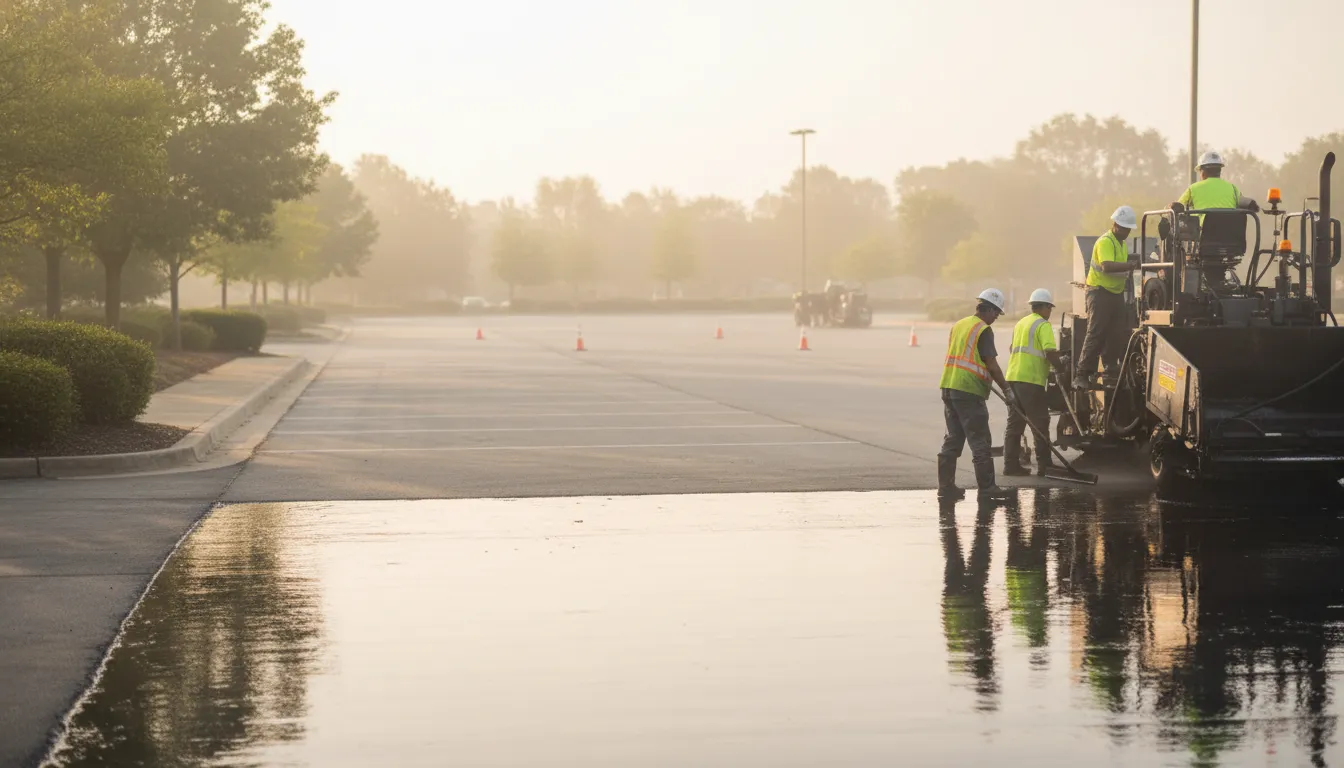
Find the Best Parking Lot Sealcoating Companies for Your Business
No obligation • Fast responses • Nationwide coverage
Why you can trust Tidy Parking
Tidy Parking is a leading U.S. source for parking lot maintenance services, including striping, sealcoating, sweeping, paving, resurfacing, and repairs. Our content is created independently, and providers cannot pay to influence ratings or recommendations.
Search providers near you
Top Parking Lot Sealcoating Companies in Philadelphia, Pennsylvania Ranked
Parking lot sealcoating is the process of applying a protective layer over asphalt pavement to shield it from the damaging effects of weather, chemicals, and traffic. In Philadelphia, this maintenance is not just a cosmetic upgrade; it's a critical investment to extend the life of your pavement and avoid costly, premature repairs. This guide explains why sealcoating matters for local property managers and business owners, details the specific considerations for our climate, and provides a clear framework for finding and evaluating professional contractors to protect your asset.
Premier Sealcoating Line Striping & Asphalt Maintenance LLC
Allentown, PA
Premier Sealcoating Line Striping & Asphalt Maintenance LLC provides comprehensive asphalt maintenance services in Allentown, PA. Their offerings include crack sealing, sealcoating, line striping, pothole patching, resurfacing sports courts, and traffic sign installation. The company uses high-quality materials such as Sherwin-Williams traffic marking paints and premium sealers fortified with silica sand to enhance durability and appearance. They serve a wide area across Pennsylvania and New Jersey, including cities like Bethlehem, Harrisburg, and Philadelphia. Premier Sealcoating is fully licensed and insured, with certifications including COSTARS, PennDOT DBE, Pennsylvania SDB, and WBENC, emphasizing their commitment to quality and compliance.

Dyer Brothers Sealcoating
Philadelphia, PA
Dyer Brothers Sealcoating is a parking lot sealcoating company based in Philadelphia, PA. They offer services focused on driveway and parking lot sealing, including thorough preparation work to improve surface appearance and durability. The company is noted for its attention to detail and cleanup after sealing. While relatively young, Dyer Brothers Sealcoating serves the Philadelphia area and nearby communities, delivering quality sealcoating work that enhances curb appeal.
Maintain-It-All - Residential & Commercial Driveway Paving
18 W Mt Kirk Ave Suite 200, Eagleville, PA 19403
Maintain-It-All - Residential & Commercial Driveway Paving provides driveway paving, sealcoating, and exterior maintenance services in Philadelphia, PA. They serve both residential and commercial clients, offering solutions such as driveway patching, extensions, and power washing to enhance and protect property surfaces. Their team focuses on quality workmanship to extend the life and improve the appearance of driveways and exterior areas. Maintain-It-All serves Montgomery, Chester, and Delaware counties as well, acting as a comprehensive exterior maintenance provider in the Pennsylvania region.
Elevation Sealcoating LLC
5 S Main St Suite #5, Allentown, NJ 08501
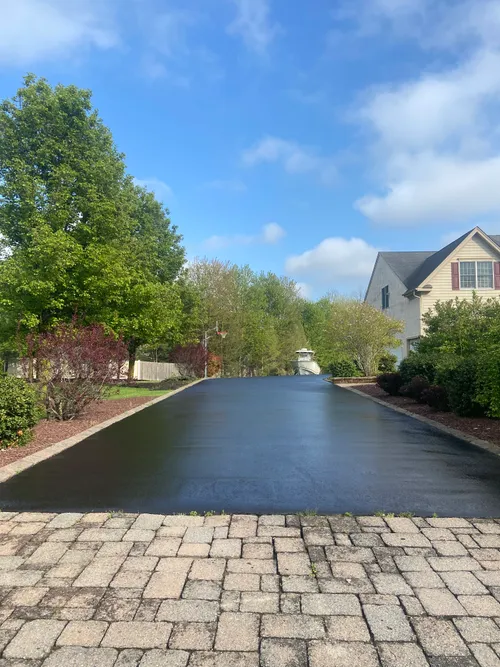
Elevation Sealcoating LLC is a parking lot sealcoating company serving Philadelphia, PA. They focus on residential property services, offering sealcoating to protect and improve the appearance of driveways and parking areas. The company emphasizes quality workmanship backed by years of experience to enhance home presentation.
FGG Sealcoating & Paving
Philadelphia, PA
FGG Sealcoating & Paving is a parking lot sealcoating and paving contractor based in Philadelphia, PA. The company provides services focused on maintaining and improving parking lot surfaces, including sealcoating and paving work. Their expertise helps protect and extend the life of parking areas in the Philadelphia area.
Why Sealcoating is Essential in Philadelphia
Philadelphia's climate presents a unique set of challenges for asphalt pavement. The primary threats come from a combination of freeze-thaw cycles and intense UV exposure. During winter, water seeps into tiny cracks in the asphalt. When it freezes, the water expands, widening those cracks and breaking apart the pavement's foundation from within. In the summer, intense afternoon sun causes oxidation, which turns the asphalt binder brittle and grey, leading to raveling and surface deterioration 1 2.
A high-quality sealcoat acts as a waterproof barrier, preventing water infiltration during rain and snow melts. It also blocks harmful UV rays, slowing the oxidation process that makes asphalt brittle. For commercial properties, this protection is vital for safety, curb appeal, and liability management. A well-maintained, clearly marked parking lot projects professionalism and care for customers and tenants.
Determining the Right Schedule for Your Lot
A common question is, "How often should I sealcoat?" In Philadelphia, the general rule of thumb is every 2 to 3 years for optimal protection 3. However, this is a starting point. Your specific schedule depends on three key factors:
- Usage Patterns: High-traffic areas like retail centers, warehouses, and properties with frequent delivery truck traffic experience more wear and tear. These lots often require maintenance every 1 to 2 years. Lots with heavy turning movements are especially prone to surface stress. Conversely, a low-traffic office lot may successfully extend to a 3 or even 4-year cycle with proper annual inspections.
- Age of Asphalt: For new asphalt, timing is crucial. The pavement needs time to fully cure and release oils. The first application of sealant should typically occur 6 to 12 months after installation 4 5.
- Visual Inspection: The condition of your lot is the ultimate guide. Annual inspections, ideally in the spring after winter's worst has passed, are recommended to assess cracking, fading, and surface wear 6.
| Action | Recommended Frequency | Optimal Timing in Philadelphia |
|---|---|---|
| Visual Inspection | Annually | Spring (After Winter) |
| Crack Filling | Annually (As Needed) | Before Sealcoating |
| Sealcoating | Every 2-3 Years | May - October |
| Re-striping | Every 18-24 Months | Immediately After Sealcoat |
The Best Time of Year for Sealcoating in Philadelphia
Timing your asphalt sealing project correctly is as important as the work itself. The sealant requires specific conditions to cure properly and form a durable, long-lasting coat.
The optimal season in Philadelphia runs from late spring through early fall, specifically from May to October. The key requirements are:
- Temperature: Air and surface temperatures must be consistently above 50°F (10°C) during application and for at least 24 hours after 7.
- Dry Weather: No rain should be in the forecast for 24 to 48 hours after application to allow the sealant to set without being washed away.
It's best to avoid scheduling during the winter months (December-February) and the unpredictable, often wet early spring (March-April). Planning your project for the stable, warmer months ensures the best results and longevity for your investment.
Professional Preparation: The Key to Success
A superior sealcoating job is 90% preparation. In fact, professional preparation often accounts for 60-70% of a project's success 8. Skipping or rushing these steps will lead to premature coating failure, no matter how high-quality the sealant is. Reputable contractors follow a meticulous preparation process:
- Deep Cleaning: The entire surface must be free of dirt, debris, leaves, and vegetation. This is typically done with commercial blowers, power brooms, and sometimes pressure washing to ensure perfect adhesion.
- Crack Filling: All cracks 1/4 inch or wider must be filled with a hot-applied rubberized crack sealant. This prevents water from penetrating the sub-base and stops the cracks from reflecting through the new sealcoat.
- Oil Spot Treatment: Oil and grease stains are common in parking lots. These areas must be treated with a specialized primer or cleaner; otherwise, the sealant will not bond to the asphalt, leading to quick peeling and flaking 9 10.
- Patching Repairs: Any potholes or areas of alligator cracking (severe, interconnected cracks) must be fully excavated and patched with fresh hot-mix asphalt before the sealing process can begin.
Find the perfect parking lot sealcoating companies for your needs
Get personalized recommendations and expert advice
The Connection Between Sealcoating and Re-striping
Parking lot striping and sealcoating are complementary services that are often performed together. The fresh, dark surface of a newly sealed lot provides the perfect backdrop for bright, highly visible pavement markings.
A general rule is that parking lot lines should be re-striped every 18 to 24 months to maintain safety and compliance 11 12. When you schedule a sealcoating project, re-striping is almost always performed immediately after the new sealcoat has fully dried, typically within 24 to 48 hours 11. This coordinated approach is efficient and ensures your lot is not only protected but also safe and legally compliant. In high-traffic areas or lots that see snow plowing, touch-ups to striping may be needed more frequently.
Understanding Costs in the Philadelphia Area
The cost of sealcoating in Philadelphia varies based on the size of the lot, its condition, and the amount of preparation required. Prices are often quoted per square foot or per parking stall. Industry averages in the PA/NJ area provide a general framework 13 14:
- Small Lots (e.g., 10-20 stalls): Often range from $300 to $500, or approximately $15-$25 per stall.
- Large Commercial Lots (e.g., 51+ stalls): Can range from $800 to $1,200 and beyond, with a lower per-stall cost of roughly $7-$15 due to economies of scale.
Many professional contractors in Pennsylvania recommend a two-coat application system for enhanced durability and protection. While this may involve a higher upfront cost, it typically extends the life of the sealant, potentially saving money over time by reducing the frequency of application. The most accurate way to determine cost is to obtain detailed quotes from licensed and insured local contractors that outline all preparation work, materials, and the number of coats.
Choosing a Local Sealcoating Contractor
Selecting the right professional is crucial. Look for contractors with verifiable experience in the Philadelphia market, as they will understand local climate challenges and municipal requirements. Always request proof of insurance (liability and workers' compensation) and ask for references from recent, similar projects. A reputable company will provide a detailed written estimate that breaks down the scope of work, including all preparation steps, the type of sealant to be used, and a clear timeline. Be wary of quotes that seem unusually low, as they often cut corners on essential preparation or use inferior, diluted materials.
Frequently asked questions
Sources
Footnotes
-
How Often Should a Parking Lot Be Sealcoated? - American Asphalt - https://americanasphalt.com/how-often-should-a-parking-lot-be-sealcoated/ ↩
-
Philadelphia's Expert Asphalt Sealcoating | Quick Lot - https://quick-lot.com/asphalt-sealcoating/ ↩
-
How Often Should You Seal Coat Asphalt? - Elcor Construction - https://elcorconstruction.com/how-often-should-you-seal-coat-asphalt/ ↩
-
Understanding the Asphalt Lifecycle and When to Sealcoat - https://www.doctorasphaltllc.com/blog/understanding-the-asphalt-lifecycle-and-when-to-sealcoat ↩
-
When To Sealcoat In Pennsylvania - Daniel B. Krieg - https://dbkrieginc.com/blog/when-to-sealcoat-in-pennsylvania/ ↩
-
The Complete Maintenance Plan Guide - parking lot - PaveConnect - https://paveconnect.com/blog/how-to-tell-what-your-parking-lot-needs-the-complete-maintenance-plan-guide/ ↩
-
Professional Parking Lot Striping Services In Philadelphia - Shyft - https://www.myshyft.com/blog/parking-lot-striping-services-philadelphia-pennsylvania/ ↩
-
Fall Asphalt Maintenance Checklist for PA Driveways | Guide - https://asphaltpa.com/blog/fall-asphalt-maintenance-checklist/ ↩
-
How to Prepare Your Parking Lot for Sealcoating - https://www.maintainitall.com/how-to-prepare-your-parking-lot-for-sealcoating ↩
-
Asphalt Sealcoating for Busy Parking Lots - https://asphaltinc.com/asphalt-sealcoating-for-busy-parking-lots/ ↩
-
Parking Lot Sealcoat: A Primer for Property Managers - DRYCO - https://www.dryco.com/blog/sealing-your-parking-lot-a-primer/ ↩ ↩2
-
How often should a parking lot be restriped? - Seton - https://www.seton.com/when-to-restripe-a-parking-lot ↩
-
Seal Coating - Asphalt Services - https://asphaltpa.com/seal-coating/ ↩
-
How Much Does It Cost to Stripe a Parking Lot? [2026 Data] - Angie's List - https://www.angi.com/articles/stripe-parking-lot-cost.htm ↩