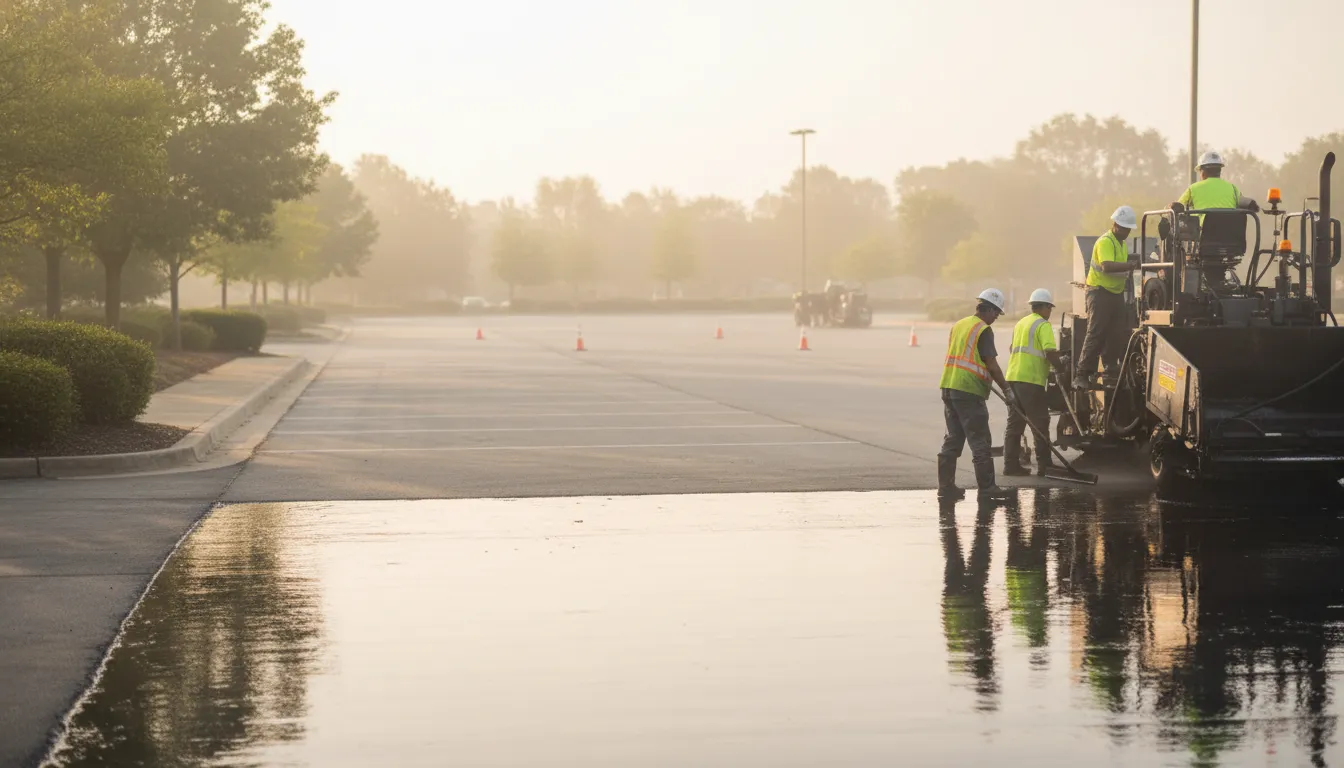
Find the Best Parking Lot Sealcoating Companies for Your Business
No obligation • Fast responses • Nationwide coverage
Why you can trust Tidy Parking
Tidy Parking is a leading U.S. source for parking lot maintenance services, including striping, sealcoating, sweeping, paving, resurfacing, and repairs. Our content is created independently, and providers cannot pay to influence ratings or recommendations.
Search providers near you
Top Parking Lot Sealcoating Companies in Chapel Hill, North Carolina Ranked
Maintaining a safe, professional, and long-lasting parking area is a critical responsibility for property managers and business owners in Chapel Hill. Parking lot sealcoating is the essential process of applying a protective layer over asphalt pavement to shield it from the elements, vehicle fluids, and daily wear. In North Carolina's climate, this preventative maintenance is not just about aesthetics-it's a vital investment in preserving your property's value and avoiding costly, premature repairs. This guide explains the local factors, best practices, and considerations for asphalt sealing in Chapel Hill, helping you make informed decisions for your commercial or residential property.
Kapusnik Paving
Greensboro, NC
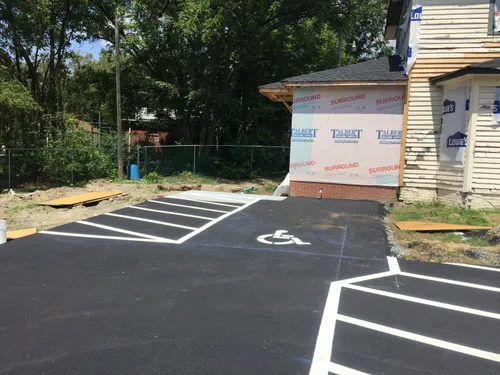
Kapusnik Paving is a paving contractor based in Greensboro, NC, providing services for both residential and commercial properties. They specialize in asphalt paving, parking lot striping, and sealcoating to maintain and improve driveways and parking lots. Their service area includes Greensboro and surrounding cities such as Raleigh, Durham, and Chapel Hill. Kapusnik Paving also offers concrete driveway installation and replacement, covering a broad range of paving needs.
Tier One Asphalt & Sealcoating
Raleigh, NC
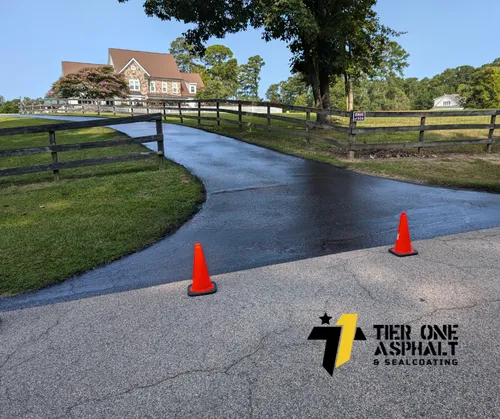
Tier One Asphalt & Sealcoating is a locally owned and family-operated company based in Raleigh, NC, specializing in asphalt paving, repair, sealcoating, and line striping for both residential and commercial properties. They serve Raleigh and surrounding areas including Wake County and Johnston County. Their services include asphalt maintenance projects ranging from small driveway repairs to large parking lot sealcoating and striping, helping to protect and extend the life of asphalt surfaces. Tier One Asphalt & Sealcoating is known for assessing pavement conditions to recommend appropriate repairs such as crack filling and patching before sealcoating, which acts as a protective barrier against weather and wear. The company emphasizes community involvement and quality workmanship in their projects.
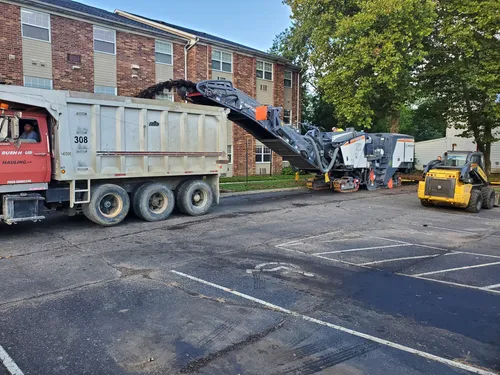
Diamond Solutions - Raleigh
3915 Beryl Rd Suite 125, Raleigh, NC 27607
Diamond Solutions - Raleigh offers parking lot striping, sealcoating, and repair services in Raleigh, NC. They handle projects across multiple states and specialize in managing parking lot maintenance from bid to completion with clear communication and efficient scheduling. Their capabilities include comprehensive parking lot repair and resurfacing, ensuring projects are completed typically within a week. Diamond Solutions is known for working on a wide range of projects, from minor pothole repairs to large capital projects, and they emphasize straightforward processes and customer updates throughout the job.
Raleigh Paving
800 Lufkin Rd, Apex, NC 27539
Raleigh Paving is a family-owned commercial paving company serving Raleigh, NC, with nearly a century of experience since 1925. They provide a wide range of services including asphalt paving, resurfacing, sealcoating, parking lot striping, and concrete work. Their capabilities include asphalt milling, which removes and recycles the top layers of pavement to restore surfaces without full repaving. Raleigh Paving also handles repairs such as crack filling and pothole patching, as well as specialty projects like ADA accessibility and storm drain repair.
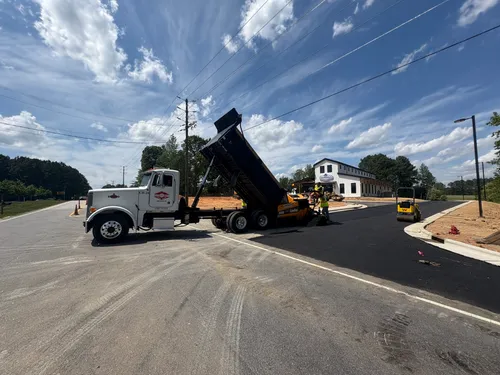
Calvin Ray Paving Contractor Inc.
9205 Bud Smith Rd, Wake Forest, NC 27587
Calvin Ray Paving Contractor Inc. is a parking lot paving and repair company based in Raleigh, NC. They offer a range of asphalt services including parking lot striping, sealcoating, patching, and pothole repair for commercial and residential properties. Their expertise includes asphalt paving for parking lots, streets, and driveways, as well as gravel installation and grading to improve durability and curb appeal. The company focuses on enhancing safety and compliance with local regulations through clear traffic markings and quality repairs.
Why Chapel Hill's Climate Demands Regular Asphalt Sealing
The weather in Chapel Hill presents a unique challenge for asphalt surfaces. The combination of high-heat summers, intense UV rays, and significant humidity accelerates the oxidation process, which makes asphalt brittle and prone to cracking. Furthermore, the area experiences intense rainstorms and winter freeze-thaw cycles. Water seeps into small cracks, freezes and expands, which can rapidly worsen existing damage and break down the protective sealer. Without a proper sealcoat, your pavement is left vulnerable to these relentless forces, leading to a shortened lifespan and escalating repair bills.
Recommended Sealing Frequency for Local Lots
The ideal schedule for applying a new seal coat depends heavily on traffic volume and usage patterns.
- High-Traffic Commercial Lots: Retail centers, medical facilities, and apartment complexes with constant vehicle flow, delivery trucks, and frequent turning movements require the most vigilance. For these surfaces, an annual or bi-annual (every 1-2 years) sealing schedule is recommended to combat oil stains, fuel spills, and structural degradation 1 2 3.
- Lower-Traffic or Residential Lots: For office parks, churches, or lower-density residential lots, a sealcoat application every 2 to 3 years may be sufficient, provided the pavement is in good condition 4.
- New Asphalt Installation: If you have a newly paved lot, it's crucial to wait 6 to 12 months for the asphalt to fully cure and volatiles to escape before applying the first protective sealcoat 5 6.
The Sealcoating Process: More Than Just Spraying On Sealer
A durable, long-lasting finish is entirely dependent on meticulous preparation. Sealers will not properly adhere to dirty, oily, or wet surfaces, so skipping steps here guarantees poor results.
- Thorough Cleaning: The area must be swept, power-blown, or wire-brushed to remove all dirt, sand, vegetation, and debris from the surface and cracks.
- Oil Spot Treatment: Fuel and grease spills are common in parking lots. These areas require a specialized oil spot primer to be applied; otherwise, the sealer will bead up and fail to bond, leaving the asphalt underneath unprotected 7.
- Crack Filling: Any cracks larger than 1/4 inch should be filled with a hot-pour rubberized crack filler. This critical step prevents water from infiltrating the asphalt base, which is a primary cause of potholes and base failure 8.
- Application: Only when the pavement is completely dry should the application begin. For best results, contractors typically apply two coats of a commercial-grade asphalt sealer. Sand is often added to the mix for slip resistance, creating a safer surface for pedestrians.
Timing Your Project: The Best Season for Sealcoating in Chapel Hill
Scheduling is everything for a successful pavement sealing project. The ideal window in Chapel Hill runs from late spring through early fall, specifically May through October 9. The application requires warm, dry conditions.
- Temperature: Both air and pavement surface temperatures should be at least 50°F and rising. Colder temperatures prevent proper curing and adhesion 10.
- Weather Forecast: There should be no rain in the forecast for at least 24 hours after application to allow the sealer to set and cure without being washed away.
- Curing Time: The lot will typically need to be closed for 24 to 48 hours after the final coat is applied to allow for full curing before vehicles can drive on it again.
Integrating Line Striping with Your Sealcoat Project
A fresh sealcoat project presents the perfect opportunity to refresh your parking lot markings. The new, dark black surface provides an excellent contrast for bright, visible lines. Line re-striping is almost always done simultaneously with or immediately after sealcoating 11.
- Timing: Striping is performed after the final sealcoat has cured, which usually takes 24-48 hours.
- Materials: For durability and visibility, high-quality, water-based acrylic traffic paint is the recommended standard 12 13.
Find the perfect parking lot sealcoating companies for your needs
Get personalized recommendations and expert advice
Understanding Sealcoating Costs in Chapel Hill
The cost to sealcoat a parking lot in the Chapel Hill area is not a flat fee; it varies based on the square footage, the condition of the pavement, and the amount of preparatory work required (like extensive crack filling or oil spot removal) 14. Prices are generally quoted per square foot, with volume discounts often applied to larger projects.
Based on local commercial pricing guides, here is a general cost framework:
- Small Lots (Up to 20,000 sq ft): Approximately $0.15 - $0.25 per square foot.
- Medium Lots (20,000 - 50,000 sq ft): Approximately $0.12 - $0.20 per square foot.
- Large Lots (Over 50,000 sq ft): Approximately $0.10 - $0.18 per square foot.
It's also common for contractors to price individual coats, which can range from $0.05 to $0.10 per square foot per coat 15. The most important financial perspective is that a regular, preventative sealing schedule (every 1-2 years) is a fraction of the cost of major repairs or a full parking lot replacement. With proper care, including sealcoating, an asphalt lot can last 20 to 30 years 16.
Choosing Materials and Planning for Longevity
Not all sealers are created equal. For commercial applications in Chapel Hill, it's advisable to use a commercial-grade, coal tar emulsion or high-performance asphalt-based sealer. These products offer superior resistance to fuel, oil, and UV degradation compared to consumer-grade products. The inclusion of sand or aggregate in the mix is also crucial for providing traction and a non-slip surface, which is a key safety consideration 17 18.
When budgeting for parking lot maintenance, think of sealcoating as a non-negotiable line item. By protecting the asphalt surface, you are preserving the structural integrity of the base layers underneath. This proactive approach is the most effective strategy for maximizing your pavement's lifespan and protecting your property investment over the long term.
Frequently asked questions
Sources
Footnotes
-
How Often Should You Seal Coat Asphalt? - Elcor Construction - https://elcorconstruction.com/how-often-should-you-seal-coat-asphalt/ ↩
-
How Often Should You Seal a Parking Lot? - https://prolineplm.com/how-often-should-parking-lots-be-sealed/ ↩
-
How Often Should a Parking Lot Be Sealcoated? - American Asphalt - https://americanasphalt.com/how-often-should-a-parking-lot-be-sealcoated/ ↩
-
How Often to Sealcoat an Asphalt Driveway & Parking Lot? - https://sipesasphaltconcrete.com/how-often-should-you-sealcoat-your-commercial-driveway-and-parking-lot/ ↩
-
How Often Should You Seal Coat Asphalt? - Elcor Construction - https://elcorconstruction.com/how-often-should-you-seal-coat-asphalt/ ↩
-
Should I Seal Coat My Parking Lot in North Carolina? [2025 ... - https://www.fixasphalt.com/blog/should-i-seal-coat-my-parking-lot-in-north-carolina-2025-guide ↩
-
Asphalt Sealcoating: The Step-by-Step Process - https://www.youtube.com/watch?v=cPEXNTJQnkw ↩
-
The Price and Process of Sealcoating a Parking Lot - https://alloutparkinglots.com/price-and-process-of-sealcoating-parking-lot/ ↩
-
How Often Should You Sealcoat a Parking Lot? | Carol Stream - https://jspaving.com/how-often-should-you-sealcoat-a-parking-lot/ ↩
-
When Is The Best Time Of Year For Asphalt Sealcoating? - https://www.raleighpaving.com/resources/blog/when-is-the-best-time-of-year-for-asphalt-sealcoating/ ↩
-
Restriping Your Parking Lot: When, Why, and How to Maintain Your Asphalt - https://buckbros.com/blog/restriping-your-parking-lot-when-why-and-how/ ↩
-
Is it Time to Sealcoat Your Parking Lot? | ABC Paving & Sealcoating - https://pavingandsealcoating.com/is-it-time-to-sealcoat-your-parking-lot/ ↩
-
Essential Guide to Parking Lot Maintenance - https://www.truscomfg.com/store/2024/07/16/essential-guide-to-parking-lot-maintenance/ ↩
-
Sealcoating Cost Planning Guide for Commercial Parking Lots - https://dbkrieginc.com/blog/sealcoating-cost-planning-guide-for-commercial-parking-lots/ ↩
-
Commercial Parking Lot Sealing Cost in Cary, NC | 02/2026 - https://caryasphaltsealing.com/cary-nc-commercial-parking-lot-sealing-costs ↩
-
Repair or Replace? What To Do About Your Aging Asphalt Parking Lot - https://www.gleassociates.com/repair-or-replace-what-to-do-about-your-aging-asphalt-parking-lot/ ↩
-
How To Sealcoat A Parking Lot (Start To Finish) - https://www.youtube.com/watch?v=bRFh7Ehm7go ↩
-
How to Sealcoat a Parking Lot or Driveway - SealMaster.net - https://sealmaster.net/faq/sealcoat-parking-lot-driveway/ ↩