Find the Best Parking Lot Sealcoating Companies for Your Business
No obligation • Fast responses • Nationwide coverage

Why you can trust Tidy Parking
Tidy Parking is a leading U.S. source for parking lot maintenance services, including striping, sealcoating, sweeping, paving, resurfacing, and repairs. Our content is created independently, and providers cannot pay to influence ratings or recommendations.
Search providers near you
Top Parking Lot Sealcoating Companies in Apple Valley, Minnesota Ranked
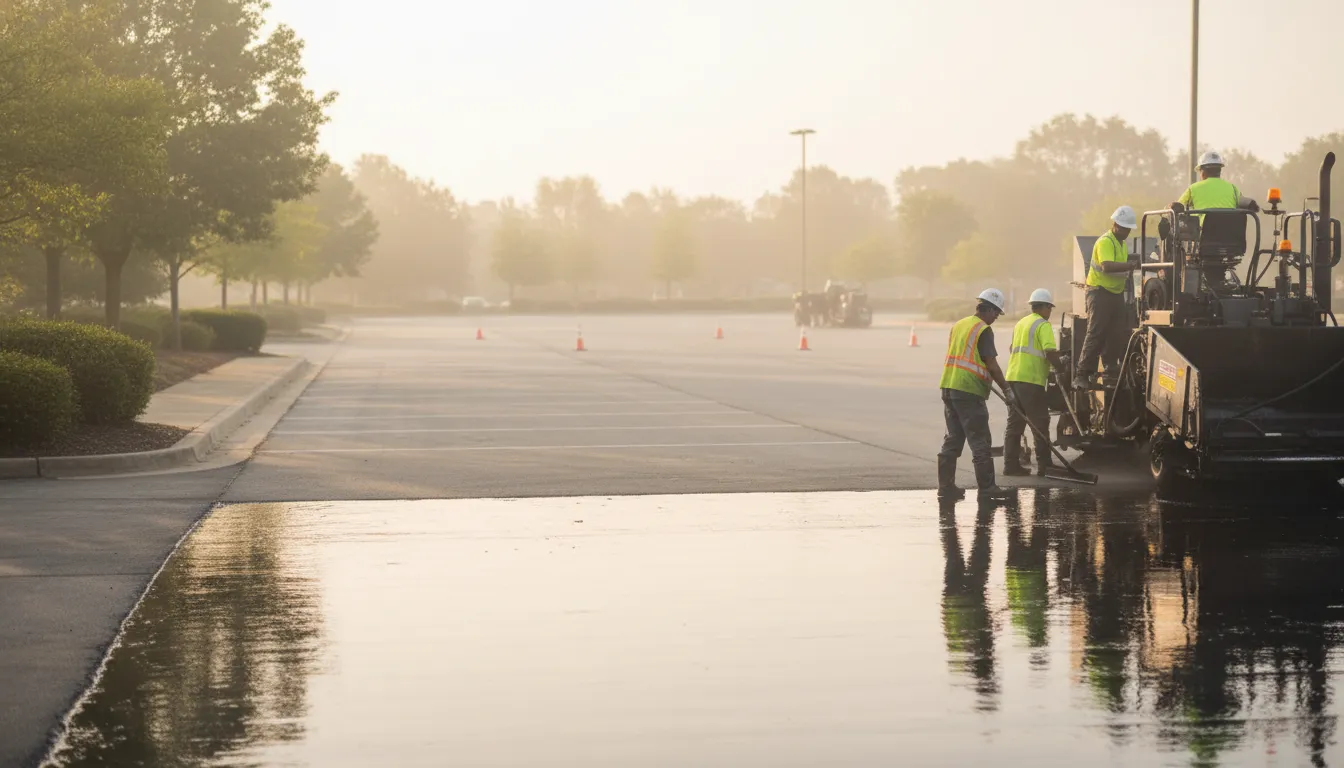
Parking lot sealcoating is a critical protective maintenance service that applies a specialized coating over asphalt pavement. In Minnesota, this service is essential for shielding your investment from the state's notoriously harsh weather, which can rapidly degrade unprotected asphalt. A properly applied sealcoat acts as a waterproof barrier, blocks UV rays, and resists oil and chemical spills, extending the life of your pavement and improving its appearance. This resource explains the unique considerations for sealcoating in Minnesota, from optimal timing to proper preparation, to help you understand the process and connect with qualified local professionals for your project.

Jet-Black® of Shoreview
2395 12th Ave E, St Paul, MN 55109
Jet-Black® of Shoreview is a parking lot sealcoating and repair company serving St Paul, MN. They offer residential and commercial asphalt maintenance services including sealcoating, crack sealing, patchwork, and hot asphalt repairs. Known for using industrial-grade sealers and hot rubber crackfiller, Jet-Black aims to provide durable protection and improve the appearance of asphalt surfaces. Established in 1987, the company has completed over 500,000 projects nationwide and combines national experience with local service.
Doctor Asphalt, LLC
1949 Atlantic St, Maplewood, MN 55109
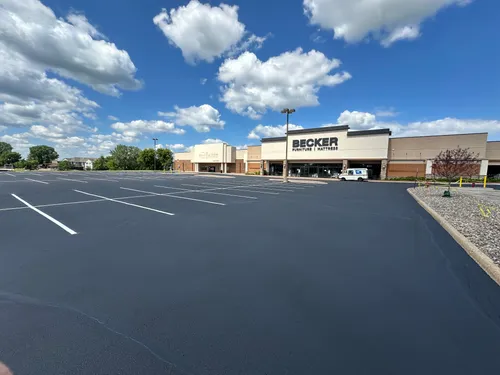
Doctor Asphalt, LLC is a parking lot paving and repair company based in St Paul, MN. They provide services including parking lot striping, sealcoating, crack filling, patching, and asphalt replacement. The company is known for working across the Twin Cities Metro Area and offers detailed proposals tailored to customer needs. Their team handles projects efficiently, often working around business schedules to minimize disruption. Doctor Asphalt has built a reputation for solid workmanship and clear communication, with a focus on practical solutions and customer perspectives.
Real Seal Asphalt Sealcoating
St Paul, MN
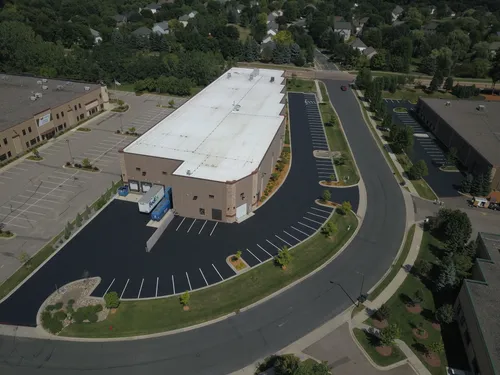
Real Seal Asphalt Sealcoating is a parking lot sealcoating and repair company serving St Paul, MN. The business offers services including asphalt patching, driveway extensions, crack maintenance, and sunken garage apron repair. Owner Dan Servais is actively involved in daily operations, emphasizing quality workmanship and attentive customer care. The company also provides snow removal services, addressing a range of asphalt and sealcoating needs in the local community.
Asphalt Paving Company
2136 Ford Pkwy Unit 8104G, St Paul, MN 55116
Asphalt Paving Company provides commercial asphalt paving, sealcoating, striping, and repair services in Minneapolis, MN. They specialize in durable asphalt solutions designed for high-traffic commercial properties, including parking lots, driveways, curbs, and drains. The company uses professional-grade materials suited for commercial equipment and offers services such as pothole repair and asphalt crack filling to maintain pavement integrity. Their expertise includes commercial asphalt paving that resists weather damage and heavy use, helping extend the lifespan of paved surfaces. Asphalt Paving Company serves the Minneapolis area with a focus on commercial clients and offers warranties on their work to ensure long-term durability.
Asphalt Driveway Company
1211 State Hwy 36 Service Rd, Maplewood, MN 55109
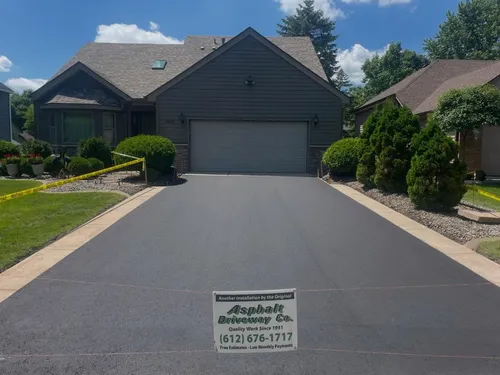
Asphalt Driveway Company is a family-owned business serving Minneapolis, MN, and the surrounding St. Paul/Minneapolis area since 1951. They provide a range of asphalt and concrete services, including driveway installation, parking lot sealcoating, patio construction, and sidewalk repair. Their expertise includes asphalt sealcoating to protect surfaces and extend their lifespan. With decades of experience, they offer flexible options for residential projects involving both asphalt and concrete.
Why Sealcoating is Non-Negotiable in Minnesota
Minnesota's climate presents one of the greatest challenges to asphalt longevity in the continental United States. The primary threat is the freeze-thaw cycle, which is particularly intense during the spring and fall. Here's how it destroys unsealed pavement:
- Water Infiltration: Rain and melting snow seep into tiny cracks and pores in the asphalt.
- Freezing Expansion: When temperatures drop, this water freezes and expands by nearly 10%, exerting tremendous pressure from within.
- Crack Propagation: This expansion widens existing cracks and creates new ones.
- Thawing and Erosion: When the ice melts, it leaves behind larger voids. Repeated cycles cause the asphalt base to crumble, leading to alligator cracking, raveling, and ultimately, severe potholes 1.
A high-quality sealcoat fills surface voids and creates a seamless, flexible membrane that prevents water from penetrating the asphalt in the first place. By stopping this cycle, sealcoating is your most cost-effective defense against premature and expensive reconstruction.
The Minnesota Sealcoating Season: Timing is Everything
You cannot sealcoat effectively year-round in Minnesota. The application and curing process has strict environmental requirements that dictate a narrow seasonal window.
- Critical Temperature Requirement: Sealant materials require ambient and surface temperatures to remain above 50°F (10°C) for a minimum of 24 hours after application to cure properly. Applying in cooler temperatures prevents curing, resulting in a soft, sticky, or washed-away coating.
- Ideal Application Window: The reliable season in Minnesota typically runs from late May through September. Early fall applications can be risky, as overnight temperatures can dip below the critical threshold even on warm days 2 3.
- The Goal: The objective is to have a fresh, fully cured sealcoat in place before winter arrives. This ensures your parking lot is sealed against the moisture from fall rains and winter snowmelt, providing maximum protection through the freezing months 4.
How Often Should You Sealcoat in Minnesota?
A standard maintenance schedule for commercial parking lots in Minnesota is every 2 to 3 years 5. However, this is a general guideline. Several local factors can necessitate more frequent applications (every 1-2 years):
- High-Traffic Volume: Lots for busy retail centers, hospitals, or distribution warehouses experience more wear.
- Exposure to Elements: Lots with full southern sun exposure degrade faster from UV radiation.
- Chemical Exposure: Lots serving restaurants (grease) or automotive businesses (oil, fuel) need more frequent protection.
- Existing Pavement Condition: Older or already weathered asphalt may benefit from a shorter resealing cycle initially.
A professional inspection, particularly after the spring thaw, is the best way to determine your lot's specific needs 6.
Find the perfect parking lot sealcoating companies for your needs
Get personalized recommendations and expert advice
The Sealcoating Process: More Than Just Spraying
A durable, long-lasting sealcoat job is 90% preparation. Reputable contractors follow a meticulous process:
- Thorough Cleaning: The surface must be immaculate. Professionals use high-pressure blowers, brooms, and washers to remove all dirt, dust, debris, and vegetation. Sealant will not adhere to dust and will peel away.
- Oil Spot Priming: Petroleum stains are a major cause of sealcoat failure. These areas must be cleaned with degreasers, wire-brushed, and treated with a specialized oil spot primer. This creates a bondable surface so the sealant doesn't repel away from the stain.
- Crack Filling: All cracks wider than ¼ inch should be filled with a hot-pour or cold-applied rubberized crack filler before sealcoating. This prevents water from entering the subbase and stops cracks from reflecting through the new sealcoat.
- Application: A two-coat method is standard for commercial work. First, a squeegee coat is applied for strong adhesion and to work sealant into the pavement texture. This is followed by a spray coat to achieve a uniform, attractive finish.
- Curing and Reopening: The lot must remain closed for 24 to 48 hours to allow for proper curing before vehicle traffic can resume 7.
Materials and Environmental Considerations
- Sealant Types: Modern sealers are typically high-quality, environmentally responsible emulsified asphalt or refined coal-tar-free formulations. For added durability and slip resistance, aggregates like sand, quartz, or basalt are often mixed in 8 9.
- Dry Weather Essential: Sealcoating cannot be applied if rain is forecast within 24 hours, as it will wash away uncured material. A solid dry forecast is mandatory 10.
- Sustainable Choice: Regular sealcoating is a form of preventive maintenance that extends pavement life by 2-3 times. This defers the need for total reconstruction, which is resource-intensive and has a significantly higher carbon footprint due to new asphalt production and transportation 11.
Understanding Costs for Commercial Projects in Minnesota
The cost for commercial parking lot sealcoating in Minnesota is typically quoted per square foot. For standard projects, you can expect a range of $0.15 to $0.40 per square foot 12 13 14. Your final price depends on several project-specific variables:
- Surface Condition: Lots requiring extensive crack filling, pothole repair, or oil spot treatment will cost more due to the added labor and materials.
- Lot Size and Layout: Larger lots generally have a lower cost per square foot due to economies of scale. Complex layouts with many light poles, islands, and tight corners take longer to work around.
- Sealant Material: Premium sealants with higher solids content or added aggregates may increase the price but offer better protection and longevity.
- Preparation Level: The intensity of cleaning and repair needed is a major cost driver.
Always request a detailed, on-site evaluation and written quote that breaks down preparation, materials, and application costs.
Choosing a Qualified Minnesota Contractor
Selecting the right professional is crucial for a successful outcome. Look for a contractor who:
- Has extensive local experience with Minnesota's climate challenges.
- Insists on a thorough inspection and discusses preparation steps in detail.
- Uses high-quality, professional-grade materials.
- Provides clear contracts with detailed scope, timeline, and cost.
- Can provide references and examples of past commercial work in your area.
- Carries adequate liability and workers' compensation insurance.
Frequently asked questions
Sources
Footnotes
-
The Complete Maintenance Plan Guide - parking lot - https://paveconnect.com/blog/how-to-tell-what-your-parking-lot-needs-the-complete-maintenance-plan-guide/ ↩
-
Meet Sealcoating Temperature Requirements for Better Results - https://www.ppm.us/sealcoating-in-spring-and-fall/ ↩
-
Can I Sealcoat My Asphalt Driveway in the Fall? - https://www.a1asphaltinc.com/can-i-sealcoat-my-asphalt-driveway-in-the-fall.php ↩
-
Parking Lot Maintenance Tips Every Property Manager ... - https://gopherstatesealcoat.com/parking-lot-maintenance-tips-every-property-manager-should-know/ ↩
-
How Often Should a Parking Lot Be Sealcoated? - American Asphalt - https://americanasphalt.com/how-often-should-a-parking-lot-be-sealcoated/ ↩
-
How Often Should Parking Lots Be Sealed in Southern California? - https://www.asphaltprofessionals.com/how-often-should-parking-lots-be-sealed-in-southern-california/ ↩
-
Sealcoating Cost Planning Guide for Commercial Parking Lots - https://dbkrieginc.com/blog/sealcoating-cost-planning-guide-for-commercial-parking-lots/ ↩
-
The Comprehensive Guide to Asphalt Sealcoating - Pavemade.com - https://pavemade.com/pages/the-comprehensive-guide-to-asphalt-sealcoating-5 ↩
-
SPM Residential Sealcoating Information - https://www.spmsealcoating.com/residential-sealcoating-information ↩
-
Sealcoating a Parking Lot: When, Why & How Much (2026 Guide) - https://strikeforcestriping.com/sealcoating-parking-lot-guide ↩
-
Minnesota Seal Coat Handbook 2006 - AWS - https://org-ppra-prod.s3.amazonaws.com/uploads/treatment_file/upload/93/MN_Seal_Coat_Handbook.pdf ↩
-
How Often Should You Sealcoat Your Commercial Parking Lot - https://thepavementgroup.com/commercial-parking-lot-sealcoat/ ↩
-
The Price and Process of Sealcoating a Parking Lot - https://alloutparkinglots.com/price-and-process-of-sealcoating-parking-lot/ ↩
-
Parking Lot Seal Coating Costs for Asphalt : 2025 Pricing Guide - https://www.fixasphalt.com/blog/how-much-does-it-cost-to-sealcoat-an-asphalt-parking-lot ↩