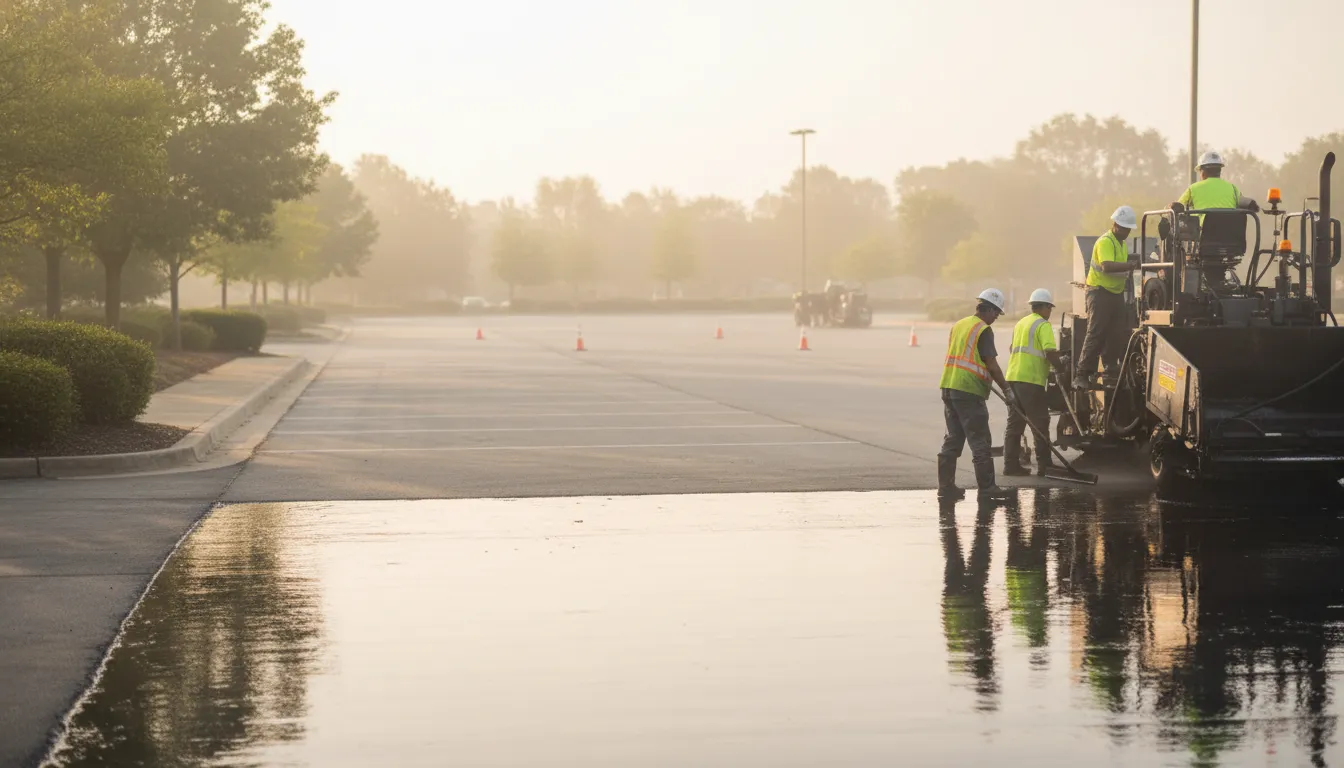
Find the Best Parking Lot Sealcoating Companies for Your Business
No obligation • Fast responses • Nationwide coverage
Why you can trust Tidy Parking
Tidy Parking is a leading U.S. source for parking lot maintenance services, including striping, sealcoating, sweeping, paving, resurfacing, and repairs. Our content is created independently, and providers cannot pay to influence ratings or recommendations.
Search providers near you
Top Parking Lot Sealcoating Companies in Fort Wayne, Indiana Ranked
Parking lot sealcoating is a critical preventative maintenance service that applies a protective layer over asphalt pavement. In Fort Wayne, this process is essential for shielding your investment from the region's harsh weather and heavy use, preventing costly damage like cracks, potholes, and surface erosion. Understanding the local best practices for timing, preparation, and application helps property managers and business owners maintain safe, functional, and aesthetically pleasing pavement. This guide provides the key information you need to plan and execute a successful sealcoating project in the Fort Wayne area.
Asphalt Authority
Fort Wayne, IN
Asphalt Authority is a family-owned asphalt maintenance contractor based in Fort Wayne, IN. They provide a range of services including asphalt paving, resurfacing, sealcoating, crack repair, parking lot striping, ADA compliance, and traffic signage. The company is experienced in handling large-scale projects such as warehouse striping and municipal crack sealing. Asphalt Authority emphasizes integrity and attention to detail in their work. They have completed extensive sealcoating and crack sealing projects, demonstrating their capability in asphalt maintenance and repair.
Midwest Seal Team LLC
1413 Orlando Dr, Fort Wayne, IN 46825
Midwest Seal Team LLC is a family-owned asphalt maintenance company based in Fort Wayne, IN. They provide services including sealcoating, crack filling, and parking lot striping for commercial and residential asphalt surfaces. Their crack filling service helps prevent water damage and extends the life of asphalt by sealing cracks before they worsen. Midwest Seal Team has been serving the Fort Wayne community for years, focusing on effective asphalt care and maintenance.
Steel Curtain Asphalt Maintenance
Fort Wayne, IN
Steel Curtain Asphalt Maintenance provides comprehensive asphalt services in Fort Wayne, IN, including sealcoating, crack sealing, pothole repair, striping, and full asphalt maintenance for both commercial and residential properties. Their services focus on protecting pavement from damage caused by UV rays, moisture, oil, and chemicals while restoring appearance and improving safety. The company offers durable sealcoating that extends pavement life, crack sealing to prevent water infiltration and potholes, and professional parking lot striping that enhances traffic flow and visibility. Steel Curtain Asphalt Maintenance serves a broad area around Fort Wayne and is committed to delivering reliable pavement care built on detailed workmanship and honest communication.
Asphalt King
Fort Wayne, IN
Asphalt King is a parking lot striping, sealcoating, and repair company based in Fort Wayne, IN. They offer services including seal coating for lots and driveways, asphalt repair, striping and markings, high-pressure power washing, and snow removal. Their work focuses on maintaining and enhancing the value of residential and commercial properties through professional asphalt care.
Jennings Asphalt Services
12326 Shearwater Run, Fort Wayne, IN 46845
Jennings Asphalt Services is a female-owned pavement contractor based in Fort Wayne, IN, with 16 years of experience. They provide a range of services including asphalt paving, parking lot sealcoating, crack filling, and parking lot repair for clients in Fort Wayne and surrounding areas. The company is known for offering same-day service for urgent pavement needs and focuses on customer satisfaction through reliable and efficient solutions.
Why Sealcoating is Non-Negotiable in Fort Wayne
The primary purpose of applying a seal coat is to create a waterproof barrier. Asphalt is naturally porous, and without protection, water seeps into tiny cracks and the pavement base. In Fort Wayne, this is a recipe for rapid deterioration due to our intense seasonal freeze-thaw cycles 1. Water expands when it freezes, pushing against the asphalt from within, which leads to cracking, crumbling, and eventually, structural failure. A high-quality sealant blocks this water infiltration, significantly extending the life of your pavement.
Beyond waterproofing, a fresh sealcoat provides crucial protection against other elements. It shields the asphalt binder from oxidation and UV rays from the sun, which cause the pavement to become brittle, fade to gray, and lose its flexibility. It also creates a smooth, uniform surface that is easier to clean and maintain, while restoring a deep, attractive black color that improves curb appeal. For commercial properties, this maintenance is not just about preservation-it's about safety, professionalism, and protecting a significant asset.
The Fort Wayne Climate: Your Biggest Adversary
Local weather patterns are the single greatest factor determining your sealcoating schedule and results. Fort Wayne experiences a full range of seasons, with cold, snowy winters and warm, humid summers. The winter months are particularly punishing for unprotected asphalt.
- Freeze-Thaw Cycles: Repeated freezing and thawing of moisture within the pavement is the leading cause of cracks and potholes.
- De-Icing Chemicals: Road salt and other de-icers used on parking lots are corrosive. They accelerate the breakdown of asphalt binder and can stain and degrade a sealcoat if it is not robust and properly applied.
- Snow Plow Damage: The scraping of plow blades can tear at weakened, unsealed asphalt edges and surfaces.
This climate makes a regular sealing program not just recommended, but essential for cost-effective property management. Proactive maintenance with sealcoating is far less expensive than reactive repairs like patching or full-depth reconstruction 2.
Determining the Right Sealcoating Schedule
How often should you sealcoat your Fort Wayne parking lot? The standard industry recommendation is every 2 to 3 years 3. However, this is a general guideline. Your specific schedule depends on several factors:
- Traffic Volume: Lots serving shopping centers, restaurants, or warehouses with constant car and truck traffic will wear out a sealcoat faster than a low-traffic office park. High-traffic areas may require re-sealing every 18 to 24 months 4.
- Existing Pavement Condition: Older lots with more oxidation and minor surface wear need the protection of sealcoat more urgently. New asphalt should typically cure for 6 to 12 months before its first sealcoat application 5.
- Previous Maintenance History: A lot that has been consistently sealed on schedule will be in better condition and may follow the standard cycle. Neglected lots require more intensive preparation and possibly more frequent initial sealing after restoration.
A simple annual inspection each spring is the best way to assess your lot's needs. Look for fading color, a rough or sandy texture, small hairline cracks, and areas where aggregate (the small stones in the asphalt) is visible.
The Ideal Time for Sealcoating in Northeast Indiana
Timing your project correctly is paramount for a successful, long-lasting application. Sealcoating is a temperature and weather-dependent process.
- Best Season: The prime sealing window in Fort Wayne is from late spring through early fall, typically May through October. This period offers the most reliably warm and dry conditions 6.
- Temperature Requirements: Sealant requires proper curing. Application should only occur when both the air temperature and pavement surface temperature are consistently above 50°F (10°C), with no overnight freeze expected for at least 24 hours after application 7. Ideal application temperatures are between 70°F and 85°F.
- Weather Forecast: The sealcoat needs 24 to 48 hours to cure without interruption. Scheduling must account for a 100% chance of no rain during application and for at least a full day afterward. High humidity can also slow the drying process.
Planning your project for this seasonal window ensures the material adheres properly, cures to its full strength, and provides the maximum lifespan.
The Sealcoating Process: From Preparation to Curing
A professional sealcoating job is more than just spraying a black coating on the ground. It's a multi-step system where preparation is just as important as the application itself.
1. Thorough Cleaning: The surface must be completely free of dirt, debris, leaves, and vegetation. Professionals use a combination of power blowers, stiff brooms, and sometimes pressure washing to achieve a clean surface 8. Any contamination left on the asphalt will prevent proper adhesion.
2. Oil Spot and Stain Treatment: Oil, grease, and fluid leaks are common in parking lots. These substances must be neutralized using a specialized degreaser or primer. If not treated, the oils will bleed through the new sealcoat, causing unsightly stains and adhesion failure 9.
3. Crack Sealing: Before the sealcoat is applied, all cracks (typically those ¼-inch or wider) must be filled. This is usually done with a hot-pour rubberized sealant. Filling cracks prevents water from penetrating the sub-base, which is the core goal of the entire process 10.
4. Edging and Protection: Surrounding landscaping, curbs, and buildings are protected with drop cloths or tape. The perimeter of the work area is clearly defined.
5. Application: The sealant, often a coal tar or asphalt-based emulsion mixed with sand and additives, is applied using specialized spray systems or squeegees to ensure an even, consistent thickness. Most commercial lots require two coats for optimal protection 11.
6. Curing and Drying: This is the most critical phase. The lot must be kept completely closed to all vehicle and foot traffic for a minimum of 24 to 48 hours to allow the coating to fully set and harden 12. Barricades and clear signage are essential.
Find the perfect parking lot sealcoating companies for your needs
Get personalized recommendations and expert advice
What Happens After the Sealcoat Cures?
Once your new sealcoat is fully dry and cured, the final step is often re-striping. The fresh, dark surface provides the perfect backdrop for new, highly visible pavement markings. It's important to note that traffic paint should be applied under similar temperature conditions as sealcoating-ideally between 50°F and 95°F for proper adhesion and durability 13. A comprehensive maintenance provider can often schedule sealcoating and striping in a coordinated sequence.
Understanding Costs and Value
The cost of sealcoating a parking lot in Fort Wayne is not a flat fee; it's calculated per square foot and influenced by several variables:
- Lot Size & Complexity: Larger lots generally benefit from a lower cost per square foot due to economies of scale. However, lots with many light poles, islands, and tight corners require more handwork, which can increase the price.
- Condition & Preparation: A lot that needs extensive crack filling, heavy cleaning, and multiple oil spot treatments will cost more to prepare than a well-maintained one. This preparatory work is non-negotiable for a quality result.
- Number of Coats: Most commercial applications require two coats for adequate thickness and longevity, which increases material and labor costs compared to a single coat.
While there is an upfront investment, it's vital to view sealcoating as a cost-saving measure. The expense of regular sealing is a fraction of the cost of repairing widespread damage or completely repaving a failed lot 14. It is the most effective way to protect and maximize the value of your asphalt asset.
Choosing a Service Provider in Fort Wayne
Selecting the right contractor is crucial. Look for established companies with specific experience in commercial parking lot maintenance in Northeast Indiana. They should understand local climate challenges and use high-quality, commercial-grade materials. Be wary of quotes that seem unusually low, as they may indicate the use of diluted materials, skipped preparation steps, or inadequate insurance. A reputable provider will be happy to explain their process, provide references, and offer a detailed, written estimate.
Frequently asked questions
Sources
Footnotes
-
Fort Wayne Climate, Weather By Month, Average Temperature ... - https://weatherspark.com/y/15330/Average-Weather-in-Fort-Wayne-Indiana-United-States ↩
-
Parking Lot Striping Pricing Salt Lake County | Cost Calculator - https://parkinglotstripingslc.com/pricing ↩
-
How Often to Sealcoat an Asphalt Driveway & Parking Lot? - https://sipesasphaltconcrete.com/how-often-should-you-sealcoat-your-commercial-driveway-and-parking-lot/ ↩
-
How Often Should You Sealcoat Your Commercial Parking Lot - https://thepavementgroup.com/commercial-parking-lot-sealcoat/ ↩
-
How Often Should You Sealcoat Your Commercial Parking Lot - https://thepavementgroup.com/commercial-parking-lot-sealcoat/ ↩
-
Why Summer is Great for Driveway Sealcoating - A-1 Asphalt Inc - https://www.a1asphaltinc.com/why-summer-is-great-for-driveway-sealcoating.php ↩
-
How Long Does It Take Driveway Sealer To Dry | Sealing Rain - https://www.nwssealcoating.com/does-rain-ruin-sealcoating ↩
-
How To Sealcoat A Parking Lot (Start To Finish) - https://www.youtube.com/watch?v=bRFh7Ehm7go ↩
-
How to Prepare Your Parking Lot for Sealcoating - https://www.maintainitall.com/how-to-prepare-your-parking-lot-for-sealcoating ↩
-
Step-by-Step Process of Parking Lot Sealcoating - https://asphaltcoatingscompany.com/blog/step-by-step-process-of-parking-lot-sealcoating/ ↩
-
Parking Lot Sealcoating Best Practices - For Construction Pros - https://www.forconstructionpros.com/pavement-maintenance/blacktop/paving/article/21271857/parking-lot-sealcoating-best-practices ↩
-
Why Regular Seal Coating Is Essential For Maintaining Your Parking ... - https://wedolines.com/why-regular-seal-coating-is-essential-for-maintaining-your-parking-lot/ ↩
-
Understanding the Dry Time for Traffic Paint - 1-800-STRIPER® - https://1800striper.com/understanding-the-dry-time-for-traffic-paint/ ↩
-
Sealcoating Cost Planning Guide for Commercial Parking Lots - https://dbkrieginc.com/blog/sealcoating-cost-planning-guide-for-commercial-parking-lots/ ↩