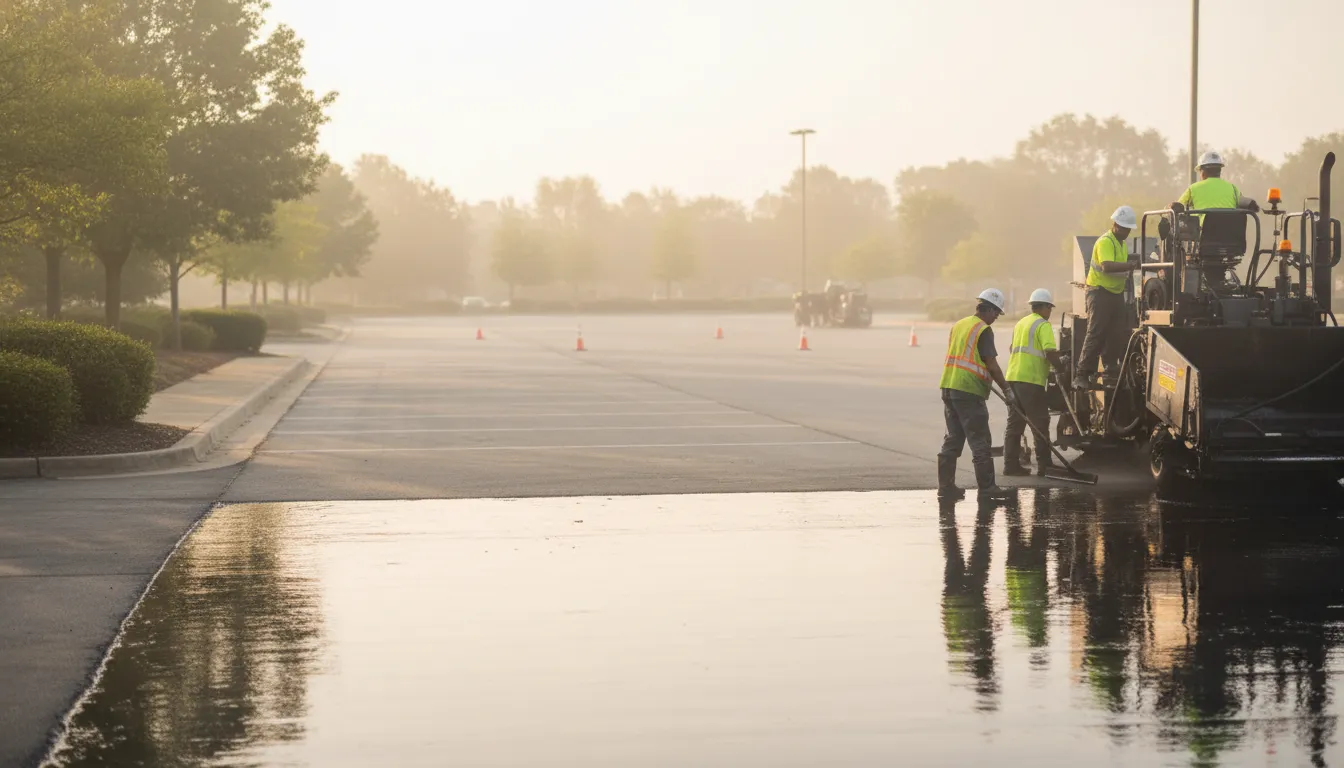
Find the Best Parking Lot Sealcoating Companies for Your Business
No obligation • Fast responses • Nationwide coverage
Why you can trust Tidy Parking
Tidy Parking is a leading U.S. source for parking lot maintenance services, including striping, sealcoating, sweeping, paving, resurfacing, and repairs. Our content is created independently, and providers cannot pay to influence ratings or recommendations.
Search providers near you
Top Parking Lot Sealcoating Companies in Santa Monica, California Ranked
A fresh coat of sealant is one of the most effective ways to protect your asphalt investment in Santa Monica. This protective layer acts as a barrier against the relentless sun, occasional rain, and daily wear and tear that degrade pavement. Understanding the specific needs of coastal Southern California can help you plan a maintenance schedule that extends the life of your parking lot, maintains its appearance, and ensures safety. This guide outlines the local considerations, processes, and timing to help you connect with qualified professionals for your pavement preservation project.
Bay Cities Paving Inc
931 Mahar Avenue, 1314 North Avalon Boulevard Ste A, Wilmington, CA 90744
Bay Cities Paving Inc is a family-owned asphalt and concrete contractor serving Los Angeles, CA, with over 40 years of experience. They provide a range of services including parking lot paving, resurfacing, sealcoating, striping, and repair for commercial, industrial, and residential properties. The company handles projects from shopping malls and restaurants to single-family driveways, applying expert techniques and quality materials to ensure durable results. Established in 1984, Bay Cities Paving also offers sign installation services and educational seminars for property managers to address safety concerns.
Blue Diamond Inglewood Asphalt
2021 W Gaylord St, Long Beach, CA 90813
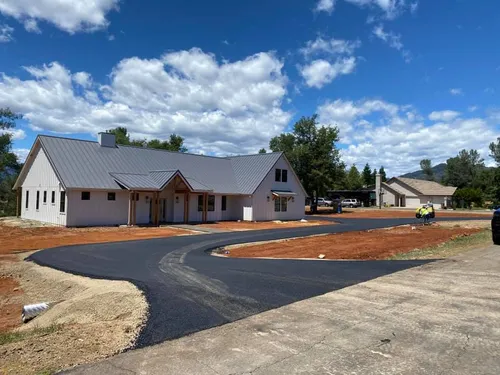
Blue Diamond Inglewood Asphalt is a parking lot and driveway contractor based in Long Beach, CA. They provide a range of asphalt services including paving, patching, striping, sealcoating, resurfacing, and repairs tailored to commercial and residential properties. Their team uses high-quality materials and modern equipment to ensure durable and smooth asphalt surfaces. The company emphasizes safety on job sites and offers free consultations to help clients plan their projects. Their expertise includes asphalt paving and sealcoating, which protect and extend the life of paved surfaces.
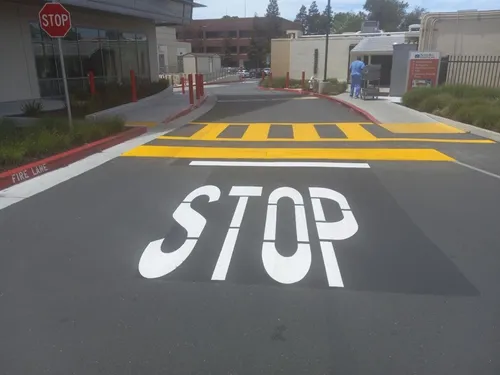
All Star Paving Co
Los Angeles, CA
All Star Paving Co is an asphalt contractor based in Los Angeles, CA, serving Pasadena and surrounding areas. They offer a range of services including asphalt paving, patching, striping, sealcoating, and driveway and parking lot construction. With over 20 years of experience, they focus on durable workmanship using premium materials and modern equipment. Their expertise includes asphalt patching to repair potholes and cracks, ensuring safety and longevity. The company is licensed and insured, emphasizing quality and long-term value in their projects.
Rose Paving
10200 Matern Pl, Santa Fe Springs, CA 90670
Rose Paving is a commercial paving company serving Los Angeles, CA, with over 50 years of industry experience. The company specializes in parking lot maintenance, including asphalt and concrete repairs, crack sealing, sealcoating, and lot marking with ADA compliance. Rose Paving combines local expertise from its Los Angeles division, which has operated for 30 years, with the resources of a national brand to provide durable and regulation-compliant pavement solutions tailored to the region's climate and traffic demands.
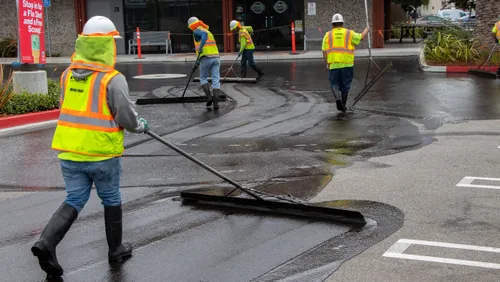
General Pavement Management (GPM)
850 Lawrence Dr #100, Thousand Oaks, CA 91320
General Pavement Management (GPM) is a paving company based in Oxnard, CA, serving the Central Coast and Southern California. They provide a range of services including asphalt paving, concrete work, sealcoating, grading, crack sealing, pavement marking, and chip sealing for commercial, industrial, and residential properties. GPM is experienced in handling projects such as parking lot striping, resurfacing, and repair, with capabilities including pothole repair, concrete repair, and ADA compliance. With over 30 years in business, GPM emphasizes clear communication, quality materials, and personalized service.
Why Sealcoating is Essential in Santa Monica
While often associated with snowy climates, sealcoating is arguably even more critical in sunny regions like Santa Monica. The primary threat here isn't freeze-thaw cycles, but intense, year-round ultraviolet (UV) radiation from the sun. UV rays cause the asphalt binder to oxidize, making the surface brittle, faded, and prone to cracking. A quality sealcoat acts as a sunscreen for your pavement, blocking these damaging rays and preventing premature aging.
Beyond sun protection, a sealcoat provides a vital shield against automotive fluids like oil and gasoline, which can break down asphalt. It also makes the surface easier to clean and maintain, and it restores a deep, uniform black color that improves curb appeal for businesses. For property managers and business owners, regular sealing is a proactive measure that prevents minor issues from becoming costly repairs.
Local Climate Factors Affecting Your Pavement
Santa Monica's coastal climate presents unique challenges for asphalt maintenance that influence sealcoating strategies.
- UV Exposure & Heat: The constant Southern California sun accelerates oxidation. Without protection, asphalt becomes dry and loses its flexibility, leading to a network of small cracks (alligator cracking).
- Coastal Humidity & Occasional Rain: While generally dry, the marine layer brings humidity that can affect the curing time of sealants. Infrequent but heavy rains can also lead to water infiltration if cracks are not properly sealed beforehand 1.
- Traffic Patterns: Usage varies greatly. A high-traffic retail lot near the Third Street Promenade experiences far more wear from constant vehicle movement than a low-traffic office lot. High-traffic and high-turnover areas typically require more frequent maintenance attention 2.
How Often Should You Sealcoat in Santa Monica?
The frequency of sealcoating isn't one-size-fits-all; it depends on the age of your asphalt and its use. Here are general guidelines for the Santa Monica area:
- New Asphalt: Wait 6 to 12 months after installation for the asphalt to fully cure and volatiles to escape before applying the first protective sealcoat.
- Low-Traffic Lots (e.g., some office complexes, warehouses): A fresh sealcoat every 3 to 4 years is often sufficient to maintain protection.
- High-Traffic or Retail Lots: Due to constant vehicle stress and exposure, these surfaces benefit from sealcoating every 1 to 2 years 3 4. An annual inspection can help determine the exact need.
For most properties in Santa Monica, a general recommendation is to re-seal every 2 to 3 years to effectively combat UV degradation 5.
The Sealcoating Process: Steps for a Lasting Result
A durable finish depends on thorough preparation and proper application. Reputable providers will follow a process similar to this:
- Preparation & Cleaning: The entire surface must be thoroughly cleaned via power sweeping or washing to remove dirt, debris, and loose particles. Oil stains require special treatment to prevent bleed-through.
- Repairs: All cracks wider than 1/8 inch should be cleaned and filled with a hot-pour or rubberized crack sealant. Any potholes or alligatored areas need to be repaired or patched. Sealing over existing damage is ineffective 6.
- Application: The sealant (typically a coal tar or asphalt-based emulsion) is applied evenly using spray systems or squeegees. Proper mixing and consistent application are key to uniform protection and appearance.
- Drying & Curing: This is the most critical phase for scheduling. The lot must be blocked off from all traffic and pedestrians for a minimum of 24 to 48 hours to allow the sealcoat to fully cure and harden 7 8. Humidity and temperature directly impact this time.
Ideal Timing and Weather Conditions
Scheduling your project during optimal weather is crucial for success. The ideal conditions for sealcoating are:
- Temperature: Between 50°F and 85°F, with rising temperatures preferred 9.
- Forecast: At least 24-48 hours of dry weather with no rain in the forecast during application and curing.
- Season: In Santa Monica, the spring and fall often provide the most consistent dry, moderate-temperature windows for pavement sealing projects.
Find the perfect parking lot sealcoating companies for your needs
Get personalized recommendations and expert advice
Coordinating Sealcoating with Striping
Parking lot markings must be fresh and clear for safety and compliance. Sealcoating covers existing paint, so re-striping is always necessary. The standard protocol is to apply new traffic paint 24 to 48 hours after the sealcoat has dried 10. This waiting period ensures the sealant has set enough so that the paint will adhere properly and not bleed or track. Planning these two services in sequence is a key part of a complete maintenance project.
Understanding Project Costs
The cost to sealcoat a parking lot in California is typically calculated per square foot. For a standard project in the Santa Monica area, prices generally range from $0.17 to $0.35 per square foot. The total project cost depends on several factors:
- Total Square Footage: Larger lots often have a lower cost per square foot due to economies of scale.
- Condition & Prep Work: Lots requiring extensive crack filling, stain treatment, or repairs will incur additional preparation costs.
- Access & Complexity: Lots with many obstructions (light poles, planters, etc.) or difficult access may take longer to work around.
As a point of reference, a smaller lot of approximately 10,000 square feet may range from $1,700 to $3,500, while a large lot of 50,000+ square feet could range from $8,500 to $17,500 or more 11. The most accurate way to determine cost is to get a detailed assessment and quote based on your specific property.
Maximizing Your Pavement Investment
A strategic approach to sealcoating in Santa Monica involves more than just periodic application. To get the most value and longevity from your pavement:
- Address Problems First: Never seal over significant cracks or damage. Proper repair before sealing is non-negotiable for long-term performance.
- Stick to a Schedule: Proactive, regular sealing based on your lot's traffic use is far more cost-effective than reacting to advanced deterioration.
- Plan for Downtime: Ensure you can block the lot for the full 48-hour curing period to avoid damaging the fresh sealant.
- Work with Experienced Providers: Choose professionals familiar with local climate challenges who follow detailed preparation and application standards.
Frequently asked questions
Sources
Footnotes
-
Does Sealcoating Work in California - https://www.gpmpavement.com/blog/sealcoat-california/ ↩
-
Retail Parking Lot Sealcoating: Why It Pays to Plan Ahead - DRYCO - https://www.dryco.com/blog/retail-parking-lot-sealcoating-why-it-pays-to-plan-ahead/ ↩
-
How Often Should Parking Lots Be Sealed in Southern California? - https://www.asphaltprofessionals.com/how-often-should-parking-lots-be-sealed-in-southern-california/ ↩
-
Parking Lot Sealcoating - City Service Contracting, Inc. - https://citypavinginc.com/commercial-paving-services/pavement-maintenance/parking-lot-sealcoating/ ↩
-
How Often Should a Parking Lot Be Sealcoated? 510-723-0280 - https://americanasphalt.com/how-often-should-a-parking-lot-be-sealcoated/ ↩
-
The Complete Maintenance Plan Guide - parking lot - PaveConnect - https://paveconnect.com/blog/how-to-tell-what-your-parking-lot-needs-the-complete-maintenance-plan-guide/ ↩
-
6 Steps For an Effective Sealing Process & Drying Time - https://dcplm.com/blog/6-steps-for-an-effective-sealing-process-drying-time/ ↩
-
Asphalt FAQ - Plantmix Asphalt Industry of Kentucky - https://www.paiky.org/asphalt-education/asphalt-faq/ ↩
-
What is the Best Weather for Sealcoating? - ACPLM - (813) 633-0548 - https://acplm.net/best-weather-for-sealcoating/ ↩
-
Should You Sealcoat Before or After Striping? - 1-800-striper - https://1800striper.com/sealcoat/ ↩
-
How Much Does It Cost to Seal an Asphalt Parking Lot in ... - https://soscopaving.com/2025/05/15/parking-lot-sealcoating-costs-in-california-2025-data/ ↩