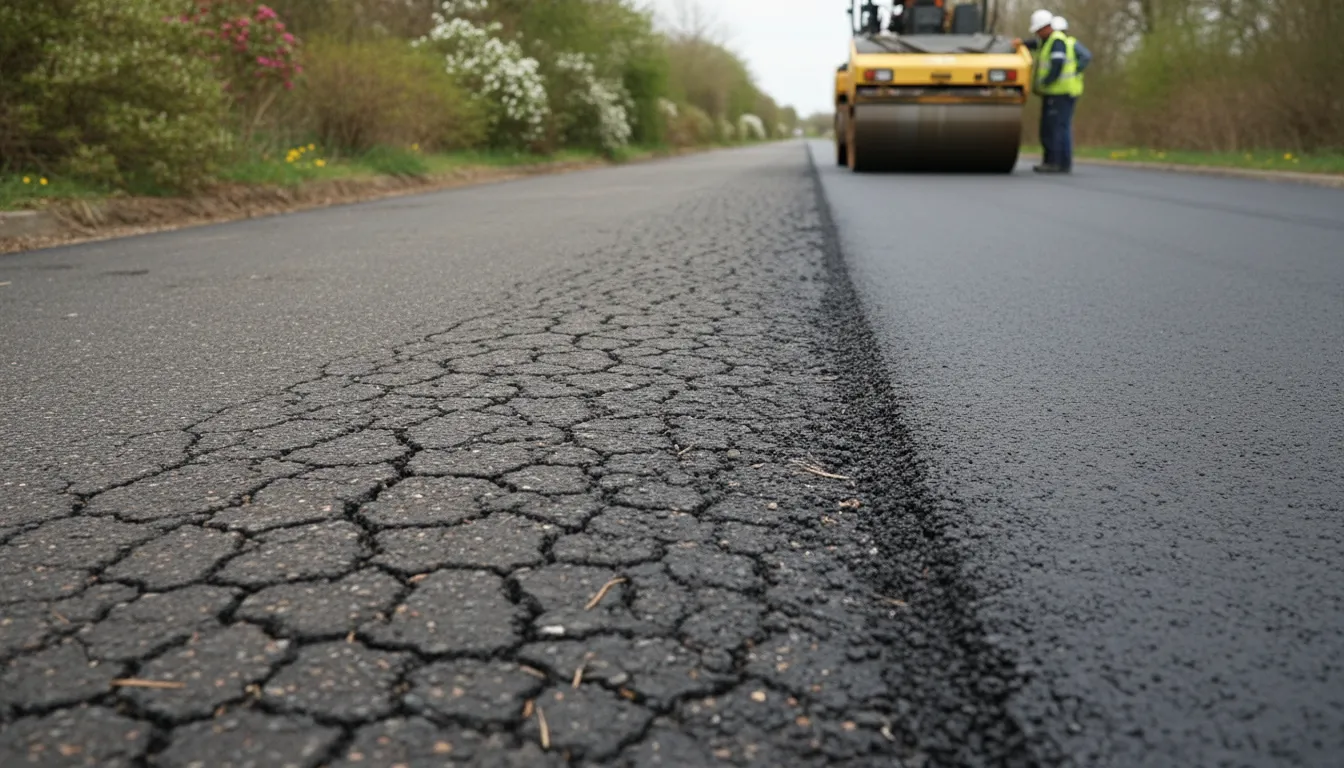
Find the Best Parking Lot Resurfacing Contractors for Your Business
No obligation • Fast responses • Nationwide coverage
Why you can trust Tidy Parking
Tidy Parking is a leading U.S. source for parking lot maintenance services, including striping, sealcoating, sweeping, paving, resurfacing, and repairs. Our content is created independently, and providers cannot pay to influence ratings or recommendations.
Search providers near you
Top Parking Lot Resurfacing Contractors in Vineland, New Jersey Ranked
A parking lot resurfacing project is a major investment that can extend the life of your asphalt by 8 to 15 years, restoring a smooth, safe, and professional appearance to your property. This process, also known as an overlay, involves applying a fresh layer of asphalt over your existing pavement, but only after thorough preparation and repairs. For property owners and managers in Vineland, understanding the local process, costs, and regulations is key to a successful project. This guide provides the essential information to help you plan your lot's restoration and connect with qualified local paving professionals.

H&S Paving And Sealcoating
Philadelphia, PA
H&S Paving And Sealcoating is a family-owned paving contractor serving Philadelphia, PA, and the South Jersey area including Gloucester, Salem, and Burlington counties. They offer a range of services such as parking lot paving, sealcoating, driveway repair, patching, resurfacing, and Belgium block curbing. With over 25 years of experience, the company handles commercial, industrial, and residential asphalt projects using specialized equipment and techniques. Their work includes asphalt removal and replacement, grading, excavation, and hardscaping, backed by a warranty of up to five years.
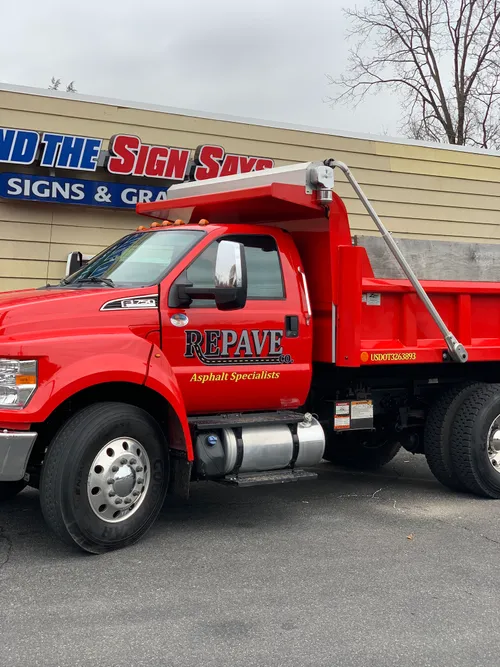
Repave Co.
Allentown, PA
Repave Co. is an asphalt paving contractor based in Allentown, PA, offering commercial and residential paving services. They provide a range of asphalt solutions including parking lot paving, sealcoating, resurfacing, crack repair, and hot tar applications. Serving areas across Delaware, Pennsylvania, and New Jersey, Repave Co. brings over a decade of experience in asphalt installation and maintenance. Their capabilities include blacktop overlays, driveway extensions, and asphalt patch repairs.
What is Parking Lot Resurfacing?
Parking lot resurfacing is a restorative paving technique where a new layer of hot mix asphalt, typically 1.5 to 2 inches thick, is installed over an existing asphalt base 1. It is not a solution for severely damaged or structurally failing lots, but rather a cost-effective method to address surface wear, minor cracking, oxidation, and fading. Think of it as a major facelift for your pavement. The goal is to create a new, durable driving surface that corrects minor imperfections, improves drainage, and provides a fresh canvas for line striping. This overlay process is distinct from a full reconstruction, which involves complete removal and replacement of the asphalt and base materials.
The Resurfacing Process: Step-by-Step
A professional resurfacing job is more than just laying new asphalt. It's a multi-stage project designed to ensure the new surface adheres properly and lasts for years.
-
Preparation and Mark-Out: The first step is always safety. Contractors must contact NJ One Call (811) to have all underground utilities marked before any digging or milling begins. Simultaneously, the process of securing necessary local permits from Vineland's Uniform Construction Code Enforcement Division starts.
-
Milling (Optional but Recommended): For many lots, especially those with drainage issues or where adding height is a concern, milling is a critical step. This involves grinding off 1 to 3 inches of the existing asphalt surface. Milling ensures a clean, textured surface for the new asphalt to bond to, helps correct elevation issues for proper drainage, and allows the new pavement to align smoothly with curbs, sidewalks, and drains.
-
Repair Work: This is the most crucial phase for long-term success. The entire lot is cleaned, and all cracks are routed and sealed. Oil spots are treated with a special primer to prevent bleeding through the new asphalt 2. Most importantly, any areas with alligator cracking, potholes, or base failure are excavated and repaired with a "leveling course" of new asphalt. This step fixes the underlying cause of standing water, which is a primary reason overlays fail.
-
Resurfacing/Overlay: Once the base is sound and prepared, the new layer of hot mix asphalt is applied by a paving machine. It is then compacted with heavy rollers to achieve the proper density and smoothness. This must be done when ambient and ground temperatures are consistently above 50°F for optimal compaction and curing.
-
Curing and Striping: The new asphalt needs time to cool and harden. Once fully cured, typically within 24-48 hours, new pavement markings are applied. This includes parking space lines, safety lanes, fire lanes, and crucially, ADA-compliant handicapped stalls with proper signage and slopes3.
Vineland-Specific Regulations and Permits
Navigating local codes is a non-negotiable part of any paving project in Vineland. Failure to comply can result in fines, work stoppages, or having to redo non-compliant work.
- Permit Requirements: Most parking lot resurfacing projects in Vineland will require a permit from the city's Uniform Construction Code Enforcement Division4. This is especially true if the project alters drainage patterns, changes the lot's size, or modifies curb cuts. A Site Improvement Permit (SIP) is often necessary, triggering a zoning review to ensure the work doesn't increase impervious surface beyond allowed limits 5.
- Drainage Standards: Vineland city code mandates that parking areas be designed to prevent puddling and ensure positive drainage away from buildings and onto appropriate discharge points6. If your resurfacing project aims to fix ponding water, the solution (like adding a leveling course or milling) will need to meet these standards. For significant alterations, the city may require documentation from a licensed professional engineer stating the work will not increase flood risk7.
- Contractor Requirements: Always verify that your paving contractor is registered with the New Jersey Division of Consumer Affairs. Hiring a registered contractor is a basic consumer protection step8.
Cost Factors for Resurfacing in Vineland
The cost of parking lot resurfacing in Vineland is typically quoted per square foot, with a general range of $1 to $3 for the overlay itself. However, the final price for your specific project depends on several variables.
- Size of the Lot: Costs are largely driven by square footage. A small lot of around 10,000 square feet (approx. 50 spaces) may range from $10,000 to $30,000 for resurfacing. A large commercial lot of 35,000+ square feet (100+ spaces) can range from $70,000 to well over $400,000, depending on the scope of needed repairs9 10.
- Condition and Preparation Needed: The single biggest cost variable is the amount of repair work required before the overlay. A lot needing extensive crack sealing, pothole repair, and a full leveling course will cost significantly more than one with minimal damage. Milling adds $0.25 to $0.60 per square foot but is often a worthwhile investment for longevity11.
- Material and Method Enhancements: For lots with reflective cracking issues, contractors may recommend paving fabric, which adds $0.14 to $0.22 per square foot but helps prevent old crack patterns from telegraphing through the new surface12.
- Local Market Rates: In South Jersey, a common benchmark for a commercial lot of about 50,000 square feet is $1.25 to $1.50 per square foot for a standard 1.5-2 inch overlay, excluding major repairs or milling13.
- Additional Costs: Don't forget to budget for final line striping and signage, which can cost $1,500 to $3,000 for a small lot and much more for larger, complex layouts14.
Find the perfect parking lot resurfacing contractors for your needs
Get personalized recommendations and expert advice
When is the Best Time for Resurfacing in New Jersey?
Asphalt is a temperature-sensitive material. The ideal paving season in Vineland runs from late spring through early fall, when daytime temperatures are reliably above 50°F and nighttime lows don't cause the asphalt to cool too quickly 15. This temperature range allows for proper compaction, which is essential for density and durability. Attempting an overlay in winter or early spring when temperatures are below 40°F leads to rapid heat loss in the asphalt mat, resulting in poor compaction, premature raveling, and cracking16. Work must also be scheduled around rain, as a saturated base or heavy precipitation during paving will halt operations.
Is Your Lot a Good Candidate for Resurfacing?
Resurfacing is a powerful solution, but not for every parking lot. Here's how to tell if an overlay is the right choice:
- Age and Damage: Resurfacing works best for lots that are generally under 20 years old and have less than 30% surface area damage17. If the base is failing or there are widespread, deep cracks and potholes, a full reconstruction might be necessary.
- Drainage is the Key Indicator: Walk your lot after a rainstorm. Are there large puddles that linger for days? If so, a simple overlay will just pave over the problem. Successful resurfacing requires fixing drainage first, often through milling or a leveling course to re-establish proper slope18.
- Project Downtime: A typical resurfacing project takes 1 to 3 days from start to finish, with the lot often accessible for light use within 24-48 hours after paving. You'll need to plan for full closure during the active paving and compaction phases.
- ADA Compliance: Resurfacing is an opportunity to ensure your property meets current Americans with Disabilities Act (ADA) standards. This includes reviewing the slopes of accessible routes, the condition of accessible parking stalls, and the visibility of required signage. Any non-compliant areas should be corrected during the restoration process.
Maintaining Your Newly Resurfaced Lot
To protect your investment and maximize the lifespan of your new overlay, a proactive maintenance plan is essential. Begin with a high-quality sealcoating application 6 to 12 months after the new asphalt has fully cured. Sealcoating acts as a protective barrier against UV rays, water, oil, and gasoline. Implement a routine of annual inspections, prompt crack sealing, and keeping the surface clean of debris and standing water. Proper drainage maintenance is critical; ensure catch basins and drains are kept clear. With consistent care, a professionally resurfaced parking lot in Vineland can provide a safe, attractive, and functional surface for well over a decade.
Frequently asked questions
Sources
Footnotes
-
Vineland, NJ Parking Lot Paving - C&C Super Seal - https://www.candcsuperseal.com/vineland-nj-parking-lot-paving/ ↩
-
How to Sealcoat a Parking Lot or Driveway - SealMaster.net - https://sealmaster.net/faq/sealcoat-parking-lot-driveway/ ↩
-
Vineland, NJ Parking Lot Sealing and Striping - https://www.candcsuperseal.com/vineland-nj-parking-lot-sealing-and-striping/ ↩
-
Uniform Construction Code Enforcement - Vineland, NJ - https://www.vinelandcity.org/uniform-construction-code-enforcement/ ↩
-
How to Navigate Paving Permits & Regulations in New Jersey - https://www.crosscountrypaving.com/blog/navigating-local-permits-and-regulations-for-paving-projects ↩
-
Article VII: Design Standards - City of Vineland, NJ - eCode360 - https://ecode360.com/12581497 ↩
-
Understanding Paving Permits and Regulations in New Jersey - https://www.affordablegnicholspaving.com/detailsblog/understandingpavingpermitsandregulationsinnewjersey ↩
-
Chapter 537: Property Maintenance - City of Vineland, NJ - https://ecode360.com/12586781 ↩
-
NJ Parking Lot Paving Costs Monmouth County - Fix Asphalt - https://www.fixasphalt.com/blog/nj-commercial-parking-lot-paving-0-0 ↩
-
How Much Does It Cost to Pave a 100,000 Sq. Ft. Parking Lot? - https://www.fixasphalt.com/testblog/how-much-does-it-cost-to-pave-a-100000-sq.-ft.-parking-lot-in-new-jersey-2026-pricing-scoping-guide ↩
-
NJ Parking Lot Paving Costs Monmouth County - Fix Asphalt - https://www.fixasphalt.com/blog/nj-commercial-parking-lot-paving-0-0 ↩
-
What's The Average Cost To Pave A Parking Lot In South Jersey? - https://www.fixasphalt.com/blog/cost-to-pave-parking-lot ↩
-
How Much Does It Cost to Pave a Parking Lot in NJ? (2025 ... - https://www.fixasphalt.com/blog/how-much-does-it-cost-to-pave-a-parking-lot-in-nj-2025-guide ↩
-
Understanding New Jersey Parking Lot Striping Regulations - https://randysealcoatingandstriping.com/blog/nj-parking-lot-striping-regulations-2025 ↩
-
Our New Jersey Parking Lot Paving Process - Fix Asphalt - https://www.fixasphalt.com/blog/the-asphalt-paving-process-0-0 ↩
-
NJ Parking Lot Sealing - Fix Asphalt - https://www.fixasphalt.com/blog/nj-parking-lot-sealing ↩
-
Parking Lot Resurfacing: Complete Cost Guide & Process [2025] - https://www.candcsuperseal.com/parking-lot-resurfacing-complete-cost-guide-process-2025/ ↩
-
NJ Commercial Parking Lot Paving Costs Monmouth County, NJ - https://www.fixasphalt.com/blog/nj-commercial-parking-lot-paving-0 ↩