Find the Best Parking Lot Resurfacing Contractors for Your Business
No obligation • Fast responses • Nationwide coverage
Why you can trust Tidy Parking
Tidy Parking is a leading U.S. source for parking lot maintenance services, including striping, sealcoating, sweeping, paving, resurfacing, and repairs. Our content is created independently, and providers cannot pay to influence ratings or recommendations.
Search providers near you
Top Parking Lot Resurfacing Contractors in Trenton, New Jersey Ranked
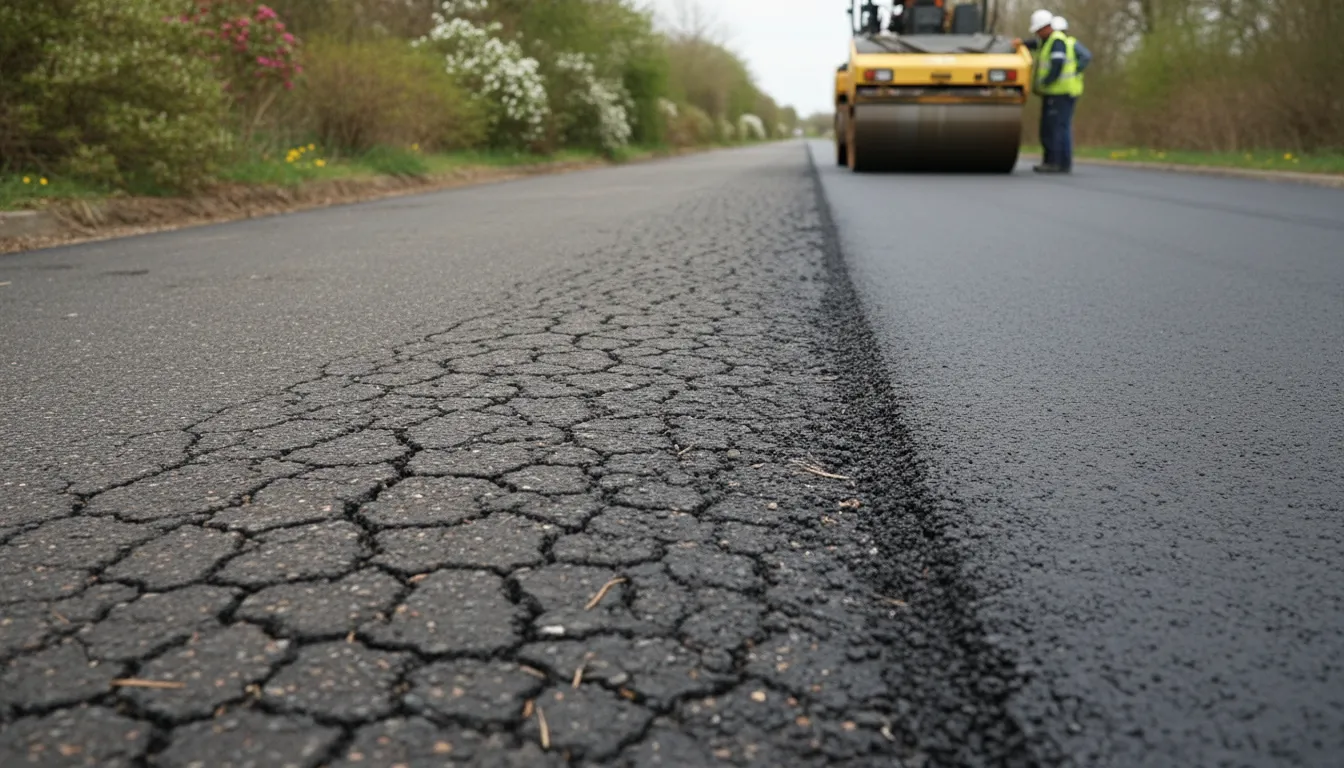
Parking lot resurfacing is a strategic pavement preservation technique that restores a worn asphalt surface, enhancing safety, curb appeal, and property value. For property managers and business owners in Trenton, this process is a cost-effective way to address surface-level damage like cracks, fading, and minor deterioration without the expense of a full reconstruction. This guide explains the local process, costs, regulations, and timing to help you plan a successful overlay project and connect with qualified professionals in the area.
Stone Master Paving & Construction Corp.
914 Hermann Rd, North Brunswick Township, NJ 08902
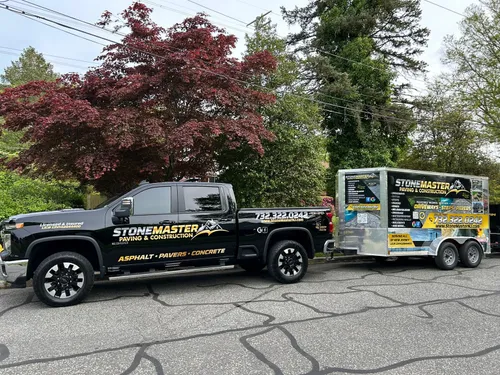
Stone Master Paving & Construction Corp. is a licensed and insured paving and masonry company serving Edison, NJ. They offer a range of services including driveway paving, parking lot repair, resurfacing, and paver installation. The company has over 35 years of industry experience and provides skilled masonry work such as patios, walkways, and retaining walls. Their team uses quality materials and up-to-date techniques to ensure durable results.
Quality Paving & Concrete
2 Bala Plaza Suite 300-726, Bala Cynwyd, PA 19004
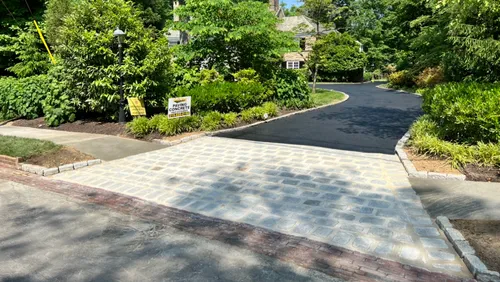
Quality Paving & Concrete is a contractor based in Philadelphia, PA, specializing in asphalt paving, concrete work, and parking lot repair and resurfacing. They offer a range of services including asphalt overlay, removal, and replacement, as well as concrete installation and repair. The company also provides hardscaping, masonry, patios, retaining walls, and basement waterproofing. With over 20 years of experience, Quality Paving & Concrete has developed expertise in delivering durable paving and concrete solutions. They serve a wide area including Bucks County, Montgomery County, Chester County, and surrounding communities.
J.D Asphalt Maintenance and Sealcoating
Lakewood, NJ
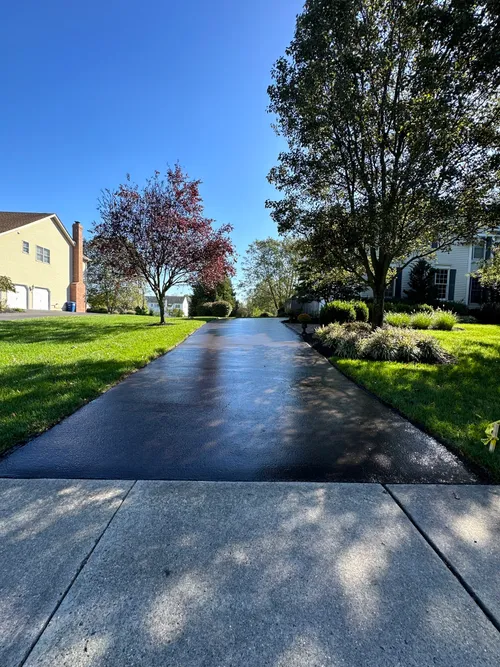
J.D Asphalt Maintenance and Sealcoating is a parking lot sealcoating and paving contractor based in Lakewood, NJ. They provide a range of asphalt services including paving, resurfacing, repairs, and sealcoating. The company uses advanced equipment and quality materials to deliver smooth and durable surfaces, following a process that includes site preparation, grading, and asphalt installation. With years of experience in the asphalt industry, J.D Asphalt Maintenance and Sealcoating is equipped to handle projects of various sizes.
J & S Pave-Rite Paving
4 Cedarwood Ln, Jackson Township, NJ 08527
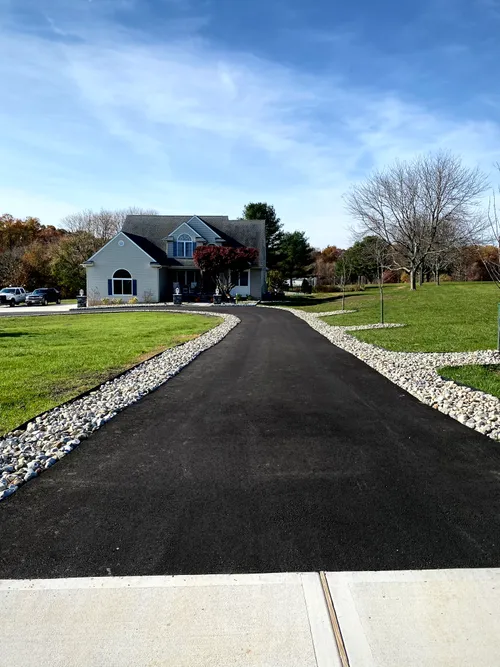
J & S Pave-Rite Paving is a family-owned paving company serving Lakewood, NJ, with over 30 years of experience in commercial, residential, and municipal asphalt paving. They offer a range of services including parking lot paving, seal coating, milling, resurfacing, and concrete work such as sidewalks and curbs. The company is equipped to handle large commercial and municipal projects and has completed work for clients like Wendy's and Gold's Gym in the region. With a history dating back to 1950, J & S Pave-Rite Paving emphasizes quality materials and workmanship to ensure long-lasting results.
Marshalls Paving and Masonry
County Rd 516, Old Bridge, NJ 08857
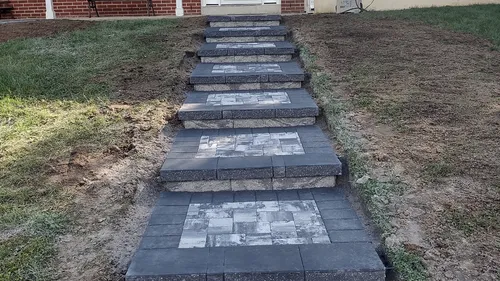
Marshalls Paving and Masonry is a parking lot sealcoating, paving, resurfacing, and repair company serving New York, NY. They specialize in driveway and walkway paving, including complete dig outs and sealcoating, with a focus on traditional, hands-on methods. Customers have praised their thorough approach to removing old pavement and landscaping before paving. The business is known for its careful workmanship and customer care.
What is Parking Lot Resurfacing?
Parking lot resurfacing, often called an overlay, involves applying a new layer of asphalt over an existing pavement structure. This is distinct from a full-depth replacement, which excavates down to the subgrade. An overlay is a viable solution when the underlying base layers are still structurally sound but the surface shows significant wear. In Trenton, this typically involves milling off the top 1.5 to 3 inches of damaged asphalt before laying the new layer, which can extend the pavement's service life by 8 to 15 years. It's a suitable approach for lots under 20 years old that have surface damage but a stable foundation.
The Resurfacing Process: A Step-by-Step Guide
A professional asphalt overlay in Trenton follows a meticulous sequence to ensure a durable, long-lasting result.
1. Site Inspection & Preparation The process begins with a thorough inspection to assess the condition of the existing pavement and sub-base. Contractors will identify areas needing repair and mark underground utilities through the required NJ One Call service. This is also the stage to secure necessary municipal permits, which we'll detail in the next section.
2. Milling and Removal A milling machine is used to grind off the top layer of deteriorated asphalt. This crucial step removes surface irregularities, ensures proper drainage slope, and creates a clean, textured surface for the new asphalt to bond to. It also allows the new pavement to sit at the correct elevation relative to curbs and sidewalks.
3. Base and Crack Repairs Before new asphalt is applied, any underlying issues must be addressed. This includes filling potholes and repairing severe "alligator" cracking. These repairs often involve excavating down to the stable subgrade, replacing compromised material, and compacting it to match the surrounding base.
4. Applying the Tack Coat and Leveling Course A tack coat-a thin layer of asphalt emulsion-is sprayed onto the milled surface. This acts as a glue, ensuring a strong bond between the old and new asphalt layers. If significant drainage or elevation issues are present, a leveling course of asphalt may be applied first to create a smooth, uniform base for the final surface.
5. Paving with New Asphalt Hot-mix asphalt (HMA) is delivered and placed at the proper temperature. For commercial lots in New Jersey, the NJDOT I-5 mix specification is commonly used. The new layer is typically installed at a thickness of 1.5 to 3 inches, depending on the expected traffic load and the condition of the existing pavement.
6. Compaction and Curing Heavy vibratory rollers compact the new asphalt while it is still hot to achieve the required density and eliminate air pockets. Proper compaction is critical for durability. After rolling, the new surface must cure, typically for 24 to 48 hours, before it can withstand vehicle traffic 1.
7. Final Striping and Markings Once the asphalt has fully cured, new pavement markings are applied. Trenton's zoning code requires parking space lines to be 4 inches wide. This final step restores clear traffic flow and ADA-compliant spaces.
Find the perfect parking lot resurfacing contractors for your needs
Get personalized recommendations and expert advice
Trenton Permits, Zoning, and Design Requirements
Navigating local regulations is a key part of any paving project in Trenton. Failure to comply can result in fines and project delays.
Required Permits A Site Improvement Permit (SIP) from the Trenton Engineering Department is typically required for parking lot resurfacing projects. This process involves a zoning review and associated fee. If the project impacts any public right-of-way, such as requiring equipment to occupy a street, a separate Street Opening Permit from the Department of Public Works will also be necessary 2. Most projects require engineered plans prepared by a New Jersey-licensed professional engineer, detailing grading, drainage, and paving specifications 3.
Key Zoning and Design Standards Trenton's municipal code includes specific requirements for off-street parking areas:
- Surfacing: All parking and loading areas must be hard-surfaced with an all-weather, dustless material like asphalt or concrete. Gravel surfaces are prohibited.
- Curbing: Concrete or granite block curbing is required wherever a parking space abuts a pedestrian walkway, landscaped area, or structure.
- Landscaping: A landscape plan is required for parking lots with 15 or more spaces. The code specifies minimum planting areas and tree requirements to reduce the visual impact of large paved areas 4 5.
- Lighting: Any lighting must be shielded and directed downward to prevent glare or light spill onto adjacent properties 6.
- Drainage: The design must ensure proper stormwater runoff and may require integration with the city's drainage system, as outlined in the engineering plans.
Optimal Timing and Weather Considerations
Asphalt is a temperature-sensitive material, making timing a critical factor for a successful overlay.
Best Seasons for Paving The ideal window for asphalt resurfacing in Trenton runs from late spring through early fall. This period generally provides the consistent warmth needed for proper material handling and compaction. The key rule is that both air and ground temperatures should be at least 50°F (10°C) and rising during installation 7.
Weather Risks to Manage
- Rain: Paving should not proceed if rain is forecast within 24 hours. Water can saturate the base or cool the hot asphalt too quickly, leading to poor compaction and premature failure 8.
- Freeze-Thaw Cycles: Trenton's climate subjects pavement to freeze-thaw cycles, which can cause "reflective cracking." This is when cracks from the old pavement layer eventually telegraph through the new overlay. Thorough milling and base repair during preparation are the best defenses against this common issue.
- Extreme Heat: While less common an issue than cold, very high temperatures can make asphalt too pliable during compaction.
Cost Factors for Resurfacing in Trenton
The cost of a parking lot overlay project is influenced by its size, condition, and specific requirements. Here's a breakdown of common cost components for the Trenton area:
- Resurfacing (Overlay): The core work of applying new asphalt typically ranges from $1.00 to $3.00 per square foot 9.
- Milling: Removing the old surface layer adds approximately $0.25 to $0.60 per square foot to the project cost.
- Line Striping: Restoring markings is a separate cost. For a small lot (around 50 spaces), striping may cost $1,500 to $3,000. For a large lot (500+ spaces), this cost can rise to $10,000 to $20,000 or more 10.
- Total Project Cost: As a combined benchmark, a standard 2-inch overlay project in New Jersey can average around $1.93 per square foot when including milling and basic repairs 11.
It's important to view these figures as estimates. The final price for your specific lot will depend on the amount of base repair needed, accessibility, permit fees, and the current price of asphalt mix. Obtaining multiple detailed quotes is always recommended.
Resurfacing vs. Full Replacement
Understanding when to resurface versus when to fully replace is a crucial financial decision.
- Choose Resurfacing/Overlay when the pavement shows surface distress (cracks, raveling, fading) but the base and subgrade are still stable. It is a cost-effective preservation method, often at 25-50% of the cost of a full reconstruction 12.
- Opt for Full Replacement when the pavement foundation has failed, evidenced by severe alligator cracking across large areas, deep potholes, or significant base settlement. Full-depth replacement involves excavating all asphalt and base material and rebuilding from the ground up, with costs ranging from $4 to $10 or more per square foot 13.
A professional contractor can perform core samples and a deflection test to definitively assess the structural integrity of your lot's base and recommend the most appropriate solution.
Maintaining Your Newly Resurfaced Lot
Protecting your investment extends its lifespan significantly. After the new asphalt has cured (usually 30-90 days), applying a sealcoat is the first line of defense. Sealcoating fills small surface voids, protects against UV oxidation and fuel spills, and makes the pavement easier to clean. A routine maintenance plan should also include:
- Prompt Crack Sealing: Fill small cracks annually to prevent water infiltration.
- Regular Cleaning: Keep the surface free of debris, oil, and chemicals.
- Planned Re-sealing: Reapply sealcoat every 2-3 years, depending on traffic levels.
By following a proactive maintenance schedule, you can maximize the 8-15 year service life expected from a quality overlay project 14.
Frequently asked questions
Sources
Footnotes
-
Our New Jersey Parking Lot Paving Process - Fix Asphalt - https://www.fixasphalt.com/blog/the-asphalt-paving-process-0-0 ↩
-
How to Navigate Paving Permits & Regulations in New Jersey - https://www.crosscountrypaving.com/blog/navigating-local-permits-and-regulations-for-paving-projects ↩
-
How to Navigate Paving Permits & Regulations in New Jersey - https://www.crosscountrypaving.com/blog/navigating-local-permits-and-regulations-for-paving-projects ↩
-
Article 10: Off-Street Parking & Loading - City of Trenton, NJ - https://ecode360.com/46048662 ↩
-
Article 11: Landscape - City of Trenton, NJ - eCode360 - https://ecode360.com/46048986 ↩
-
1262.04 REQUIRED IMPROVEMENTS TO OFF-STREET PARKING ... - https://codelibrary.amlegal.com/codes/trenton/latest/trenton_oh/0-0-0-33525 ↩
-
Parking Lot Paving in South Bound Brook, NJ - https://www.platinumpavingnj.com/our-services/parking-lot-paving/south-bound-brook-nj/ ↩
-
Best Time to Pave Driveway | Seasonal Paving Guide - https://sspaving.com/blog/best-time-to-pave-driveway/ ↩
-
New Jersey Parking Lots Costs & Prices - ProMatcher Cost Report - https://parking-lots.promatcher.com/cost/new-jersey.aspx ↩
-
Understanding New Jersey Parking Lot Striping Regulations - https://randysealcoatingandstriping.com/blog/nj-parking-lot-striping-regulations-2025 ↩
-
NJ Parking Lot Paving Costs Monmouth County - Fix Asphalt - https://www.fixasphalt.com/blog/nj-commercial-parking-lot-paving-0-0 ↩
-
Parking Lot Resurfacing: Complete Cost Guide & Process [2025] - https://www.candcsuperseal.com/parking-lot-resurfacing-complete-cost-guide-process-2025/ ↩
-
How Weather Impacts Asphalt Paving Projects and What to Watch ... - https://prioritypavingfranklin.com/2023/08/how-weather-impacts-asphalt-paving-projects-and-what-to-watch-out-for/ ↩
-
Parking Lot Resurfacing: Complete Cost Guide & Process [2025] - https://www.candcsuperseal.com/parking-lot-resurfacing-complete-cost-guide-process-2025/ ↩