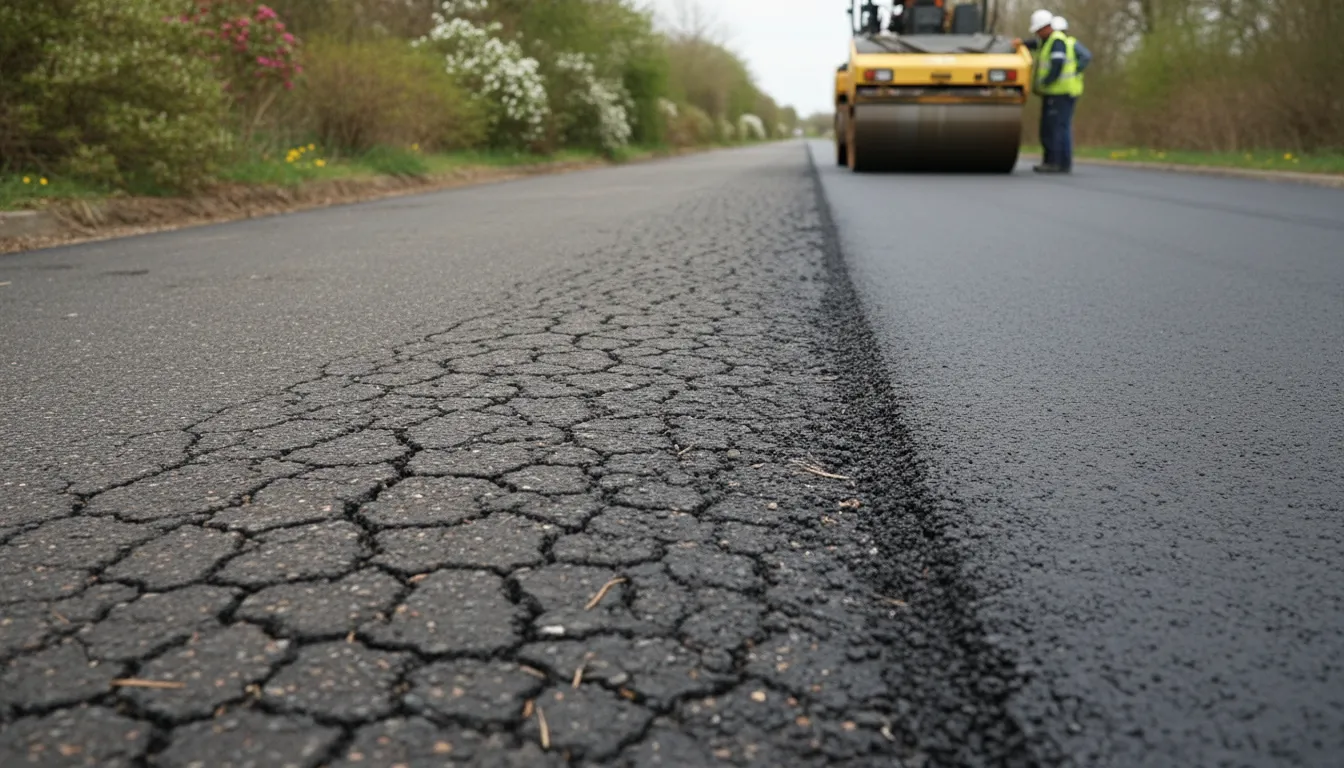
Find the Best Parking Lot Resurfacing Contractors for Your Business
No obligation • Fast responses • Nationwide coverage
Why you can trust Tidy Parking
Tidy Parking is a leading U.S. source for parking lot maintenance services, including striping, sealcoating, sweeping, paving, resurfacing, and repairs. Our content is created independently, and providers cannot pay to influence ratings or recommendations.
Search providers near you
Top Parking Lot Resurfacing Contractors in Paterson, New Jersey Ranked
Parking lot resurfacing is a strategic maintenance solution that restores a worn asphalt surface to a like-new condition. This process is essential for property owners and managers in Paterson to maintain safety, improve curb appeal, and extend the lifespan of their pavement investment. When a parking area shows signs of widespread cracking, fading, and minor surface deterioration but has a structurally sound base, a full overlay can be a cost-effective alternative to complete reconstruction. This guide explains the local process, costs, regulations, and timing to help you make an informed decision for your commercial or multi-family property.
Cement Tech,LLC
31-00 47th Ave Suite 3100, Long Island City, NY 11101
Cement Tech, LLC is a concrete contractor based in New York, NY, specializing in residential and commercial concrete services including parking lot paving and resurfacing. They serve Astoria, Queens, and the greater New York City area, handling projects of various sizes with expert crews. Their capabilities include concrete grinding and polishing, ensuring precise workmanship and attention to detail. Cement Tech, LLC operates without contracts or seasonal fees, providing services as needed to meet client schedules.
Ascot Driveways and Patios
55 Madison Ave suite 400 #4342, Morristown, NJ 07960
Ascot Driveways and Patios is a paving and masonry contractor serving New York, NY, and the surrounding Morris County area. They specialize in asphalt and concrete driveway installation, sealcoating, repairs, masonry wall building, patio construction, and landscaping hardscaping services. The company is experienced in restoring asphalt driveways with high-strength seal coating and offers a wide range of driveway and patio solutions tailored to customer needs. Ascot Driveways and Patios is a family-operated business known for its skilled craftsmanship and attention to detail, with a history of satisfied clients and completed projects in the region.
Just Paving Inc
60 Dartmouth Ave, Yonkers, NY 10701
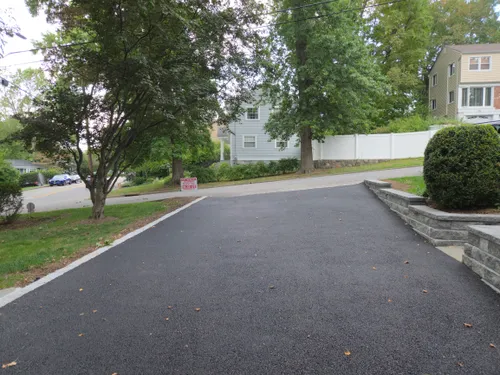
Just Paving Inc is a paving and masonry company based in New York, NY, serving residential and commercial clients in Yonkers and Westchester County. They offer a range of services including driveway paving, parking lot paving, resurfacing, repairs, and lot striping. Their expertise extends to masonry work such as retaining walls, patios, fire pits, and concrete steps. Established in 2000, Just Paving Inc has over two decades of experience delivering durable and visually appealing paving solutions. They focus on quality materials and craftsmanship to enhance property appearance and functionality.
MACH PAVING
Yonkers, NY
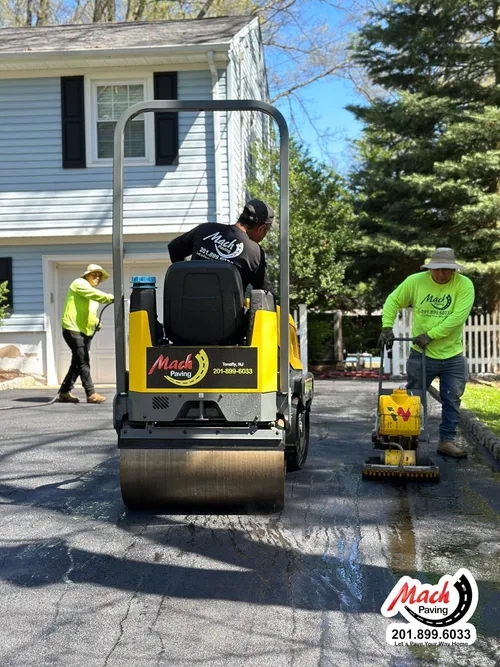
MACH PAVING is a family-owned paving company serving Yonkers, NY, and the surrounding New York and New Jersey areas. With over 20 years of experience, they provide residential and commercial paving services including parking lot paving, resurfacing, striping, seal coating, and custom concrete projects. Their team uses high-quality materials and advanced techniques to deliver durable and visually appealing surfaces. They also offer specialized services such as ADA compliant handicap parking markings and Belgium block installation.
Anything Asphalt
17 S Franklin Turnpike, Ramsey, NJ 07446
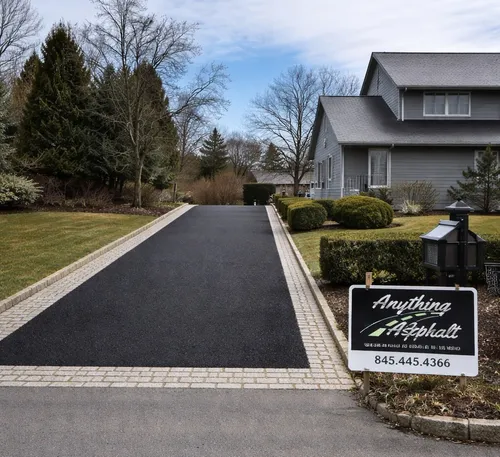
Anything Asphalt is a paving company based near New York, NY, specializing in residential and commercial asphalt services. They offer driveway installation, repair, resurfacing, parking lot paving, sealcoating, crack filling, and line striping. Serving Bergen County, NJ, and nearby areas including Rockland County, NY, they use quality materials to ensure durable results. The company has extensive experience completing projects on time and within budget, focusing on customer satisfaction throughout each job.
What is Parking Lot Resurfacing?
Parking lot resurfacing, often called an overlay, involves applying a new layer of asphalt over an existing pavement surface. This is distinct from simple sealcoating, which is a protective coating, or full-depth reconstruction, which involves removing and replacing the entire pavement structure. Resurfacing is the ideal remedy for lots that are structurally sound but have surface-level issues like alligator cracking, raveling, or oxidation. The process typically includes milling off the top 1-3 inches of the old, damaged asphalt to create a clean, level surface for the new layer to bond to 1. In Paterson, this method is commonly recommended for parking areas under 20 years old with a solid foundation, providing a renewed, durable surface for another decade or more of service.
The Resurfacing Process: A Step-by-Step Guide
A professional asphalt overlay project follows a meticulous sequence to ensure longevity and compliance with local standards.
-
Site Assessment & Preparation: The process begins with a thorough inspection, ideally after a rain event, to identify any underlying drainage problems. The existing pavement is cleaned, and any significant potholes or isolated failures are repaired to create a stable base.
-
Permitting & Utility Location: Before any work begins, a contractor must secure the necessary permits from the Paterson Engineering Office. For work that alters drainage, curb cuts, or the surface in a right-of-way, a Driveway-Parking Area Permit or Street Opening Permit is typically required. Contractors are also required to contact NJ One Call to locate and mark any underground utilities 2.
-
Milling: If the existing surface has significant irregularities or cracking, a milling machine is used to grind off the top layer (usually 1.5 to 3 inches). This step is crucial for addressing drainage issues and ensuring the new overlay has a uniform thickness. City regulations may require milling to a depth of 1.5 inches if the resurfacing is occurring over a previous street opening.
-
Base Repairs & Grading: Any compromised areas in the sub-base are excavated and replaced with new compacted aggregate. The entire area is then graded to ensure positive drainage away from buildings and toward designated storm drains, a critical requirement in Paterson's codes 3.
-
Tack Coat Application: A thin layer of liquid asphalt, called a tack coat, is sprayed onto the prepared surface. This adhesive ensures a strong bond between the old pavement and the new hot-mix asphalt overlay 4.
-
Asphalt Installation & Compaction: Hot-mix asphalt (often NJDOT-approved mix I-5 for parking lots) is delivered and spread by a paving machine to the specified thickness, usually 1.5 to 2 inches for a resurfacing project. While still hot, heavy vibratory rollers (weighing 3 to 10 tons) compact the material to achieve the required density and smoothness 5.
-
Final Striping & Signage: Once the new asphalt has cured, final pavement markings are applied. This includes stall lines, directional arrows, fire lanes, and crucially, ADA-compliant handicapped parking spaces and access aisles, which must meet current New Jersey standards 6 7.
Paterson Regulations and Permit Requirements
Navigating local regulations is a key part of any paving project in Paterson. Compliance is not optional and ensures your property avoids fines and legal issues.
- Permits: Most parking lot resurfacing projects that affect the existing grade, drainage, or curb cuts will require a permit from the Paterson Engineering Office 8 9. For larger projects or those requiring variances, you may need to submit site plans to the Department of Economic Development, Division of Planning & Zoning at 125 Ellison Street for approval 10.
- Drainage Standards: The city code mandates that all parking areas must have positive drainage. Your paving contractor's grading plan must demonstrate how water will effectively run off the property 11.
- Tree Protection: City ordinances require a 2.5-foot unpaved area to be maintained around the base of any trees within or adjacent to the parking lot.
- Maintenance Responsibilities: Property owners are responsible for keeping parking lots free of ice and snow and for maintaining clear, visible pavement markings at all times 12.
Best Time of Year for Asphalt Overlays in North Jersey
Weather is a critical factor for a successful asphalt overlay. The ideal paving window in the Paterson area is from late spring through early fall.
- Temperature: Asphalt installation and compaction require ambient and surface temperatures to be above 50°F for proper settling and curing 13. Paving in temperatures below 40°F can cause the material to become brittle and not compact correctly, leading to premature failure. Conversely, extreme summer heat above 90°F can make the asphalt too soft during installation 14.
- Moisture: Asphalt will not properly bond to a wet surface. Paving should not be scheduled during rain or if the base is saturated from previous precipitation, as trapped moisture can lead to future potholes and base failures 15 16.
- Planning: Scheduling your project for the dry, warm months of May through October provides the most reliable conditions for a durable, long-lasting result.
Find the perfect parking lot resurfacing contractors for your needs
Get personalized recommendations and expert advice
Understanding Costs for Parking Lot Overlays
The cost of resurfacing a parking lot in Paterson varies based on the lot's size, condition, amount of milling required, and current material prices. Generally, milling and resurfacing in New Jersey ranges from $2.00 to $4.00 per square foot 17 18. Milling alone typically adds $0.25 to $0.60 per square foot to the project cost.
To provide a clearer picture, here are some estimated price ranges based on common lot sizes:
- Small Lot (approx. 10,000 sq ft): A full milling and overlay project could range from $20,000 to $40,000.
- Large Lot (approx. 50,000 sq ft+): For a standard 1.5-2 inch overlay, the price per square foot may decrease due to scale, with total project costs potentially ranging from $62,500 to $75,000 or more 19 20.
- Additional Services: After the new surface has cured, sealcoating (which includes crack sealing) is recommended for protection and can cost an additional $0.65 to $0.90 per square foot 21. Restriping a small lot may cost $1,500 to $3,000, while large lots can exceed $10,000 22.
| Factor | Typical Requirements / Cost |
|---|---|
| Resurfacing Cost | $2.00 - $4.00 per sq. ft. |
| Milling Cost | $0.25 - $0.60 per sq. ft. |
| Striping Cost | $1,500 - $3,000 (Small), $10,000+ (Large) |
| Permit Needs | Paterson Engineering Office / Zoning |
| Ideal Season | May - October (50°F+ dry weather) |
| Project Duration | 1-3 days for typical resurfacing |
Key Considerations Before You Begin
Before committing to a resurfacing project, consider these final points:
- Foundation is Key: Resurfacing is only effective if the underlying base and subgrade are stable. A professional assessment is vital to determine if an overlay is suitable or if more extensive repairs are needed.
- Get Multiple Quotes: Always obtain detailed written estimates from several licensed and insured local contractors. Ensure quotes include line items for milling, asphalt tonnage, compaction, grading, and cleanup.
- Verify Credentials: Confirm that any contractor you hire is familiar with Paterson's specific permit process and zoning requirements. They should also provide proof of insurance and references from similar local projects.
- Plan for Downtime: While a typical resurfacing project may only take 1-3 days of active work, you will need to ensure the parking lot is completely clear of vehicles and obstacles for the contractor's entire work window.
Frequently asked questions
Sources
Footnotes
-
Parking Lot Resurfacing: Complete Cost Guide & Process [2025] - https://www.candcsuperseal.com/parking-lot-resurfacing-complete-cost-guide-process-2025/ ↩
-
Our New Jersey Parking Lot Paving Process - https://www.fixasphalt.com/blog/the-asphalt-paving-process-0-0 ↩
-
New Jersey Commercial Asphalt Parking Lot Paving Specialists - https://www.fixasphalt.com/new-jersey-asphalt-paving ↩
-
Our New Jersey Parking Lot Paving Process - Fix Asphalt - https://www.fixasphalt.com/blog/the-asphalt-paving-process-0-0 ↩
-
NJ Commercial Parking Lot Paving Cost Factors - Fix Asphalt - https://www.fixasphalt.com/blog/nj-commercial-parking-lot-paving- ↩
-
Understanding New Jersey Parking Lot Striping Regulations - https://randysealcoatingandstriping.com/blog/nj-parking-lot-striping-regulations-2025 ↩
-
Understanding New Jersey Parking Lot Striping Regulations - https://randysealcoatingandstriping.com/blog/nj-parking-lot-striping-regulations-2025 ↩
-
Article III: Street Openings and Excavations - City of Paterson, NJ - https://ecode360.com/8554076 ↩
-
Sidewalk / Driveway / Apron / Curb / Permit & Inspection - https://hamiltonnj.com/faq.aspx?TID=68 ↩
-
INFORMATION FOR APPLICANTS - Paterson - https://www.patersonnj.gov/egov/documents/1658774665_62673.pdf ↩
-
Article II: Construction, Repair and Maintenance - City of Paterson, NJ - https://ecode360.com/8554039 ↩
-
Chapter 359: Parking Lots, Open-Air - City of Paterson, NJ - https://ecode360.com/8552614 ↩
-
How Seasons Impact Asphalt Installation & Repairs - https://www.expertasphaltinc.com/blog/weather-matters-how-seasons-impact-asphalt-installation-repairs ↩
-
Finding the Optimal Temperature for Asphalt Sealing - https://kleenseal.com/optimal-temperature-for-asphalt-sealing/ ↩
-
How Weather Impacts Asphalt Curing & Your Timeline - https://www.alliedasphalt.com/how-weather-impacts-asphalt-curing-and-your-timeline.php ↩
-
Resurfacing and Weather: What You Need to Know - Phillips Paving - https://phillipspaving.com/weather-impact-asphalt-resurfacing/ ↩
-
How Much Does It Cost to Pave a Parking Lot in NJ? (2025 ... - https://www.fixasphalt.com/blog/how-much-does-it-cost-to-pave-a-parking-lot-in-nj-2025-guide ↩
-
How Much Does It Cost to Pave a Parking Lot in NJ? (2025 Guide) - https://www.fixasphalt.com/blog/how-much-does-it-cost-to-pave-a-parking-lot-in-nj-2025-guide ↩
-
What's The Average Cost To Pave A Parking Lot In South Jersey? - https://www.fixasphalt.com/blog/cost-to-pave-parking-lot ↩
-
Cost to Pave a 2-Acre Parking Lot in Somerset County NJ - https://www.nvnpaving.com/cost-to-pave-2-acre-parking-lot-somerset-county-nj/ ↩
-
How Much Does It Cost To Sealcoat An Asphalt Parking Lot In NJ? ( ... - https://www.fixasphalt.com/blog/how-much-does-it-cost-to-sealcoat-an-asphalt-parking-lot-1 ↩
-
How Much Does Paving a Parking Cost? - https://crossroadspavingct.com/how-much-does-paving-a-parking-lot-cost/ ↩