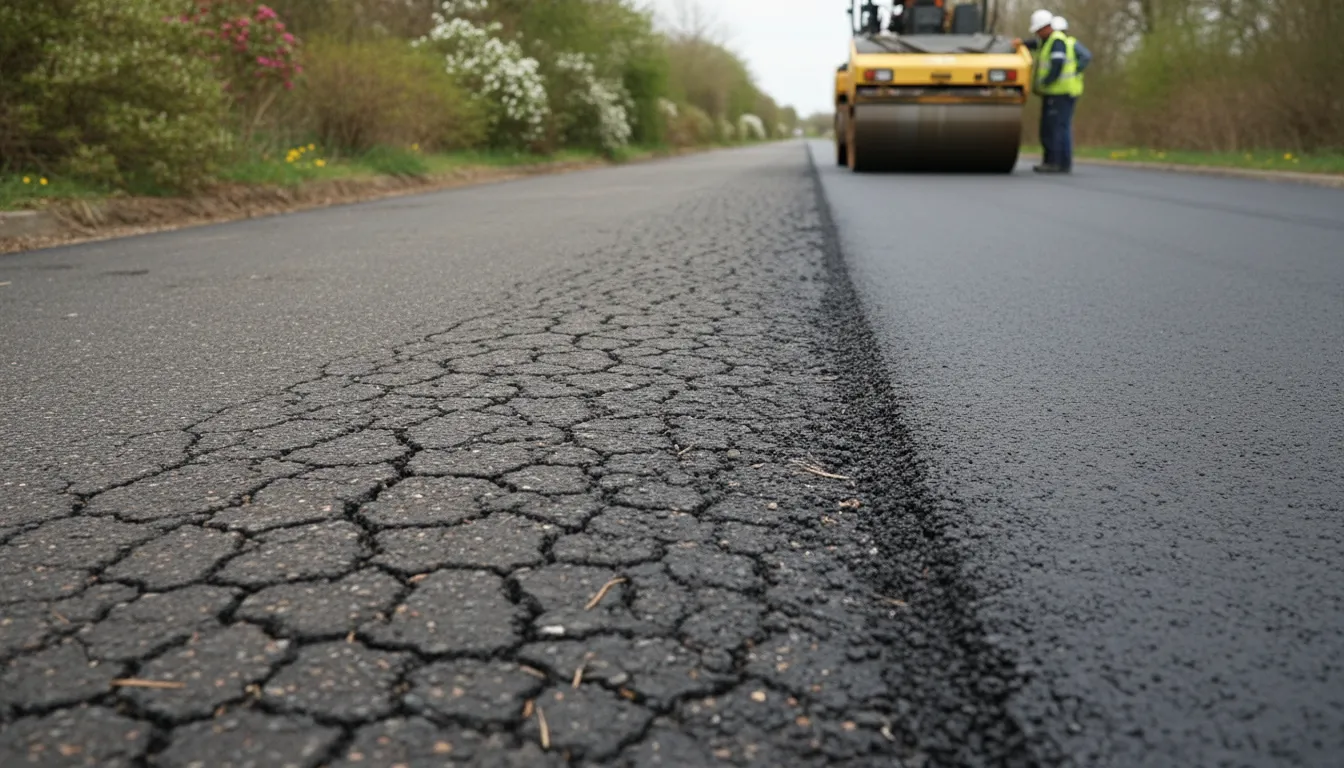
Find the Best Parking Lot Resurfacing Contractors for Your Business
No obligation • Fast responses • Nationwide coverage
Why you can trust Tidy Parking
Tidy Parking is a leading U.S. source for parking lot maintenance services, including striping, sealcoating, sweeping, paving, resurfacing, and repairs. Our content is created independently, and providers cannot pay to influence ratings or recommendations.
Search providers near you
Top Parking Lot Resurfacing Contractors in Monroe, New Jersey Ranked
A parking lot resurfacing project is a strategic investment to extend the life of your asphalt pavement, improve safety, and enhance your property's curb appeal. In Monroe, this process involves more than just laying new asphalt; it requires navigating local regulations, understanding New Jersey's climate constraints, and executing a multi-step overlay process. This guide explains what commercial property owners and managers need to know about asphalt overlay, repaving, and pavement renewal specifically in Monroe Township, from costs and permits to the step-by-step procedure and local code requirements.
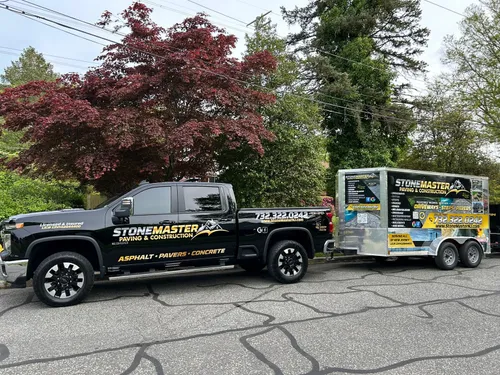
Stone Master Paving & Construction Corp.
914 Hermann Rd, North Brunswick Township, NJ 08902
Stone Master Paving & Construction Corp. is a licensed and insured paving and masonry company serving Edison, NJ. They offer a range of services including driveway paving, parking lot repair, resurfacing, and paver installation. The company has over 35 years of industry experience and provides skilled masonry work such as patios, walkways, and retaining walls. Their team uses quality materials and up-to-date techniques to ensure durable results.
Cement Tech,LLC
31-00 47th Ave Suite 3100, Long Island City, NY 11101
Cement Tech, LLC is a concrete contractor based in New York, NY, specializing in residential and commercial concrete services including parking lot paving and resurfacing. They serve Astoria, Queens, and the greater New York City area, handling projects of various sizes with expert crews. Their capabilities include concrete grinding and polishing, ensuring precise workmanship and attention to detail. Cement Tech, LLC operates without contracts or seasonal fees, providing services as needed to meet client schedules.
Ascot Driveways and Patios
55 Madison Ave suite 400 #4342, Morristown, NJ 07960
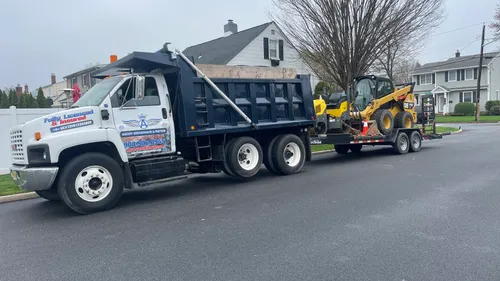
Ascot Driveways and Patios is a paving and masonry contractor serving New York, NY, and the surrounding Morris County area. They specialize in asphalt and concrete driveway installation, sealcoating, repairs, masonry wall building, patio construction, and landscaping hardscaping services. The company is experienced in restoring asphalt driveways with high-strength seal coating and offers a wide range of driveway and patio solutions tailored to customer needs. Ascot Driveways and Patios is a family-operated business known for its skilled craftsmanship and attention to detail, with a history of satisfied clients and completed projects in the region.
MACH PAVING
Yonkers, NY
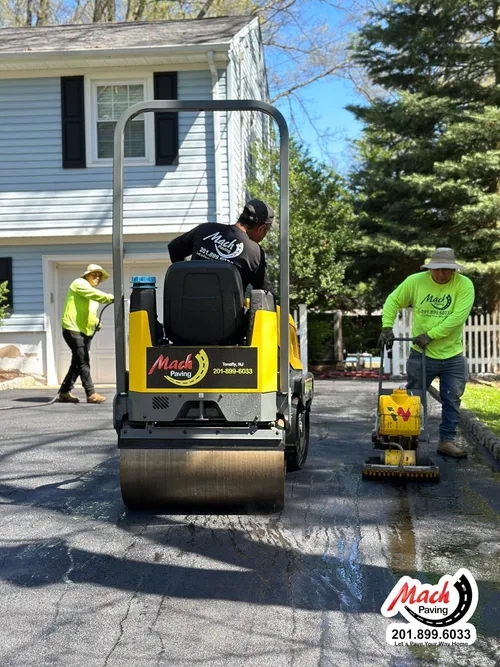
MACH PAVING is a family-owned paving company serving Yonkers, NY, and the surrounding New York and New Jersey areas. With over 20 years of experience, they provide residential and commercial paving services including parking lot paving, resurfacing, striping, seal coating, and custom concrete projects. Their team uses high-quality materials and advanced techniques to deliver durable and visually appealing surfaces. They also offer specialized services such as ADA compliant handicap parking markings and Belgium block installation.
Marshalls Paving and Masonry
County Rd 516, Old Bridge, NJ 08857
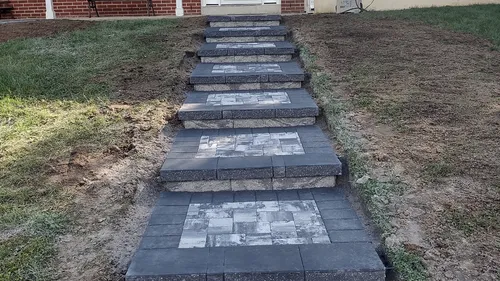
Marshalls Paving and Masonry is a parking lot sealcoating, paving, resurfacing, and repair company serving New York, NY. They specialize in driveway and walkway paving, including complete dig outs and sealcoating, with a focus on traditional, hands-on methods. Customers have praised their thorough approach to removing old pavement and landscaping before paving. The business is known for its careful workmanship and customer care.
What is Parking Lot Resurfacing?
Parking lot resurfacing, often called an overlay, is the process of applying a new layer of asphalt over an existing pavement structure. It is a cost-effective alternative to a full reconstruction when the base layers are still structurally sound. The goal is to address surface-level distress like cracks, weathering, and minor irregularities, creating a smooth, durable, and like-new driving surface. In Monroe, this typically involves milling off a portion of the old surface, making necessary repairs, and then installing a new 1.5 to 2-inch thick asphalt mat 1.
This approach is distinct from sealcoating (which is a protective coating) or patching (which addresses isolated areas). A full-depth reconstruction is only necessary when the subbase has failed. Resurfacing can add 8 to 15 years of functional life to a parking lot when performed correctly.
The Resurfacing Process in Monroe: A Step-by-Step Breakdown
A successful overlay project in Monroe follows a meticulous sequence. Adherence to this process ensures longevity and compliance with township standards.
1. Permits and Utility Mark-Out
Before any work begins, you must secure the proper approvals. For paving on private property in Monroe, a Site Improvement Permit (SIP) is required from the Township Engineering Department. Your contractor will typically handle this, submitting site plans that show existing and proposed grades, drainage patterns, and other improvements.
Concurrently, NJ One Call (811) must be contacted to have all underground utilities marked. This state-mandated step prevents dangerous and costly strikes during milling or excavation 2.
2. Milling and Site Preparation
Milling is the process of grinding off the top layer of existing asphalt, usually between 1 and 3 inches deep. It's recommended if the lot has significant cracking, drainage issues (ponding water), or if adding a full overlay would create problems with curb reveal heights or drainage inlets 3. Milling provides a clean, textured surface for the new asphalt to bond to and helps maintain proper elevation. This service typically costs between $0.25 and $0.60 per square foot 4.
3. Cleaning and Base Repairs
After milling, the entire surface is thoroughly cleaned of all debris, dust, and loose material. This is a critical step for adhesion. Any remaining potholes or areas of base failure are then excavated and repaired with fresh hot-mix asphalt. Addressing these issues before the overlay prevents them from "reflecting" through the new surface prematurely.
4. Overlay Installation
The new layer of hot-mix asphalt (HMA) is installed. For commercial parking lots in New Jersey, the typical specification is an NJDOT I-5 mix, which is designed for durability under heavy traffic and varying weather conditions. The asphalt is delivered hot, spread with a paver, and then compacted with rollers to achieve the proper density and smoothness. The standard overlay thickness in Monroe is 1.5 to 2 inches.
5. Striping, Signage, and Finishing
Once the new asphalt has cooled and cured, final line striping and pavement markings are applied. Monroe Township has specific regulations: parking spaces must be a minimum of 8 feet wide, and aisles must be at least 25 feet wide for perpendicular parking 5. Fire lanes, which must be 20 to 24 feet wide, require specific signage and curbing 6. All markings must use durable, reflective paint for safety and compliance.
Find the perfect parking lot resurfacing contractors for your needs
Get personalized recommendations and expert advice
Monroe Township Regulations and Code Requirements
Navigating local codes is non-negotiable. Monroe has specific ordinances that directly impact parking lot design and construction.
- Concrete Standards: Any new or replaced curbs and sidewalks associated with the project must use Portland cement concrete with a minimum compressive strength of 4,000 PSI (Class C) 7.
- Drainage and Grading: The township mandates proper grading to ensure no ponding water remains on the pavement 48 hours after a rain event. All drainage must flow toward designated inlets or pervious areas 8.
- Landscaping Requirements: Monroe requires that at least 5% of any parking area be landscaped. Furthermore, there must be one tree for every ten parking spaces 9. These elements must be integrated into the site plan.
- Stormwater Management: If your project includes pervious pavement systems (like porous asphalt or pavers), the property owner is required to submit an annual maintenance report to the Department of Public Works by December 31st to ensure the system functions correctly 10.
Cost Factors for Resurfacing in Monroe
The total investment for a parking lot overlay in Monroe depends on several variables. The typical full-service resurfacing rate ranges from $1.00 to $3.00 per square foot. This wide range accounts for project specifics.
- Project Size: Larger projects benefit from economies of scale. Smaller lots have higher per-square-foot costs due to fixed mobilization and setup expenses.
- Small Lot (10-15 cars, 4,000-7,000 sq. ft.): $10,000 - $50,000 11
- Medium Lot (30-50 cars, 10,000-20,000 sq. ft.): $20,000 - $140,000
- Large Lot (100+ cars, 35,000+ sq. ft.): $70,000 - $400,000+ 12
- Site Conditions: The need for extensive milling, numerous base repairs, or drainage corrections will increase costs.
- Materials: The price of hot-mix asphalt fluctuates with the cost of oil and aggregates. Using NJDOT-approved mixes ensures quality but follows market rates.
- Labor and Timing: Projects scheduled during peak paving season (late spring through early fall) may see higher demand for contractor services.
Best Time of Year for Asphalt Overlay in New Jersey
Weather is a decisive factor for asphalt quality. The material requires warm, dry conditions for proper installation and compaction.
- Temperature: Asphalt should be placed when ambient and surface temperatures are above 50°F. Colder temperatures cause the mix to cool too quickly, preventing proper compaction and leading to premature raveling and failure.
- Precipitation: Resurfacing cannot be done in the rain or on wet surfaces, as moisture prevents proper adhesion between the old and new asphalt layers.
- Ideal Season: The reliable window for paving in Monroe generally runs from April through November13. Planning your project for late spring or early fall often provides ideal conditions.
Key Considerations Before You Begin
- Contractor Selection: Choose a licensed, insured, and experienced contractor familiar with Monroe Township's permit process and codes. Ask for references and examples of similar local projects.
- Planning for Business Operations: Discuss a detailed traffic and business interruption plan with your contractor. Phasing the work or scheduling it for off-hours/weekends can minimize disruption.
- Long-Term Value: While resurfacing is a significant expense, it protects your larger asset investment. A well-maintained parking lot improves safety, reduces liability, and creates a positive first impression for customers and tenants.
Frequently asked questions
Sources
Footnotes
-
A Complete Guide to Parking Lot Resurfacing | McConnell & Associates - https://mcconnellassociates.org/a-complete-guide-to-parking-lot-resurfacing/ ↩
-
The Parking Lot Paving Process - Fix Asphalt - https://www.fixasphalt.com/blog/the-asphalt-paving-process-0 ↩
-
NJ Parking Lot Paving Costs Monmouth County - Fix Asphalt - https://www.fixasphalt.com/blog/nj-commercial-parking-lot-paving-0-0 ↩
-
Understanding Price Factors for Repaving Parking Lots in ... - https://www.fixasphalt.com/blog/understanding-price-factors-for-repaving-parking-lots-in-new-jersey ↩
-
Article IX: Parking - Township of Monroe, NJ - eCode360 - https://ecode360.com/35515742 ↩
-
NJ Parking Lot Striping Regulations 2025 | Compliance Guide - https://randysealcoatingandstriping.com/learning-center/nj-parking-lot-striping-regulations-2025 ↩
-
Article III: Curb and Sidewalk Construction - Township of Monroe, NJ - https://ecode360.com/7183336 ↩
-
How to Navigate Paving Permits & Regulations in New Jersey - https://www.crosscountrypaving.com/blog/navigating-local-permits-and-regulations-for-paving-projects ↩
-
Landscape Requirements for Buffer and Parking Areas - https://ecode360.com/35515652 ↩
-
Pervious Pavers / Pavement - Monroe Township, New Jersey - https://monroetownshipnj.org/pervious-pavers-pavement/ ↩
-
Parking Lot Resurfacing: Complete Cost Guide & Process [2025] - https://www.candcsuperseal.com/parking-lot-resurfacing-complete-cost-guide-process-2025/ ↩
-
How Much Does It Cost to Pave a Parking Lot in NJ? (2025 ... - https://www.fixasphalt.com/blog/how-much-does-it-cost-to-pave-a-parking-lot-in-nj-2025-guide ↩
-
NJ Parking Lot Sealing - Fix Asphalt - https://www.fixasphalt.com/blog/nj-parking-lot-sealing ↩