Find the Best Parking Lot Resurfacing Contractors for Your Business
No obligation • Fast responses • Nationwide coverage
Why you can trust Tidy Parking
Tidy Parking is a leading U.S. source for parking lot maintenance services, including striping, sealcoating, sweeping, paving, resurfacing, and repairs. Our content is created independently, and providers cannot pay to influence ratings or recommendations.
Search providers near you
Top Parking Lot Resurfacing Contractors in Franklin, New Jersey Ranked
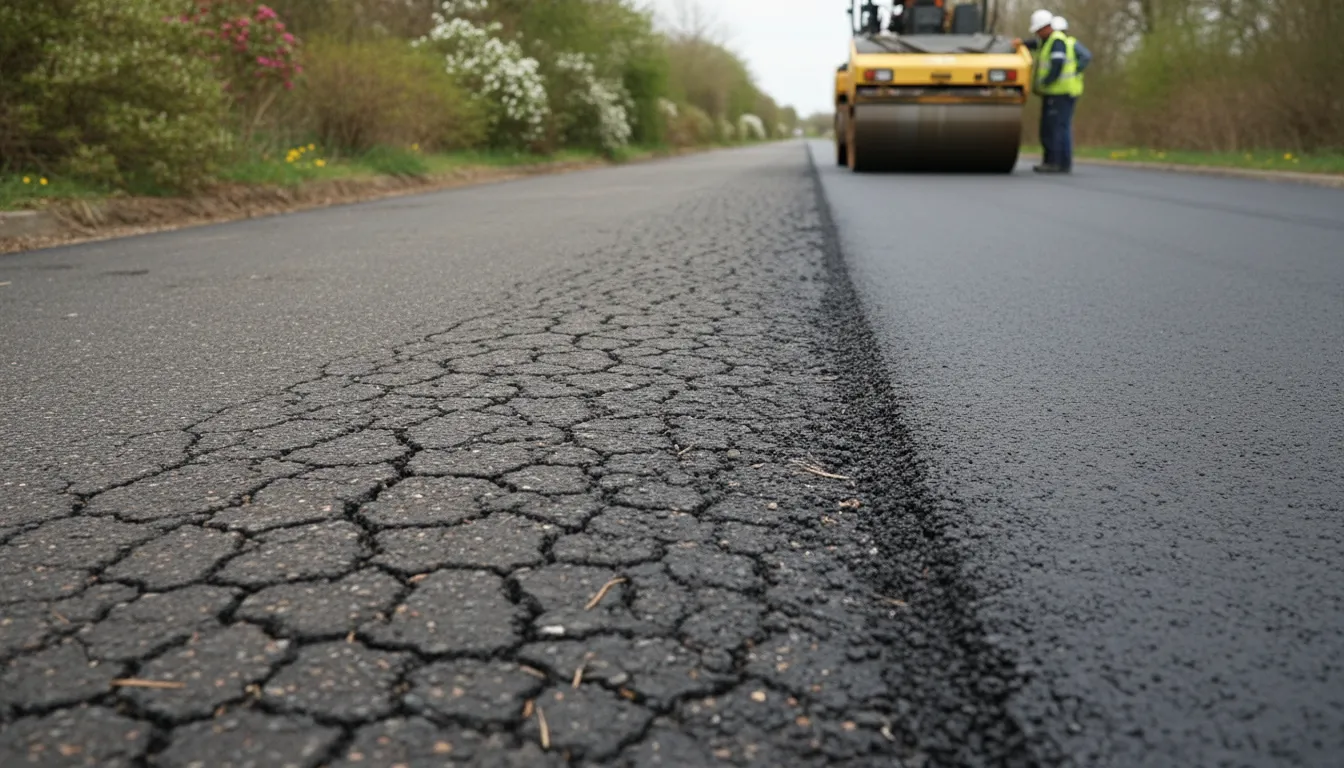
Parking lot resurfacing is a critical maintenance investment that restores a worn asphalt surface, improving safety, appearance, and longevity. In New Jersey, this process is particularly important due to the state's challenging weather, which can accelerate pavement deterioration. This guide provides property owners and managers with essential information on costs, best practices, and materials specific to New Jersey, helping you make informed decisions and connect with qualified local paving professionals for your project.
Ascot Driveways and Patios
55 Madison Ave suite 400 #4342, Morristown, NJ 07960
Ascot Driveways and Patios is a paving and masonry contractor serving New York, NY, and the surrounding Morris County area. They specialize in asphalt and concrete driveway installation, sealcoating, repairs, masonry wall building, patio construction, and landscaping hardscaping services. The company is experienced in restoring asphalt driveways with high-strength seal coating and offers a wide range of driveway and patio solutions tailored to customer needs. Ascot Driveways and Patios is a family-operated business known for its skilled craftsmanship and attention to detail, with a history of satisfied clients and completed projects in the region.
MACH PAVING
Yonkers, NY
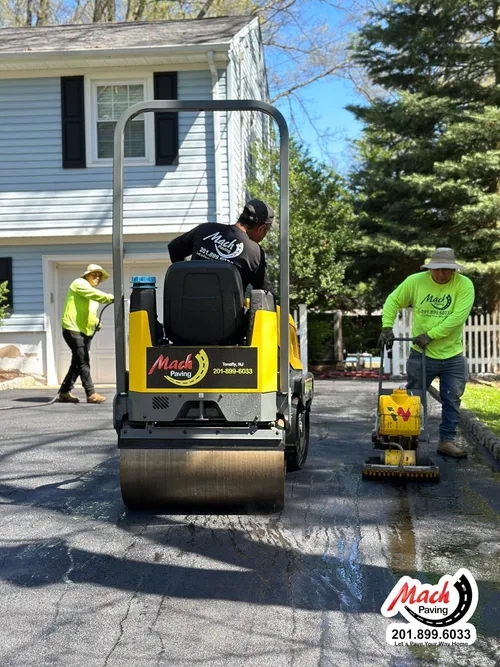
MACH PAVING is a family-owned paving company serving Yonkers, NY, and the surrounding New York and New Jersey areas. With over 20 years of experience, they provide residential and commercial paving services including parking lot paving, resurfacing, striping, seal coating, and custom concrete projects. Their team uses high-quality materials and advanced techniques to deliver durable and visually appealing surfaces. They also offer specialized services such as ADA compliant handicap parking markings and Belgium block installation.
Anything Asphalt
17 S Franklin Turnpike, Ramsey, NJ 07446
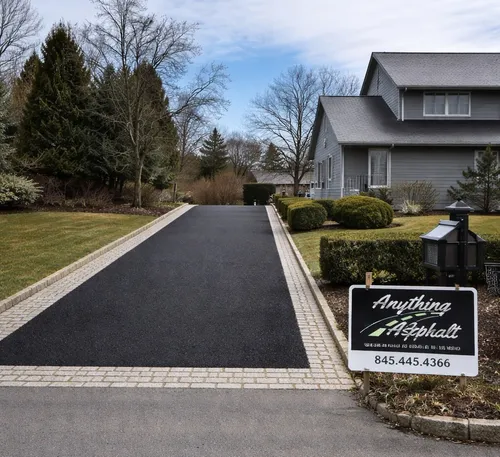
Anything Asphalt is a paving company based near New York, NY, specializing in residential and commercial asphalt services. They offer driveway installation, repair, resurfacing, parking lot paving, sealcoating, crack filling, and line striping. Serving Bergen County, NJ, and nearby areas including Rockland County, NY, they use quality materials to ensure durable results. The company has extensive experience completing projects on time and within budget, focusing on customer satisfaction throughout each job.
MAC Paving & Sealcoating LLC
599 Broadway, Paterson, NJ 07514
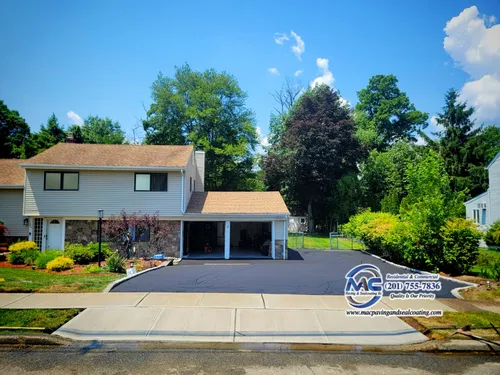
MAC Paving & Sealcoating LLC is a family-owned paving company with over 15 years of experience serving New York, NY, and surrounding North Jersey counties. They specialize in driveway paving installation, resurfacing, replacement, sealcoating, crack filling, line striping, and Belgium block edging. Their services focus on using high-quality materials and tailored designs that consider local soil and traffic conditions. The company manages projects with owner-led crews to ensure quality control and offers integrated maintenance plans covering asphalt paving and repairs.
Jersey Craft Asphalt Company
New York, NY
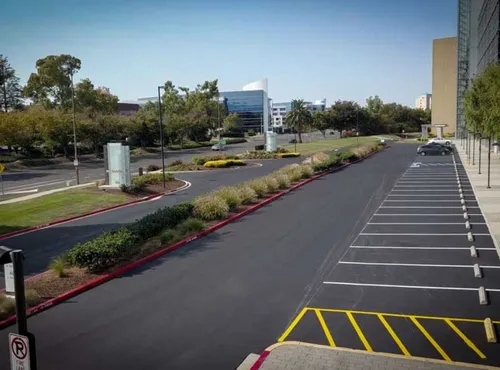
Jersey Craft Asphalt Company offers professional asphalt paving, repairs, sealcoating, resurfacing, and line striping services in New York, NY, and the surrounding North Jersey area. They serve both residential and commercial clients, including driveways and parking lots, using premium asphalt mixes and industry-standard compaction to ensure durability and long-lasting results. Established in 1982, Jersey Craft Asphalt brings decades of local expertise, understanding the specific weather and traffic conditions that affect asphalt performance in the region.
Understanding Resurfacing Costs in New Jersey
The cost to resurface a parking lot in New Jersey varies significantly based on the project's scope, the condition of the existing pavement, and the chosen method. Generally, you can expect the following price ranges:
- Milling & Resurfacing (2-inch overlay): $1.90 - $2.50 per square foot.
- Medium Lot (15,000 sq. ft.): $60,000 - $105,000.
- Large Lot (30,000 sq. ft.): $120,000 - $210,000.
- Full-depth Replacement: For projects where the base is compromised, full-depth removal and replacement can cost $4 - $10 per square foot1.
- Ancillary Costs: Necessary repairs, such as full-depth subgrade fixes, add $13 - $20 per square foot of the repaired area. Plan for sealcoating about one year after a new surface is installed, which typically costs $0.22 - $0.35 per square foot2.
For a major commercial project, such as a 100,000-square-foot lot, total costs can range from $250,000 to over $450,000, heavily dependent on the amount of preparatory work required3. The most significant factor influencing your final quote will be the condition of your existing pavement subbase and the necessary corrections before new asphalt can be applied.
New Jersey's Climate and Optimal Paving Timing
New Jersey's distinct four-season climate, characterized by hot summers, cold winters, and significant freeze-thaw cycles, directly impacts asphalt performance and project scheduling.
- Freeze-Thaw Damage: Water seeps into small cracks, freezes and expands, then thaws. This cycle relentlessly breaks apart asphalt and can destroy the subbase if cracks are not sealed.
- Optimal Paving Window: Asphalt must be placed and compacted at specific temperatures for proper density and longevity. The ideal time for resurfacing in NJ is when ambient and ground temperatures are consistently above 50°F, making late spring through early fall the prime paving season 4.
- Sustainable Practices: To extend the workable season and improve performance, many contractors now use Warm-Mix Asphalt (WMA). This technology allows asphalt to be produced and placed at lower temperatures, which can lead to better compaction in the cooler shoulder seasons and reduced fuel consumption5.
Recommended Asphalt Mixes and Materials
Using the correct asphalt mix is non-negotiable for a durable parking lot surface in New Jersey. The state's Department of Transportation (NJDOT) provides specifications that are the industry standard.
- NJDOT I-5 Mix: This is the standard surface course mix for most commercial parking lots in the state. It provides a smooth, durable finish capable of handling typical car and light truck traffic.
- NJDOT I-4 Mix: For areas expecting heavier loads-such as loading docks, dumpster pads, or fire lanes-the I-4 mix is recommended. It contains a larger stone aggregate, making it more resistant to rutting and deformation.
- Performance-Graded (PG) Binders: The "glue" that holds the asphalt together must withstand New Jersey's temperature swings. Commonly specified binders include PG 64-22 or PG64E-22, which are engineered to perform effectively within the state's typical temperature range6.
The Critical Role of Drainage
Proper drainage is arguably the most important design factor for a parking lot's lifespan, especially in a state with heavy rainfall like New Jersey. Water is asphalt's primary enemy.
- Cross-Slope Requirement: A finished parking lot surface must have a minimum cross-slope of 1.5% to 2% to ensure water runs off efficiently and does not pool7 8. Standing water will inevitably lead to premature failure.
- Correcting Existing Issues: If your current lot has low spots or improper slope, these must be corrected before resurfacing. Techniques like profile milling or applying a leveling course are used to establish the correct grade.
- Subsurface Solutions: In areas where achieving surface slope is impossible, underdrains or trench drains must be installed to collect and channel water away from the pavement structure 9.
Find the perfect parking lot resurfacing contractors for your needs
Get personalized recommendations and expert advice
Mill & Pave vs. Overlay: Choosing the Right Method
Not all resurfacing is the same. The two primary methods have different applications and outcomes.
- Mill & Pave (Recommended): This process involves mechanically grinding off (milling) the top 1.5 to 2 inches of the existing asphalt and then replacing it with new material. This is generally the superior approach because it:
- Maintains the existing curb height and drainage relationships.
- Removes old, oxidized, and cracked material.
- Corrects minor surface irregularities through milling.
- Creates a fresh, clean surface for the new asphalt to bond to.
- Overlay (Paving Over Existing): This involves placing new asphalt directly on top of the old surface. While sometimes less expensive upfront, it can create problems:
- Raises the pavement elevation, which may interfere with curb inlets, manholes, and adjacent sidewalks.
- Can trap underlying cracks, allowing them to "reflect" through the new layer quickly.
- Is only suitable if the existing pavement is structurally sound, with excellent drainage and no active cracking.
Essential Preparation and Best Practices
Skipping proper preparation is the fastest way to waste your resurfacing investment. A quality contractor will always follow these steps:
- Thorough Inspection: Evaluate the entire lot for alligator cracking, rutting, potholes, and drainage issues.
- Full Remediation: All failed areas must be completely excavated and repaired with new stone and asphalt before any resurfacing begins. Paving over failed sections guarantees they will fail again, often within a year.
- Edge Work: Ensure all pavement edges are saw-cut straight to provide a clean seam for the new mat.
- Cleaning: The surface must be completely clean of dirt, debris, and loose material before paving.
- Tack Coat: A thin layer of liquid asphalt (tack coat) should be applied to the milled or cleaned surface to ensure a strong bond between the old and new layers.
Planning and Executing Your Project
A successful resurfacing project requires careful planning. Start by obtaining detailed written estimates from several licensed and insured New Jersey contractors. These estimates should clearly break down costs for milling, asphalt material (specifying the mix), labor, repair work, and any drainage corrections. Ensure the contractor pulls all necessary local permits. During construction, expect some business disruption; a professional crew will work to phase the project to minimize impact on tenants and customers. Once complete, protect your investment with a strict maintenance plan that includes annual crack sealing and sealcoating on schedule.
Frequently asked questions
Sources
Footnotes
-
How to Budget for Commercial Parking Lot Paving Projects - https://thepavementgroup.com/how-to-budget-for-commercial-parking-lot-paving-projects/ ↩
-
Asphalt Driveway Cost 2026 | NJ Pricing Guide & Estimates - https://randysealcoatingandstriping.com/asphalt-paving-cost ↩
-
How Much Does It Cost to Pave a 100,000 Sq. Ft. Parking Lot? - https://www.fixasphalt.com/testblog/how-much-does-it-cost-to-pave-a-100000-sq.-ft.-parking-lot-in-new-jersey-2026-pricing-scoping-guide ↩
-
Parking Lot Resurfacing: Complete Cost Guide & Process [2025] - https://www.candcsuperseal.com/parking-lot-resurfacing-complete-cost-guide-process-2025/ ↩
-
Sustainable Paving Solutions for New Jersey Parking Lot ... - https://www.gspavement.com/sustainable-paving-solutions-for-new-jersey-parking-lot-owners-2/ ↩
-
Our New Jersey Parking Lot Paving Process - Fix Asphalt - https://www.fixasphalt.com/blog/the-asphalt-paving-process-0-0 ↩
-
How Much Does It Cost to Pave a Parking Lot in NJ? (2025 ... - https://www.fixasphalt.com/blog/how-much-does-it-cost-to-pave-a-parking-lot-in-nj-2025-guide ↩
-
NJAPA Pavement Guide 2009.102408.FINAL.qxp - https://www.njapa.com/wp-content/uploads/2016/10/NJAPA-Design-Guide-2013-64E-Rev-11-4-13.pdf ↩
-
NJ Commercial Parking Lot Paving Cost Factors - Fix Asphalt - https://www.fixasphalt.com/blog/nj-commercial-parking-lot-paving- ↩