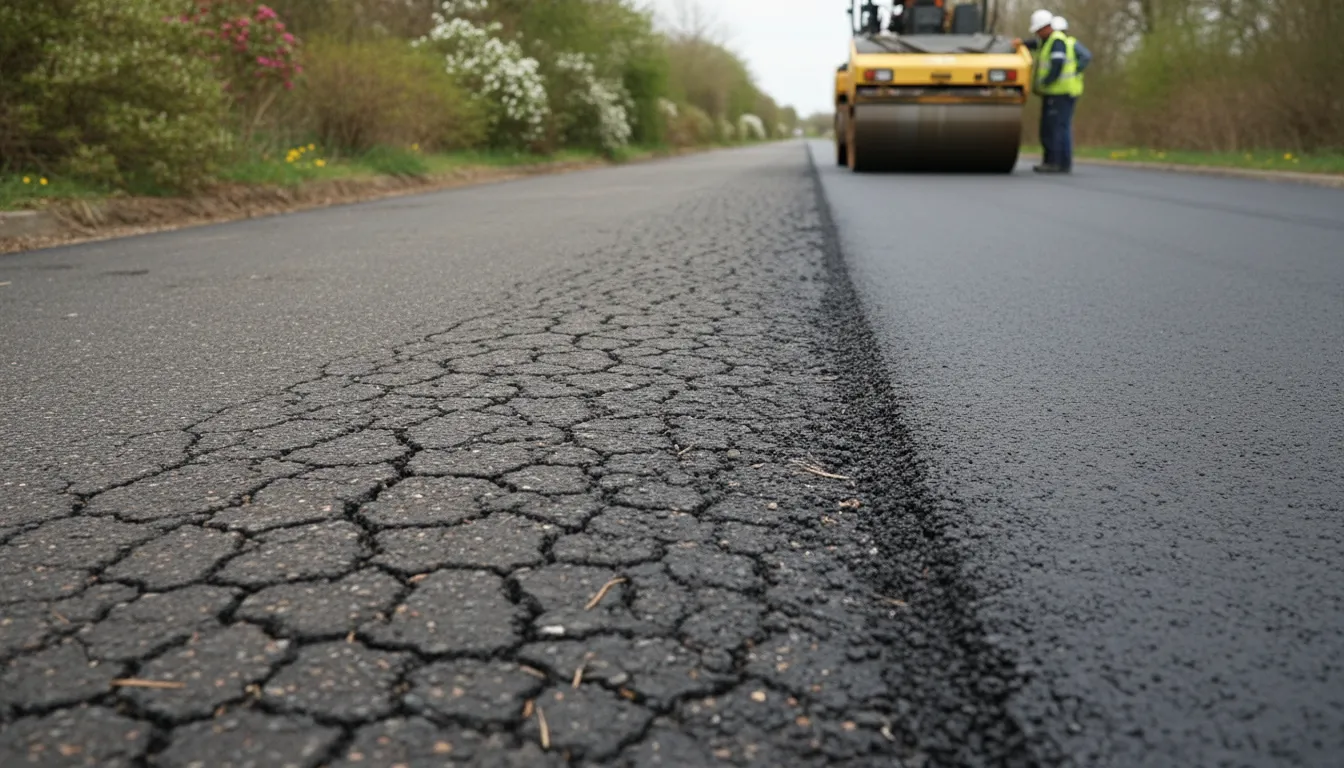
Find the Best Parking Lot Resurfacing Contractors for Your Business
No obligation • Fast responses • Nationwide coverage
Why you can trust Tidy Parking
Tidy Parking is a leading U.S. source for parking lot maintenance services, including striping, sealcoating, sweeping, paving, resurfacing, and repairs. Our content is created independently, and providers cannot pay to influence ratings or recommendations.
Search providers near you
Best Parking Lot Resurfacing Contractors in Missouri Ranked
A well-maintained parking lot is crucial for safety, curb appeal, and the long-term value of any commercial property in Missouri. Parking lot resurfacing involves applying a new layer of asphalt over an existing, structurally sound base, effectively restoring the surface and extending its life for years. This guide provides essential information on costs, materials, timing, and best practices for resurfacing projects across the state, helping you make informed decisions and connect with qualified local professionals for your specific needs.
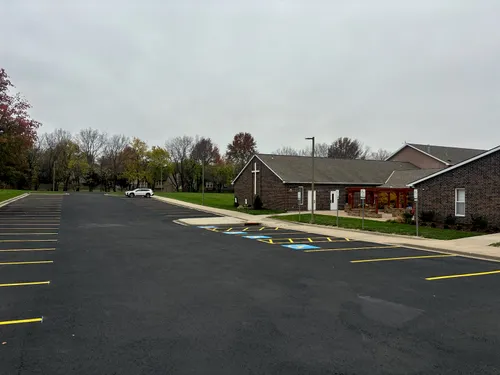
Fountain City Asphalt Co.
3600 N Wabash Ave, Kansas City, MO 64116
Fountain City Asphalt Co. is an asphalt service provider based in Kansas City, MO, offering a range of services including parking lot striping, sealcoating, paving, resurfacing, and repair. The company serves the Kansas City metro area and nearby communities such as Overland Park, Olathe, and Lawrence. Their expertise covers both residential and commercial projects, focusing on durable asphalt paving, resurfacing to extend surface life, and repairs like crack filling and pothole maintenance. Founded by Nathan Athans, who developed his skills working alongside his father, Fountain City Asphalt Co. combines decades of experience with modern techniques to deliver reliable asphalt solutions.
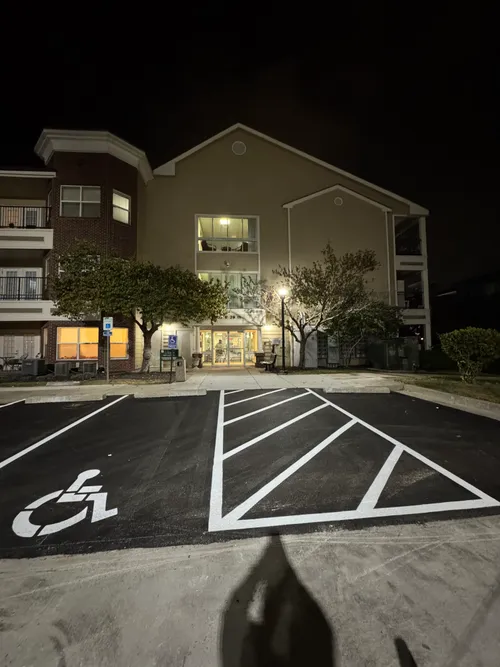
Platinum Paving
832 Cheyenne Ave, Kansas City, KS 66105
Platinum Paving is a full-service asphalt paving company based in Kansas City, MO, offering comprehensive parking lot services including new asphalt paving, sealcoating, striping, repairs, and concrete work. They serve over 50 communities across the Kansas City metro area, handling everything from milling and resurfacing to ADA compliance and line striping. With over 1,500 projects completed since their founding in 2019, Platinum Paving provides a one-year warranty on all work and manages projects with in-house crews to maintain quality and coordination.
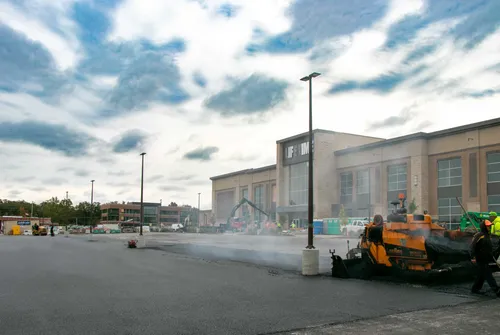
Leritz Busy Bee Paving
2909 Barrett Station Rd, St. Louis, MO 63122
Leritz Busy Bee Paving is a commercial asphalt paving contractor based in St Louis, MO. They provide services including new asphalt pavement installation, pavement maintenance, resurfacing, and repair for commercial properties and municipal projects. With over 40 years of experience, they use high-quality equipment and a precise, production line approach to deliver projects efficiently and with minimal disruption. Their expertise includes handling government contracts and preparing for city requirements to ensure compliance.
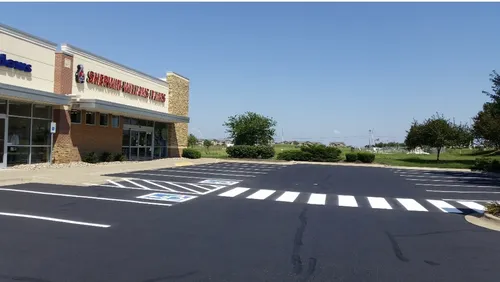
SmartPrice Asphalt Sealcoating
10650 Roe Ave Ste 150, Overland Park, KS 66207
SmartPrice Asphalt Sealcoating is a third-generation asphalt maintenance company based near Kansas City, MO. They provide a range of services including parking lot striping, sealcoating, paving, resurfacing, crack filling, pothole patching, and hot tar filler application. The company has been serving the area since 1995 and handles projects from small repairs to large-scale asphalt work.
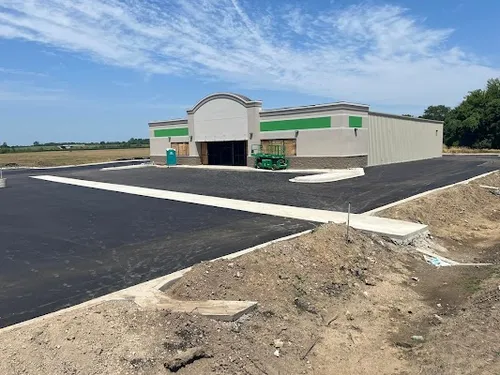
MoSeal Asphalt Services
2416 N Bluff St, Fulton, MO 65251
MoSeal Asphalt Services is a full-service asphalt contractor based in Columbia, MO, serving Mid-Missouri including Fulton, Jefferson City, and surrounding areas. They specialize in asphalt paving, sealcoating, repair, resurfacing, and parking lot striping for commercial and residential clients. MoSeal operates its own batch asphalt plant in Fulton, ensuring quality and consistency in every project. The company offers a one-year guarantee on commercial paving services and provides installation of parking lot features such as pole bollards, curbs, and drains.
Understanding Costs for Missouri Resurfacing Projects
Budgeting accurately is the first step in any parking lot improvement project. In Missouri, costs can vary based on the scope of work, materials used, and site conditions.
- Resurfacing/Overlay: For a standard 2-inch overlay on a sound base, the average cost in Missouri is approximately $1.41 per square foot, with typical ranges from $1.32 to $1.49 per square foot depending on project size and location 1.
- Total Project Cost: If your project requires full-depth repairs to the base before resurfacing, the total cost can range from $2.00 to over $7.00 per square foot 2. This wider range accounts for the extent of foundational repairs needed.
- Maintenance Follow-up: After resurfacing, protective sealcoating is recommended. In Missouri, sealcoating costs approximately $0.31 per square foot 3.
These costs are investments that can add 8 to 15 years of functional life to a parking lot when performed on a structurally sound base, typically one under 20 years old. Obtaining detailed quotes from several contractors is the best way to establish a precise budget for your property.
Missouri's Climate and the Optimal Resurfacing Window
Missouri's weather presents unique challenges for asphalt, with hot, humid summers and cold winters that create significant freeze-thaw cycles. These temperature extremes can lead to thermal cracking and accelerated wear if the pavement is not properly constructed.
The most critical factor for a successful resurfacing project is temperature. Asphalt must be installed and compacted at high temperatures and requires consistent warmth to cure properly.
- Best Time of Year: The ideal resurfacing season in Missouri runs from late spring through early fall. The key is ensuring ambient and ground temperatures remain above 50°F during installation and for the critical curing period afterward.
- Material Selection for Climate: To combat Missouri's temperature swings, specific high-performance asphalt binders are required. Using the correct binder grade is essential to prevent premature thermal cracking and rutting 4.
Selecting the Right Asphalt Materials
Choosing the appropriate asphalt mix is not a one-size-fits-all decision. The right combination ensures durability under traffic and resilience against Missouri's climate.
- Hot Mix Asphalt (HMA): This is the standard and most cost-effective choice for commercial parking lots in Missouri. It is produced and installed at temperatures between 300°F and 350°F, which provides excellent durability and workability 5.
- Performance Grade (PG) Binders: The binder is the "glue" that holds the asphalt together. For most commercial parking lots in Missouri, PG 58-28 or PG 64-22 binders are commonly specified. These grades are engineered to perform within specific high and low temperature ranges, helping to resist both rutting in summer heat and cracking in winter cold 6. For areas expecting very heavy or slow-moving traffic, a higher-grade binder like PG 58E-34 may be recommended to prevent rutting 7.
- Surface Mixes: The top layer of a resurfacing project typically uses a fine-graded surface mix. This provides a smoother, more attractive finish and better traction. Coarser mixes may be used in lower layers or for patching to provide structural stability 8.
Find the perfect parking lot resurfacing contractors for your needs
Get personalized recommendations and expert advice
The Critical Role of Drainage and Subgrade
Water is the primary enemy of asphalt pavement. A successful resurfacing project in Missouri must address drainage from the surface down to the foundation.
- Surface Slope: Proper drainage requires a paved surface with a consistent slope. Industry standards call for a minimum slope of 1% to 2% to ensure water flows off the pavement and toward drains or landscaped areas 9 10.
- Subgrade and Subbase: The soil foundation (subgrade) and the compacted stone layer above it (subbase) are the backbone of your parking lot. They must be properly designed, compacted, and tested (e.g., using standards like the California Bearing Ratio or CBR) to support commercial traffic loads without shifting or settling.
- Drainage Infrastructure: During resurfacing planning, existing catch basins, inlets, and storm drains must be inspected and cleared. Ensuring this infrastructure is functional is vital for long-term pavement health 11.
The Resurfacing Process: Key Steps for Success
A quality resurfacing project follows a systematic process. Understanding these steps helps you evaluate contractor proposals and ensure nothing is overlooked.
- Inspection and Evaluation: A professional should first assess whether resurfacing is appropriate. A general rule is that resurfacing is viable if the existing pavement has less than 30% damage and the base is structurally sound 12.
- Cleaning and Preparation: The existing surface must be thoroughly cleaned of debris, oil, and vegetation. Any drainage issues should be corrected at this stage.
- Repairs and Patching: All localized failures like potholes, alligator cracking, or areas of base failure must be repaired with full-depth patches before the new overlay is applied.
- Tack Coat Application: A thin layer of liquid asphalt (tack coat) is applied to the clean, existing pavement. This crucial step ensures a strong bond between the old surface and the new overlay.
- Asphalt Placement and Compaction: The new hot mix asphalt is placed at the proper thickness (typically 1.5 to 2 inches for resurfacing) using a paving machine. It is then immediately compacted with rollers to achieve the required density, which is essential for preventing water infiltration and achieving longevity 13.
- Curing and Striping: The new surface must cure, typically for at least 24-48 hours before allowing traffic. New pavement markings and striping are applied once the surface is fully cured.
Maintenance After Resurfacing
Protecting your investment doesn't end when the paving equipment leaves. A proactive maintenance plan will maximize the lifespan of your resurfaced lot.
- Sealcoating: Apply a quality sealcoat every 2-3 years. This protective layer shields the asphalt from UV rays, gasoline, oil, and water, slowing the oxidation process that makes asphalt brittle.
- Prompt Repairs: Address small cracks and potholes immediately with crack sealing and patching. This prevents water from penetrating and causing more extensive, costly damage.
- Regular Cleaning: Keep the surface free of debris, and ensure drainage inlets and gutters are clear, especially before winter.
Frequently asked questions
Sources
Footnotes
-
Missouri Parking Lots Costs & Prices - ProMatcher Cost Report - https://parking-lots.promatcher.com/cost/missouri.aspx ↩
-
How To Budget for Repaving a Parking Lot or Playground - - https://arnoldasphalt.com/how-to-budget-for-repaving-a-parking-lot-or-playground/ ↩
-
How to Budget for Commercial Parking Lot Paving Projects - https://thepavementgroup.com/how-to-budget-for-commercial-parking-lot-paving-projects/ ↩
-
How Weather Affects Asphalt Paving in Missouri - https://majorleaguepavingllc.com/blog/how-weather-affects-asphalt-paving-in-missouri ↩
-
How to Select the Right Asphalt Mix for Your Parking Lot - https://summitasphalt.com/right-asphalt-mix-for-your-parking-lot/ ↩
-
Things to Consider Before Paving an Asphalt Parking Lot - https://bitroads.com/About-Us/Blog/entryid/35/things-to-consider-before-paving-an-asphalt-parking-lot ↩
-
Best asphalt mixes for your parking lot - Baughman Magic Seal - https://baughmanmagicseal.com/best-asphalt-mixes-for-your-parking-lot/ ↩
-
Asphalt Parking Lots: Asphalt Mixes And Subgrade - https://goodmansonconstruction.com/parking-lots-asphalt-mixes-subgrade/ ↩
-
Asphalt Parking Lot Design - https://moasphalt.org/wp-content/uploads/2022/01/MAPA-Parking-Lot-Guide_8.5x11-COMP_small.pdf ↩
-
Parking Lot Paving - Paradise Pavement Maintenance - https://www.paradisepavement.com/commercial-paving-services/parking-lot-paving/ ↩
-
Engineering and Compliance in Parking Lot Design: What Property Owners Need to Know - WE LOVE PAVING - https://www.welovepaving.com/engineering-and-compliance-in-parking-lot-design-what-property-owners-need-to-know/ ↩
-
Parking Lot Resurfacing: Complete Cost Guide & Process [2025] - https://www.candcsuperseal.com/parking-lot-resurfacing-complete-cost-guide-process-2025/ ↩
-
Parking Lots Paving - Hot Mix Asphalt (HMA) Recommendations - https://www.wsbeng.com/parking-lots-paving-hot-mix-asphalt-hma-recommendations/ ↩