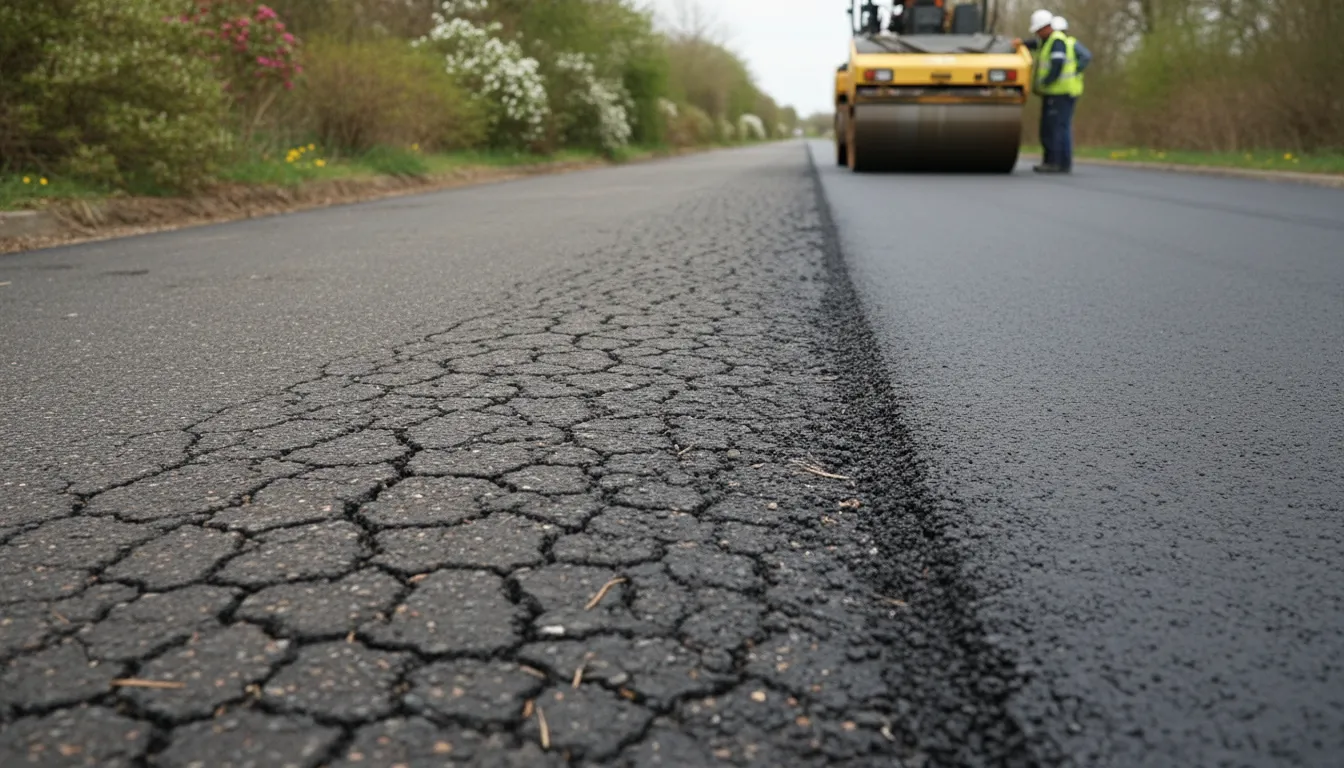
Find the Best Parking Lot Resurfacing Contractors for Your Business
No obligation • Fast responses • Nationwide coverage
Why you can trust Tidy Parking
Tidy Parking is a leading U.S. source for parking lot maintenance services, including striping, sealcoating, sweeping, paving, resurfacing, and repairs. Our content is created independently, and providers cannot pay to influence ratings or recommendations.
Search providers near you
Top Parking Lot Resurfacing Contractors in Gainesville, Georgia Ranked
A well-maintained parking lot is crucial for safety, curb appeal, and property value. In Georgia, the intense heat and humidity present unique challenges that make professional resurfacing a vital investment. This guide explains the process, costs, and key considerations for asphalt overlay projects in the Peach State, helping you connect with qualified local contractors to restore your pavement.
Understanding Asphalt Overlay in Georgia's Climate
Parking lot resurfacing, often called an overlay, involves applying a new layer of hot-mix asphalt (HMA) over an existing, structurally sound pavement. In Georgia, this isn't just a cosmetic upgrade-it's a necessary defense against the environment. The state's high summer temperatures and significant humidity accelerate the oxidation process in asphalt, making it brittle and highly susceptible to cracking. Without intervention, these cracks allow water to penetrate, leading to base failure and costly full-depth repairs.
An overlay seals the surface, restores a smooth ride, and corrects minor drainage issues, effectively resetting the clock on your pavement's lifespan. It's a strategic maintenance step that protects your underlying investment. For Georgia property managers and business owners, understanding when and how to resurface is key to long-term asset management.
Why Georgia's Weather Demands Proactive Resurfacing
The climate is the primary driver of pavement deterioration here. Two major factors are at play:
- Heat and UV Radiation: Prolonged exposure to intense sun breaks down the asphalt binder, the "glue" that holds the aggregate together. This process, called oxidation, causes the surface to become dry, gray, and brittle, leading to raveling (loose stones) and alligator cracking.
- Humidity and Rainfall: Georgia's moisture-laden air and frequent rainstorms mean water is constantly seeking entry into pavement. Once water infiltrates cracks and reaches the base or subgrade, it softens the supporting soil. This leads to settling, potholes, and complete structural failure, especially under the weight of vehicles.
A timely resurfacing project applies a fresh, flexible layer of asphalt that shields the older pavement from these elements, preventing minor wear from turning into a reconstruction project.
The Resurfacing Process: Step-by-Step
A professional overlay is a systematic process. Here's what you can expect from a reputable Georgia contractor:
- Comprehensive Evaluation: A thorough inspection is the first step. The contractor will assess the existing pavement for structural integrity, drainage patterns, and the extent of cracking or deterioration. This determines if the base is stable enough for an overlay or if repairs are needed first.
- Milling (If Required): To maintain proper curb heights and drainage flow, the top 1.5 to 3 inches of the old asphalt are often mechanically ground off (milled) before the new layer is applied. This also creates a rough, clean surface for excellent adhesion of the new asphalt.
- Base and Crack Repair: Any localized failures, potholes, or wide cracks are repaired. This is critical-paving over a compromised base will lead to quick failure of the new surface. Proper repair ensures a uniform, strong foundation.
- Drainage Verification: Ensuring water runs off the lot is paramount. Contractors will check and, if necessary, adjust the slope to meet the engineering standard of at least a 2% grade 1. Proper drainage is the single most important factor for pavement longevity in Georgia.
- Application of Hot-Mix Asphalt (HMA): The new asphalt layer is laid at a high temperature, typically between 1.5 and 3 inches thick for a resurfacing project. For commercial lots handling heavier traffic, the thickness may be on the higher end of that range or greater.
- Compaction and Finishing: Heavy rollers compact the new asphalt while it's still hot to achieve the required density, eliminating air pockets and creating a smooth, durable surface.
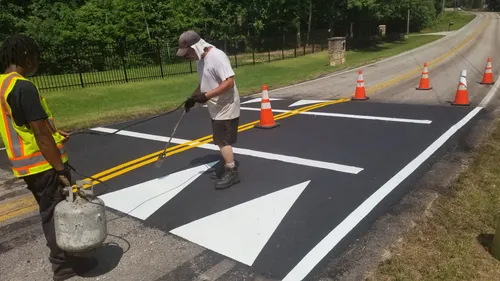
- Curing and Striping: The new pavement needs 24-48 hours to cool and harden before it can accept traffic. Once cured, new parking stall lines, symbols, and traffic markings are applied.
Find the perfect parking lot resurfacing contractors for your needs
Get personalized recommendations and expert advice
Material Choices: Hot-Mix Asphalt for Georgia
For resurfacing projects in Georgia, Hot-Mix Asphalt (HMA) is the nearly universal choice. It's produced at high temperatures (300°F+), which makes it more workable for achieving a smooth finish and superior compaction. Once cooled, HMA forms a dense, durable surface highly resistant to the deformation caused by Georgia's heat and heavy vehicle loads.
The specific mix design-the blend of aggregate (stone, sand, gravel) and asphalt binder-can be tailored. For parking lots, a mix with a higher sand content is often used to create a smoother surface texture, while the aggregate size and binder grade are selected for stability under high temperatures 2.
Cost Factors for Resurfacing in Georgia
The cost of parking lot resurfacing in Georgia is typically quoted per square foot. For an overlay project, you can generally expect a range of $0.90 to $2.00 per square foot. However, this is a starting point. Several variables influence the final price:
- Project Size: Larger lots benefit from economies of scale, lowering the per-square-foot cost.
- Condition of Existing Pavement: Extensive milling, pothole repair, or base stabilization will add to the project cost but are non-negotiable for a quality outcome.
- Asphalt Thickness: A thicker overlay (e.g., 3 inches vs. 1.5 inches) uses more material and increases cost but also extends service life.
- Access and Complexity: Tight sites, the need for night work, or maintaining partial lot access during construction can increase labor costs.
- Material Costs: The price of liquid asphalt and aggregate fluctuates with the oil market and local availability.
For comparison, a full-depth repaving (complete removal and replacement) costs significantly more, generally $2.50 to $4.50 per square foot 3 4. As an example, resurfacing a 100,000 sq ft commercial lot could be a major investment, while a small 10-car lot might be a more modest project, though site-specific conditions always dictate the final price 4.
Resurfacing vs. Other Maintenance Options
It's important to distinguish resurfacing from other common parking lot services:
- Sealcoating: This is a protective, wear-resistant coating applied to the surface of asphalt. It defends against UV rays, gas, oil, and water. Sealcoating is a low-cost maintenance treatment (recommended every 3-5 years in Georgia 5 6) but does not fix structural issues or correct surface irregularities.
- Repair (Patching/Crack Filling): This addresses specific, localized problems like potholes or cracks. It's a spot treatment, not a comprehensive solution for widespread aging.
- Resurfacing/Overlay: As detailed above, this addresses surface-level wear, minor cracks, and oxidation across the entire lot by adding a new asphalt layer. It requires a structurally sound base.
- Reconstruction/Repaving: This is a complete rebuild, involving excavating the old asphalt and base, repairing or replacing the subgrade, and installing entirely new pavement. It's the solution for lots with severe base failure.
Choosing the right service depends entirely on the condition of your existing pavement. A professional assessment is the only way to make an informed decision.
Key Considerations for Georgia Property Owners
- Don't Delay: Addressing pavement distress early with an overlay is far more cost-effective than waiting for base failure, which necessitates full reconstruction.
- Drainage is Non-Negotiable: Before any asphalt is laid, ensure your contractor has a plan for positive drainage. A 2% slope is the minimum standard 7 8. Water is asphalt's number one enemy.
- Verify Contractor Credentials: In Georgia, ensure your contractor is licensed, insured, and has local experience. Ask for references and examples of previous overlay projects.
- Plan for Maintenance: A new overlay should be sealcoated after it has fully cured (typically 6-12 months) and then on a regular 3-5 year cycle to maximize its lifespan.
- Get Detailed Quotes: A professional quote should break down costs for milling, repair, asphalt tonnage (by thickness), compaction, drainage work, and striping. This allows for accurate comparisons between bids.
Frequently asked questions
Sources
Footnotes
-
Parking Lot Surface Options: Asphalt vs Concrete - https://www.byrneandjones.com/blog/asphalt/parking-lot-surface-options-asphalt-vs-concrete/ ↩
-
Best asphalt mixes for your parking lot - Baughman Magic Seal - https://baughmanmagicseal.com/best-asphalt-mixes-for-your-parking-lot/ ↩
-
Costs and Differences of Asphalt Parking Lot Resealing ... - https://www.andersonandsonsasphalt.com/costs-and-differences-of-asphalt-parking-lot-resealing-resurfacing-and-repaving/ ↩
-
How To Budget for Repaving a Parking Lot or Playground - - https://arnoldasphalt.com/how-to-budget-for-repaving-a-parking-lot-or-playground/ ↩ ↩2
-
Paving in Columbus, GA: What Property Owners Should Know ... - https://columbusgasealcoating.com/paving-in-columbus-ga-what-property-owners-should-know-before-replacing-their-asphalt ↩
-
A Breakdown of Parking Lot Maintenance Costs - TRUEGRID Pavers - https://www.truegridpaver.com/parking-lot-maintenance-costs/ ↩
-
Parking Lot Resurfacing: Complete Cost Guide & Process [2025] - https://www.candcsuperseal.com/parking-lot-resurfacing-complete-cost-guide-process-2025/ ↩
-
Paving A Parking Lot In Atlanta Georgia - The Surface Masters - https://thesurfacemasters.com/5-things-you-need-to-know-about-paving-a-parking-lot-in-atlanta/ ↩