Find the Best Parking Lot Resurfacing Contractors for Your Business
No obligation • Fast responses • Nationwide coverage
Why you can trust Tidy Parking
Tidy Parking is a leading U.S. source for parking lot maintenance services, including striping, sealcoating, sweeping, paving, resurfacing, and repairs. Our content is created independently, and providers cannot pay to influence ratings or recommendations.
Search providers near you
Top Parking Lot Resurfacing Contractors in South San Francisco, California Ranked
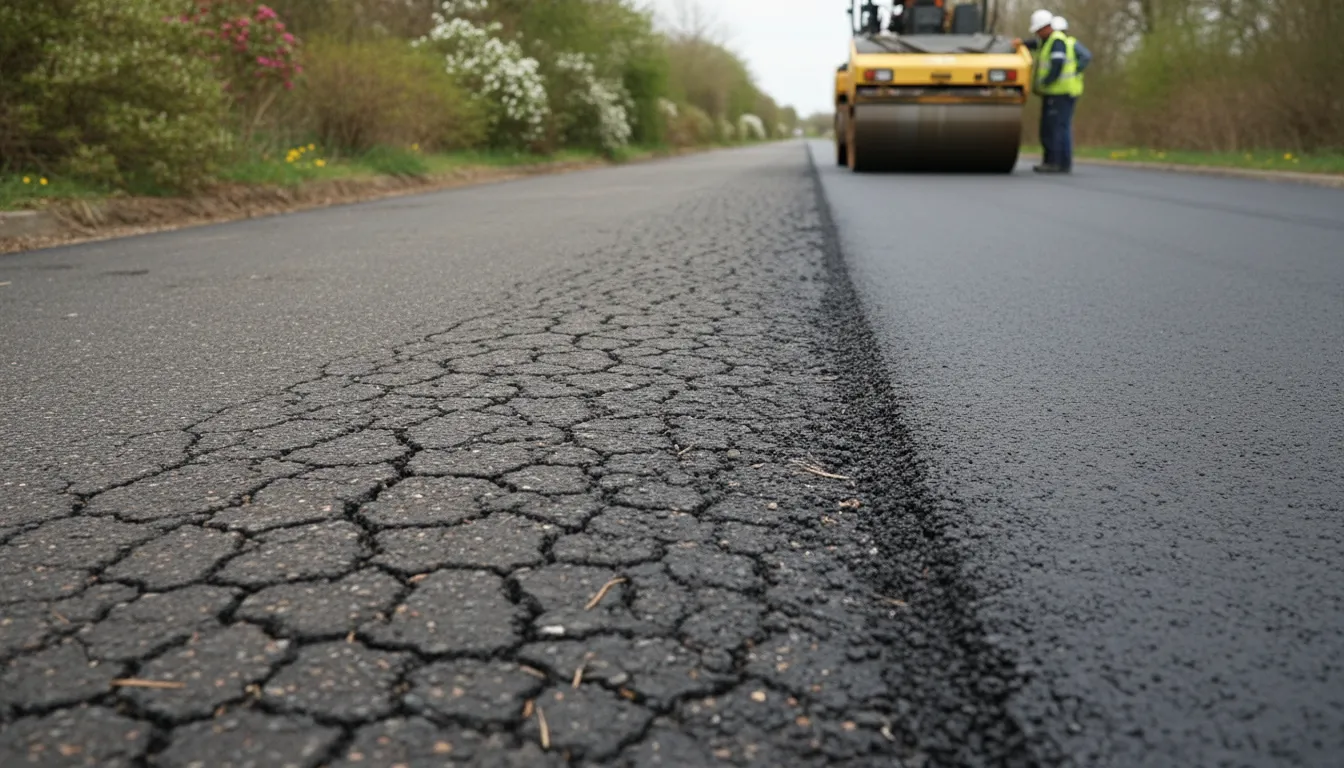
Parking lot resurfacing is a major maintenance procedure that restores a worn asphalt surface by installing a fresh overlay. For property owners and managers in South San Francisco, this process is crucial for maintaining safety, compliance, and property value. A well-executed asphalt overlay can address surface-level deterioration like cracks, raveling, and weathering without the cost and disruption of a full reconstruction. This guide explains the local process, costs, regulations, and timing to help you plan your project and connect with qualified local paving professionals.
Progressive Asphalt Paving
San Jose, CA
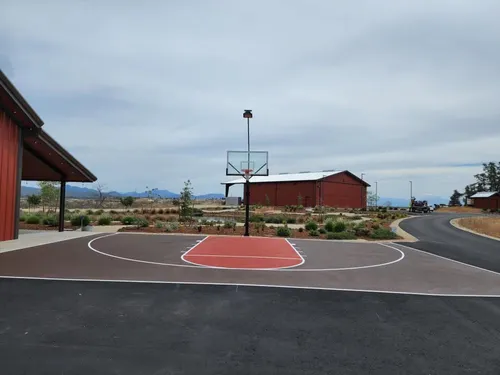
Progressive Asphalt Paving is an asphalt contractor serving San Jose, CA, specializing in asphalt paving, patching, striping, sealcoating, and driveway installation. They provide services for residential, commercial, and municipal clients, using premium materials to ensure durable and long-lasting asphalt surfaces. Their expertise includes asphalt patching techniques that restore pavement strength and professional striping that meets regulatory standards. The company emphasizes tailored solutions and transparent pricing based on years of industry experience.
El Camino General Engineering Inc
1212 Camellia Dr, Palo Alto, CA 94303
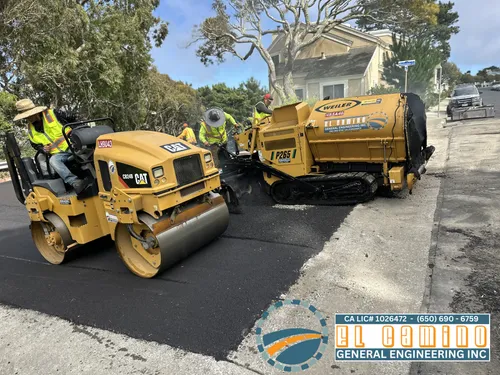
El Camino General Engineering Inc is a family-owned asphalt paving contractor based in San Jose, CA. They offer a range of services including parking lot striping, sealcoating, paving, resurfacing, and repair for residential, commercial, and municipal properties. Their team specializes in asphalt installation, maintenance, and ADA compliance improvements, using high-quality materials and equipment to ensure durable results. Founded by Israel, who brings over 30 years of local industry experience, the company also benefits from the civil engineering expertise of his son, Edgar. El Camino General Engineering provides innovative solutions tailored to client needs and operates with a focus on clear communication and project efficiency.
RF Sealcoating and Striping
Santa Rosa, CA
RF Sealcoating and Striping is a parking lot striping and sealcoating company based in Santa Rosa, CA. They offer services for commercial, residential, and HOA properties, including asphalt repairs, chipsealing, pothole repairs, asphalt paving, maintenance, sealcoating, and ADA-compliant striping. Their capabilities include crack filling using hot rubberized or cold pour applications to protect asphalt surfaces and extend pavement life.
WE LOVE PAVING, INC
5201 Great America Pkwy Suite 320, Santa Clara, CA 95054
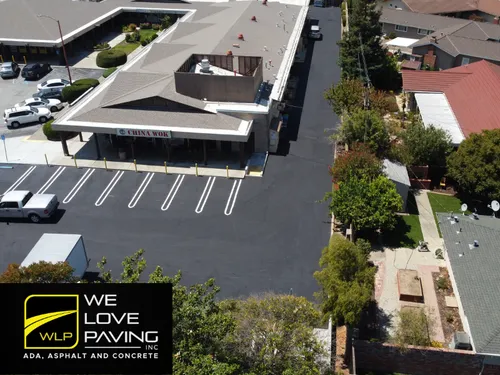
WE LOVE PAVING, INC is a parking lot paving and repair company based in San Jose, CA. They provide services including parking lot striping, sealcoating, resurfacing, and ADA-compliant ramp installations. The company addresses common issues like drainage errors and offers asphalt paving solutions designed to meet California standards. Their capabilities include precise striping with durable materials and ensuring proper slopes to prevent water damage. WE LOVE PAVING, INC emphasizes compliance with local regulations and uses materials suited for California's climate.
APCO PAVING CO.
2545 Monument Blvd, Concord, CA 94520
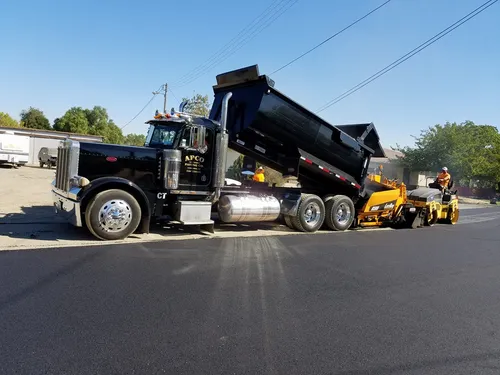
APCO Paving Co. is a family-owned paving and sealcoating company based in Oakland, CA, serving the greater Alameda and Contra Costa areas since 1984. They provide a wide range of services including asphalt paving, parking lot resurfacing, sealcoating, grading, catch basin repair, and concrete repair for both residential and commercial properties. APCO Paving Co. is equipped to handle projects from new construction to preventative maintenance and offers 24-hour emergency service for urgent paving needs.
What is Parking Lot Resurfacing?
Parking lot resurfacing, often called an asphalt overlay, involves placing a new layer of hot-mix asphalt, typically 1.5 to 2 inches thick, over an existing pavement that has a structurally sound base 1. It is a cost-effective solution for lots that are showing significant surface wear but do not have deep structural failures. The goal is to create a new, smooth, waterproof wearing surface that extends the life of your pavement by 8 to 15 years with minimal downtime, often just 1 to 3 days 2. It's distinct from sealcoating (a protective coating) or full reconstruction (complete removal and replacement).
The Resurfacing Process: A Step-by-Step Guide
A successful overlay project in South San Francisco follows a meticulous sequence to ensure longevity and compliance.
1. Site Inspection & Preparation The process begins with a thorough assessment of the existing pavement's sub-base. The surface must be cleaned of all debris, oil, and dirt. Any severe potholes or localized base failures are repaired beforehand to create a stable foundation for the new layer.
2. Milling & Grinding To ensure the new asphalt bonds properly and blends seamlessly with adjacent surfaces like concrete curbs, drains, and roadways, the edges of the existing pavement are often milled or ground down. This creates "keyways" that prevent edge cracking and allow for proper drainage integration 3.
3. Tack Coat Application A sticky, adhesive asphalt emulsion called a tack coat is sprayed onto the cleaned, prepared old surface. This critical step creates a strong bond between the old pavement and the new overlay, preventing slippage and delamination 4.
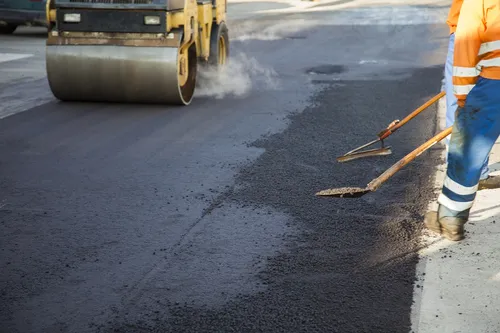
4. Asphalt Overlay Installation Hot-mix asphalt is delivered and installed at the proper temperature, spread evenly to the specified thickness (usually 1.5" to 2" for resurfacing projects in this area). Timing is essential, as the mix must be placed and compacted before it cools.
5. Compaction Heavy steel-wheel and pneumatic rollers compact the new asphalt layer immediately after placement. Proper compaction is vital for achieving the required density, which ensures durability, smoothness, and resistance to water infiltration.
Find the perfect parking lot resurfacing contractors for your needs
Get personalized recommendations and expert advice
6. Striping & Marking Once the new asphalt has cured sufficiently-typically 1 to 3 days after paving-new traffic and parking stall markings are applied 5. This step is not just aesthetic; it is required for compliance with the Americans with Disabilities Act (ADA) and California Building Code (CBC) Title 24, which mandates specific stall dimensions.
South San Francisco Regulations & Permits
Adhering to local municipal codes is non-negotiable for any paving project. Key regulations for South San Francisco include:
- Permit Requirement: A Building/Engineering Permit is required for most alterations involving pavement 6. Applications are processed through the South San Francisco Permit Center. A "Grading Permit" may also be necessary for significant earthwork 7.
- Allowed Working Hours: Grading and other loud construction work are restricted to weekdays (Monday through Friday) from 8:00 a.m. to 6:00 p.m. Work is prohibited on weekends and city holidays.
- Environmental & Stormwater Controls: The city mandates strict dust control measures, which must be maintained 24 hours a day, 7 days a week during construction. Crucially, a winterization plan must be implemented for all undeveloped areas to control silt and runoff. This plan must be submitted to the City Engineer and in effect by November 1st each year.
- ADA Parking Compliance: When restriping, California code requires standard car-accessible spaces to be a minimum of 108 inches wide, and van-accessible spaces to be 144 inches wide, with specific aisle requirements 8.
Climate & Timing: When to Schedule Your Project
The local climate directly impacts the success of an asphalt overlay. The San Francisco Bay Area's weather demands careful scheduling.
- Ideal Temperature: Asphalt should be placed when ambient temperatures are at least 50°F and rising. The material needs heat to remain workable for proper spreading and compaction 9.
- Best Seasons: The most stable, moderate conditions in South San Francisco typically occur during spring (late March through June) and early fall (September to October). These windows offer the best chance for dry, warm weather conducive to curing 10.
- Rain Restrictions: Paving must be avoided if rain is forecast within 24 to 48 hours of application. Rain can wash away the vital tack coat and prevent the new asphalt from properly compacting and bonding 11.
- Winter Considerations: Due to the mandatory winterization deadline of November 1st, scheduling your project well before fall is advisable to avoid complications and ensure all stormwater protection measures are approved and in place 12.
Cost Factors for Parking Lot Resurfacing
Costs for asphalt overlay in South San Francisco are primarily quoted per square foot, with the total price depending heavily on the project's size, condition, and accessibility.
- Price Range: You can generally expect costs to range from $1.00 to $3.00+ per square foot for the resurfacing work itself.
- Small Lots (e.g., ~10,000 sq. ft.): Total project costs often range from $15,000 to $30,000 or more. Smaller projects frequently see per-square-foot costs at the higher end of the scale due to fixed mobilization and equipment setup costs 13.
- Large Lots (e.g., 50,000+ sq. ft.): Larger projects benefit from economies of scale, with total costs potentially ranging from $50,000 to $100,000+ at a lower per-square-foot rate, often between $1.00 and $2.00 14.
- Additional Costs: Remember to budget for the required permits from the city. The final striping and marking phase is typically priced separately, adding approximately $0.15 to $0.40 per square foot 15 16.
Is Resurfacing the Right Solution for Your Lot?
An asphalt overlay is an excellent investment for parking areas that are less than 20 years old and suffering primarily from surface distress, such as:
- Extensive alligator (fatigue) cracking
- Surface raveling (loose aggregate)
- Weathering and oxidation
- Minor settling or unevenness
It is not a fix for foundational problems. If your lot has severe, recurring potholes, deep base failures, or major drainage issues, a full reconstruction may be necessary. A professional contractor can perform a core analysis to definitively assess the structural integrity of your sub-base.
Frequently asked questions
Sources
Footnotes
-
Paving vs. Resurfacing: Choosing the Right Option [2025] - https://www.stanleypaving.com/blog/parking-lot-paving-vs-resurfacing-which-option-is-right-for-your-property/ ↩
-
City of South San Francisco, CA LOT AND DEVELOPMENT STANDARDS - https://ecode360.com/43450918 ↩
-
Paving Program - City of South San Francisco - https://www.ssfca.gov/Government/Measure-W/Paving-Program ↩
-
Pavement Preservation - San Francisco Public Works - https://sfpublicworks.org/services/pavementpreservation ↩
-
Parking Lot Resurfacing: Complete Cost Guide & Process [2025] - C&C Super Seal - https://www.candcsuperseal.com/parking-lot-resurfacing-complete-cost-guide-process-2025/ ↩
-
Permits & Development - City of South San Francisco - https://www.ssfca.gov/Departments/Public-Works/Divisions/Engineering-Division/Permits-Development ↩
-
REQUIRED PERMITS - City of South San Francisco - https://www.ssfca.gov/files/assets/public/v/1/public-works/documents/residential-required-permi.pdf ↩
-
Parking Code Regulations California Building Code (CBC) Title 24 Part 2 - https://www.dgs.ca.gov/-/media/Divisions/CCDA/Tabs/Meetings/Meetings-Before-2023/Checklist-Committee-Meetings/Checklist-Committee-Meetings-2020/Item-7A---Parking-Code-Regulations-Accessible.pdf ↩
-
Asphalt Paving: Temperature & Timing - https://alphapavingtexas.com/asphalt-paving-temperature-timing/ ↩
-
How Weather Impacts Asphalt Curing & Your Timeline - https://www.alliedasphalt.com/how-weather-impacts-asphalt-curing-and-your-timeline.php ↩
-
How Weather Impacts Asphalt Paving Projects and What to ... - https://prioritypavingfranklin.com/2023/08/how-weather-impacts-asphalt-paving-projects-and-what-to-watch-out-for/ ↩
-
standard development conditions - City of South San Francisco - https://www.ssfca.gov/files/assets/public/v/1/public-works/documents/standard_dev_conditions.pdf ↩
-
Parking Lot Resurfacing: Complete Cost Guide & Process [2025] - C&C Super Seal - https://www.candcsuperseal.com/parking-lot-resurfacing-complete-cost-guide-process-2025/ ↩
-
Parking Lot Resurfacing: Complete Cost Guide & Process [2025] - https://www.candcsuperseal.com/parking-lot-resurfacing-complete-cost-guide-process-2025/ ↩
-
Complete Guide to Parking Lot Striping in California - https://bowmanparkinglotstriping.com/complete-guide-to-parking-lot-striping-in-california/ ↩
-
Parking Lot Sealer: How Much Does It Cost? | EastCoat Pavement - https://eastcoatpavement.com/parking-lot-sealer-cost/ ↩