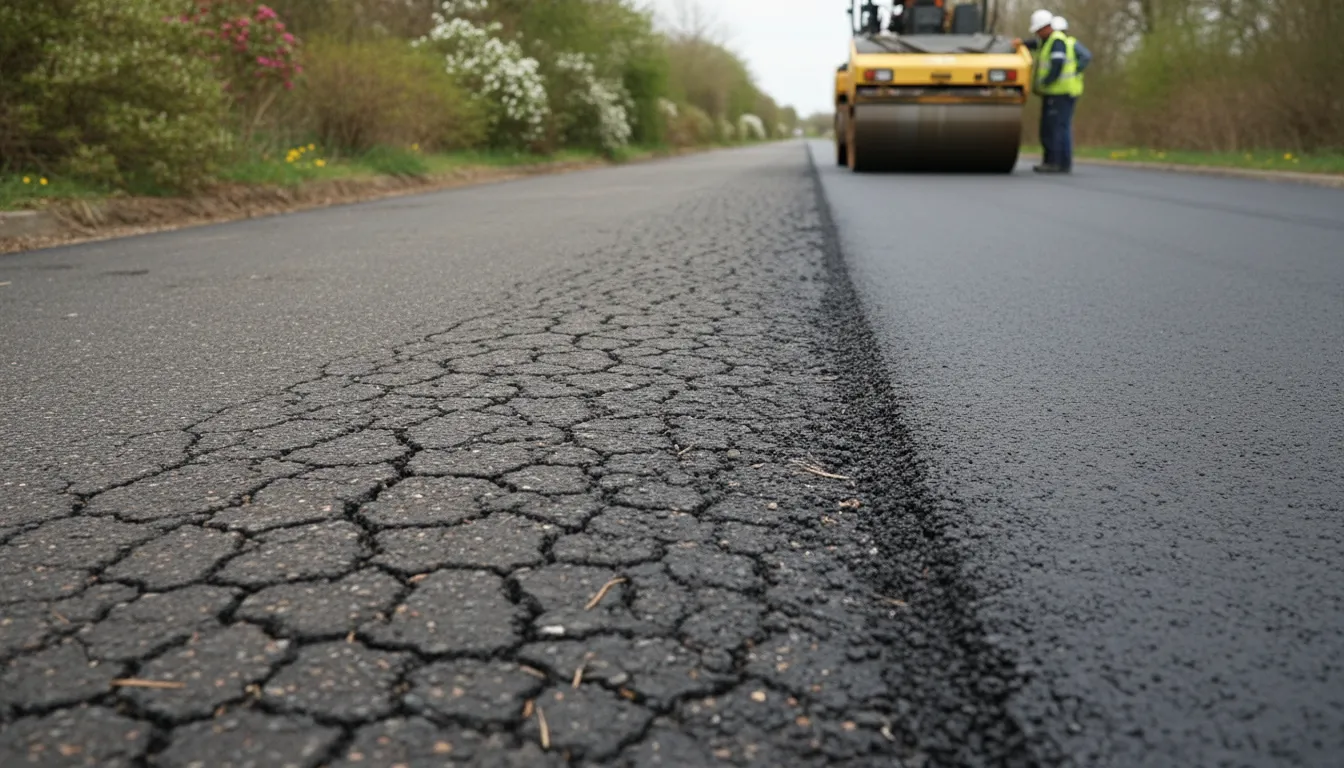
Find the Best Parking Lot Resurfacing Contractors for Your Business
No obligation • Fast responses • Nationwide coverage
Why you can trust Tidy Parking
Tidy Parking is a leading U.S. source for parking lot maintenance services, including striping, sealcoating, sweeping, paving, resurfacing, and repairs. Our content is created independently, and providers cannot pay to influence ratings or recommendations.
Search providers near you
Top Parking Lot Resurfacing Contractors in Alhambra, California Ranked
Parking lot resurfacing is a critical maintenance procedure that restores a worn asphalt surface, extending its life and improving safety and appearance. For property owners and managers in Alhambra, this process is a cost-effective alternative to full replacement when the pavement's foundation is still sound. This guide explains the local resurfacing process, costs, regulations, and how to find qualified local contractors to handle your project.
Pavescapes
1340 E Pomona St, Santa Ana, CA 92705
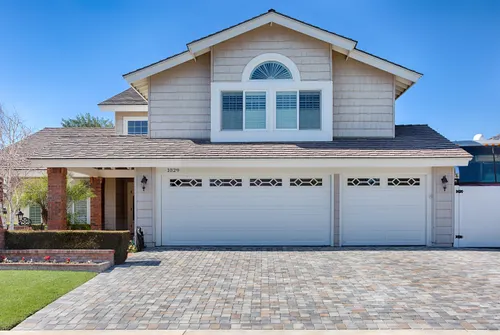
Pavescapes is a parking lot resurfacing contractor based in Santa Ana, CA, specializing in thin paver installations over existing concrete surfaces. Serving Orange County, San Diego County, San Bernardino County, Ventura County, and Coachella Valley, they offer an overlay system that preserves the underlying concrete, avoiding demolition and reducing waste. This method addresses cracked, stained, or unsightly concrete and supports eco-friendly practices by minimizing material disposal. Pavescapes installs over failing overlay systems and provides a non-slip surface ideal for pool decks and other areas.
Bay Cities Paving Inc
931 Mahar Avenue, 1314 North Avalon Boulevard Ste A, Wilmington, CA 90744
Bay Cities Paving Inc is a family-owned asphalt and concrete contractor serving Los Angeles, CA, with over 40 years of experience. They provide a range of services including parking lot paving, resurfacing, sealcoating, striping, and repair for commercial, industrial, and residential properties. The company handles projects from shopping malls and restaurants to single-family driveways, applying expert techniques and quality materials to ensure durable results. Established in 1984, Bay Cities Paving also offers sign installation services and educational seminars for property managers to address safety concerns.
Bay Cities Paving
Long Beach, CA
Bay Cities Paving is a parking lot paving and repair company serving Long Beach, CA, and surrounding Orange County communities. With over 30 years of experience, they provide comprehensive asphalt and concrete services including parking lot striping, sealcoating, resurfacing, and repair. Their expertise covers residential, commercial, and industrial properties, with capabilities such as asphalt milling, crack sealing, and ADA-compliant parking lot paving. The company emphasizes local knowledge of Southern California's climate and soil conditions to deliver durable pavement solutions. Bay Cities Paving offers emergency services and weekend consultations by appointment.
Blue Diamond Inglewood Asphalt
2021 W Gaylord St, Long Beach, CA 90813
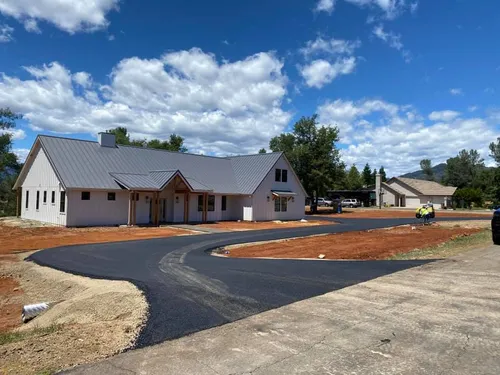
Blue Diamond Inglewood Asphalt is a parking lot and driveway contractor based in Long Beach, CA. They provide a range of asphalt services including paving, patching, striping, sealcoating, resurfacing, and repairs tailored to commercial and residential properties. Their team uses high-quality materials and modern equipment to ensure durable and smooth asphalt surfaces. The company emphasizes safety on job sites and offers free consultations to help clients plan their projects. Their expertise includes asphalt paving and sealcoating, which protect and extend the life of paved surfaces.
All Star Paving Co
Los Angeles, CA
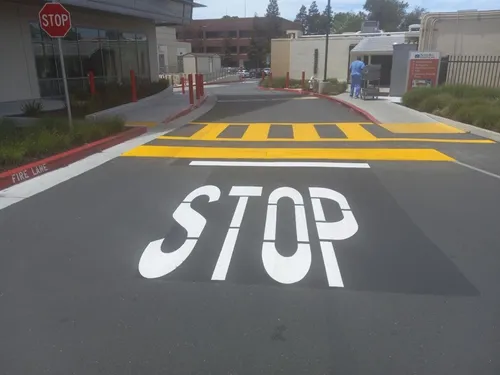
All Star Paving Co is an asphalt contractor based in Los Angeles, CA, serving Pasadena and surrounding areas. They offer a range of services including asphalt paving, patching, striping, sealcoating, and driveway and parking lot construction. With over 20 years of experience, they focus on durable workmanship using premium materials and modern equipment. Their expertise includes asphalt patching to repair potholes and cracks, ensuring safety and longevity. The company is licensed and insured, emphasizing quality and long-term value in their projects.
What is Parking Lot Resurfacing?
Parking lot resurfacing, also known as asphalt overlay, is the process of applying a new layer of hot-mix asphalt over an existing, structurally sound pavement. It's a major pavement restoration technique designed to address surface-level issues like cracks, fading, and minor irregularities without the extensive excavation required for a full reconstruction. When performed correctly, this overlay can extend the functional lifespan of your parking area by 8 to 15 years. It's distinct from simple sealcoating (a protective coating) or patching (spot repairs), as it involves installing a completely new wearing course across the entire lot.
The Step-by-Step Resurfacing Process in Alhambra
A professional asphalt overlay follows a meticulous sequence to ensure a durable, long-lasting result. Here's what you can expect from a typical parking lot restoration project in the Alhambra area.
1. Professional Assessment and Inspection
The first and most crucial step is a thorough evaluation by a qualified contractor. They will inspect the existing pavement to confirm the subgrade-the soil and aggregate base beneath the asphalt-is stable and undamaged. If the foundation has failed, resurfacing will not be a lasting solution, and a full-depth replacement may be necessary 1. This assessment determines the project's feasibility and scope.
2. Cleaning and Preparation
The entire lot is thoroughly cleaned to remove dirt, debris, oil stains, and vegetation. Any weeds growing through cracks are eliminated. This step is vital to prevent contaminants from interfering with the bond between the old and new asphalt layers.
3. Repair and Patching
Before the new layer can be applied, existing damage must be addressed. All cracks are cleaned and filled with a hot rubberized sealant. Potholes and areas of deep deterioration are cut out and repaired with fresh asphalt in a process often called a "dig-out". This ensures the new surface has a uniform, solid base.
4. Milling (Grinding)
In many cases, especially to maintain proper drainage or match existing curb heights, the top 1.5 to 2 inches of the old asphalt is mechanically ground off. This milling process is particularly important around edges, drains, and sidewalks to ensure the new pavement grade aligns correctly with surrounding surfaces 2 3.
5. Tack Coat Application
A thin, sticky layer of liquid asphalt emulsion, called a tack coat, is sprayed onto the prepared existing surface. This acts as a glue, creating a strong, inseparable bond between the old pavement and the new overlay.
6. Paving and Compaction
New hot-mix asphalt is delivered and spread evenly across the lot using a paving machine. Immediately after laying, heavy steel-wheel and pneumatic rollers compact the material to the proper density, eliminating air pockets and creating a smooth, stable surface 4.
7. Striping and Marking
Once the new asphalt has cooled and cured, the lot is re-striped. This includes painting parking stalls, directional arrows, fire lanes, and crucially, compliant ADA (Americans with Disabilities Act) accessible stalls with proper signage and ramp access.
8. Final Sealcoating (Optional)
While not part of the core resurfacing process, applying a protective sealcoat a few weeks after the overlay is highly recommended. This coal-tar or asphalt-based sealer shields the new surface from water, oil, and UV damage, significantly prolonging its life.
Alhambra Regulations and Permit Requirements
Undertaking a parking lot pavement project in Alhambra requires adherence to specific city codes. Ignoring these can result in doubled permit fees or work stoppages.
- Permit Mandate: A written permit from the Alhambra Director of Public Works is required for any construction that involves removing, repairing, or altering driveways, curbs, gutters, or roadway surfaces 5. This explicitly includes parking lot resurfacing that affects any of these elements.
- Environmental and Stormwater Compliance: The City has strict rules to prevent stormwater pollution. Contractors must implement measures (like silt fences and inlet protection) to ensure soil, debris, or wash water does not enter the gutter or storm drain system 6.
- ADA Compliance: The project must include any necessary repairs or installations to bring the property into compliance with ADA standards, such as updating wheelchair ramps or access aisles 7.
- Construction Standards: The city's zoning code specifies standards for materials; for example, loading areas must be paved with at least 2 inches of asphalt over a 4-inch base 8.
- Low Impact Development (LID): If the project disturbs 5,000 square feet or more of surface area, it may be subject to LID standards, requiring a preliminary MS4 (Municipal Separate Storm Sewer System) application to manage runoff 9.
Find the perfect parking lot resurfacing contractors for your needs
Get personalized recommendations and expert advice
Optimal Timing and Weather Conditions
The success of an asphalt overlay is heavily dependent on weather. Alhambra's climate is generally favorable, but timing is key.
- Best Seasons: The ideal window for asphalt paving and resurfacing in Southern California is from late spring through early fall-typically March to October 10. This period offers consistently warm, dry conditions.
- Temperature Requirements: Asphalt must be laid and compacted when ambient and ground temperatures are above 50°F. Colder temperatures prevent proper compaction, leading to premature raveling and failure 11 12.
- Rain and Moisture: Paving should not be scheduled if rain is forecast within 24 hours. Moisture trapped between the old and new layers can cause delamination (separation) and weaken the bond 13.
- Extreme Heat: While asphalt cures best in warm weather, extreme heat can sometimes make the material too soft during initial compaction. Professional contractors know how to manage work schedules during heat waves.
Understanding Costs for Alhambra Parking Lots
The cost of parking lot restoration is primarily calculated per square foot, but the total project price depends heavily on the lot's size, condition, and required preparations.
- Per-Square-Foot Cost: For the resurfacing work itself, property owners in Alhambra can expect a general range of $1 to $3 per square foot 14. The final price depends on asphalt material costs, the complexity of the job, and the extent of required repairs.
- Small Lot Example: A small lot with 20-50 spaces may see resurfacing costs starting in the range of $15,000 to $30,000+, with restriping adding $800 to $2,500.
- Large Lot Example: For a large commercial lot with 150-500 spaces, the resurfacing project cost can easily exceed $100,000, with comprehensive restriping and marking costing $5,000 to $15,000 or more 15.
- Factors Influencing Price: Key variables include the amount of milling needed, the depth of the new overlay, the number of potholes and cracks requiring repair, compliance requirements (like ADA upgrades), and the current market price of liquid asphalt.
Resurfacing vs. Other Parking Lot Repair Options
Resurfacing is one of several solutions for a deteriorating parking area. Understanding the differences helps in making the right investment.
- Patching: Addresses isolated areas of damage like potholes or alligator cracking. It's a spot repair, not a full-surface solution.
- Sealcoating: A protective, wear-resistant coating applied to the surface of intact asphalt. It does not fix structural issues or add thickness but is an excellent maintenance procedure after resurfacing 16.
- Full Reconstruction: Involves completely removing the old asphalt and base materials and rebuilding from the ground up. This is the most expensive option and is necessary when the subgrade has failed 17.
- Why Choose Resurfacing? Resurfacing is the ideal choice when the pavement shows widespread surface wear, oxidation, and minor cracking, but the underlying base is still solid. It provides a new, smooth driving surface at a fraction of the cost of reconstruction 18 19.
Finding a Qualified Contractor in Alhambra
Selecting the right professional is critical. Look for a licensed, insured contractor with specific experience in commercial parking lot resurfacing. They should be thoroughly familiar with Alhambra's permit process, stormwater (MS4) regulations, and ADA requirements. Ask for local references and examples of past projects. A reputable contractor will provide a detailed written estimate that breaks down all costs, including permits, milling, asphalt, repairs, striping, and cleanup.
Frequently asked questions
Sources
Footnotes
-
The Importance of Sub-grade Inspection Before Asphalt Paving: Avoiding Costly Mistakes - https://www.fixasphalt.com/blog/the-importance-of-sub-grade-inspection-before-asphalt-paving-avoiding-costly-mistakes ↩
-
addendum no. 2 bid no. n2m21-79 fy 20-21 sb1 street ... - https://www.alhambraca.gov/DocumentCenter/View/2411/NIB-No-N2M21-79-Addendum-NO2---FY-20-21-SB1-Street-Rehab-Project-PDF ↩
-
Alhambra Avenue Downtown Paving Project - https://www.martinezplanroom.com/projects/1676/details/alhambra-avenue-downtown-paving-project ↩
-
Asphalt Resurfacing in 7 Easy Steps - BigRentz - https://www.bigrentz.com/blog/asphalt-resurfacing ↩
-
PERMIT # - Alhambra, CA - https://www.alhambraca.gov/DocumentCenter/View/1020/Non-Utility-Application-form-PDF ↩
-
CHAPTER 13.24: DRIVEWAYS - American Legal Publishing - https://codelibrary.amlegal.com/codes/alhambra/latest/alhambra_ca/0-0-0-129800 ↩
-
Projects | Alhambra, CA - https://www.alhambraca.gov/307/Projects ↩
-
§ 23.20.080 LOADING. - American Legal Publishing - https://codelibrary.amlegal.com/codes/alhambra/latest/alhambra_ca/0-0-0-137193 ↩
-
MS4 - 1 - Alhambra, CA - https://www.alhambraca.gov/DocumentCenter/View/2037/MS4-1-Preliminary-Project-Application ↩
-
Best Time to Pave Driveway | Seasonal Paving Guide - https://sspaving.com/blog/best-time-to-pave-driveway/ ↩
-
Ideal Weather and Seasonal Conditions for Asphalt Projects - https://www.rmserviceco.com/ideal-weather-and-seasonal-conditions-for-asphalt-maintenance-projects/ ↩
-
Sealcoat Parking Lots: What is the Best Temperature ... - ACPLM - https://acplm.net/sealcoat-parking-lots/ ↩
-
Asphalt vs. Concrete: Which Parking Lot Surface Is Better? - rePAVE - https://repavellc.com/asphalt-vs-concrete-which-parking-lot-surface-is-better/ ↩
-
Parking Lot Resurfacing: Complete Cost Guide & Process [2025] - https://www.candcsuperseal.com/parking-lot-resurfacing-complete-cost-guide-process-2025/ ↩
-
Complete Guide to Parking Lot Striping in California - https://bowmanparkinglotstriping.com/complete-guide-to-parking-lot-striping-in-california/ ↩
-
Parking Lot Resurfacing: Complete Cost Guide & Process [2025] - C&C Super Seal - https://www.candcsuperseal.com/parking-lot-resurfacing-complete-cost-guide-process-2025/ ↩
-
Types of Parking Lot Repair Options - https://www.suresealpavement.com/2023/04/27/parking-lot-repair-options-patch-resurface-replace/ ↩
-
Parking Lot Resurfacing - https://triplerpaving.com/services/paving/parking-lot/parking-lot-resurfacing ↩
-
Building a Cost-Effective Church Parking Lot - https://www.basecore.co/building-a-cost-effective-church-parking-lot/ ↩