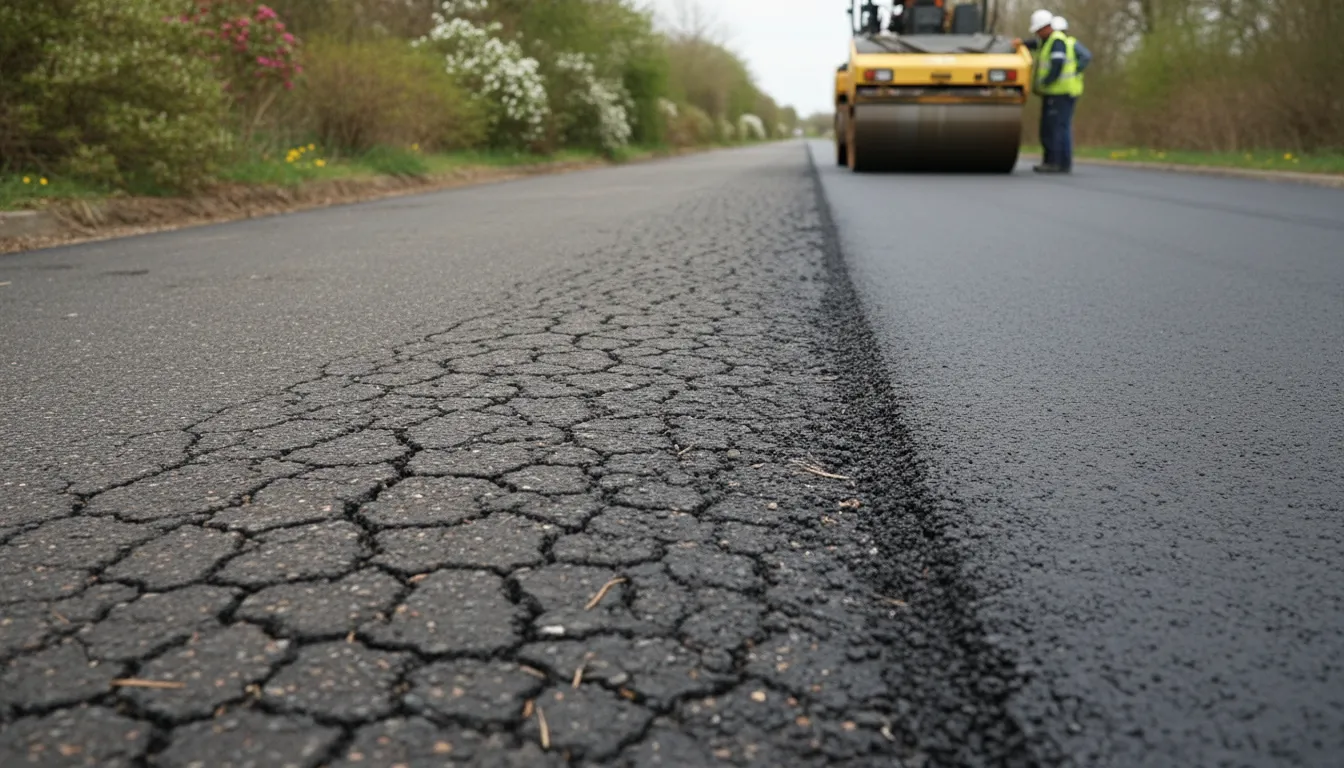
Find the Best Parking Lot Resurfacing Contractors for Your Business
No obligation • Fast responses • Nationwide coverage
Why you can trust Tidy Parking
Tidy Parking is a leading U.S. source for parking lot maintenance services, including striping, sealcoating, sweeping, paving, resurfacing, and repairs. Our content is created independently, and providers cannot pay to influence ratings or recommendations.
Search providers near you
Top Parking Lot Resurfacing Contractors in Queen Creek, Arizona Ranked
Parking lot resurfacing is a critical maintenance procedure that involves applying a new layer of asphalt over an existing, structurally sound pavement. In Queen Creek, this process is essential for extending the life of your pavement, improving safety, and maintaining a professional appearance for your business. The intense Arizona sun and heat demand a specialized approach to asphalt overlay. This guide explains the local process, costs, and regulations to help you connect with qualified paving professionals for your project.
Empire Paving & Maintenance LLC
720 S Smith Rd Ste 105, Tempe, AZ 85288
Empire Paving & Maintenance LLC is a parking lot paving and maintenance company serving Phoenix, AZ, and the entire state of Arizona. They provide a range of services including asphalt paving, crack sealing, striping, sealcoating, concrete repairs, and parking lot resurfacing for residential, commercial, and industrial properties. Their capabilities include asphalt removal and replacement, overlays, milling, and effective crack sealing to extend pavement life. The company is licensed, bonded, and insured with over 10 years of experience in the industry.
Asphalt Paving Mesa
Gilbert, AZ
Asphalt Paving Mesa is a family-owned asphalt paving company serving Gilbert, AZ, and the surrounding Mesa County area. They provide a range of services including residential and commercial asphalt paving, parking lot striping, sealcoating, resurfacing, and pothole repair. The company is experienced in handling projects of all sizes, from driveway paving to large commercial parking lots, with a focus on safety and durability. With decades of experience, Asphalt Paving Mesa emphasizes quality workmanship and community care in every project.
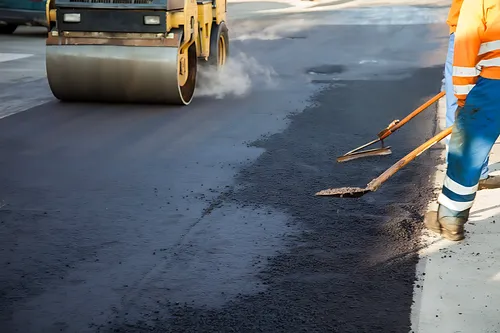
Chandler Asphalt Paving
Phoenix, AZ
Chandler Asphalt Paving is a family-owned company serving Phoenix, AZ, and surrounding areas with residential, commercial, and industrial asphalt paving services. Their offerings include parking lot paving, striping, sealcoating, resurfacing, and repair, with a focus on safety and durability. The team has decades of experience and handles projects ranging from driveways to large parking lots, ensuring minimal disruption for businesses. They emphasize quality workmanship and community commitment in every project.
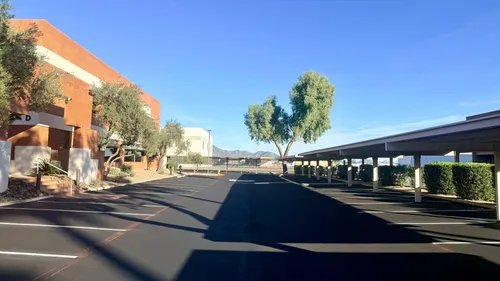
Road Tech Paving LLC
20 E Thomas Rd #2200, Phoenix, AZ 85012
Road Tech Paving LLC is a parking lot paving and repair company based in Phoenix, AZ. They offer a range of services including sealcoating, asphalt patching, line striping, crack sealing, pothole repair, and resurfacing for both residential and commercial properties. Their team uses high-quality materials and proven methods to ensure durable and weather-resistant pavement surfaces. The company provides comprehensive asphalt maintenance that helps extend the life of driveways and parking lots while improving safety and appearance.
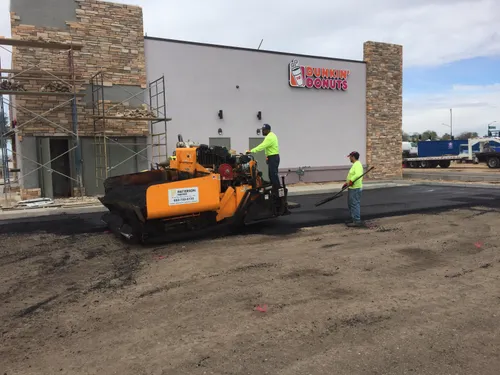
Patterson Paving
4340 E Indian School Rd #21-557, Phoenix, AZ 85018
Patterson Paving is a parking lot paving and repair company based in Phoenix, AZ. With over 60 years of experience, they offer a full range of asphalt services including site preparation, new asphalt installation, striping, resurfacing, and maintenance plans. They serve the entire Phoenix Metro area, including Scottsdale, Glendale, Surprise, Peoria, Buckeye, Avondale, Paradise Valley, Ahwatukee, Chandler, Gilbert, Mesa, Queen Creek, San Tan Valley, and Tempe. Their expertise covers both commercial parking lots and high-end driveway paving projects.
What is Parking Lot Resurfacing?
Often called an overlay, resurfacing is the application of a new wearing course of hot-mix asphalt over an existing parking lot. It is not a full reconstruction, which involves removing and replacing the entire pavement structure. Instead, resurfacing is a cost-effective solution for pavements that are aged, faded, and cracked but have a stable base. The new layer, typically 1.5 to 2 inches thick, seals the surface, restores a smooth ride, and provides a fresh, black appearance. For Queen Creek properties, this process can add 8 to 15 years of service life to your lot.
The Queen Creek Resurfacing Process: A Step-by-Step Guide
A professional asphalt overlay in Queen Creek follows a systematic approach to ensure longevity and compliance with local codes.
1. Site Inspection and Preparation
The first step is a thorough assessment of the existing pavement. A contractor will evaluate the base for stability, drainage, and any underlying issues. In high-traffic areas or sections with severe distress, the damaged asphalt may need to be cut out and replaced (a process known as patching or "dig-outs") to create a uniform foundation for the new overlay.
2. Cleaning and Repairing
All debris, vegetation, and loose material are removed. Critical repairs are made at this stage. Cracks wider than 1/8 inch should be cleaned and sealed with a hot-pour rubberized crack filler to prevent water intrusion. Any potholes are excavated and filled with new hot-mix asphalt. These repairs are crucial; failing to address them can lead to premature failure of the new overlay through a phenomenon called "reflective cracking" 1.
3. Milling or Grinding
In many cases, especially where adding height is a concern (like at building entrances or where curbs are present), the top 1 to 2 inches of the old asphalt is mechanically milled off. This grinding process creates a clean, textured surface for the new asphalt to bond to and ensures the final pavement elevation does not create tripping hazards or drainage issues.
4. Applying the New Asphalt Overlay
A fresh layer of hot-mix asphalt is laid down by a paving machine. The mix used in Arizona is formulated to withstand high temperatures. The asphalt is then compacted with heavy rollers while it is still hot to achieve the proper density and a smooth finish. This is the core of the resurfacing operation.
5. Sealcoating and Curing
After the new asphalt has cured (typically 30-90 days), a protective sealcoat is often applied. This coal-tar or asphalt-based emulsion acts as a sunscreen and waterproofing agent, shielding the pavement from Queen Creek's intense UV rays and occasional monsoon rains, which can significantly extend its lifespan.
6. Final Striping and ADA Compliance
Once the surface is ready, new pavement markings are applied. This is not just about aesthetics; it's a legal requirement. Striping must comply with the Americans with Disabilities Act (ADA) and local Queen Creek ordinances, specifying the dimensions for standard parking spaces, accessible spaces, access aisles, and traffic flow arrows 2.
Local Regulations and Permits in Queen Creek
Navigating local requirements is a key part of any commercial paving project.
- Permit Requirement: Most commercial parking lot resurfacing projects in Queen Creek require a construction permit. Applications are submitted online through the Town's Development Nexus portal.
- Plan Submission: You or your contractor will need to submit a detailed site plan showing the proposed parking layout, including striping dimensions and ADA compliance details, as part of the permit application 3.
- Contractor Licensing: Always verify that your paving contractor holds the appropriate license from the Arizona Registrar of Contractors (ROC). For resurfacing work, relevant classifications include A-14 (Asphalt Paving) and A-15 (Seal Coating and Asphalt Maintenance).
- Dust Control: Maricopa County enforces strict air quality rules. Regulations mandate that all commercial and industrial properties have "dust-free" surfaces, such as asphalt or concrete, to control particulate matter. Resurfacing your lot directly helps meet this requirement 4.
- Inspections: The Town of Queen Creek's Building Safety department will schedule inspections at critical phases of the project to ensure the work complies with approved plans and adopted building codes 5.
Find the perfect parking lot resurfacing contractors for your needs
Get personalized recommendations and expert advice
Cost Factors for Resurfacing in Queen Creek
The total investment for a parking lot overlay depends on several variables. The primary cost driver is the square footage of the area to be resurfaced.
- Price Per Square Foot: The typical range for resurfacing in the region is $1 to $3 per square foot. This wide range accounts for project complexity, the current price of oil (a key component of asphalt), and material availability.
- Extent of Repairs: The condition of your existing pavement greatly affects cost. A lot requiring extensive crack sealing, patching, and base repairs before the overlay can be applied will cost more than one in relatively good condition.
- Project Size: There are economies of scale. Larger lots (e.g., 50,000+ sq. ft.) may see a lower cost per square foot than very small lots.
- Sample Project Estimates:
Optimal Timing and Seasonal Considerations
Arizona's climate presents unique scheduling challenges for asphalt work.
- Best Seasons: The ideal time for resurfacing in Queen Creek is during moderate temperatures, typically in the late spring (April-May) or early fall (September-October). The ambient heat helps with compaction and curing without being excessive.
- Summer Heat Constraints: While hot-mix asphalt requires heat, extreme summer temperatures can make the material too pliable during installation and difficult for workers to manage. Some contractors may adjust mix formulas or work during cooler parts of the day.
- Water Management: If your property uses irrigation, sprinklers must be turned off for at least 24 hours before and after asphalt application. Water can cool the hot mix too quickly, preventing proper compaction and leading to weak spots 8.
How to Choose a Qualified Contractor
Selecting the right professional is crucial for a successful overlay project.
- Verify ROC License: Ask for their Arizona ROC license number and confirm it's active and in the correct classification (A-14, A-15).
- Check References & Portfolio: Ask for local references and examples of recent resurfacing projects in the Queen Creek or East Valley area.
- Review the Proposal in Detail: A professional quote should be itemized, including costs for repairs, milling, asphalt tonnage, compaction, sealcoating, striping, and permit acquisition.
- Ensure They Handle Permits: A reputable contractor will typically manage the permit application and inspection process on your behalf.
- Ask About Warranties: Inquire about workmanship warranties for the overlay and any repairs performed.
Frequently asked questions
Sources
Footnotes
-
Parking Lot Resurfacing: Complete Cost Guide & Process [2025] - C&C Super Seal ↩
-
Commercial/Industrial Project Submittal Requirements - Town of Queen Creek ↩
-
Arizona State Requirements for Parking Lots - One Stop Asphalt ↩
-
Parking Lot Resurfacing: Complete Cost Guide & Process [2025] - C&C Super Seal ↩
-
Asphalt Service Price Guide in Cave Creek, AZ | Spring 2026 ↩