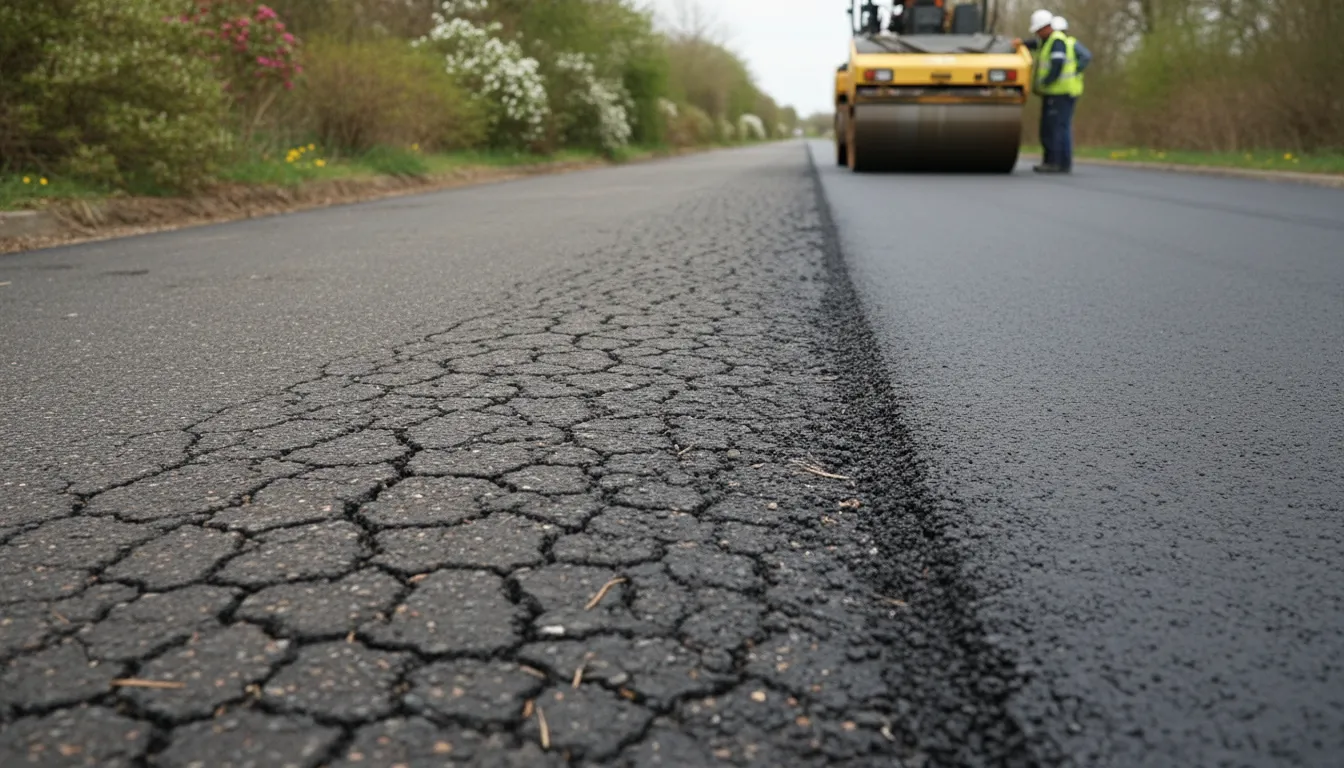
Find the Best Parking Lot Resurfacing Contractors for Your Business
No obligation • Fast responses • Nationwide coverage
Why you can trust Tidy Parking
Tidy Parking is a leading U.S. source for parking lot maintenance services, including striping, sealcoating, sweeping, paving, resurfacing, and repairs. Our content is created independently, and providers cannot pay to influence ratings or recommendations.
Search providers near you
Best Parking Lot Resurfacing Contractors in Alaska Ranked
Maintaining a safe and durable parking lot in Alaska is a unique challenge. The extreme freeze-thaw cycles, heavy snowfall, and short construction season demand specialized materials and expert planning. Parking lot resurfacing is the process of applying a new layer of asphalt over an existing, stable base to restore a smooth, waterproof surface and extend the pavement's life. This guide explains the critical considerations for Alaskan conditions, from material specifications to project timing, to help property owners and managers make informed decisions and connect with qualified local contractors who understand these regional demands.
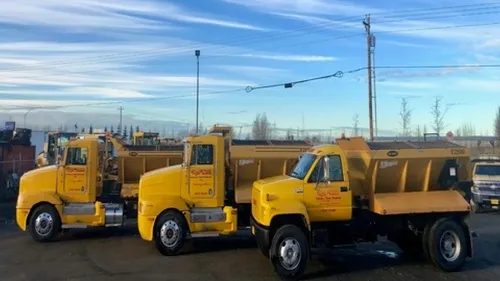
Ron Webb Paving, Inc
241 King Cir, Anchorage, AK 99515
Ron Webb Paving, Inc is a family-owned and operated paving and snow removal company based in Anchorage, AK. Since 1980, they have provided commercial and residential paving services including parking lot construction, asphalt repairs, seal coating, and resurfacing. Their capabilities also extend to excavation, storm drain installation, and commercial snow removal, serving the Anchorage area with licensed and insured expertise.
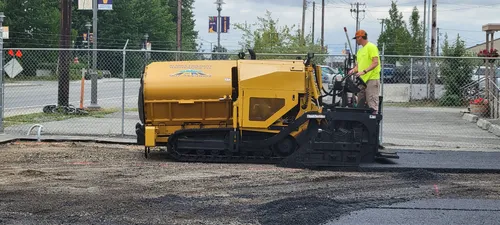
AK Pave Co.
9044 Hartzell Rd, Anchorage, AK 99507
AK Pave Co. is a commercial and residential asphalt paving and maintenance contractor based in Anchorage, AK. They provide services including asphalt paving, parking lot striping, crack filling, seal coating, repairs, and commercial snow plowing with 24-hour availability. The company serves Anchorage, Girdwood, the Mat-Su Valley, and surrounding areas. AK Pave Co. offers custom driveway and parking lot installations designed for Alaska's northern climate, ensuring durable and well-prepared surfaces. They have an owner on-site for quality control and provide a one-year warranty on new pavement.
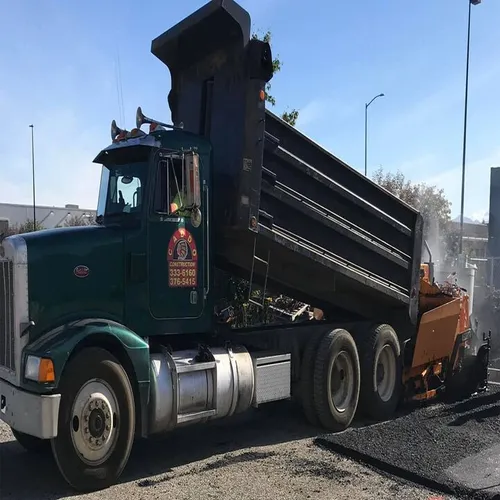
Caddo Construction LLC
720 E Schrock Rd, Wasilla, AK 99654
Caddo Construction LLC is a licensed and insured asphalt and paving company serving Anchorage, AK, and the Mat-Su Valley. They provide a wide range of services including parking lot striping, seal coating, asphalt overlays, resurfacing, and snow removal for commercial, civil, and residential projects. Their team uses innovative equipment to deliver durable and quality finishes tailored to client needs. Caddo Construction LLC emphasizes safety and quality standards in their work and offers reliable service backed by years of regional experience.
Understanding Alaska's Unique Pavement Challenges
Alaska's climate is one of the most punishing in the world for asphalt pavement. The primary enemy is the relentless cycle of freezing and thawing. Water seeps into tiny cracks, freezes and expands, then thaws, creating voids and heaving the pavement. Over a single season, this process can turn minor surface flaws into major structural failures. Successful resurfacing here isn't just about laying new asphalt; it's about engineering a solution that can withstand these forces.
Beyond freeze-thaw, project planning must account for snow management. Parking lots need designated areas for snow storage during plowing. If these piles melt directly onto the pavement, the resulting water can saturate the sub-base, leading to instability and premature failure. Proper design integrates this reality from the start.
Finally, the construction window is narrow. Asphalt must be placed and compacted when ambient and ground temperatures are consistently above 50°F to ensure proper bonding and density. This typically restricts major resurfacing work to the period from late spring through early fall, making scheduling and contractor availability critical factors.
When is Resurfacing the Right Solution?
Resurfacing is a cost-effective strategy, but only under the right conditions. It is not a fix for foundational problems.
- Stable Base Required: Resurfacing is viable only if the underlying base and subgrade are structurally sound. If the existing pavement shows alligator cracking, severe rutting, or potholes that indicate base failure, a simple overlay will not last. The new surface will quickly mirror the failures beneath it, necessitating a full reconstruction.
- Addressing Surface Wear: Resurfacing is ideal for lots showing signs of aging like widespread surface oxidation (graying), minor cracking, raveling (loose aggregate), or minor surface irregularities. It restores a smooth ride, renews the waterproof seal, and provides a fresh, dark surface that improves safety and aesthetics.
- Cost vs. Replacement: Financially, resurfacing is significantly less expensive than full-depth reconstruction. In Alaska, resurfacing typically costs between $1 and $3 per square foot, while complete replacement can range from $4 to $10 per square foot 1. Resurfacing also has a much faster turnaround, often allowing access to be restored within 24 to 48 hours.
Alaskan Asphalt: Material Specifications and Types
Not all asphalt mix is created equal, especially for Alaskan applications. The state's Department of Transportation provides strict specifications for Hot Mix Asphalt (HMA) to ensure durability. These are categorized by type, each with defined parameters for voids, asphalt content, and minimum lift (layer) thickness.
- Type I Mix: Designed for a minimum 3-inch lift. It has a Voids in Mineral Aggregate (VMA) of 13% and an asphalt content of 4.5-7.0%. This thicker lift is used for heavier-duty applications or to build up surface elevation.
- Type II Mix: A common choice for parking lot overlays, with a minimum 2-inch lift. It has a VMA of 14% and an asphalt content of 5.0-7.5%.
- Type III Mix: Used for thinner overlays (minimum 1.5 inches), with a VMA of 15% and asphalt content of 5.5-8.0% 2.
- Type V Mix: Similar to Type II but with specific aggregate gradation, also for a 2-inch lift.
Contractors familiar with Alaskan specs will select the appropriate mix type based on traffic load, existing pavement condition, and the desired final thickness. Using the correct, high-quality HMA is non-negotiable for long-term performance in this environment.
Find the perfect parking lot resurfacing contractors for your needs
Get personalized recommendations and expert advice
Critical Design and Drainage Considerations
A new surface is only as good as the water management system beneath and around it. Proper design is paramount.
- Slope and Grading: Effective drainage is the first line of defense against water damage. Pavement must be graded with a minimum slope (typically 1-2%) to direct water toward drains or perimeters, preventing ponding. In Alaska, standing water is a direct path to frost heave and cracking during freeze-up.
- Infrastructure for Meltwater: A comprehensive plan accounts for spring snowmelt. This may include adequately sized storm drains, retention ponds, or even bioretention areas (rain gardens) to manage the large volume of runoff from melting snow piles without overwhelming the system or soaking the ground near the pavement 3.
- ADA Compliance: All resurfacing projects must review and comply with the Americans with Disabilities Act (ADA) requirements for parking lots. This includes providing the correct number and size of accessible parking spaces, proper slope on access aisles (max 2.0%), and smooth, slip-resistant transitions 4. Resurfacing is an ideal time to correct any existing non-compliant features.
The Resurfacing Process and Timeline
Understanding the steps involved can help you plan for a successful project.
- Professional Assessment: A qualified contractor will evaluate your lot's condition, test the base stability, and identify any underlying issues that must be addressed before resurfacing.
- Preparation: This includes cleaning the surface, milling (grinding) off the top layer if needed to maintain curb heights or improve adhesion, and repairing any localized base failures. All cracks should be cleaned and filled.
- Paving: The new hot mix asphalt is delivered, spread, and compacted with heavy rollers. Temperature control during this phase is critical for achieving proper density and seam bonding.
- Cooling and Striping: Once compacted, the asphalt must cool and harden before it can accept traffic. Parking stall lines, symbols, and curb markings are then applied with durable, weather-resistant paint.
For a typical commercial parking lot in Alaska, the active construction phase for resurfacing can often be completed in 1 to 3 days, with sections reopening as they cool.
Long-Term Maintenance After Resurfacing
Protecting your investment starts as soon as the new asphalt has cured.
- Sealcoating: Applying a protective coal tar or asphalt-based sealer is highly recommended. It shields the surface from UV rays, gasoline, oil, and water penetration. In Alaska, sealcoating (costing approximately $0.14 to $0.50 per square foot) should be applied 6-12 months after resurfacing and then reapplied every 2 to 4 years 5 6.
- Proactive Crack Sealing: Annually inspect and seal any new hairline cracks to prevent water infiltration, the primary cause of pavement deterioration in cold climates.
- Snow Plowing Practices: Use plows with rubber blades or proper shoes to avoid gouging the new surface. Avoid piling snow in the same spot repeatedly to prevent base saturation.
Frequently asked questions
Sources
Footnotes
-
Parking Lot Resurfacing: Complete Cost Guide & Process [2025] - https://www.candcsuperseal.com/parking-lot-resurfacing-complete-cost-guide-process-2025/ ↩
-
- Pavement Design - https://dot.alaska.gov/stwddes/dcsprecon/assets/pdf/preconhwy/revisions/sect1180_eff0105.pdf
-
A Handbook for Homer, Alaska - https://www.cityofhomer-ak.gov/sites/default/files/fileattachments/planning/page/6964/homerstormwater.pdf ↩
-
ADA Compliance: Parking Lot Slope Requirements - Attorney Aaron Hall - https://aaronhall.com/ada-compliance-parking-lot-slope-requirements/ ↩
-
Parking Lot Seal Coating Costs for Asphalt : 2025 Pricing Guide - https://www.fixasphalt.com/blog/how-much-does-it-cost-to-sealcoat-an-asphalt-parking-lot ↩
-
A Breakdown of Parking Lot Maintenance Costs - TRUEGRID Pavers - https://www.truegridpaver.com/parking-lot-maintenance-costs/ ↩