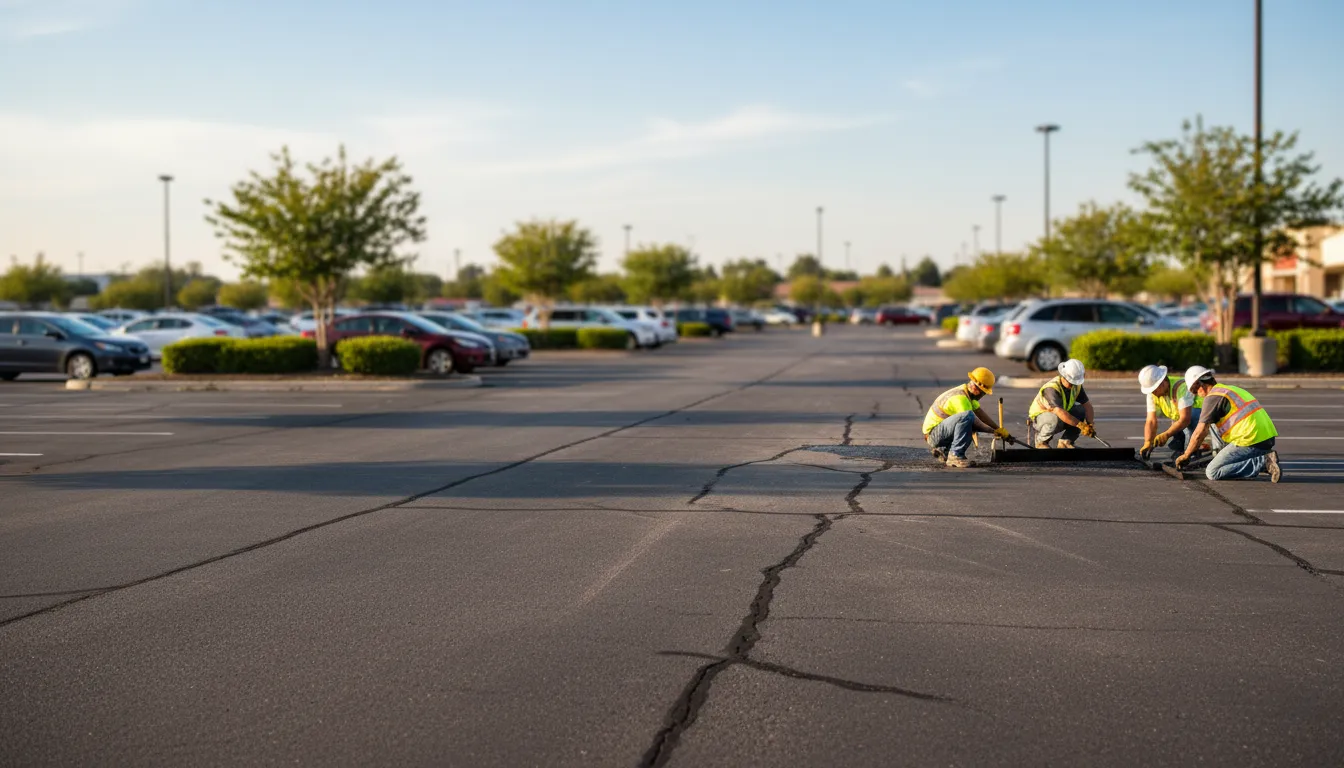
Find the Best Parking Lot Repair Companies for Your Business
No obligation • Fast responses • Nationwide coverage
Why you can trust Tidy Parking
Tidy Parking is a leading U.S. source for parking lot maintenance services, including striping, sealcoating, sweeping, paving, resurfacing, and repairs. Our content is created independently, and providers cannot pay to influence ratings or recommendations.
Search providers near you
Top Parking Lot Repair Companies in Surprise, Arizona Ranked
Maintaining a safe and functional parking area is a critical responsibility for any business or property owner in Surprise. The intense Arizona sun and heavy traffic loads can quickly turn minor pavement issues into major, costly structural problems. This guide explains the common types of asphalt damage seen locally, the repair solutions available, and how to develop a proactive maintenance plan to protect your investment. You can use this information to understand your property's needs and connect with qualified local contractors for assessments and quotes.
Western Asphalt Solutions
Phoenix, AZ
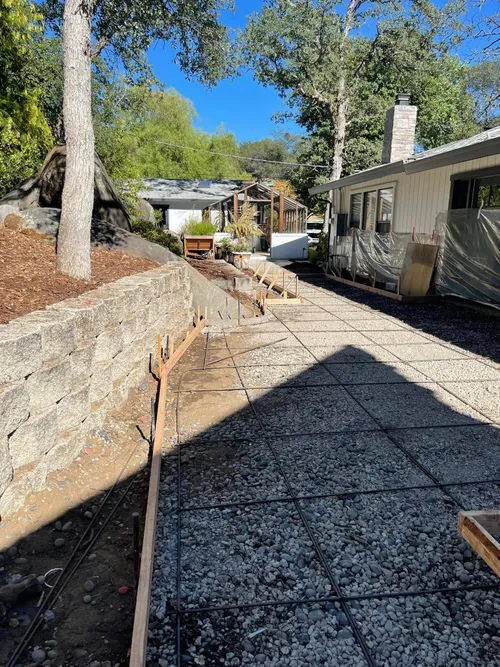
Western Asphalt Solutions is an asphalt contractor based in Phoenix, AZ, providing services for residential and commercial clients. They specialize in asphalt paving, patching, striping, sealcoating, driveway installation, and parking lot construction and repair. Their team uses premium materials designed for Arizona's climate to ensure durable and long-lasting surfaces. The company has years of experience and focuses on customized solutions to meet specific project needs. They also emphasize sustainability by using environmentally friendly materials when possible.
Progressive Asphalt Solutions
Phoenix, AZ
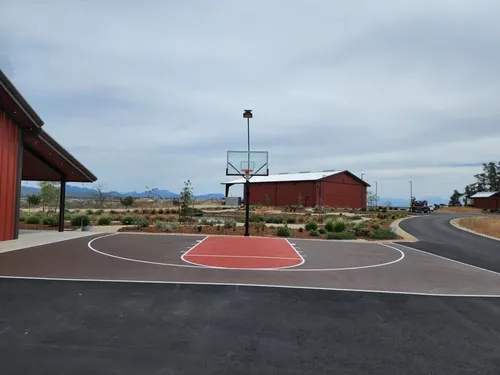
Progressive Asphalt Solutions is a locally owned asphalt contractor serving Phoenix, AZ. They provide a full range of asphalt services including paving, patching, striping, sealcoating, and driveway installation for both residential and commercial clients. The company uses high-quality materials and modern equipment to deliver durable asphalt surfaces designed to withstand the challenges of the Arizona climate. With years of experience, Progressive Asphalt Solutions focuses on tailored solutions and clear communication to meet client needs effectively.
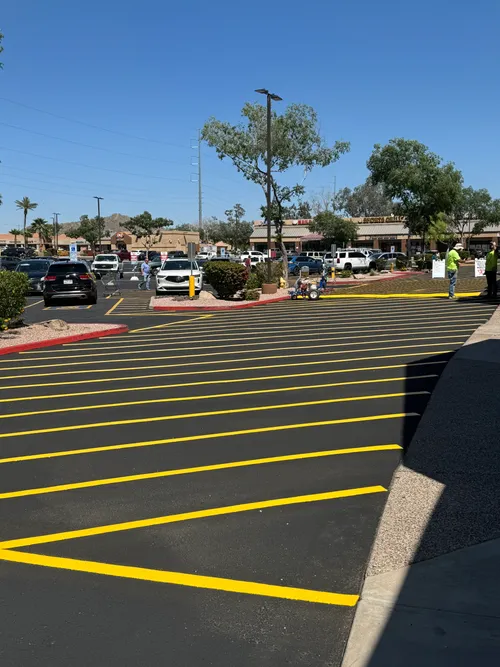
American Supreme Paving & Sealcoating
8614 N 26th Ave, Phoenix, AZ 85021
American Supreme Paving & Sealcoating is a parking lot paving and repair company based in Phoenix, AZ. They offer services including patching, crack sealing, sealcoating, and line striping to improve the durability and appearance of parking lots and driveways. With over a decade of experience, the company uses high-quality products to protect pavement from extreme weather and extend its lifespan. They serve the entire Phoenix valley area.
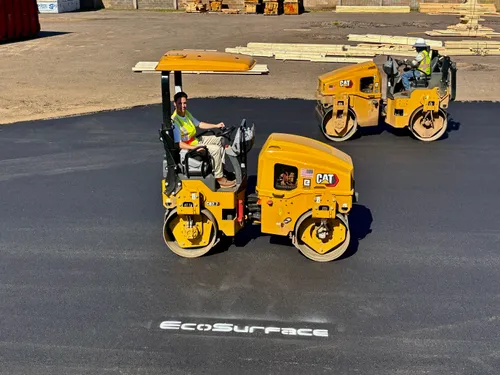
EcoSurface, LLC
2390 E Camelback Rd Suite 130, Phoenix, AZ 85016
EcoSurface, LLC is a parking lot striping, sealcoating, paving, and repair company based in Phoenix, AZ. They offer a wide range of services including asphalt paving, patching, crack sealing, seal coating, striping, and concrete maintenance. With over 50 years of combined industry experience, EcoSurface has completed more than 2,600 projects since 2002. Their capabilities include environmentally conscious asphalt solutions and advanced seal coating technology to extend pavement lifespan.
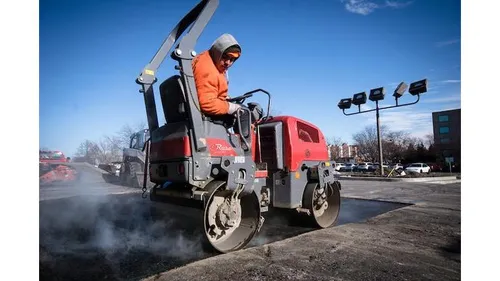
Rose Paving Phoenix
245 E Watkins St, Phoenix, AZ 85004
Rose Paving Phoenix is a commercial paving company based in Phoenix, AZ, offering a wide range of parking lot maintenance and repair services. With over 50 years of experience, they specialize in asphalt and concrete repair, sealcoating, crack sealing, and precise parking lot striping to help maintain safe and compliant parking areas. Their services are designed to extend the life and appearance of parking lots while minimizing disruption to business operations. Rose Paving Phoenix is recognized for its expertise in asphalt removal and replacement, as well as preventative maintenance solutions tailored to the local climate.
Why Surprise's Climate is Tough on Asphalt
The desert environment in Surprise presents a unique set of challenges for asphalt pavement. Understanding these factors is the first step in implementing an effective repair and maintenance strategy.
Extreme Heat and UV Radiation: Arizona's intense, year-round sun is a primary aggressor. Ultraviolet (UV) rays break down the binding agents in asphalt, causing it to become brittle, fade to a dull gray, and lose its flexibility. This process, called oxidation, makes the surface highly susceptible to cracking. Simultaneously, the extreme daytime heat can soften the asphalt binder, leading to rutting and warping under the weight of vehicles.
Thermal Expansion and Contraction: Surprise experiences significant temperature swings between day and night. Asphalt expands in the heat and contracts as it cools. This constant cycle stresses the material, creating cracks that widen over time. Once a crack forms, it becomes an entry point for the next major threat: water.
Monsoon Moisture and Drainage Issues: While Surprise is dry for much of the year, the summer monsoon season brings intense, heavy rains. When water seeps into cracks, it washes away the compacted soil and gravel base layer that supports the asphalt. This erosion creates voids beneath the surface, leading to sagging, alligator cracking, and ultimately, potholes 1. Proper drainage is essential to channel water away from the pavement.
Heavy Traffic Loads: Commercial lots, in particular, face constant stress from delivery trucks, garbage trucks, and daily customer traffic. This repetitive heavy loading fatigues the asphalt and its base, accelerating the formation of structural "alligator" or fatigue cracking.
Common Types of Parking Lot Damage in Surprise
Recognizing the early signs of pavement distress can help you address issues before they escalate.
- Alligator (Fatigue) Cracking: A network of interconnected cracks that resemble alligator skin. This is a sign of structural failure in the base layer, often caused by water infiltration or repeated heavy loads 2.
- Potholes: These bowl-shaped depressions are the result of unchecked cracking. Water enters a crack, erodes the base, and traffic breaks up the unsupported asphalt, creating a hole that grows rapidly 3.
- Linear and Transverse Cracking: Straight-line cracks that run parallel (longitudinal) or perpendicular (transverse) to the pavement's direction. They are often caused by thermal stress, shrinkage, or underlying joint failures.
- Raveling and Fading: The loss of surface aggregate, leaving a rough, pitted texture, and the bleaching of the asphalt to a light gray color are direct results of UV oxidation and weathering 4.
- Rutting and Depressions: Channels or dips in the wheel paths indicate a softened surface or a compromised base layer, frequently worsened by heat and heavy trucks.
Professional Repair Solutions for Damaged Pavement
For each type of damage, there is a targeted repair method. The right solution depends on the extent, severity, and cause of the problem.
Crack Sealing and Filling
This is the most cost-effective and preventative maintenance you can perform. Specialized sealants or fillers are applied to cracks to prevent water, oil, and debris from penetrating the base layer. Industry experts note that water infiltration is the number one cause of potholes and base failure, making annual crack sealing a critical task for Surprise properties.
Patching (Surface and Deep)
Patching is used to repair isolated areas of damage like potholes or localized cracking.
- Surface Patching: Addresses defects limited to the top layer of asphalt.
- Deep Patching (Full-Depth Repair): Involves removing damaged asphalt down to the base layer, repairing or replacing the base material, and compacting new asphalt on top. This is necessary for structural potholes and alligator-cracked areas 5.
Sealcoating
More than just a cosmetic treatment, sealcoating is a protective barrier. A coal tar or asphalt-based emulsion is applied to the surface, shielding it from UV rays, water, oil, and gasoline spills. In Surprise's climate, applying a fresh sealcoat every 2 to 3 years is a recommended best practice to significantly extend pavement life and maintain a dark, fresh appearance.
Resurfacing (Overlay)
When a parking lot has widespread surface damage but a structurally sound base, resurfacing is an excellent option. This process involves milling (grinding) the top inch or two of damaged asphalt and then applying a brand new layer over the existing base. A resurface or overlay can extend the life of a pavement by 8 to 15 years and is ideal for lots under 20 years old with less than 30% damage 6.
Complete Removal and Replacement
When a pavement system has failed completely-with severe alligator cracking, deep base failures, and drainage issues-partial repairs are no longer viable. Total reconstruction involves excavating all old asphalt and base materials, re-grading and compacting a new stone base, and installing a full-depth asphalt pavement. This is the most extensive and costly option but is necessary for long-term stability when the foundation is compromised 7.
Find the perfect parking lot repair companies for your needs
Get personalized recommendations and expert advice
Understanding Parking Lot Repair Costs in Surprise
Costs for pavement maintenance and rehabilitation vary widely based on the scope of work, the size of the lot, and the materials used. The following ranges provide a general framework, but obtaining detailed quotes from local contractors is essential.
- Sealcoating: As a preventative measure, this is typically priced by the square foot and is one of the most affordable ways to protect your investment.
- Crack Sealing & Patching: Small repairs and crack filling often range from $2 to $5 per square foot, depending on the complexity and amount of linear feet 8.
- Resurfacing/Overlay: For larger projects involving milling and a new asphalt layer, costs are more economical per square foot for big areas, generally ranging from $1 to $3 per square foot 9 10.
- Complete Removal & Replacement: This major capital project is the most expensive, with costs typically ranging from $4 to $10 per square foot, as it includes full excavation, new base materials, and all new asphalt 11.
Proactive Maintenance Saves Money: The single most effective way to manage costs is through a proactive plan. An annual crack sealing program and biennial sealcoating can prevent minor issues from evolving into problems that require a full-depth patch or resurfacing, saving significant money over the lifespan of the lot.
Creating a Proactive Maintenance Plan for Surprise Properties
Given the local climate, a scheduled, preventative approach is not just recommended-it's necessary for cost-effective property management.
- Annual Inspection: Perform a thorough walk-through of your parking lot each spring, before the monsoon season. Look for new cracks, drainage issues, and signs of raveling.
- Crack Sealing: Fill any new cracks annually. This simple step is your best defense against water damage.
- Sealcoating Schedule: Apply a high-quality sealcoat every 2 to 3 years to combat UV oxidation and fluid damage.
- Immediate Pothole Repair: Address potholes and surface depressions as soon as they are spotted to improve safety and prevent base washout.
- Professional Assessment: Every 5-7 years, have a reputable pavement contractor conduct a professional evaluation to plan for larger projects like resurfacing before catastrophic failure occurs.
Frequently asked questions
Sources
Footnotes
-
ACI ASPHALT & CONCRETE - https://www.aciindiana.com/blog/ ↩
-
Asphalt Commercial Repair in Phoenix - https://onestopasphalt.com/services/commercial-asphalt-repair/ ↩
-
Parking Lot Repair in Phoenix - One Stop Asphalt - https://onestopasphalt.com/services/parking-lot-repair/ ↩
-
How Sun & Heat Affect Asphalt Pavement in Arizona - https://apschipsealingpaving.com/the-harsh-effects-of-sun-and-heat-on-asphalt-pavement-in-arizona/ ↩
-
Repair of asphalt parking lots and driveways - https://www.asphaltmagazine.com/repair-of-asphalt-parking-lots-and-driveways/ ↩
-
Parking Lot Repair Types | One Stop Asphalt in Phoenix - https://onestopasphalt.com/blog/parking-lots-when-to-sealcoat-overlay-replace/ ↩
-
Parking Lot Repair vs Replace - What to do? - https://nationalfacilitycontractors.com/asphalt-services/parking-lot-repair/ ↩
-
Asphalt Patch Repair Prices Breakdown - Pavemade.com - https://pavemade.com/pages/asphalt-patch-repair-prices-breakdown ↩
-
Parking Lot Resurfacing: Complete Cost Guide & Process [2025] - https://www.candcsuperseal.com/parking-lot-resurfacing-complete-cost-guide-process-2025/ ↩
-
Comprehensive Care: Parking Lot Repair Techniques - https://heartlandpavingpartners.com/comprehensive-care-parking-lot-repair-techniques/ ↩
-
Proactive Asphalt Maintenance Plan for Arizona Properties - https://valorpavement.com/blog/asphalt-maintenance-plan-for-arizona-properties/ ↩