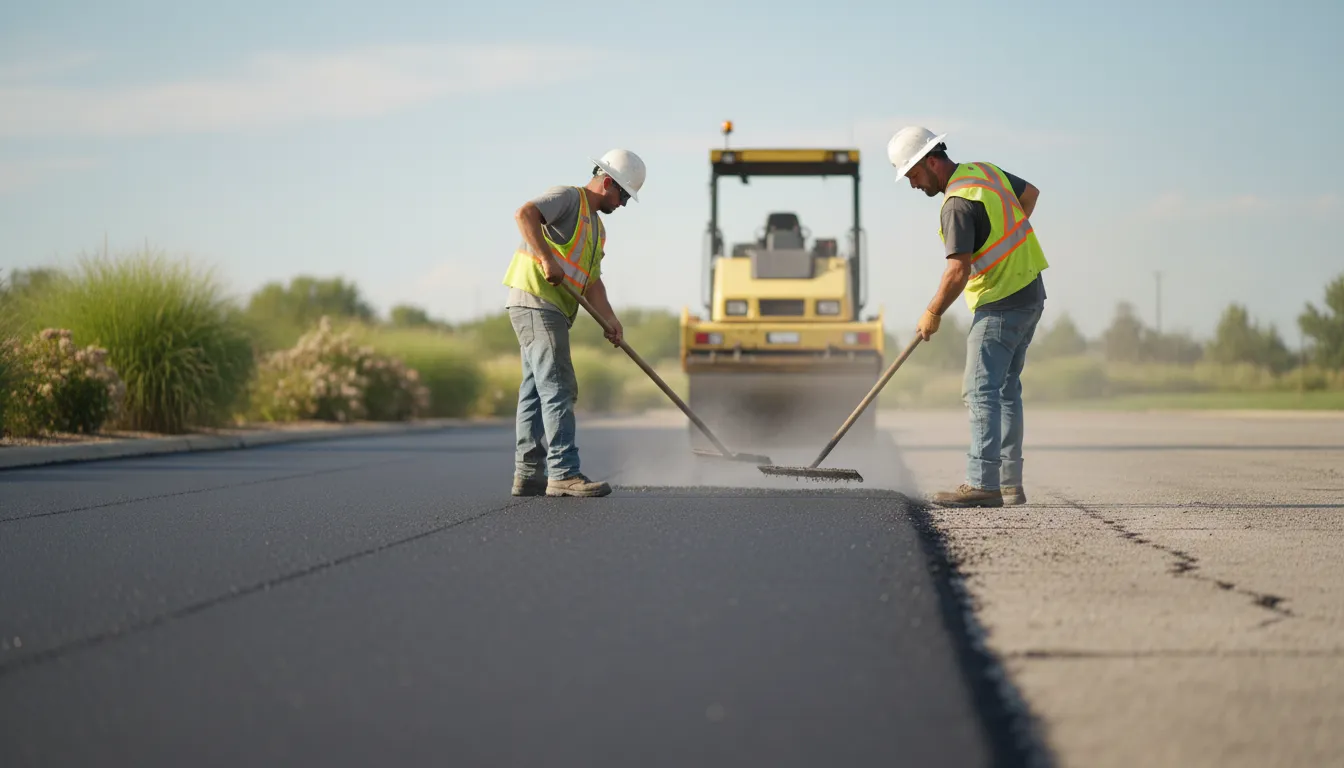
Find the Best Parking Lot Paving Contractors for Your Business
No obligation • Fast responses • Nationwide coverage
Why you can trust Tidy Parking
Tidy Parking is a leading U.S. source for parking lot maintenance services, including striping, sealcoating, sweeping, paving, resurfacing, and repairs. Our content is created independently, and providers cannot pay to influence ratings or recommendations.
Search providers near you
Top Parking Lot Paving Contractors in Vancouver, Washington Ranked
A well-paved parking lot is a critical asset for any business or property in Vancouver, providing a safe, durable, and professional first impression for customers and tenants. Parking lot paving involves the construction of a new asphalt surface, a significant investment that requires careful planning to handle the region's unique climate and soil conditions. This guide explains the local paving process, costs, and key considerations to help you understand your project and connect with experienced local paving contractors who can deliver a long-lasting result.
Black Diamond Sealcoating
940 NW Dunbar Ave #100, Troutdale, OR 97060
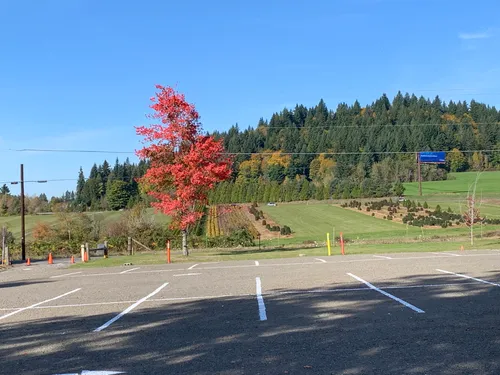
Black Diamond Sealcoating is a parking lot sealcoating, paving, striping, sweeping, and repair company serving Portland, OR, and the surrounding metro area. Their services include sealcoating to protect paved surfaces, crack sealing, parking lot striping with ADA and specialty stenciling, lot sweeping, and asphalt paving for commercial and residential properties. They cover a broad area including Troutdale, Gresham, Sandy, Vancouver, and extend to the Columbia River Gorge, Willamette Valley, and south to Salem. Black Diamond is fully licensed, bonded, and insured, offering expertise in maintaining and extending the life of asphalt surfaces.
360 Paving of Washington
11410 NE 72nd Ave, Vancouver, WA 98686
360 Paving of Washington is a paving contractor serving Portland, OR, specializing in commercial and residential asphalt services. They handle projects of all sizes, including parking lot striping, sealcoating, paving, patchwork repairs, and installation of speed bumps and curbs. With over three generations of experience, the company offers personalized solutions and 1-year workmanship warranties on their work. Their team is skilled in asphalt repair and paving, ensuring durable and low-maintenance surfaces for driveways and parking lots.
Alamo Paving Co
13595 SE Ambler Rd, Clackamas, OR 97015
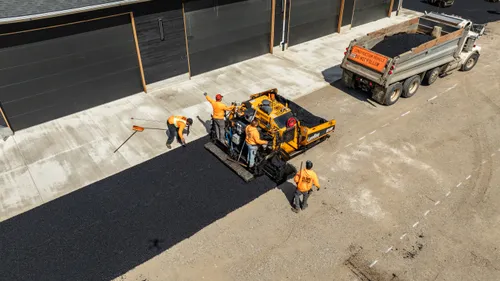
Alamo Paving Co is a family-owned parking lot paving contractor based in Portland, OR, serving Northern Oregon and Southern Washington. With 40 years of experience, they offer residential and commercial asphalt paving services tailored to each project's needs. Their expertise includes detailed on-site assessments and quality asphalt paving work to enhance property exteriors. The company emphasizes personalized service and has a long history of serving the Portland metro area.
William Stanley & Sons Paving
5933 NE Win Sivers Dr #205, Portland, OR 97220
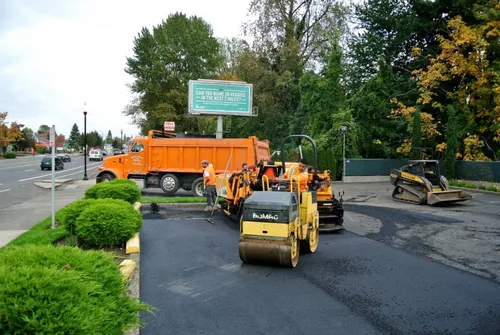
William Stanley & Sons Paving is a third-generation, family-owned paving company serving Portland, OR, and the surrounding metro area. With over 30 years of experience, they provide residential and commercial paving services including driveway installations, parking lot paving, sealcoating, striping, grading, crack sealing, and asphalt resurfacing. Their expertise extends to ADA-compliant parking striping and eco-friendly permeable asphalt solutions. The company emphasizes quality craftsmanship and local knowledge, working year-round to meet diverse paving needs.

Keystone Concrete Driveway Retaining Wall Foundation Contractor
1020 SW Taylor St Suite 540, Portland, OR 97205
Keystone Concrete Driveway Retaining Wall Foundation Contractor is a concrete construction company based in Portland, OR. They offer a wide range of services including concrete driveways, patios, steps, retaining walls, decorative concrete, and ADA-compliant ramps. Their team is skilled in delivering customized concrete solutions with attention to detail and quality craftsmanship. Keystone Concrete is known for handling both simple and intricate projects, providing durable and visually appealing concrete work throughout Portland. They emphasize using premium materials and industry best practices to ensure long-lasting results.
Understanding the Paving Process in Southwest Washington
Paving a parking lot in Vancouver is more than just laying down asphalt; it's a multi-stage construction project designed to create a stable foundation that will withstand decades of use and weather. The process is engineered to address specific local challenges, such as heavy winter rainfall and clay-rich soils.
A typical commercial paving project follows these key steps:
- Site Planning & Permits: The process begins with design, aiming to minimize complex shapes that create hard-to-drain areas. Efficient designs prioritize long, straight runs for paving machinery.
- Clearing & Grading: The site is cleared and graded to establish a stable base and, most importantly, proper drainage. Given Vancouver's high rainfall, grading with a minimum 2% slope is essential to direct water toward drains or bioswales 1 2.
- Soil Stabilization: This is a critical step for Vancouver's often wet, clay-heavy soils. Contractors may need to "undercut" or over-excavate soft soil and replace it with structural fill or use geotextile fabrics to prevent future sinking and cracking.
- Subbase Preparation: A thick, compacted gravel base (typically 8-12 inches or more) is installed. This layer bears the load, provides frost protection, and ensures proper drainage away from the asphalt.
- Paving: Hot mix asphalt (HMA) is laid in multiple "lifts" or layers. A sturdy base layer is followed by a smoother, finer top layer designed to shed water effectively.
- Finishing: Once the asphalt has cured (usually 6-12 months), final line striping and sealcoating are applied to protect the surface and define parking spaces.
Key Local Factors Influencing Your Paving Project
Vancouver's environment presents specific challenges that directly impact how a parking lot should be built. Ignoring these factors can lead to premature failure, including cracks, potholes, and drainage issues.
- High Rainfall and Drainage: Southwest Washington's wet winters make stormwater management a top priority. A paving plan must include comprehensive drainage solutions, such as adequate slope, catch basins, and possibly even bioswales, to prevent water from pooling and weakening the pavement structure.
- Clay-Heavy Soils: The prevalent soil in the area drains poorly and can expand when wet. This necessitates the soil stabilization techniques mentioned earlier, like undercutting and geotextiles, to create a firm, unyielding base for the asphalt 3 4.
- Asphalt Mix Selection: Local contractors often use asphalt mixes specifically formulated for durability in wet conditions. The focus is on achieving the right density and composition to resist water infiltration and the stresses of freeze-thaw cycles.
- Efficient Site Design: To control costs and improve longevity, designs should avoid intricate curves and tight corners. Simple, functional layouts are easier to pave correctly, drain effectively, and maintain over time.
Find the perfect parking lot paving contractors for your needs
Get personalized recommendations and expert advice
Cost Breakdown for Parking Lot Paving in Vancouver
The cost to pave a parking lot in Vancouver, WA, is typically quoted per square foot, with a wide range based on project scope and site conditions. Prices generally fall between $2.50 and $7.00 per square foot for a full construction project.
- Total Project Cost (Small Lot): For smaller commercial lots, costs are often higher per square foot due to fixed mobilization and equipment costs, ranging from $4.00 to $9.00 per sq ft.
- Total Project Cost (Large Lot): Larger projects benefit from economies of scale, with costs typically ranging from $2.50 to $6.00 per sq ft 5.
- Resurfacing Only: If an existing asphalt base is in good condition, applying a new wear layer (resurfacing) is a cost-effective option, usually costing $1.00 to $3.00 per sq ft 6.
Example Project: For a standard 10,000-square-foot lot, total project costs for new pavement can range from approximately $25,000 to $70,000, with the final price heavily dependent on the required site preparation, drainage work, and asphalt thickness 7.
Comparing Paving to Repair and Maintenance Options
Not every parking surface issue requires a full paving project. Understanding your options helps in budgeting and planning.
- Full Paving vs. Resurfacing: New paving is necessary when the base and subgrade have failed or no pavement exists. Resurfacing (or overlay) is a thinner new layer applied over sound existing asphalt to renew the surface and correct minor issues.
- When Repair is Sufficient: Isolated problems like potholes, alligator cracking in small areas, or drainage issues at specific points can often be addressed with targeted repairs like patching, crack sealing, or adjusting drain inlets, postponing the need for a major investment.
- The Role of Sealcoating: While not a structural fix, sealcoating is a crucial maintenance activity. It protects the asphalt surface from oxidation, water, and chemical spills, extending the life of the pavement. It is usually applied after the new asphalt has fully cured.
Planning and Executing Your Project
A successful parking lot construction project requires foresight and clear communication.
- Initial Assessment: Have a qualified contractor evaluate your site. They will assess soil conditions, drainage, and the intended use to recommend the appropriate pavement structure.
- Detailed Quoting: Ensure your quote is detailed and includes all phases: excavation, soil stabilization, gravel base, asphalt thickness (in inches), drainage work, and finishing. This prevents unexpected costs later 8.
- Timing and Scheduling: Asphalt paving is best done in dry, warmer conditions. In Vancouver, planning for late spring through early fall is ideal. Schedule well in advance, as reputable contractors are often booked.
- Understanding Standards: A professional contractor should meet or exceed commercial paving standards for compaction, slope, thickness, and smoothness. Don't hesitate to ask about their specifications and quality control measures.
Frequently asked questions
Sources
Footnotes
-
Parking Lots - Washington Asphalt Pavement Association | - https://www.asphaltwa.com/parking-lots/ ↩
-
Your Contractor Should Meet or Exceed These Commercial Parking Lot Paving Standards - https://palermopaving.com/commercial-parking-lot-paving-standards/ ↩
-
7 Key Factors That Affect Your Overall Driveway Paving Cost - https://vfpaving.com/factors-affecting-cost-of-paving-driveway/ ↩
-
Parking Lot Paving Costs are Outrageous - TRUEGRID Pavers - https://www.truegridpaver.com/parking-lot-paving-costs/ ↩
-
How Much Does Paving a Parking Lot Cost? - https://crossroadspavingct.com/how-much-does-paving-a-parking-lot-cost/ ↩
-
Parking Lot Resurfacing: Complete Cost Guide & Process [2025] - https://www.candcsuperseal.com/parking-lot-resurfacing-complete-cost-guide-process-2025/ ↩
-
How Much Does It Cost to Pave a Parking Lot? - Explained - https://oldtownpavers.com/how-much-does-it-cost-to-pave-a-parking-lot/ ↩
-
How to Budget for Commercial Parking Lot Paving Projects - https://thepavementgroup.com/how-to-budget-for-commercial-parking-lot-paving-projects/ ↩