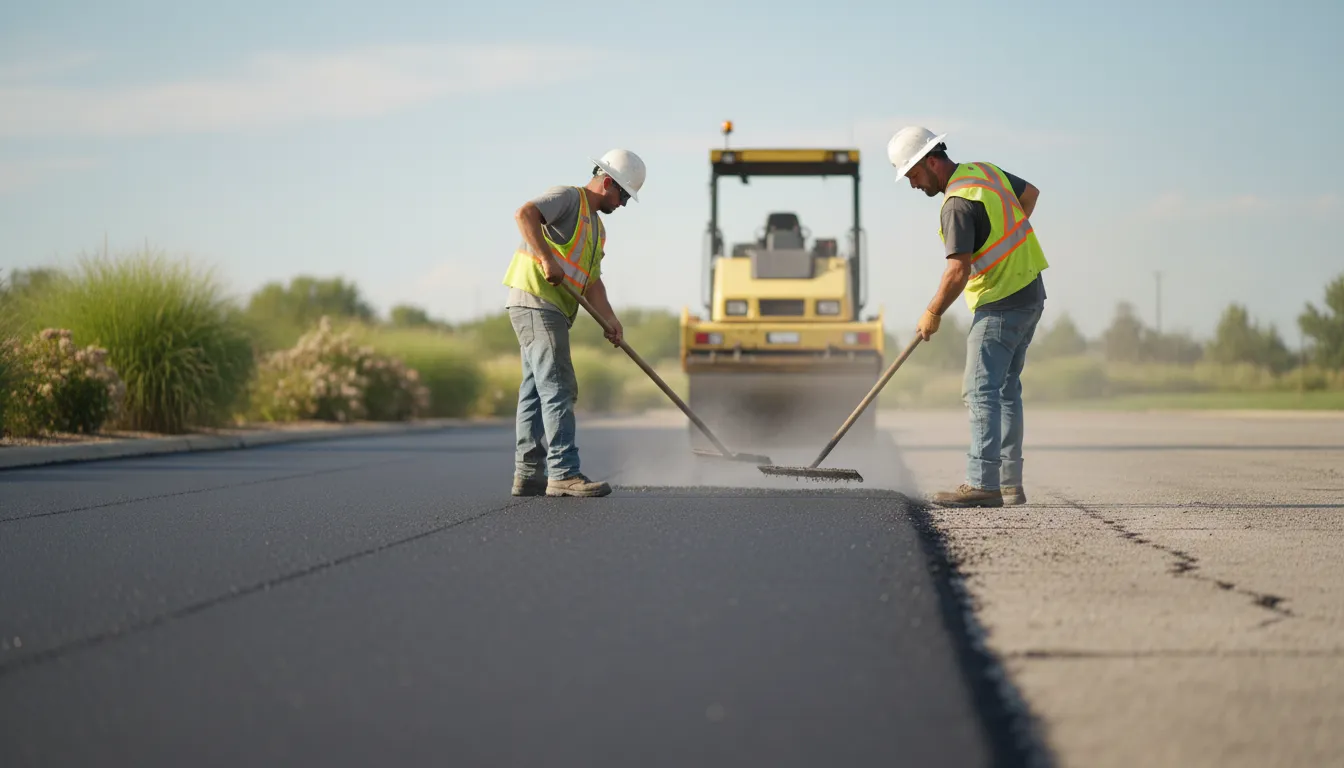
Find the Best Parking Lot Paving Contractors for Your Business
No obligation • Fast responses • Nationwide coverage
Why you can trust Tidy Parking
Tidy Parking is a leading U.S. source for parking lot maintenance services, including striping, sealcoating, sweeping, paving, resurfacing, and repairs. Our content is created independently, and providers cannot pay to influence ratings or recommendations.
Search providers near you
Top Parking Lot Paving Contractors in Hillsboro, Oregon Ranked
A well-paved parking lot is a critical asset for any Hillsboro business, providing a safe, durable, and professional first impression for customers and employees. Parking lot paving is a complex construction project that involves preparing the ground, installing a stable base, and applying a durable asphalt surface designed to withstand local weather and traffic. For property managers and business owners, understanding this process is key to planning a successful project that lasts. This guide explains the specifics of asphalt paving in Hillsboro, from climate considerations to cost factors, helping you make informed decisions when evaluating local paving contractors.
Black Diamond Sealcoating
940 NW Dunbar Ave #100, Troutdale, OR 97060
Black Diamond Sealcoating is a parking lot sealcoating, paving, striping, sweeping, and repair company serving Portland, OR, and the surrounding metro area. Their services include sealcoating to protect paved surfaces, crack sealing, parking lot striping with ADA and specialty stenciling, lot sweeping, and asphalt paving for commercial and residential properties. They cover a broad area including Troutdale, Gresham, Sandy, Vancouver, and extend to the Columbia River Gorge, Willamette Valley, and south to Salem. Black Diamond is fully licensed, bonded, and insured, offering expertise in maintaining and extending the life of asphalt surfaces.

360 Paving of Washington
11410 NE 72nd Ave, Vancouver, WA 98686
360 Paving of Washington is a paving contractor serving Portland, OR, specializing in commercial and residential asphalt services. They handle projects of all sizes, including parking lot striping, sealcoating, paving, patchwork repairs, and installation of speed bumps and curbs. With over three generations of experience, the company offers personalized solutions and 1-year workmanship warranties on their work. Their team is skilled in asphalt repair and paving, ensuring durable and low-maintenance surfaces for driveways and parking lots.
Alamo Paving Co
13595 SE Ambler Rd, Clackamas, OR 97015
Alamo Paving Co is a family-owned parking lot paving contractor based in Portland, OR, serving Northern Oregon and Southern Washington. With 40 years of experience, they offer residential and commercial asphalt paving services tailored to each project's needs. Their expertise includes detailed on-site assessments and quality asphalt paving work to enhance property exteriors. The company emphasizes personalized service and has a long history of serving the Portland metro area.
William Stanley & Sons Paving
5933 NE Win Sivers Dr #205, Portland, OR 97220
William Stanley & Sons Paving is a third-generation, family-owned paving company serving Portland, OR, and the surrounding metro area. With over 30 years of experience, they provide residential and commercial paving services including driveway installations, parking lot paving, sealcoating, striping, grading, crack sealing, and asphalt resurfacing. Their expertise extends to ADA-compliant parking striping and eco-friendly permeable asphalt solutions. The company emphasizes quality craftsmanship and local knowledge, working year-round to meet diverse paving needs.

Keystone Concrete Driveway Retaining Wall Foundation Contractor
1020 SW Taylor St Suite 540, Portland, OR 97205
Keystone Concrete Driveway Retaining Wall Foundation Contractor is a concrete construction company based in Portland, OR. They offer a wide range of services including concrete driveways, patios, steps, retaining walls, decorative concrete, and ADA-compliant ramps. Their team is skilled in delivering customized concrete solutions with attention to detail and quality craftsmanship. Keystone Concrete is known for handling both simple and intricate projects, providing durable and visually appealing concrete work throughout Portland. They emphasize using premium materials and industry best practices to ensure long-lasting results.
Understanding the Hillsboro Paving Environment
Hillsboro's climate and geology present unique challenges for asphalt installation and longevity. The city experiences high annual rainfall and occasional winter freeze-thaw cycles, which can be harsh on pavement if not properly addressed. Furthermore, the underlying soils in the Willamette Valley are predominantly heavy clay, which is expansive and can shift with moisture changes, potentially compromising the stability of the sub-base beneath your asphalt 1. A successful paving project here must account for these factors from the initial design phase, focusing on superior drainage and a robust, well-compacted foundation to prevent premature cracking, potholes, and settlement.
The Critical Role of Drainage Design
Given the wet climate, managing water is the single most important factor in parking lot construction in Hillsboro. Inadequate drainage leads to water pooling on the surface, which accelerates deterioration and creates safety hazards 2. Proper design ensures water flows off the pavement efficiently.
- Grading and Slope: The subgrade must be graded to create a consistent slope, typically between 1% and 2%, directing water toward catch basins or drainage swales 3 4.
- Catch Basins and Inlets: These are strategically placed to collect runoff and channel it into the stormwater system, preventing accumulation.
- Local Regulations: Projects must comply with local stormwater management requirements, such as those from Clean Water Services, which may influence design choices to "slow the flow" and reduce runoff impact.
- Porous Asphalt Options: In some cases, using porous asphalt can be a beneficial solution, allowing water to filter through the pavement into a stone reservoir below, reducing runoff and recharging groundwater 5.
The Step-by-Step Asphalt Paving Process
A professional asphalt paving contractor follows a meticulous, multi-stage process to ensure a long-lasting result. Skipping or rushing any step can lead to costly failures down the road.
1. Site Preparation and Demolition
The process begins with clearing the site. Any existing damaged pavement is broken up and removed (a process known as demolition). Vegetation and unstable organic soil are excavated to reach a firm, stable subgrade.
2. Grading and Compacting the Subgrade
The exposed earth is then graded to the precise slopes and elevations outlined in the drainage plan. This graded subgrade is thoroughly compacted to create a solid, unyielding platform. In Hillsboro's clay soils, this compaction is especially crucial to prevent future shifting and settling.
3. Installing the Aggregate Base
A strong, load-bearing foundation is built using layers of aggregate (crushed rock). This base is spread in "lifts" or layers, with each layer being meticulously compacted. The thickness and quality of this aggregate base are fundamental to supporting vehicle loads and preventing cracks from forming in the asphalt surface above 6.
4. Applying the Binder and Surface Courses
The asphalt itself is applied in layers. First, a binder course-a thicker, stronger layer of asphalt-is laid to provide structural strength. Finally, a smoother, finer surface course is applied. This top layer provides the smooth ride quality and weather resistance. In cooler Oregon months, contractors may use Warm-Mix Asphalt technologies, which allow paving at lower temperatures for better compaction and an extended paving season 7.
5. Final Compaction and Curing
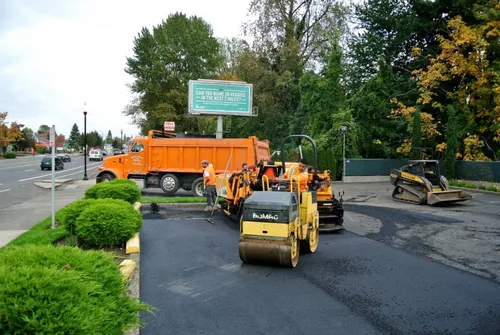
While the asphalt is still hot, heavy rollers compact it to the specified density, eliminating air pockets and ensuring a tight bond between aggregate and asphalt binder. After rolling, the new pavement must cure. While light traffic may be allowed after 2-3 days, it typically takes up to 30 days for the asphalt to fully harden and reach its maximum strength 8 9.
Find the perfect parking lot paving contractors for your needs
Get personalized recommendations and expert advice
Asphalt Selection for Oregon's Climate
Choosing the right asphalt mix is not a one-size-fits-all decision. For Hillsboro projects, the mix must balance durability with flexibility.
- Durability Against Moisture: The mix must be designed to resist water infiltration, which can erode the base from below 10.
- Flexibility for Temperature Swings: The asphalt needs enough flexibility to resist cracking during freeze-thaw cycles, where water in tiny cracks expands when frozen 11.
- Regular Sealcoating: To protect the surface from water, fuel, and UV rays, a fresh sealcoat should be applied every 2 to 4 years. This is a vital maintenance step in a wet climate like Oregon's 12.
Cost Considerations for Parking Lot Paving
The cost of a commercial paving project in Hillsboro varies based on size, condition of the existing site, drainage needs, and material choices. Here's a general breakdown of cost ranges:
- Full Paving Construction: For a complete new installation, including site work, base, and asphalt, costs typically range from $2.50 to $5.00 per square foot 13. Complex sites with poor soil or extensive drainage work will be on the higher end.
- Resurfacing (Overlay): If the existing base is sound, a new layer of asphalt can be applied over the old. This costs between $2.00 to $7.00 per square foot, depending on the thickness required and any preparatory repairs.
- Sealcoating: This routine maintenance service is less expensive, generally costing $0.15 to $0.30 per square foot 14.
It's important to view these figures as estimates. The final price for your specific project will depend on its unique complexity, accessibility, and the current costs of materials and labor 15 16 17. A detailed quote from a qualified local contractor will provide the most accurate picture.
Key Factors Influencing Your Project's Success
Beyond the basic steps, several decisions will impact the longevity and performance of your paved lot.
- Asphalt Thickness: The required thickness depends on the type of traffic. A lot serving passenger cars requires a different specification than one handling delivery trucks or semi-trailers. A professional design will calculate the appropriate thickness for the binder and surface courses.
- Marking and Striping: Clearly defined parking stalls, directional arrows, and ADA-compliant spaces are essential for safety, organization, and legal compliance. These are typically applied after the new asphalt has cured.
- Choosing the Right Contractor: Look for a licensed, insured contractor with specific experience in the Pacific Northwest. They should understand local soil and drainage challenges, provide a detailed written contract, and offer references from similar commercial projects in the area.
Frequently asked questions
Sources
Footnotes
-
Creative Landscape Drainage Solutions In Oregon City OR - https://www.whiteoaknw.com/landscape-drainage-solutions/ ↩
-
How Parking Lot Drainage Impacts Pavement Longevity - Rose - https://www.rosepaving.com/blog/how-parking-lot-drainage-impacts-pavement-longevity/ ↩
-
Preventing Parking Lot Injuries: Slope, Condition, and Lighting ... - https://www.thesilverlining.com/hubfs/LC1008%23%20Parking%20Lot%20Condition%20Considerations%20-%207-25.pdf ↩
-
Asphalt Paving Design Part III: Parking Lot Design - https://equipmentandcontracting.com/asphalt-paving-design-part-iii/ ↩
-
Slow the Flow! | Clean Water Services - https://cleanwaterservices.org/wp-content/uploads/2022/06/slow-the-flow-brochure.pdf ↩
-
Complete Overview of The Asphalt Paving Process - https://www.1st-choiceconstruction.com/complete-overview-of-the-asphalt-paving-process/ ↩
-
CALL NO. 330 CONTRACT ID. 101002 MEADE COUNTY ... - https://transportation.ky.gov/Construction-Procurement/Proposals/330-MEADE-10-1002.pdf ↩
-
The Complete Asphalt Paving Process | Annapolis, MD - https://www.cooperpaving.com/2020/07/02/the-complete-asphalt-paving-process/ ↩
-
5 Steps Process Asphalt Paving Contractors Use for Installation - https://www.standardpavinginc.com/5-steps-process-asphalt-paving-contractors-use-for-installation/ ↩
-
Assessing the effects of sunlight and water on asphalt binder and ... - https://www.sciencedirect.com/science/article/abs/pii/S0301479723014263 ↩
-
How Changes in Temperature Affect Asphalt in Central Oregon - https://tricountypaving.net/how-changes-in-temperature-affect-asphalt-in-central-oregon/ ↩
-
Parking Lot Paving Services in Portland OR - https://pavinu.com/commercial-parking-lot-paving/ ↩
-
Everything You Need To Know About Paving a Parking Lot - Elite Asphalt - https://eliteasphalt.net/paving-a-parking-lot/ ↩
-
Cost to Pave a Parking Lot Price Guide [2026 Data] | Angi - https://www.angi.com/articles/cost-to-pave-parking-lot.htm ↩
-
Understanding the Cost of Asphalt Paving: A Guide to Project ... - https://www.welovepaving.com/understanding-the-cost-of-asphalt-paving-a-guide-to-project-complexity-and-material-pricing/ ↩
-
Cost of Paving a Parking Lot - TRUEGRID Pavers - https://www.truegridpaver.com/parking-lot-construction-cost/ ↩
-
Understanding the Cost of Commercial Asphalt Paving: What Affects Pricing? - https://caurorapaving.com/blog/understanding-the-cost-of-commercial-asphalt-paving-what-affects-pricing/ ↩