
Find the Best Parking Lot Paving Contractors for Your Business
No obligation • Fast responses • Nationwide coverage

Why you can trust Tidy Parking
Tidy Parking is a leading U.S. source for parking lot maintenance services, including striping, sealcoating, sweeping, paving, resurfacing, and repairs. Our content is created independently, and providers cannot pay to influence ratings or recommendations.
Search providers near you
Top Parking Lot Paving Contractors in Albany, Oregon Ranked
A well-paved parking lot is a critical asset for any Oregon business, providing a safe, durable, and professional first impression for customers and employees. Given the state's unique climate and environmental regulations, successful asphalt paving requires specialized knowledge of materials, drainage, and compliance standards. This guide explains the key considerations for commercial parking lot paving in Oregon, from material selection and foundational work to navigating local rules and budgeting, helping you make informed decisions for your property.
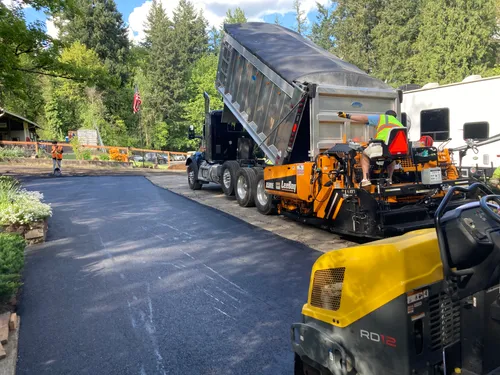
Cascade Paving & Sealcoating
1115 Madison St NE, Salem, OR 97301
Cascade Paving & Sealcoating is a parking lot sealcoating and paving company serving Salem, OR. With over 40 years of experience, they provide asphalt installation, pavement repairs, and maintenance services for residential, commercial, and industrial properties. Their team uses high-quality materials and modern equipment to ensure durable and visually appealing surfaces. The company has a long history of serving the Portland area and focuses on delivering reliable workmanship.
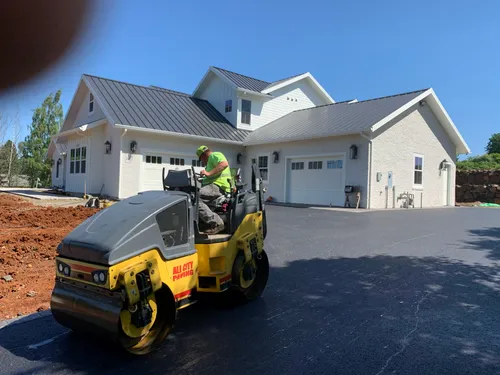
All City Paving LLC
8890 Huff Ave NE, Salem, OR 97303
All City Paving LLC is a parking lot paving contractor based in Salem, OR. They provide comprehensive paving services including planning, excavation, and final paving for roads, parking lots, and driveways. With over 30 years of experience since starting in 1981, they serve Salem and the Willamette Valley, handling projects from excavation to utility laying and paving completion.
Understanding Oregon's Paving Environment
Oregon's diverse climate and stringent environmental regulations create a distinct set of challenges for asphalt installation and longevity. In Western Oregon, high annual rainfall and mild, wet winters are the primary concerns, while Eastern Oregon experiences hotter summers and colder winters with potential for freezing and snow. This variability demands pavement that can resist rutting in summer heat and cracking from winter freeze-thaw cycles.
Beyond weather, new regulatory frameworks significantly impact project planning. For any new parking lot development larger than one-half acre, Oregon's State Climate-Friendly and Equitable Communities (CFEC) rules apply. These rules require developers to mitigate the climate impact of new pavement by choosing one of several options: providing a 40% tree canopy coverage over the lot, installing solar panels capable of generating at least 0.5 kW per parking space, or paying an in-lieu fee, which can be $1,500 or more per parking space to fund renewable energy projects. Navigating these requirements is an essential first step in the planning process for larger commercial projects.
Choosing the Right Asphalt Mix for Durability
Selecting the appropriate asphalt mix is paramount for a long-lasting surface that can withstand local conditions. Contractors typically recommend specific mixes based on traffic load, climate, and project goals.
- Hot Mix Asphalt (HMA): This is the standard for most commercial paving projects. Produced at temperatures between 300°F and 500°F, HMA is highly durable and workable, making it ideal for Oregon's temperature fluctuations 1 2. For regions with significant winter contraction and expansion, a Performance Grade (PG) 64-28 asphalt binder is often specified, as it provides a better balance of stiffness and flexibility 3.
- Warm Mix Asphalt (WMA): An increasingly popular, more sustainable alternative, WMA is produced and applied at temperatures 30 to 100 degrees Fahrenheit lower than HMA. This reduces fuel consumption, lowers greenhouse gas emissions, and can improve compaction, especially in cooler weather 4.
- Porous Asphalt: Highly recommended for areas with high rainfall, porous asphalt is a special open-graded mix placed over a deep stone reservoir. It allows stormwater to drain directly through the pavement, reducing runoff, recharging groundwater, and minimizing puddling and ice formation 5 6. In Portland, permeable pavement like porous asphalt is permitted on slopes of 5% or less and requires a specific sub-base of crushed, washed rock 7.
The Foundation: Subgrade, Base, and Compaction
A parking lot's longevity is determined more by its foundation than its surface. Industry experts often state that 80-90% of a pavement's strength comes from a properly prepared subgrade and base8. Cutting corners here leads to premature cracking, potholes, and costly repairs.
The construction process typically follows these critical steps:
- Subgrade Evaluation and Preparation: The native soil is tested. Poor-quality or unstable soil may need to be removed or stabilized with additives like lime or asphalt.
- Base Installation: A strong, stable base is crucial. For commercial lots, this usually involves 6 to 8 inches of densely graded and compacted crushed stone or gravel 9.
- Binder Course: Before the final surface layer, a binder layer of hot mix asphalt is often applied. This intermediate layer adds structural strength and helps ensure a smooth, stable final surface 10.
- Compaction: Each layer-subgrade, base, and asphalt-must be thoroughly compacted to the specified density. Proper compaction prevents settling and ensures the pavement can bear the intended loads.
Critical Design: Drainage and Grading
Effective water management is non-negotiable in Oregon. Poor drainage is a leading cause of pavement failure, as water trapped in or under the asphalt weakens the base and leads to cracks and potholes.
- Grading and Slope: The entire parking area must be graded to direct water away from buildings and toward drains or landscaped swales. A minimum slope of 1-2% is standard practice 11. In Portland and other jurisdictions, managing stormwater on-site (onsite retention) is a key regulatory requirement 12.
- Drainage Infrastructure: Catch basins and inlets must be strategically placed at all low points. Engineering standards, such as those in Marion County, specify maximum gutter flow lengths (e.g., 500 feet) to prevent excessive water accumulation 13.
- Permeable Pavement Systems: For projects using porous asphalt or other permeable surfaces, the design includes the paved surface, a choker course, and a deep sub-base reservoir of clean, washed stone that temporarily stores stormwater while it infiltrates into the soil below.
Find the perfect parking lot paving contractors for your needs
Get personalized recommendations and expert advice
Compliance and Accessibility Standards
All parking lot paving projects must adhere to federal and local accessibility guidelines. American with Disabilities Act (ADA) compliance is mandatory, governing the number, size, and location of accessible parking spaces, the slope of access aisles, and the route to building entrances 14. Local zoning codes may also dictate parking space counts, setbacks from property lines, and landscaping requirements 14.
For larger new developments, as mentioned, the CFEC rules add a layer of climate-specific compliance. Early consultation with a paving contractor familiar with these rules and local planning departments is essential to integrate requirements like tree planting or solar panel infrastructure into the initial design and budget.
Paving Season and Project Timing
Asphalt installation is highly weather-dependent. The optimal paving season in Oregon is during warmer, drier months, typically from late spring through early fall. Asphalt needs to be placed and compacted when ambient and ground temperatures are consistently above 50°F to ensure proper curing and achieve maximum density 15. Scheduling your project well in advance is crucial, as reputable contractors are often booked months ahead during this peak season.
Cost Considerations for Oregon Parking Lots
Parking lot paving costs in Oregon vary widely based on size, site conditions, materials, and regulatory requirements. As a general range, asphalt paving costs between $2 and $7 per square foot for the installation 16.
Sample Project Budgets:
- Small Lot Resurfacing (e.g., 5,000 sq ft): Refreshing an existing, stable base with a new asphalt surface can range from $10,000 to $15,000 or more.
- Small Lot New Paving (e.g., 5,000 sq ft): A complete project including excavation, base installation, and new asphalt typically ranges from $15,000 to $35,000+, with the higher end reflecting challenging soil or drainage work 17.
- Large Lot New Paving (e.g., 40,000+ sq ft / ~1 acre): For major commercial developments, costs can span from $80,000 to $250,000 or more. This wide range accounts for extensive earthwork, complex drainage systems, and the potential cost of meeting CFEC rules, such as installing solar panel arrays or paying substantial per-space mitigation fees 18 19.
The state-mandated climate mitigation fee of $1,500 or more per parking space for new large projects is a significant potential cost adder that must be factored into the initial budget for qualifying developments 20.
Planning for Long-Term Performance
A successful paving project doesn't end with installation. Proactive maintenance is key to protecting your investment. This includes timely crack sealing to prevent water intrusion, periodic sealcoating to protect the surface from oxidation and fuel spills, and prompt repair of any potholes or base failures. A qualified local paving professional can provide a maintenance plan tailored to your specific lot and usage patterns, ensuring your Oregon parking surface remains safe, functional, and attractive for years to come.
Frequently asked questions
Sources
Footnotes
-
Best Asphalt Mixes In OR - Central Oregon Paving Contractors - https://tricountypaving.net/whats-the-right-type-of-asphalt-mix-for-central-oregon/ ↩
-
Right Asphalt Mix for Industrial and Commercial Applications - https://thepavementgroup.com/choosing-the-right-asphalt-mix-for-industrial-and-commercial-applications/ ↩
-
A GUIDELINE FOR THE DESIGN AND CONSTRUCTION OF ASPHALT PARKING LOTS IN COLORADO - https://www.co-asphalt.com/assets/docs/AsphaltlParkingLotDesignGuide1.pdf ↩
-
Best asphalt mixes for your parking lot - Baughman Magic Seal - https://baughmanmagicseal.com/best-asphalt-mixes-for-your-parking-lot/ ↩
-
» Porous Asphalt Pavements - https://vaasphalt.org/pavement-guide/porous-asphalt-pavements/ ↩
-
» Porous Asphalt Parking Lots - https://vaasphalt.org/pavement-guide/pavement-design-by-use/permeable-parking-lots/ ↩
-
Permeable Pavement - Portland.gov - https://www.portland.gov/ppd/infrastructure/managing-rain-your-property/permeable-pavement ↩
-
Proper Base and Subgrade Construction for Parking Lots - https://www.mypavementguy.com/proper-base-and-subgrade-construction-for-parking-lots/ ↩
-
How Thick Should Asphalt Paving Be? Complete Guide 2025 - https://sspaving.com/blog/how-thick-should-asphalt-paving-be/ ↩
-
From Preparation to Finish: Understanding Asphalt Installation in Prince Georges County, MD - https://marylandasphaltllc.com/2025/01/from-preparation-to-finish-understanding-asphalt-installation-in-prince-georges-county-md/ ↩
-
Parking Lot Grading in Portland OR - William Stanley & Sons Paving - https://pavinu.com/services-parking-lot-grading/ ↩
-
Stormwater Management Requirements | Portland.gov - https://www.portland.gov/ppd/documents/land-division-information-guide-stormwater-management-requirements/download ↩
-
MARION COUNTY DEPARTMENT OF PUBLIC WORKS ... - https://www.co.marion.or.us/PW/Engineering/engineeringstandards/Documents/1990drainage.pdf ↩
-
1157.02 LOCATION OF PARKING SPACES, SETBACKS ... - https://codelibrary.amlegal.com/codes/oregon/latest/oregon_oh/0-0-0-30287 ↩ ↩2
-
How weather delays impact paving schedules and what we do - https://blacktopnorthwest.com/how-weather-delays-impact-paving-schedules-and-what-we-do-main/ ↩
-
How Much Does Parking Lot Paving Cost? - Michigan Paving - https://www.michiganpaving.com/blog/parking-lot-paving-cost/ ↩
-
Portland Asphalt Paving Services - KNL Industries - https://www.kandlindustries.com/services/parking-lot-paving/ ↩
-
Climate Mitigation for Large New Parking Lots - Salem, Oregon - https://www.cityofsalem.net/business/land-use-zoning/land-use-applications/climate-mitigation-for-large-new-parking-lots ↩
-
How to Budget for Commercial Parking Lot Paving Projects - https://thepavementgroup.com/how-to-budget-for-commercial-parking-lot-paving-projects/ ↩
-
Chapter 660 - Oregon Secretary of State Administrative Rules - https://secure.sos.state.or.us/oard/viewSingleRule.action?ruleVrsnRsn=301177 ↩