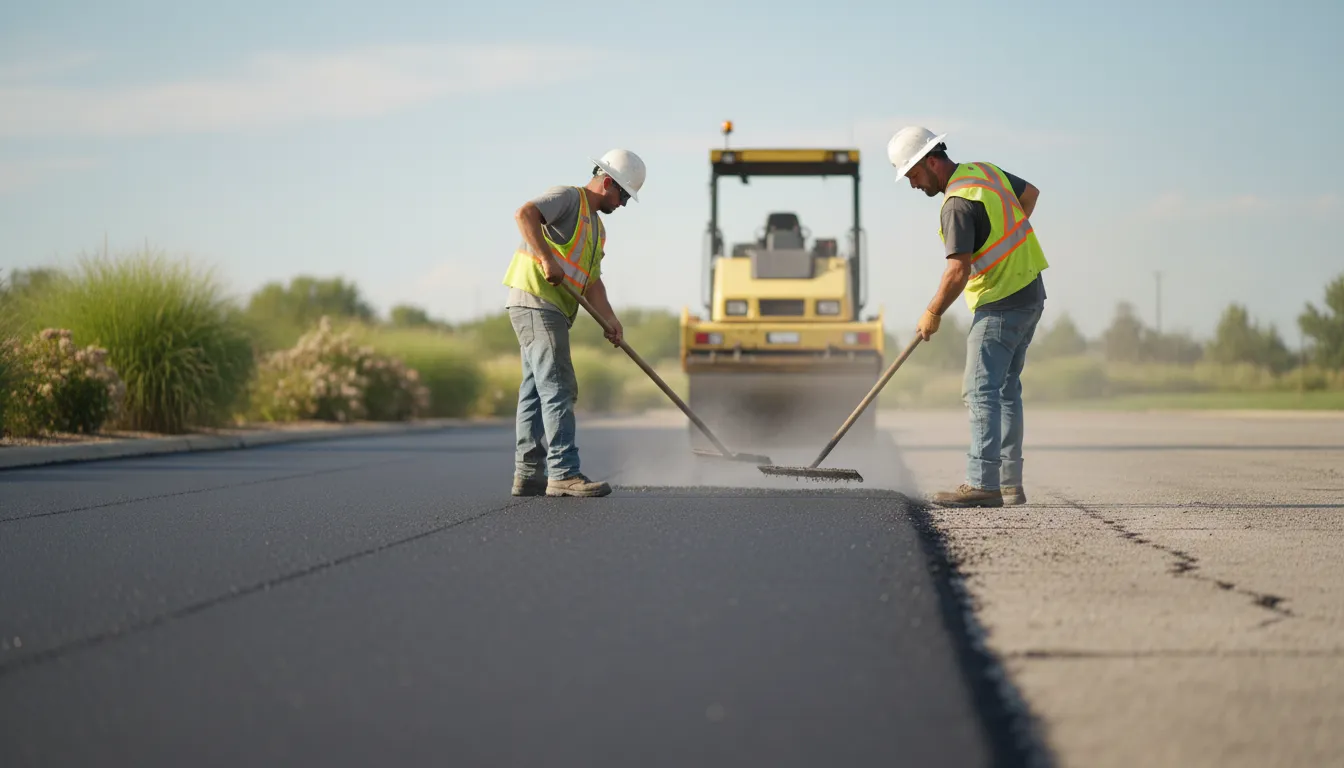
Find the Best Parking Lot Paving Contractors for Your Business
No obligation • Fast responses • Nationwide coverage

Why you can trust Tidy Parking
Tidy Parking is a leading U.S. source for parking lot maintenance services, including striping, sealcoating, sweeping, paving, resurfacing, and repairs. Our content is created independently, and providers cannot pay to influence ratings or recommendations.
Search providers near you
Top Parking Lot Paving Contractors in Rochester, Minnesota Ranked
A well-paved parking lot is a critical asset for any Minnesota business or property, providing safe access and a positive first impression. Given the state's extreme freeze-thaw cycles and harsh winters, proper asphalt installation is not just about aesthetics-it's about long-term durability and cost-effective maintenance. This guide explains the specific materials, design standards, and construction practices required for a successful parking lot paving project in Minnesota, helping you understand what to look for and how to evaluate local paving experts.
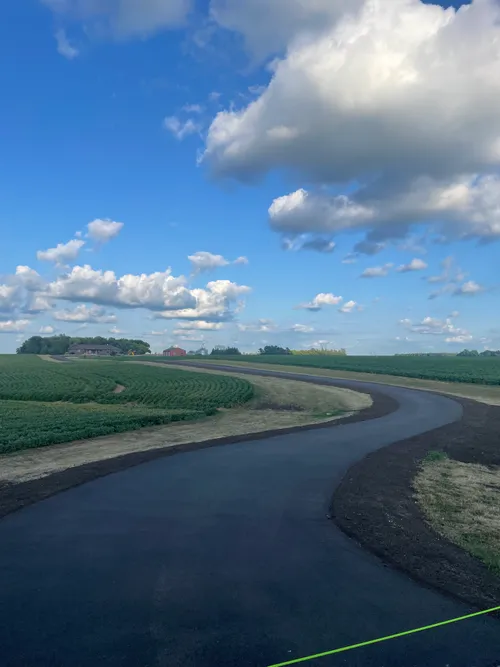
Rochester Asphalt and Concrete
1832 3rd Ave SE Building A, Rochester, MN 55904
Rochester Asphalt and Concrete is a paving contractor based in Rochester, MN, serving the surrounding areas including Byron and Bloomington. They offer a range of services such as asphalt and concrete paving, parking lot striping, sealcoating, repair, and site preparation. Their capabilities include grading and underground utility installation to support commercial construction projects. The company focuses on maintaining safe and functional parking lots and sidewalks through repairs and maintenance.
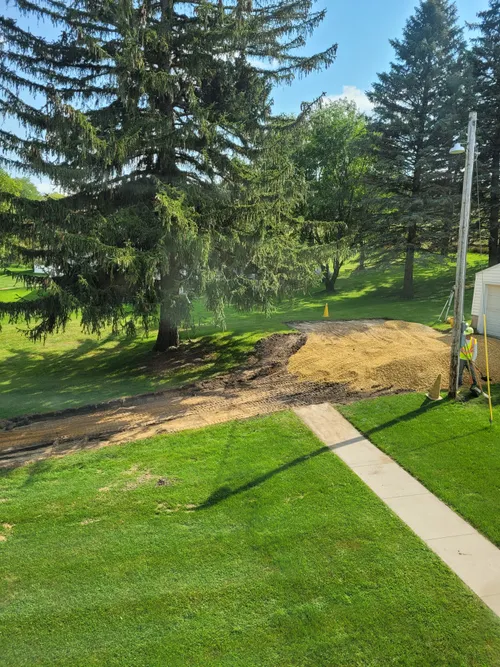
Rochester Sand & Gravel
4537 E River Rd NE, Rochester, MN 55906
Rochester Sand & Gravel is a parking lot paving contractor based in Rochester, MN. The company specializes in asphalt production and placement, serving Southeastern Minnesota and West Central Wisconsin. They handle projects including asphalt highways, driveways, and parking lots, with a key capability in supplying aggregates for construction. As part of a larger family-owned organization, Rochester Sand & Gravel has extensive resources and experience across the Midwest region.
Aarow Asphalt Paving
Rochester, MN
Aarow Asphalt Paving is a third-generation asphalt paving contractor based in Rochester, MN. They provide driveway and parking lot paving services designed to withstand the region's harsh freeze-thaw cycles. With over 50 years of experience, Aarow Asphalt uses commercial-grade equipment and hot mix asphalt sourced from certified local plants to ensure durable and smooth finishes. Their expertise includes managing local soil and weather conditions, such as proper drainage and frost depth considerations, to deliver reliable pavement solutions. The company operates by appointment and offers a 12-month warranty on all paving services.
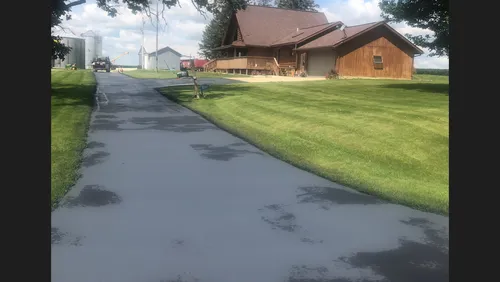
State Line Asphalt
Rochester, MN
State Line Asphalt is a family-owned asphalt contractor based in Rochester, MN, serving residential, commercial, and agricultural customers in the area. They provide a range of asphalt services including driveway replacement and repair, parking lot installation, striping, and sealcoating. With over 20 years of experience, State Line Asphalt offers durable paving solutions and specializes in projects such as silage and haylage pads. Their fully licensed and insured team handles jobs of various sizes with attention to quality and care.
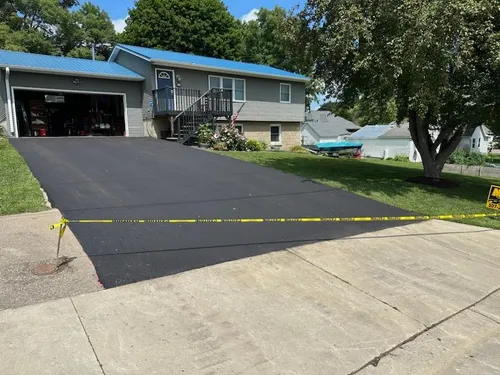
M&M Construction Inc
1107 Chester Ave SE, Rochester, MN 55904
M&M Construction Inc is a veteran-run company based in Rochester, MN, specializing in asphalt paving, sealcoating, and parking lot repair. They offer a variety of services including asphalt patching, sealcoating with colored options, concrete installation and repair, and resetting of manholes and drains. Their team handles both residential and commercial projects, providing solutions such as driveway paving, parking lot construction, and concrete work including foundations and sidewalks.
Why Minnesota's Climate Demands Specialized Paving
Minnesota's weather presents a unique challenge for asphalt surfaces. The relentless cycle of freezing and thawing, combined with rapid oxidation from summer sun, can cause standard asphalt to become brittle and crack prematurely 1 2. Water is the primary enemy; when it seeps into cracks and freezes, it expands, creating larger fissures and potholes. This makes the initial design and construction phase absolutely critical. A parking lot built to Minnesota specifications focuses on three core principles: a robust, well-drained base; the correct asphalt mix for the climate; and precise compaction during installation. Cutting corners on any of these elements will lead to accelerated deterioration and higher repair costs down the line.
Core Design & Material Specifications
Minnesota paving projects, especially for commercial lots, often follow the rigorous MnDOT Spec 2360 for asphalt mixtures, ensuring the materials can withstand state-specific stresses 3. This specification governs the type and grade of asphalt binder (the "glue" that holds the aggregate together), selecting one that remains flexible in cold temperatures and resistant to rutting in the heat. The goal is to create a surface that is both durable and resilient.
The Critical Base Layer
The longevity of your asphalt surface is entirely dependent on what lies beneath it. A proper foundation prevents shifting, settling, and cracking.
- Subgrade Preparation: The native soil must be properly excavated and compacted to provide a stable platform.
- Granular Base: A minimum of 6 inches of compacted Class 5 granular material is the standard base requirement for Minnesota parking lots. This crushed rock layer provides strength, promotes drainage away from the subgrade, and helps mitigate frost heave.
- Compaction: Each layer of the base must be mechanically compacted to the proper density. An inadequately compacted base will settle over time, causing the asphalt above to fail.
Asphalt Thickness & Mix Types
The thickness and composition of the asphalt layer are determined by the expected traffic.
-
Thickness Guidelines:
-
Heavy-Duty/Industrial: Areas expecting frequent truck or heavy equipment traffic need even greater thickness and a mix designed with higher crushed aggregate content to prevent rutting.
-
Common Asphalt Mixes:
- Hot Mix Asphalt (HMA): The standard and most common material, produced at high temperatures for optimal workability and compaction 7.
- Warm Mix Asphalt (WMA): This technology allows asphalt to be produced and placed at lower temperatures. It's beneficial in Minnesota's shorter paving season as it improves compaction in cooler weather, extends the haul distance, and can enhance durability 8.
-
Permeable (Porous) Asphalt: A sustainable option where water drains through the asphalt surface into a stone reservoir below, reducing stormwater runoff and filtering pollutants. It requires a specialized subsurface design 9.
Drainage: The Non-Negotiable Element
Proper drainage is arguably the most important design factor. Standing water leads to rapid deterioration in winter and safety hazards year-round.
- Surface Slope: Parking lot surfaces should be designed with a minimum 2% slope (a 2-foot drop over 100 feet) to channel water toward drains or landscaped areas 10 11.
- Catch Basins & Drains: Strategically placed to collect runoff efficiently.
- Permeable Pavement Systems: These manage stormwater at its source by allowing infiltration, which can help properties meet municipal stormwater management requirements (MS4) 12.
Find the perfect parking lot paving contractors for your needs
Get personalized recommendations and expert advice
The Construction Process: Timing and Best Practices
A successful paving project hinges on proper execution. In Minnesota, timing is everything.
- Ideal Paving Season: Asphalt installation is best performed during warm, dry weather, typically from late spring through early fall. The ground must be thawed and dry, and air temperatures should be sufficiently high to allow the mat to be properly compacted before it cools.
- Compaction is Key: The asphalt must be rolled and compacted while it is still hot (above 220°F) to achieve the required density. Inadequate compaction leads to a porous surface that allows water infiltration and accelerates raveling and cracking.
- Curing: Fresh asphalt needs time to cure and harden fully. While it can be driven on within a day or two, heavy loads and sharp turns should be avoided for several weeks.
Understanding Parking Lot Paving Costs in Minnesota
Costs for asphalt paving in Minnesota vary widely based on project size, site conditions, materials, and current market prices for oil and aggregate. Economies of scale apply, meaning the cost per square foot generally decreases as the total project size increases.
- Small Lots (e.g., 5,000 sq ft): Due to high mobilization costs for equipment, smaller projects often range from $4 to $8 per square foot for a complete installation (including base and asphalt) 13.
- Large Commercial Lots (e.g., 50,000+ sq ft): Larger projects benefit from scale, with costs typically ranging from $3 to $6 per square foot 14.
- Permeable Asphalt Pavement: This sustainable option carries a premium due to its specialized design and subsurface stone reservoir, with costs generally ranging from $4 to $9 per square foot for the pavement system itself 15 16.
- Important Note: These are estimated ranges. The only way to get an accurate price for your specific property is to obtain detailed quotes from qualified local contractors who will assess your site's drainage, soil conditions, and access.
Planning Your Project: From Design to Completion
A smooth project starts with thorough planning.
- Initial Assessment & Design: Engage with a contractor or civil engineer to survey your site, discuss traffic needs, and create a design plan that addresses drainage, stall layout (standard spaces are 9' x 19'), lighting, and landscaping.
- Permitting: Most municipalities in Minnesota require permits for parking lot construction or major reconstruction to ensure compliance with local zoning, stormwater, and accessibility codes.
- Contractor Selection: Seek licensed, insured contractors with specific experience in Minnesota commercial paving. Ask for references, examples of past work, and detailed written quotes that break down materials, labor, and timeline.
- Construction & Inspection: A reputable contractor will manage the site preparation, base installation, paving, and compaction. It's wise to be present during key phases, like base compaction and asphalt rolling.
- Maintenance Planning: Discuss a maintenance plan with your contractor, including the recommended timeline for sealcoating (typically every 2-3 years) and crack sealing to protect your investment.
Frequently asked questions
Sources
Footnotes
-
Parking Lots - https://cdnsm5-hosted.civiclive.com/UserFiles/Servers/Server_10879634/File/Resident/Community%20Development/Permits%20and%20Inspections/Construction%20Handouts/Parking%20Lots.pdf ↩
-
5 things to know for the right conditions to pave in Minnesota - https://www.jwasphalt.com/Blog/entryid/27/five-things-to-know-for-the-right-conditions-to-pave-in-minnesota ↩
-
Saint Paul's Guide to MnDOT Asphalt Mix Specification 2360 - https://blacktopcentral.com/mndot-asphalt-mix-spec-2360-st-paul-guide/ ↩
-
Asphalt Driveway Installation in Minnesota - Blacktop Concepts - https://blacktopconcepts.com/minnesota/residential-asphalt-paving/driveway-installation/ ↩
-
Parking Lot Paving | Bituminous Roadways - Minneapolis/St. Paul, MN - https://bitroads.com/New-Construction/Parking-Lots ↩
-
Complete Parking Lot Design - https://irp-cdn.multiscreensite.com/1411d0ca/files/uploaded/Complete%20Parking%20Lot%20Design%20-%20Jerry%20D%20Morrow.pdf ↩
-
Parking Lots Paving - Hot Mix Asphalt (HMA) Recommendations - https://www.wsbeng.com/parking-lots-paving-hot-mix-asphalt-hma-recommendations/ ↩
-
Cold Weather Paving Resources - Minnesota Asphalt Pavement ... - https://www.asphaltisbest.com/cold-weather-paving-resources ↩
-
Design criteria for permeable pavement - https://stormwater.pca.state.mn.us/design_criteria_for_permeable_pavement ↩
-
Asphalt Paving Design Part III: Parking Lot Design - https://equipmentandcontracting.com/asphalt-paving-design-part-iii/ ↩
-
Parking Lots | Washington Asphalt Pavement Association - https://www.asphaltwa.com/parking-lots/ ↩
-
Residential streets and parking lot checklist - https://stormwater.pca.state.mn.us/residential_streets_and_parking_lot_checklist ↩
-
Concrete Driveway Cost Minneapolis: Complete 2026 Pricing Breakdown by Size and Style - https://www.preferred1mn.com/post/concrete-driveway-cost-minneapolis-complete-2026-pricing-breakdown-by-size-and-style ↩
-
How Much Does Asphalt Paving Cost? - https://lonestarpavingtx.com/asphalt-pavement-costs/ ↩
-
MS4 fact sheet - Pervious Pavements - Minnesota Stormwater Manual - https://stormwater.pca.state.mn.us/ms4_fact_sheet_pervious_pavements ↩
-
How Much Does It Cost to Build a Parking Lot - The 2024 Calculator - https://dcplm.com/blog/how-much-does-it-cost-to-build-a-parking-lot/ ↩