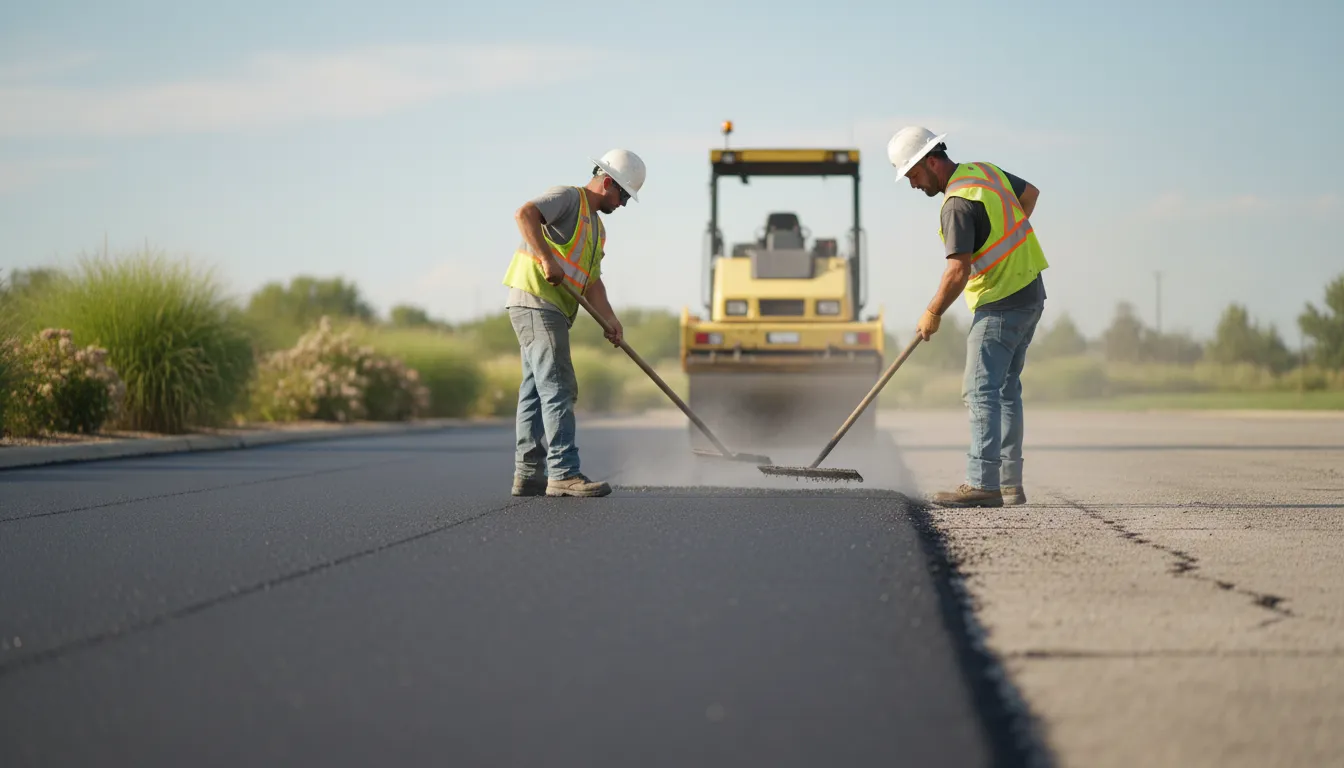
Find the Best Parking Lot Paving Contractors for Your Business
No obligation • Fast responses • Nationwide coverage
Why you can trust Tidy Parking
Tidy Parking is a leading U.S. source for parking lot maintenance services, including striping, sealcoating, sweeping, paving, resurfacing, and repairs. Our content is created independently, and providers cannot pay to influence ratings or recommendations.
Search providers near you
Top Parking Lot Paving Contractors in Grand Rapids, Michigan Ranked
A durable, well-paved parking lot is a critical asset for any Grand Rapids business, providing a safe first impression for customers and a reliable surface for daily traffic. In West Michigan, this isn't just about laying asphalt; it's about engineering a surface to withstand punishing freeze-thaw cycles, manage significant water runoff, and support heavy loads for years. This resource explains the specialized techniques, materials, and planning required for commercial asphalt paving in Grand Rapids, helping property managers and business owners understand the process to make informed decisions when selecting a local contractor.
All Around Asphalt and Sealcoat
Grand Rapids, MI
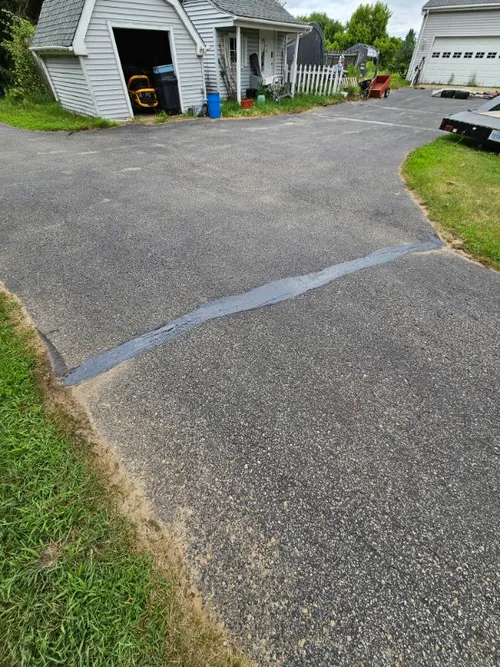
All Around Asphalt and Sealcoat is a paving contractor based in Grand Rapids, MI, offering a range of services including paving, sealcoating, patching, and excavation. They serve Grand Rapids, East Grand Rapids, Middleville, and surrounding areas. With over 15 years of industry experience, the company handles asphalt repairs and site preparation with a focus on quality workmanship. They are fully insured and accredited by the BBB.
Superior Asphalt, Inc.
669 Century Ave SW, Grand Rapids, MI 49503
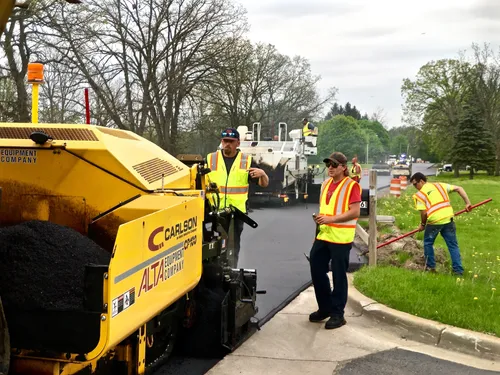
Superior Asphalt, Inc. is a full-service paving company based in Grand Rapids, MI, serving commercial and residential clients throughout West Michigan. Since 1983, they have handled projects ranging from small driveways to large commercial parking lots, offering asphalt paving, maintenance, and repair services. Their capabilities include winter hot mix asphalt production and emergency maintenance such as pothole patching and drain repairs, ensuring year-round service.
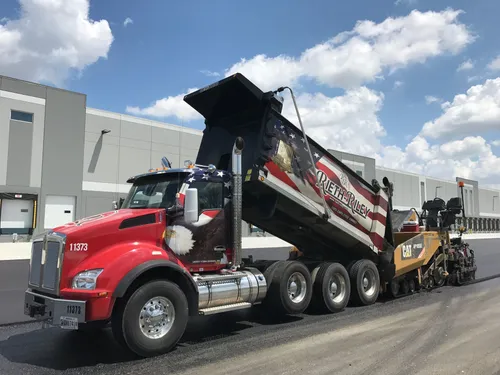
Rieth Riley
2100 Chicago Dr SW, Wyoming, MI 49519
Rieth Riley is a full-service asphalt paving contractor based near Grand Rapids, MI. The company handles a wide range of commercial and industrial paving projects, from small repairs to major highway reconstruction. Rieth Riley also supplies hot mix asphalt and aggregates, operates advanced recycling plants for asphalt and concrete, and offers site preparation and excavation services. With over 20 years as a 100% employee-owned company, Rieth Riley emphasizes ownership and quality in every project.
Michigan Paving & Materials
1100 Market Ave SW, Grand Rapids, MI 49503
Michigan Paving & Materials is a parking lot paving contractor based in Grand Rapids, MI. They offer commercial paving, maintenance, and asphalt supply services across the state. With operations including more than 25 asphalt plants and materials locations, they provide a wide coverage area and control the quality and availability of their materials. Established in 1959, the company has a long history in the industry and is known for recycling over 1 million tons of old asphalt pavement annually, emphasizing sustainability.
Why Grand Rapids Presents Unique Paving Challenges
Paving a parking lot in Grand Rapids requires more than standard practices; it demands a climate-specific approach. The region's weather and geology directly influence every stage of a project, from the soil up.
- Freeze-Thaw Cycles: Michigan winters can drive frost up to three feet deep beneath the pavement. As this ground freezes, it expands and heaves. When it thaws, the soil softens and settles. This relentless cycle is a primary cause of cracking, potholes, and structural failure in asphalt that isn't properly engineered for it.
- Water Management: Water is asphalt's greatest enemy, especially here. Standing water seeps into cracks, softens the compacted base, and leads to premature failure when it freezes. Effective drainage isn't just an add-on; it's a foundational requirement. This includes proper grading, functioning catch basins, and sometimes specialized solutions for areas with a high water table 1 2.
- Soil Conditions: The subgrade-the native soil beneath your parking lot-must be stable. In West Michigan, soil types can vary, and some sites may require additional stabilization to create a solid, load-bearing foundation that won't shift or settle unevenly.
The Professional Paving Process: A Step-by-Step Guide
A long-lasting commercial pavement installation follows a meticulous sequence. Skipping or short-changing any step can compromise the entire investment.
- Site Assessment and Planning: A reputable contractor will evaluate your property's specific conditions. This includes analyzing drainage patterns, estimating traffic loads (from passenger cars to delivery trucks), and testing soil composition. This phase determines the necessary pavement thickness and drainage strategy.
- Demolition and Removal: Existing deteriorated asphalt or concrete is removed, typically using a rotomill. This old material is often recycled, crushed, and reused as part of the new base, which is both economical and environmentally friendly.
- Grading and Subgrade Preparation: The exposed soil is graded to precise slopes (usually a minimum 2% grade) to ensure water flows toward drains. It is then thoroughly compacted to create a stable, unyielding platform 3.
- Base Installation: This is arguably the most critical step for longevity. A layer of aggregate (crushed stone or gravel), typically 6 to 12 inches thick, is spread and compacted. This base layer distributes weight, provides drainage away from the subgrade, and prevents frost from penetrating the soil below 4.
- Asphalt Layering: Hot-mix asphalt (HMA) is applied in layers. A thicker "binder" course is laid first for strength, followed by a smoother "surface" course. Each layer is meticulously leveled and compacted with heavy rollers to achieve optimal density and eliminate air pockets.
- Finishing: Once the asphalt has cooled and cured, final touches are applied. This includes installing or repairing curb and gutter, ensuring catch basins are clear, and finally, applying pavement markings, symbols, and ADA-compliant signage 5.
Choosing the Right Asphalt Materials for Michigan
The type of asphalt mix used is a key determinant of performance. Contractors in Grand Rapids have several options tailored to different needs and environmental conditions.
- Hot Mix Asphalt (HMA): The industry standard for commercial projects. It is produced and laid at high temperatures (300°F+), which makes it highly workable and allows for excellent compaction. A well-compacted HMA pavement is dense and resistant to water infiltration and the stress of Michigan's temperature swings.
- Superpave Mixes: These are HMA mixes designed with performance-based specifications. For Michigan, this means engineers select aggregate and asphalt binder combinations that will resist rutting in summer and cracking in winter, ensuring the correct air void structure (3-5%) for durability 6.
- Warm Mix Asphalt (WMA): This technology allows asphalt to be mixed, laid, and compacted at temperatures 50 to 100 degrees Fahrenheit lower than HMA. Benefits include reduced fuel consumption, lower emissions, and the ability to pave effectively during cooler shoulder seasons in spring and fall, extending the paving window 7.
- Porous Asphalt: An innovative solution for areas with drainage concerns. This special mix allows water to drain directly through the pavement into a stone reservoir below, where it slowly infiltrates the soil. It can help manage stormwater runoff and reduce the burden on municipal systems.
Find the perfect parking lot paving contractors for your needs
Get personalized recommendations and expert advice
Understanding Parking Lot Paving Costs in Grand Rapids
Costs for commercial asphalt projects are typically quoted per square foot and can vary widely based on project scope and site conditions. The following ranges reflect current industry data for the region 8 9 10.
- Full Asphalt Paving/Replacement: For a complete new installation, including demolition, base work, and new asphalt, costs generally range from $2.50 to $7.00 per square foot.
- Asphalt Resurfacing (Overlay): If the existing base is structurally sound, a new layer of asphalt can be applied over the old. This is less expensive, typically $1.50 to $3.00 per square foot.
- High-Quality Commercial Paving: Projects requiring extensive site work, superior base materials, and thicker asphalt sections for heavy traffic can range from $3.00 to $8.00 per square foot. Labor costs themselves often account for $1.50 to $2.00 per square foot of this total 11.
Several key factors influence where your project falls within these ranges:
- Project Size: Larger projects often benefit from a lower cost per square foot due to economies of scale.
- Site Accessibility: Tight sites with limited access for large equipment may increase labor time and cost.
- Soil Conditions: Poor soil that requires removal, stabilization, or a thicker gravel base will add expense.
- Drainage Requirements: Installing new catch basins, drains, or correcting significant grading issues adds to the project scope.
- Asphalt Thickness: A lot designed for semi-trucks will require a much thicker pavement section than one for passenger vehicles only.
Long-Term Protection: Sealcoating and Maintenance
Your investment doesn't end when the paving equipment leaves. Proactive maintenance is essential to maximize the lifespan of your Grand Rapids parking lot.
- Sealcoating: Applying a protective coal-tar or asphalt-based sealer every 2 to 3 years is highly recommended. This coating shields the asphalt from damaging UV rays, prevents water and salt penetration, and resists stains from oil and gasoline 12.
- Prompt Repair: Quickly addressing small cracks with crack sealant prevents water from entering and expanding them into larger potholes or base failures.
- Drainage Maintenance: Regularly cleaning catch basins and ensuring drain inlets are clear is a simple but vital task to prevent water from pooling on the surface 13.
Frequently asked questions
Sources
Footnotes
-
Drainage - Grapids Irrigation - https://grapids.com/services/drainage/ ↩
-
Drainage Installations | Hastings | Grand Rapids | Kalamazoo MI - https://www.rhtractorservices.com/drainage-installations/ ↩
-
A Guide To Why Roads & Driveways Are Paid - And How Much It Costs - https://rampavingltd.ca/how-much-does-paving-cost-2023-edition/ ↩
-
Road Construction Guide | City of Grand Rapids, Michigan - https://www.grandrapidsmi.gov/departments/engineering/road-construction/road-construction-guide/ ↩
-
Parking Lot Paving in Grand Rapids - Michigan Paving - https://www.michiganpaving.com/locations/grand-rapids/parking-lot-paving ↩
-
Common Asphalt Paving Methods Explained for Michigan Projects - https://www.michiganpaving.com/blog/asphalt-paving-methods/ ↩
-
Why Switching to Warm-Mix Asphalt Benefits the Environment - https://www.michiganpaving.com/blog/moving-warm-mix-asphalt-beneficial-environment/ ↩
-
How Much Does Parking Lot Paving Cost? - Michigan Paving - https://www.michiganpaving.com/blog/parking-lot-paving-cost/ ↩
-
Cost to Pave a Parking Lot Price Guide [2026 Data] | Angi - https://www.angi.com/articles/cost-to-pave-parking-lot.htm ↩
-
Discover Average Asphalt Paving Cost in 2026 - https://nationalfacilitycontractors.com/asphalt-services/asphalt-paving-cost/ ↩
-
How Much Does Parking Lot Paving Cost in 2025? - Eli's Paving - https://elispaving.com/how-much-does-parking-lot-paving-cost-in-2025/ ↩
-
Asphalt Paving Tips & Installation Guide for Michigan's Climate - https://www.anthonysasphalt.com/asphalt-paving-tips-and-installation-guide-michigan/ ↩
-
Parking lot Drainage: Is Your Catch Basin Broken? - https://michigansealcoating.com/parking-lot-drainage-is-your-catch-basin-broken/ ↩